
Navy beans are the quiet foundation of some of the most enduring dishes in American cooking - the bean that holds a baked bean pot together and thickens a ham-and-vegetable soup without you ever noticing how it got there.
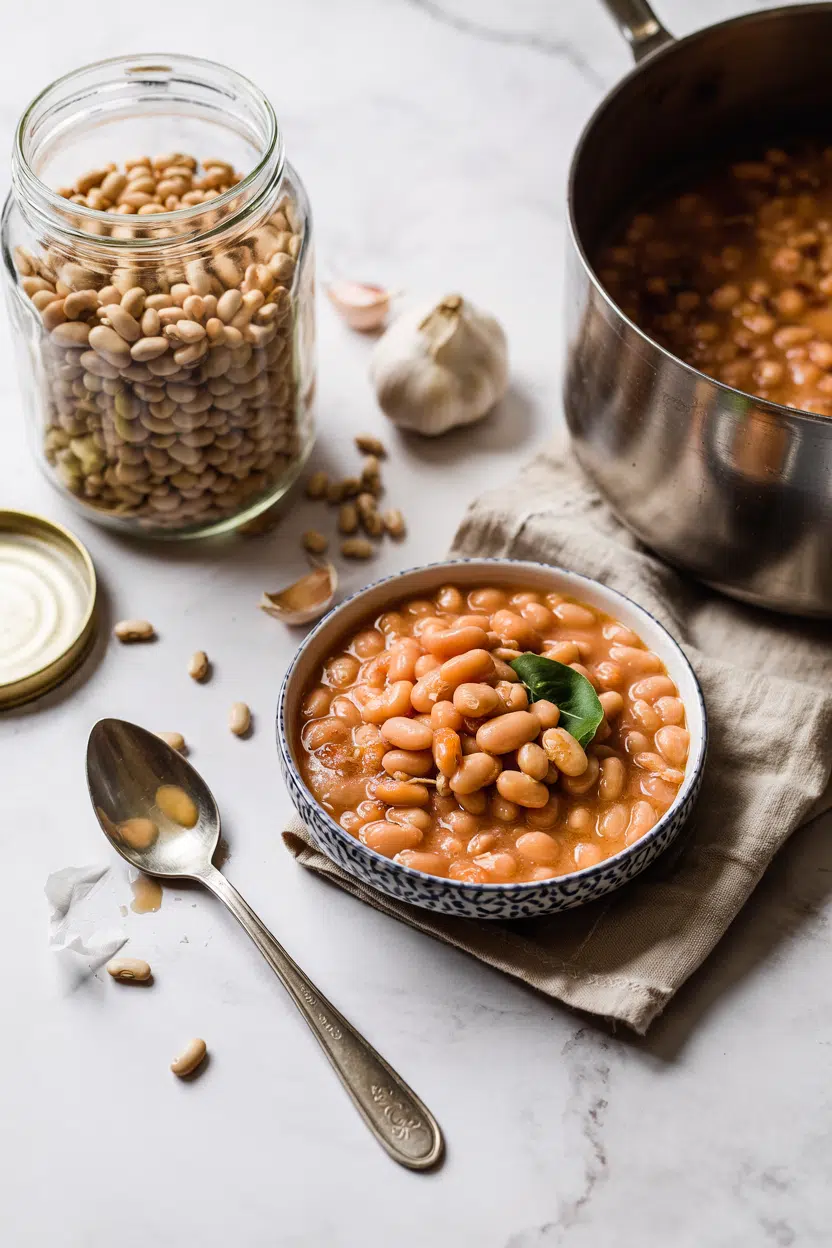
Unlike the earthier great northern bean and its flavor or the bold, almost iron-like richness of the taste of kidney bean, the navy bean works by stepping back.
Its mild, creamy character absorbs whatever surrounds it, making it indispensable without ever demanding attention.
The navy bean is a small, oval white legume with a mild, slightly nutty flavor and a creamy texture when cooked. It anchors baked beans, bean soups, and white bean purees. Dry beans store for 1-2 years; canned beans keep unopened for up to 5 years.
What Is a Navy Bean?
The navy bean is a small, oval legume belonging to the Phaseolus vulgaris species, native to North America and now cultivated worldwide. Its name traces to the U.S.
Remember it later
Planning to try this recipe soon? Save it for a quick find later!
Navy, which relied on dried beans as a shelf-stable protein source for sailors in the 19th century.
You'll also find it sold under the names haricot, pea bean, or white pea bean - the same bean, just different regional labels. In Britain, it's the haricot that fills a tin of classic baked beans.
In New England, it's the navy bean that goes into a slow-baked pot with molasses and salt pork.
Unlike black bean and its flavor or pinto bean in cooking, the navy bean has no visible skin pigment and stays creamy white through cooking.
Its skin is thin and its interior is dense, which explains why it breaks down so readily into a smooth, starchy puree.
- 🫘 Size - Smaller than cannellini or great northern beans, roughly the size of a large pea
- 🌱 Origin - North America; cultivated commercially across the US, Canada, and Europe
- 📋 Alternate names - Haricot (UK/Europe), pea bean, white pea bean, navy pea bean
- 🏺 Category - Dry bean, legume; sold dried or canned
What Does a Navy Bean Taste Like?
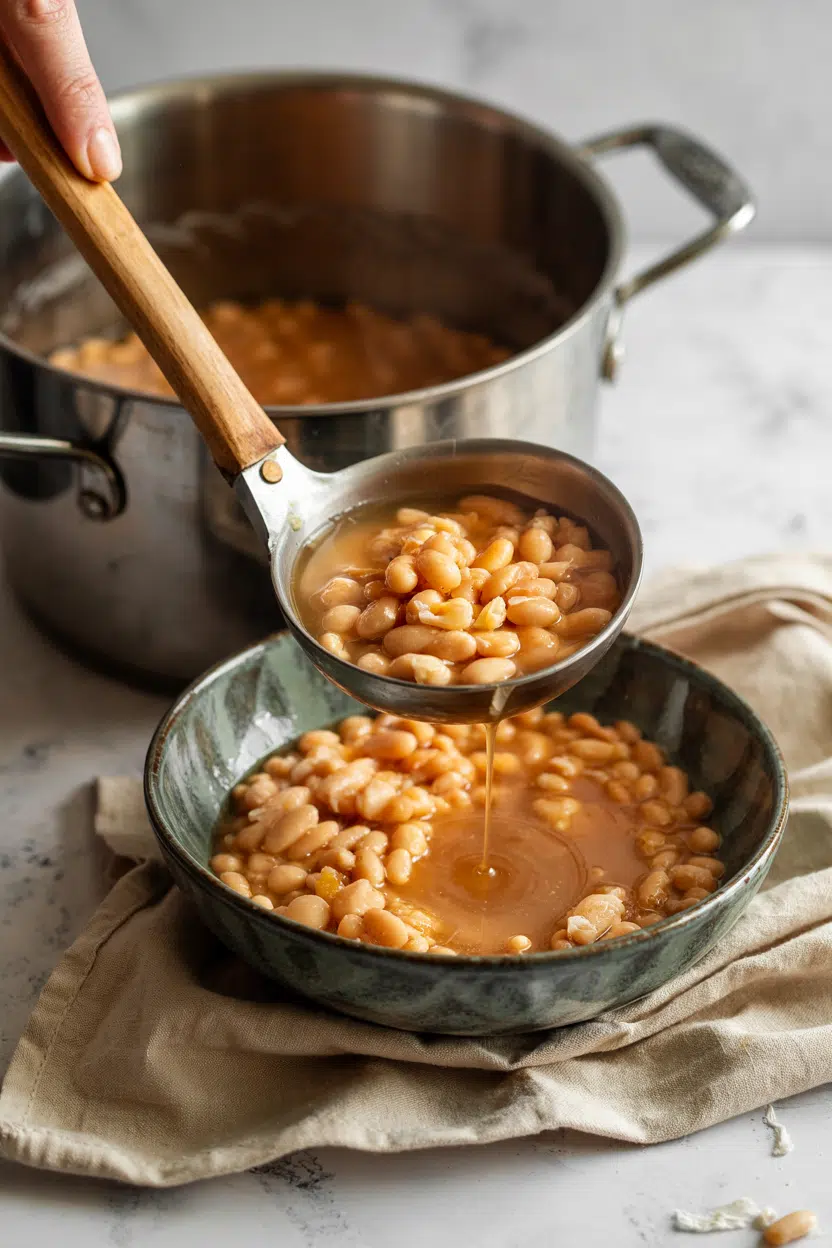
The flavor of a navy bean is genuinely mild - not bland, but restrained. A fully cooked bean delivers a soft nuttiness with a faint earthiness and a hint of sweetness underneath.
That mildness is precisely what makes navy beans such strong flavor absorbers. Slow-cooked in a braise with bay leaf, thyme, and smoked pork, they pull every aromatic note into themselves.
Compared to the taste of cannellini bean, the navy bean is denser and slightly less buttery. Both are mild, however, and either works in white bean purees - the navy bean simply holds a thicker, more pasty consistency.
How to Use Navy Beans
Navy beans shine most in low-and-slow cooking environments where their dense flesh has time to soften all the way through. The classic New England baked beans recipe - beans slow-baked with molasses, brown sugar, mustard, and salt pork for several hours - exists almost entirely because of how navy beans hold their shape at the edge while going creamy at the center.
| Method | Best For | Tip |
|---|---|---|
| 🍲 Slow Simmer | Soups, stews, ham-and-bean | Add aromatics from the start; salt near the end |
| 🫙 Baked | Traditional baked beans in sauce | Use low heat (300°F/150°C) for 4-6 hours |
| ⚡ Pressure Cooked | Fast weeknight beans from dry | No soaking required; cook 25-30 min at high pressure |
| 🥗 Cold Salad | Vinaigrette-dressed bean salads | Use canned or pre-cooked; dress while still slightly warm |
| 🫧 Pureed | White bean dips, creamy sauces | Add olive oil and lemon; blend while warm for smoothest result |
In Mediterranean-style cooking, pureed navy beans become a spread not unlike hummus - blended with olive oil, garlic, and lemon. For thickening a chowder or stew, mash a handful of cooked beans against the pot wall rather than adding flour.
Smoked pork is the classic pairing: understanding the taste of ham hock helps explain why this combination has endured so long - the fat and smoke saturate the beans during a long braise. For weeknight cooking, bacon or smoked sausage delivers a similar result in less time.
How to Buy and Store Navy Beans
For dry beans, look for uniform, hard beans with smooth, unbroken skins. Shriveled or discolored beans usually indicate age - old beans take far longer to cook and may never fully soften.
For canned navy beans, check for no bulging lids and scan the sodium level if that matters in your diet.
- 🫙 Dry storage - Keep in an airtight container in a cool, dark pantry; best quality within 1-2 years
- ❄️ Cooked beans - Refrigerate in a sealed container and use within 3-5 days
- 🥫 Canned, unopened - Shelf-stable for 3-5 years; after opening, treat like cooked beans
A full breakdown of navy bean's shelf life covers date labels, freezing, and when to discard cooked batches. For anyone swapping between bean types, navy bean swaps that work covers which varieties hold up in soups versus purees.
Start With Baked Beans or a Soup
If you're new to cooking navy beans, pick one of two entry points. The baked bean route shows you how the bean responds to long, slow oven heat - it's forgiving, and the molasses sauce covers any textural imperfection.
The soup route (ham hock, mirepoix, bay leaf, a long simmer) shows you the bean's real strength: absorbing a broth until the whole pot tastes unified. Either dish will tell you more about navy beans than a recipe summary can.
Frequently Asked Questions
No. Both are white beans with mild flavor, however cannellini are larger, creamier, and slightly more buttery. Navy beans are denser and break down faster, making them better for baked beans and thick soups.
Soaking isn't required but it shortens cook time by 30-45 minutes and reduces the oligosaccharides that cause gas. For pressure cooker methods, skip the soak - high pressure compensates without it.
Soaked navy beans simmer to creamy in 60-90 minutes on the stovetop. Unsoaked, expect 90-120 minutes. A pressure cooker cuts that to 25-30 minutes at high pressure.
Great northern beans are larger with a slightly firmer texture and hold their shape better in long braises. Navy beans are smaller, break down faster, and produce a thicker, pastier result when mashed or pureed.
Yes - navy beans are the traditional choice for American and British baked beans recipes. Their small size and tendency to soften gradually under prolonged heat makes them the standard, not a substitute.



