Broccolini is the closest substitute for Chinese broccoli (gai lan). Use it 1:1 by weight and start checking it 1 to 2 minutes earlier, because its stems are thinner. It is a cross between broccoli and gai lan, so the flavor is the same, just milder and sweeter.
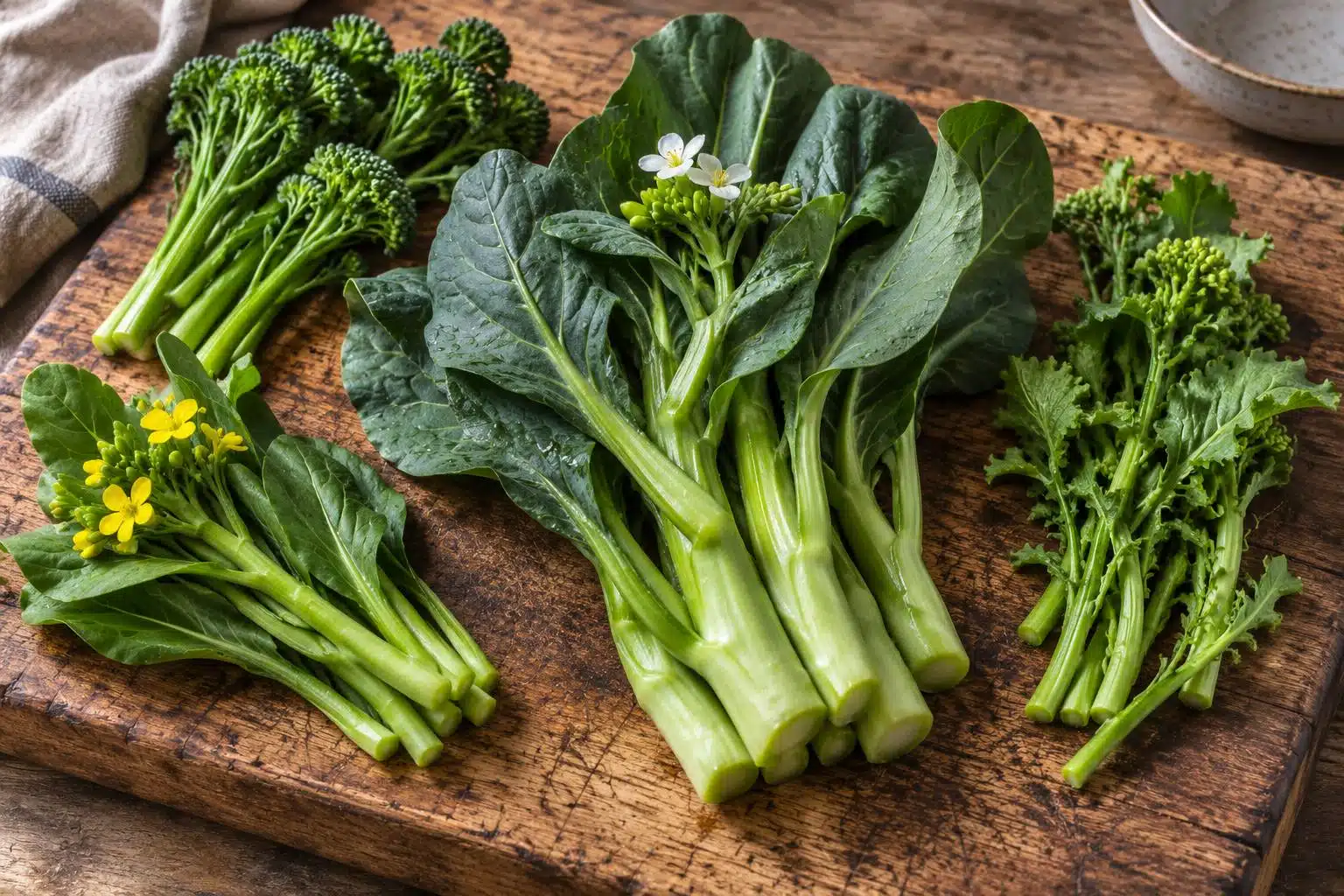
Choy sum is a close second, and broccoli rabe is the pick when you want the bitterness kept. Bok choy and regular broccoli florets are the ones that let you down, since neither has gai lan's bitter edge or its long, crisp stem.
What Does Chinese Broccoli Do in a Dish?
Chinese broccoli (also sold as gai lan, kai-lan or Chinese kale) is eaten for its stems and leaves, and it tastes like broccoli turned up: stronger and slightly more bitter. It usually gets stir-fried with garlic and ginger, or blanched and served under oyster sauce.
Remember it later
Planning to try this recipe soon? Save it for a quick find later!
Three jobs decide which swap works, and a good substitute covers the ones your dish leans on:
- Bitter edge: Blanched gai lan under salty-sweet oyster sauce relies on that bitterness for balance, so a sweet green makes the plate taste flat.
- Thick, crisp stems: Mature stems need about 2 minutes of blanching and stay crisp-tender, while baby gai lan stems need only about 45 seconds.
- Leaves that wilt, not collapse: The leaves go into the pot for the last 30 seconds or so and stay green, but overcooked gai lan turns yellow and limp.
Best Chinese Broccoli Substitutes, Ranked
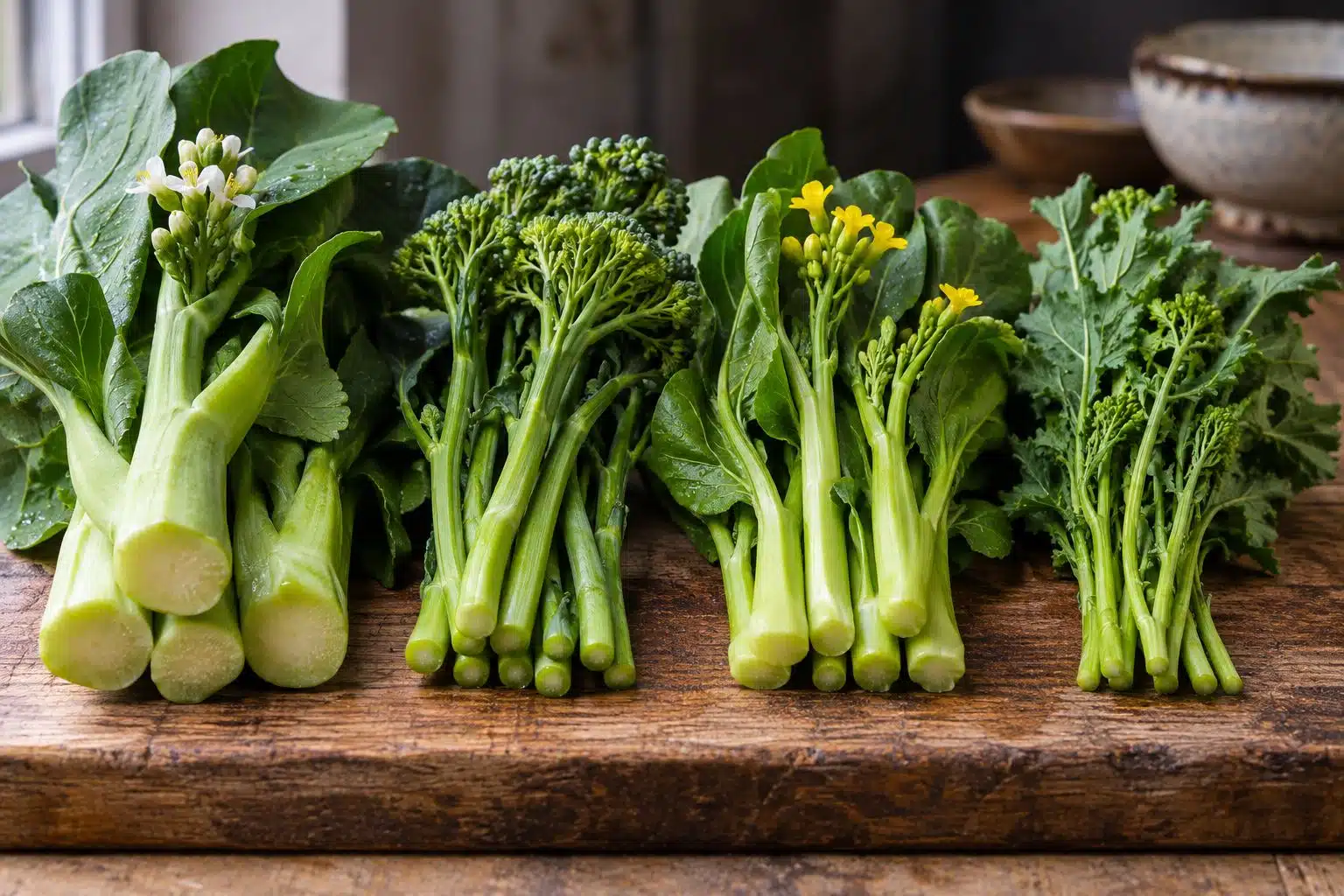
Five of the six swap 1:1 by weight, so the real differences are bitterness and stem thickness. The table ranks them by how close they get on both.
| # | Substitute | Best For | Ratio | Key Note |
|---|---|---|---|---|
| 1 | Broccolini | 🍳 Stir-Fry | 1:1 | Thinner stems cook faster |
| 2 | Choy Sum | 🍳 Blanching | 1:1 | Milder, cooks faster |
| 3 | Broccoli Rabe | 🍳 Braising | 1:1 | Sharper, blanch first |
| 4 | Bok Choy | 🍳 Soups | 1:1 | No bitterness, more water |
| 5 | Broccoli Stems + Spinach | 🍳 Stir-Fry | 2:1 | Peel stems, add spinach last |
| 6 | Kale | 🍳 Braising | 1:1 | Needs longer cooking |
Broccolini and choy sum stay closest in texture, rapini wins on bitterness, and the last three only work in the dishes listed.
1. Broccolini 🥦
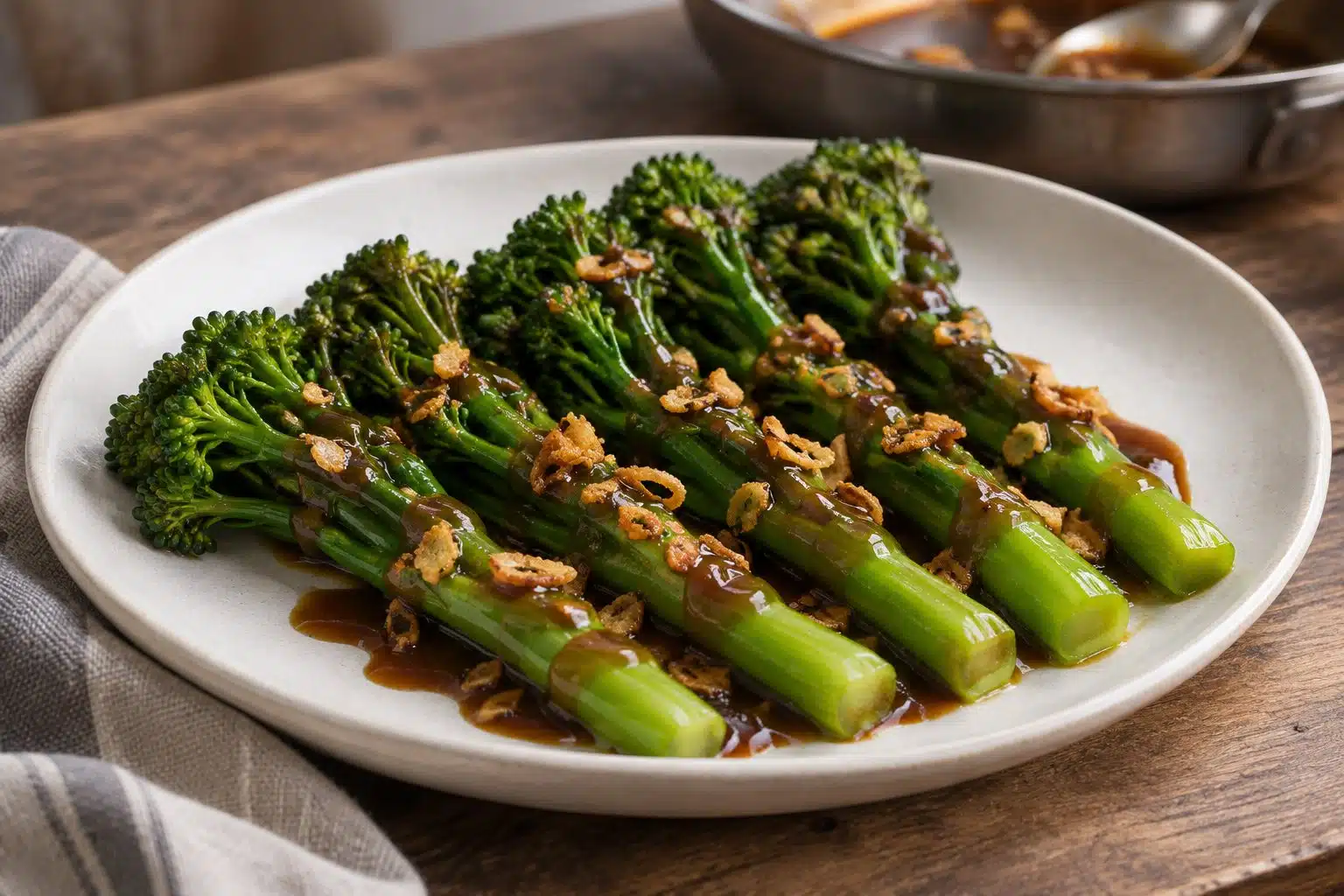
This broccoli and gai lan hybrid is milder and slightly sweeter than the real thing, with smaller leaves and long, slender stems. Cook it the way you would gai lan.
Use 1:1 by weight and begin checking 1 to 2 minutes earlier, since thin stems soften faster than gai lan's thick ones.
- ✅ Best for: Stir-fries, steaming and blanching with oyster sauce, where it keeps a crisp-tender bite.
- ✅ Holds its shape: The stems stay firm under high heat while the leaves wilt just enough.
- ⚠️ Where it falls short: The bitterness is much weaker, so the dish tastes sweeter and rounder than gai lan.
2. Choy Sum 🥬
Choy sum looks and cooks like a smaller gai lan, with tender stems about 0.5 to 1 cm thick and small yellow flowers. It tastes milder and a little sweeter, with very little bitterness.
Use 1:1 and give it less time in the wok. It works especially well when you blanch the greens and pour oyster sauce over them.
The trade-off is flavor: if you want gai lan's bite, choy sum will taste gentle, so pick rapini instead.
3. Rapini (Broccoli Rabe) 🌿
Broccoli rabe tastes nutty, bitter and pungent, and it usually lands sharper than gai lan. Its thinner stems stay firm and the small leaves wilt down, so it holds up in braised and sautéed dishes.
Use 1:1 by weight. In a braise, add it near the end so the stems do not overcook.
Even blanched, rapini suits rich, savory plates better than light stir-fries, where its edge can take over the dish.
4. Bok Choy (Baby or Shanghai) 🥗
Bok choy keeps a crisp stem crunch but trades the bitterness for mild sweetness. It also holds more water than gai lan, so it suits light stir-fries and soups where you do not need an assertive flavor.
- ✅ What works: The crisp stems hold up in quick-cooked dishes.
- ⚠️ What is missing: The bitter edge Chinese broccoli brings is gone, so oyster sauce greens taste sweeter.
Use 1:1 by weight and add it near the end of cooking to keep the stems crunchy.
5. Broccoli Stems + Spinach 🔧
Regular broccoli has the crunch but not the leaves, and spinach has the leaves but no crunch, so together they rebuild gai lan's stem-and-leaf contrast. Skip the florets, which turn soft before the stems are done.
Use 2 parts peeled broccoli stems to 1 part fresh spinach by weight, and slice the stems on the bias to mimic gai lan's shape.
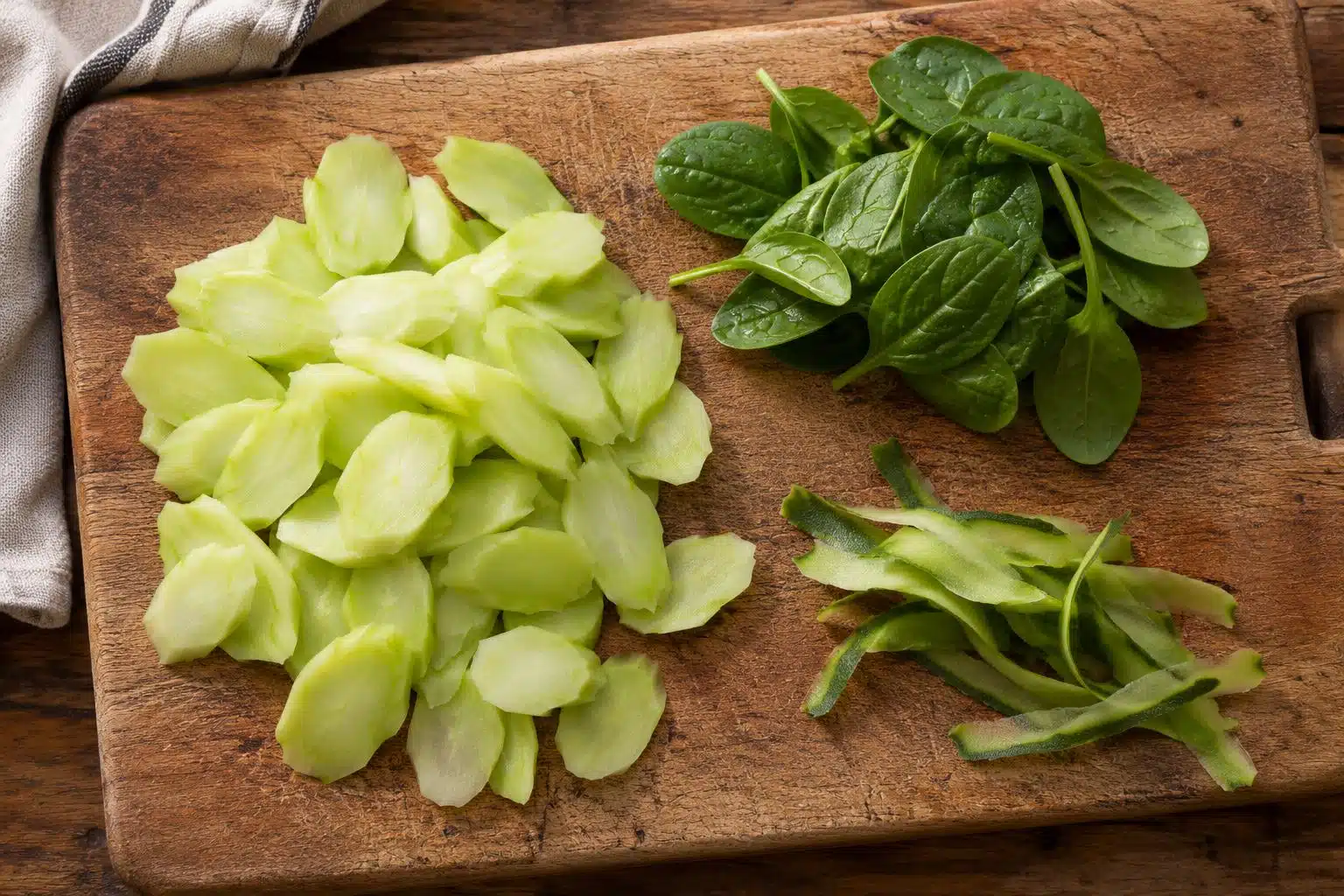
Add the stems first and cook 2 to 3 minutes until crisp-tender, then toss in the spinach for the last 30 seconds. The blend covers the stem and leaf jobs, but it will not give you the bitter edge.
6. Kale (Lacinato/Dino) 🥬
Kale handles long cooking in soups and braises, and it is slightly bitter like gai lan. It lacks the tender stems, though, and the fibrous leaves need more time to soften.
Use 1:1 chopped and strip the tough center ribs first. Lacinato cooks more evenly than curly kale because its leaves are flatter. Collard greens behave the same way.
Kale will not match the quick-cooking crunch of gai lan, so keep it for slow braises and soup pots.
Which Substitute Works for Which Dish?
Match the swap to the dish first, because a swap that is perfect for blanched greens can ruin a braise. The oyster sauce plate and pad see ew both lean on gai lan, so they get their own rows.
| If You're Making | Pick | Why | Adjust |
|---|---|---|---|
| Oyster sauce greens | Broccolini or choy sum | Both stay crisp-tender when blanched | Blanch stems first, leaves last |
| Garlic stir-fry | Broccolini | Closest stem and flavor | Cook 1 to 2 minutes less |
| Pad see ew | Broccolini or choy sum | Crisp stems plus tender leaves | Slice stems on the bias |
| Braise or soup | Rapini or kale | Hold up to longer cooking | Rapini late, kale ribs out |
| Mild, light dish | Bok choy | Crisp stems, no bitterness | Add near the end |
The table shows that broccolini and choy sum cover the two dishes people ask about most, while the bitter and leafy greens belong in longer cooking.
Frequently Asked Questions
No. Broccolini is a hybrid of broccoli and gai lan, so it has thinner stalks, smaller leaves and a milder, sweeter taste. Gai lan has thicker stems and a stronger, more bitter flavor.
It tastes similar but stronger and a little more bitter. The stems stay crisp-tender and the leaves wilt, so you get greens and stalks together instead of the floret texture of regular broccoli.
Only the stems. Regular broccoli florets will not match gai lan's texture or flavor, but peeled stems sliced on the bias cook much like gai lan stems. You lose the leaves and some bitterness, and the crunch stays close.
Broccolini or choy sum. Slice the stems on the bias, stir-fry them first, and add the leaves last. Bok choy works if you want a milder plate.
5 Best Substitutes for Chinese Broccoli
Ingredients
Method
- Pick the substitute best suited for your dish's cooking method and flavor preference.
- Prepare the greens by washing and trimming; peel and slice broccoli stems for the DIY blend if used.
- Apply the recommended ratio: usually 1:1 fresh weight except for the DIY blend which is 2:1 broccoli stems to spinach.
- Adjust cooking time as substitutions have thinner stems or require blanching; reduce cooking by 1-2 minutes for broccolini or blanch rapini if needed.
- Check for desired bitterness and texture, balancing sharp flavors with seasoning or sugar as necessary.
Notes
- Broccolini is the closest match for texture and mild bitterness in stir-fries and steaming.
- Rapini's sharper bitterness benefits from blanching or balancing with soy sauce and sugar.
- Bok choy lacks bitterness but provides crisp stems for mild flavor dishes.