
Beef and broccoli is one of those dishes where the sauce does all the heavy lifting, and oyster sauce is almost always the reason it works. That dark, glossy coating - sweet, savory, and faintly oceanic - doesn't come from soy sauce or hoisin sauce alone.

Oyster sauce has a specific gravity to it, a depth that's genuinely hard to replicate, which is why bottles of it disappear fast in active home kitchens.
Oyster sauce is a thick, dark condiment made from reduced oyster extracts, sugar, and salt. It delivers umami-forward, sweet-savory depth with a faint marine note - used across Cantonese and Southeast Asian cooking to gloss, season, and finish everything from stir-fries to marinades.
What Is oyster sauce?
Oyster sauce originated in Guangdong province in the late 19th century, reportedly discovered when a cook reduced oyster-poaching liquid too long and found the result unexpectedly rich. Today it's a cornerstone of Cantonese cooking, with wide adoption across Thai and Vietnamese kitchens as well.
Remember it later
Planning to try this recipe soon? Save it for a quick find later!
At its core, it's made by simmering oyster extracts with sugar, salt, and sometimes a small amount of soy, then cooking the mixture down to a thick, syrupy consistency. Better-quality bottles list oyster extract near the top of the ingredient list rather than relying on artificial flavoring or primarily soy.
You may also see it labeled ho see sauce, oyster-flavored sauce, or oyster extract sauce.
There are a few varieties worth knowing:
- Traditional oyster sauce - Made with real oyster extract; deeper flavor and more complex brine
- Oyster-flavored sauce - Common commercial version; may blend extract with soy and flavor enhancers
- Mushroom-based oyster sauce - Vegan substitute using shiitake or oyster mushroom extract; sold in most Asian grocery stores
- Premium/artisan versions - Higher oyster extract concentration; noticeably richer and less sweet
What Does oyster sauce Taste Like?
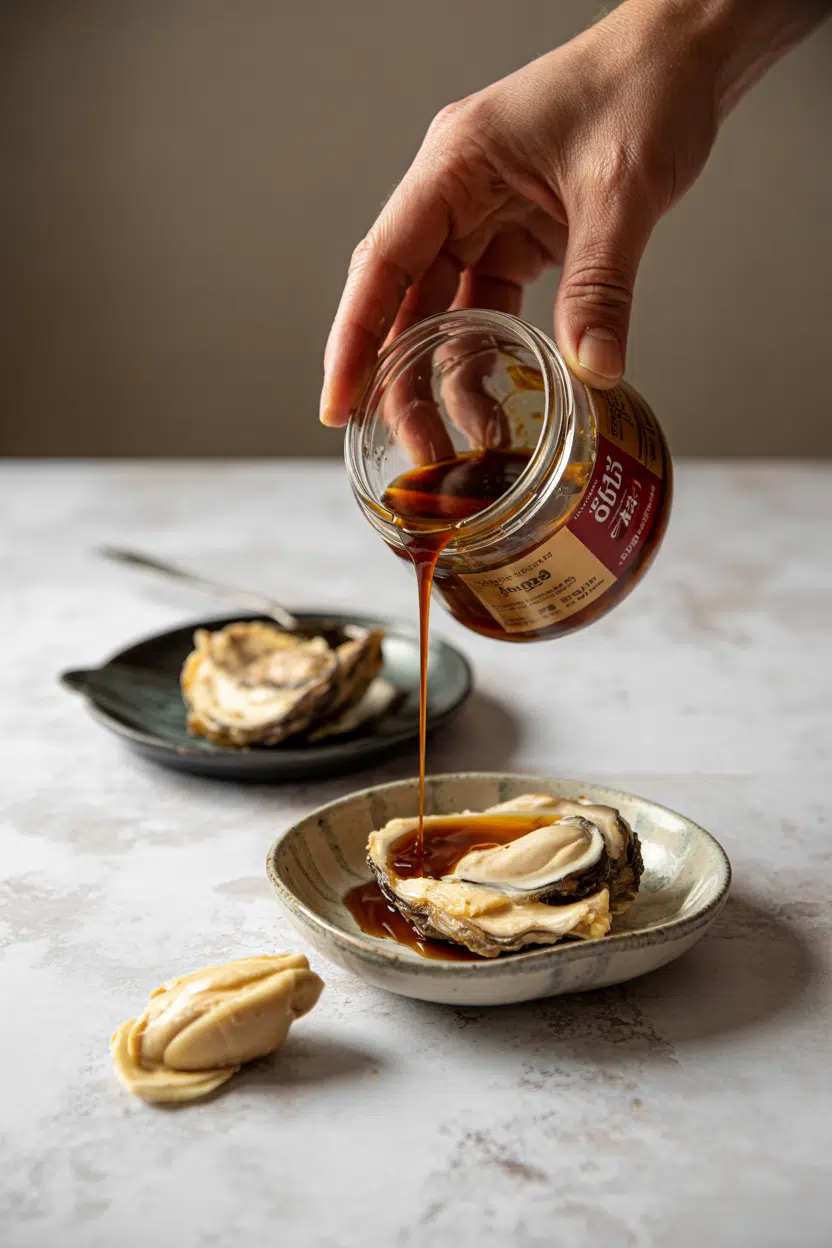
Oyster sauce tastes like a darker, thicker version of soy sauce with more sweetness and a quiet mineral undertone. It doesn't taste strongly of oysters - the brine is subtle, more of a background seafood note than a forward seafood flavor.
Heat brings out the caramelized sweetness and amplifies the umami without sharpening the brine. Added near the end of stir-frying, it rounds out harsh salt edges from other seasonings and leaves a glossy coat on whatever it touches.
At room temperature straight from the bottle, the marine note is more noticeable - which is why it's rarely used as a cold dressing.
How to Use oyster sauce
Oyster sauce earns its place across Cantonese, Sichuan, Thai, and Vietnamese kitchens precisely because it does two jobs at once: it seasons and glazes simultaneously. A tablespoon in the wok turns a flat vegetable stir-fry into something with real dimension.
A brush over grilling meat gives you lacquered shine and savory sweetness with no extra reduction needed.
It pairs naturally with soy sauce, garlic, and ginger - the classic Cantonese aromatics - and works especially well with dark leafy greens like bok choy and gai lan, where its sweetness offsets any bitterness. For what to serve with stir-fry, oyster sauce-dressed dishes hold up well alongside plain steamed rice, which absorbs the glaze cleanly.
Beef and pork are natural partners; chicken works too, especially in marinades where the sauce adds color as well as flavor.
| Method | Best For | Tip |
|---|---|---|
| 🥢 Stir-frying | Beef, pork, leafy greens, noodles | Add in the final 60-90 seconds; toss fast to gloss evenly |
| 🔥 Glazing/Basting | Grilled meats, roasted chicken | Apply at low-heat finish to prevent burning the sugars |
| 🥣 Marinating | Chicken thighs, pork shoulder | Keep marinade times short - 30 min to 2 hours maximum |
| 🍲 Sauce building | Pan sauces, braising liquids, dipping blends | Combine with stock or sesame oil; reduce gently to avoid over-salting |
Avoid using oyster sauce in raw fruit-forward dressings or anywhere delicate dairy sauces are central - its viscosity and marine note conflict with both. For dishes where you need that same savory depth without shellfish, check out our guide to oyster sauce replacements.
How to Buy and Store oyster sauce
Look for bottles with a deep mahogany color and a syrupy pour - if it looks watery or pale, the oyster extract concentration is likely low. Check the ingredient list: oyster extract should appear near the top, not buried below soy, starch, and flavor enhancers.
A recent production or best-by date matters here because the sauce darkens and loses nuance over time.
Store an unopened bottle in a cool pantry away from heat. Once opened, seal it tightly and refrigerate - this slows darkening and preserves the aroma.
For more detail on how long it stays usable, see our full breakdown of oyster sauce storage guide.
- Unopened: 12-24 months at room temperature, away from direct sunlight
- Opened, refrigerated: 6-12 months depending on salt content and brand
- Signs of spoilage: Mold at the cap, off or sour smell, watery separated texture
Where to Start With Oyster Sauce
Start with beef and broccoli if you've never cooked with oyster sauce before. It's the clearest demonstration of what the sauce does: the gloss, the rounded umami, the sweet-savory balance.
From there, try it in a simple bok choy stir-fry with garlic - just two tablespoons at the end of the wok. Once you see how it behaves under heat, everything else follows naturally.
If you already cook with hoisin sauce regularly, note that oyster sauce is less sweet and less spiced - it's the better choice when you want depth without dominance. Those exploring substitutions for either sauce will find real differences once they cook side by side.
Frequently Asked Questions
No. Fish sauce is a thin, intensely salty liquid fermented from fish, while oyster sauce is thick, sweet-savory, and made from reduced oyster extracts. They're not interchangeable - fish sauce adds sharp salinity; oyster sauce adds gloss and rounded umami.
Standard oyster sauce is not vegetarian - it contains oyster extract. Mushroom-based oyster sauce, typically made from shiitake or oyster mushroom extract, is a direct substitute sold in most Asian grocery stores and labeled clearly as vegan.
Oyster sauce is generally less salty than soy sauce by volume, but noticeably sweeter. Its sodium content is still high - around 400-500mg per tablespoon - so it still needs to be accounted for when seasoning a dish.
Yes. Traditional oyster sauce is made from oyster extract, which is a shellfish product. Anyone with a shellfish allergy should avoid it entirely and use a mushroom-based alternative instead.
Not on its own - the raw marine note is too pronounced and the texture too thick. Mix it with sesame oil, a splash of chili, and a small amount of warm water to thin it out before using as a dip for dumplings or blanched vegetables.



