
Slow-braised collard greens ladled over a pot of black-eyed peas are one of those combinations that needs almost no explanation - the leaves do the work, holding their shape while everything else softens around them.
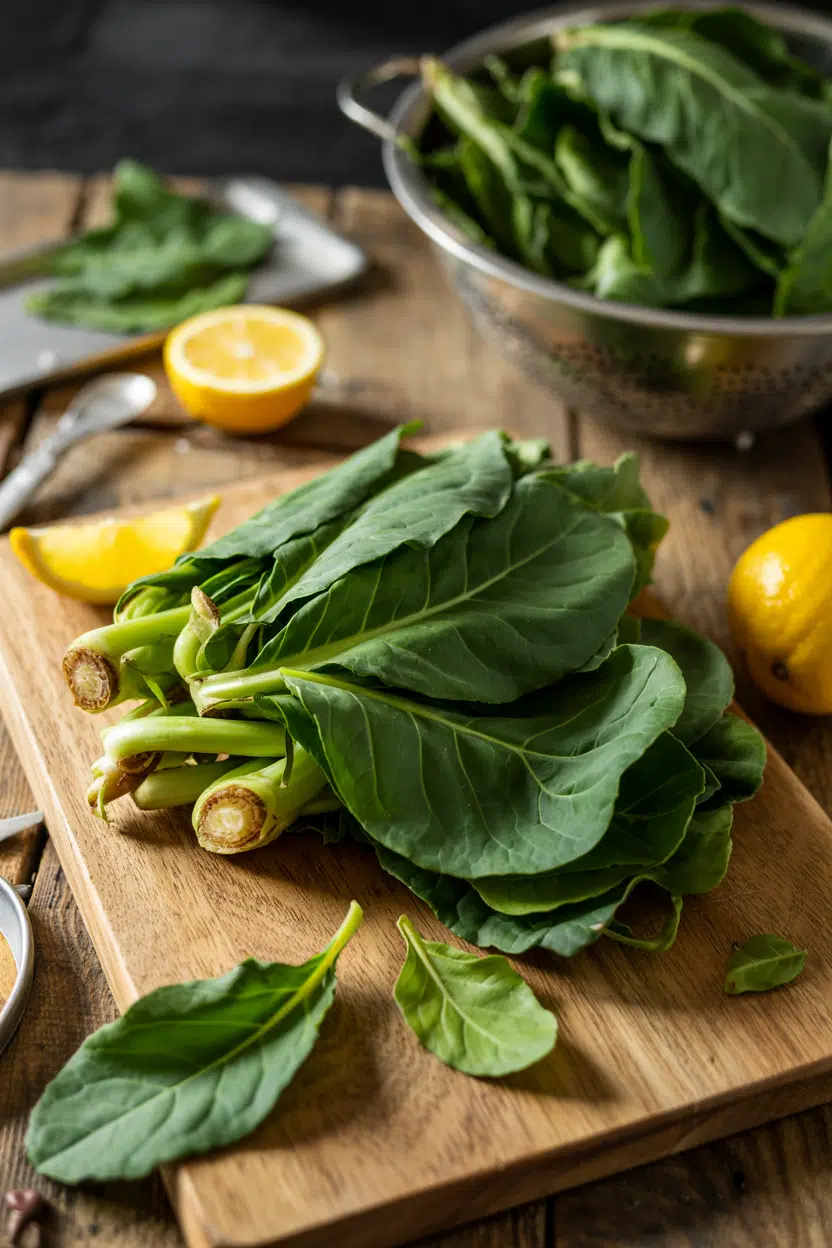
Understanding the role mustard green plays in similar preparations helps put collards in context: these are sturdy, assertive greens built for heat and long cooking.
If you ever need collard green swaps that work, the options are narrower than you'd expect, which says something about what makes collards distinctive.
Collard greens are large, dark-leaved brassicas with a bitter-green, earthy flavor that mellows with slow cooking. A cornerstone of Southern American cuisine, they hold up to braising, smoking, and long pot cooking better than nearly any other leafy green.
What Is Collard Greens?
Collard greens - formally Brassica oleracea var. acephala, and sometimes called colewort in older texts - are a non-heading member of the cabbage family.
Remember it later
Planning to try this recipe soon? Save it for a quick find later!
They arrived in the American South via West Africa through the Atlantic trade routes, and they've been a cornerstone of soul food cooking ever since.
The leaves are broad, flat, and dark green, with prominent central ribs that run the full length of each leaf. Unlike kale, collards don't curl at the edges; the leaf surface stays relatively smooth and intact even after long cooking.
Several varieties exist, though most home cooks encounter two main types:
- 🌱 Georgia Southern (Green Glaze) - the classic heirloom variety, large leaves with a waxy surface and thick central ribs
- 🌱 Champion - a more compact, faster-growing cultivar with slightly more tender leaves
- 🌱 Flash - a modern hybrid bred for bolt resistance and uniform leaf size, widely available at grocery stores
Traditional fat sources for the braising pot have shifted over the years - if you're cooking without smoked pork, knowing your replacements for lard keeps the dish on track without losing body in the liquid.
What Does Collard Greens Taste Like?
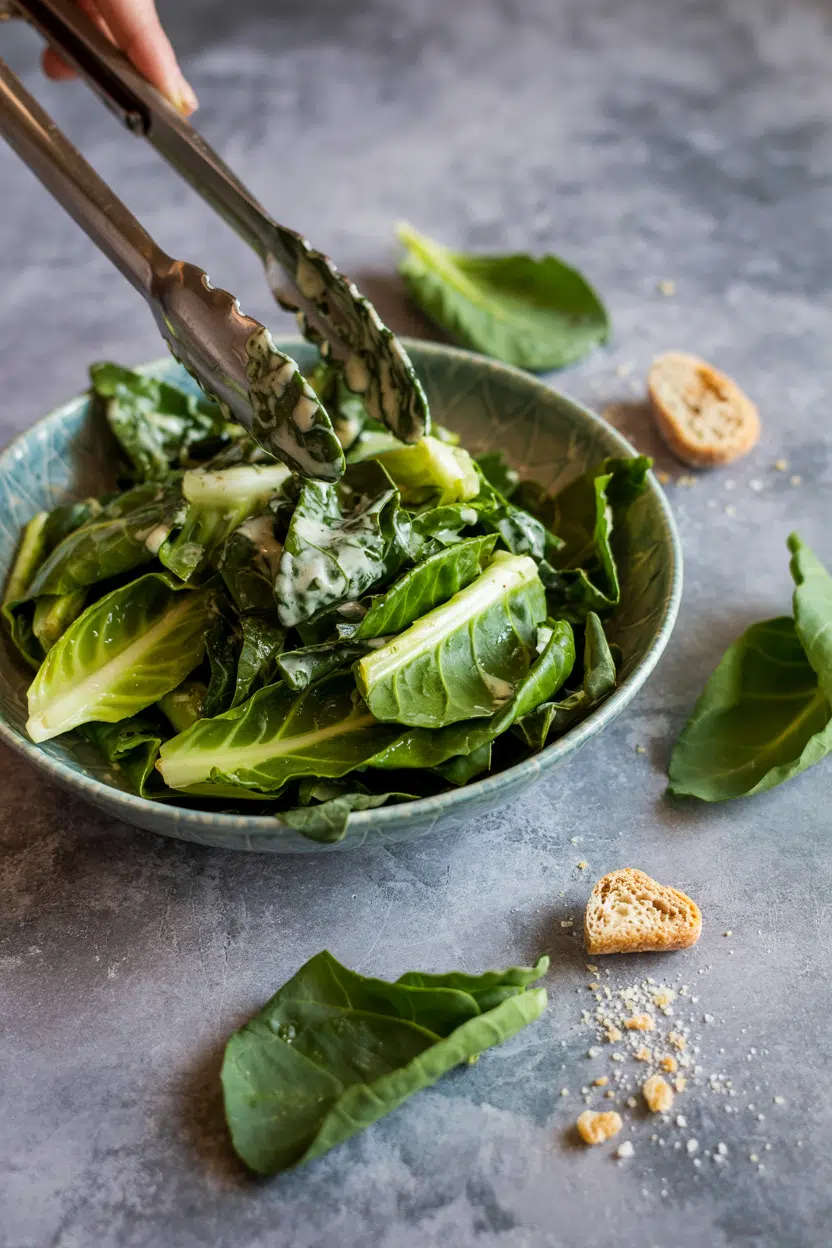
Raw collard greens are bitter and vegetal, with a green sharpness that sits somewhere between mature kale and cabbage. The flavor isn't harsh, however - it's more straightforward than the peppery bite of mustard greens.
Heat changes everything. Long braising with smoked meat draws out a mellow, almost sweet earthiness, softening the bitterness into background depth.
A splash of apple cider vinegar at the end sharpens the flavor back up, cutting through the fat in the braising liquid with a clean acidity.
How to Use Collard Greens
Southern American cooking owns the most recognized preparations, but collards travel well across other traditions. Portuguese caldo verde uses a close relative sliced fine into broth, and West African-influenced dishes often pair collards with tomato and spiced stewing liquids.
The leaf's durability is the constant - it doesn't dissolve, doesn't go limp, and doesn't disappear into a dish.
The most straightforward approach is slow braising: leaves torn into large pieces and cooked low in stock with a ham hock or smoked turkey for one to three hours.
Sautéing with garlic and onion over high heat is faster and keeps more of the bitter-green character intact.
For collard wraps, blanch the whole leaf briefly, shock it in ice water, and the leaf becomes pliable enough to roll around grains or beans without tearing.
| Method | Best For | Tip |
|---|---|---|
| 🫕 Braising | Soul food pots, smoked pork preparations | Cook low and slow; add vinegar in the final 10 minutes |
| 🥘 Sautéing | Quick weeknight sides, garlic-forward dishes | High heat, short time - keeps the green bite |
| 🥗 Blanched Wrap | Grain or bean wraps, meal prep rolls | Ice bath immediately after blanching to hold the green color |
| 🔥 Grilling | Smoky charred sides, barbecue accompaniments | Brush with oil; char edges only - center stays intact |
| 🫘 Pot cooking | Bean dishes, stews, black-eyed pea pots | Add leaves in the last 30 minutes to avoid over-softening |
Collard greens added to a pot of beans bring both texture and a bitter green note that balances the starchiness - see what pairs with black eyed peas for how these combinations get built out into full plates.
Pairings that reliably work include smoked pork, apple cider vinegar, hot sauce, garlic, and tomato - all ingredients that play against the leaf's natural bitterness rather than with it.
How to Buy and Store Collard Greens
At the market, look for deep green, unblemished leaves with firm, moist stems. Yellowing edges signal age; slimy patches along the central rib mean the leaf is past its best.
Larger leaves typically have thicker ribs that need more trimming, not a quality flaw - just something to account for before you cook.
Store collards unwashed in the refrigerator, either in a perforated plastic bag or wrapped loosely in a damp paper towel.
They keep well for 5 to 10 days - older, larger leaves at the shorter end of that window.
Washing before storage invites rot; rinse only when you're ready to cook.
Collard greens hold longer than kale in most cases, though how long mustard green keeps follows a similar pattern worth knowing if you're rotating brassica greens regularly.
Where to Start with Collard Greens
If you've never cooked collards before, start with a braise. It's forgiving, the timing is flexible, and the result is hard to ruin.
- New to collards - Braise with smoked turkey leg, garlic, and a splash of apple cider vinegar for two hours; strip the ribs first
- Short on time - Sauté torn leaves with garlic and chili flakes over high heat for eight to ten minutes
- Exploring beyond Southern cooking - Shred finely and stir into bean soup, or blanch whole leaves for wraps
For reference on how collards compare to their closest relatives, kale and its flavor and pairing ideas for kale give a useful side-by-side sense of where the two greens diverge in the kitchen.
Collards are less fussy than their reputation suggests - they just need heat and time.
Frequently Asked Questions
Yes, raw collards are noticeably bitter, though less peppery than mustard greens. Long braising significantly reduces that bitterness, and adding vinegar or a pinch of sugar at the end balances what remains.
Collard leaves are broader, flatter, and less curly than kale, with a milder bitter flavor and a firmer texture that holds up better to very long cooking. Kale softens faster and has a slightly more mineral, grassy taste.
You can, but the central rib stays unpleasantly fibrous. Remove the rib, slice the leaves very thin, and massage with a dressing - the texture becomes more approachable without any heat.
Sautéed collards take 8-12 minutes over high heat. Traditional braising runs 1-3 hours low and slow, which is what produces the tender, deeply savory texture most associated with soul food preparations.
Vinegar cuts through the fat in the braising liquid and brightens the flavor of the finished leaves. Apple cider vinegar is most common; it also balances residual bitterness without masking the smoky depth from the pork.



