
Raw mustard greens hit the back of your throat like a mild flash of heat - that sharp, peppery bite is the first clue that this leafy green is doing something different from the taste of arugula or kale.

Drop the same leaves into a hot pan, though, and that heat softens into a deep, slightly bitter savory flavor that cooks across Southern US kitchens and East Asian households have relied on for centuries.
If you're familiar with keeping turnip greens fresh or working with replacements for bok choy, mustard greens belong to the same leafy family - just with considerably more attitude.
Mustard greens are peppery, slightly bitter leafy greens from the Brassica juncea plant. Raw, they sting with wasabi-like heat. Cooked, they mellow into a savory, earthy green. Best in braises, stir-fries, and soups - and a staple in Southern US and Chinese cooking.
What Is Mustard Green?
Mustard greens are the edible leaves of Brassica juncea, a plant native to the Himalayan region and widely cultivated across East Asia, particularly in China, before spreading globally. They fall squarely in the leafy green category alongside collards and turnip greens, though their flavor profile sets them apart from both.
Remember it later
Planning to try this recipe soon? Save it for a quick find later!
Leaves vary considerably by variety. Southern US types tend to be darker, curly, and heavily ruffled; Asian types such as gai choy (Chinese mustard) run broader, smoother, and paler green.
Both have fibrous central ribs on mature leaves that are usually stripped before cooking.
The plant also goes by leaf mustard and Brassica juncea in botanical contexts, and it's the same species whose seeds produce prepared mustard - which explains the characteristic heat.
That shared chemistry with mustard seed is one of the more interesting botanical connections in the leafy green family.
- 🌱 Plant family - Brassica (same family as kale, cabbage, and arugula)
- 🌍 Regional names - gai choy (Cantonese), leaf mustard (English), Chinese mustard
- 🍃 Leaf types - curly/ruffled (Southern US) or broad and flat (Asian varieties)
- 🔪 Rib note - fibrous stems on large leaves should be removed before cooking tender preparations
What Does Mustard Green Taste Like?
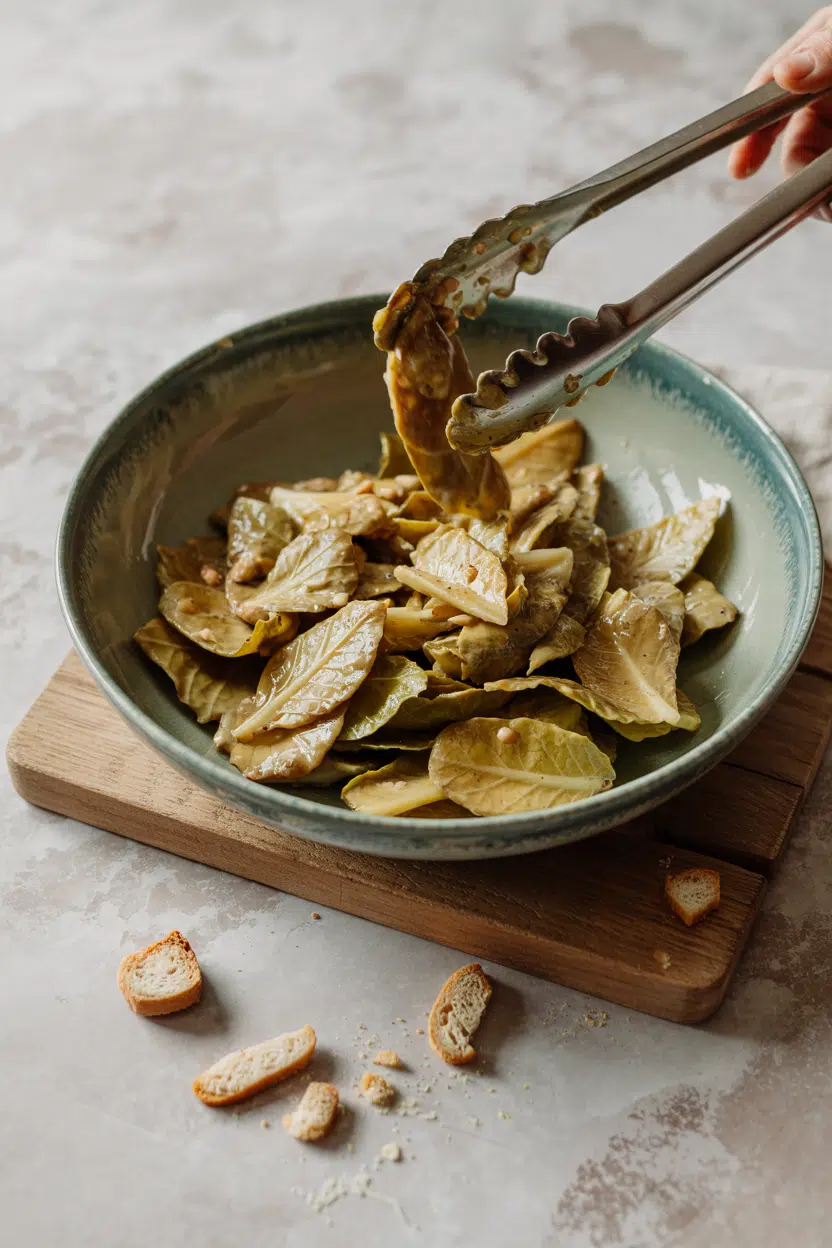
Bite into a raw mustard green leaf and the first sensation is sharp, wasabi-like heat - a pungent, almost horseradish-note that sits at the back of the palate. That heat comes from glucosinolates, the same compounds responsible for the bite in mustard seeds.
There's a leafy bitterness underneath, too, more pronounced than kale but less acidic than radicchio.
Heat transforms the leaf significantly. Braising pulls out deep, savory notes and cuts the raw sting to a mellow warmth; a quick sauté keeps more bite intact.
Baby leaves are notably milder than mature bunches - a useful distinction if you want the flavor without the full-force heat.
How to Use Mustard Green
Braising is the most forgiving method and the one most closely associated with Southern US cooking. Long-cooked mustard greens with smoked pork or bacon - fat, acid, and time working together - produce a pot liquor that's nearly as valued as the greens themselves. Smoked meat also balances the bitterness in a way that plain stock won't.
For faster preparations, a stir-fry with garlic, ginger, and soy sauce keeps the leaves bright and retains more of their peppery character. Chinese recipes often add sesame oil at the end and finish with chili flakes.
This is classic gai choy territory - high heat, short time, punchy result.
| Method | Best For | Tip |
|---|---|---|
| 🥗 Raw | Salads, slaws with sharp dressings | Use baby leaves only; slice thinly to reduce intensity |
| 🍲 Braised | Southern-style greens, stews | Add smoked pork and a splash of vinegar for balance |
| 🥘 Stir-Fried | Chinese-style sides, quick weeknight dishes | High heat, short cook - 2-3 minutes maximum |
| 🍜 Soup/Broth | Peppery green notes in noodle soups | Add near the end so leaves wilt without turning gray |
| 🫙 Pickled | Condiments, dumplings, savory pancakes | Vinegar tames heat; short-brine for crunch, long-brine for funk |
Mustard greens also appear in Indian cooking - Punjabi sarson da saag pairs them with fenugreek leaves and maize flatbread (makki di roti), a dish where the greens are the star rather than a supporting player.
Korean cuisine uses them in kimchi preparations and pickled banchan.
Beyond Asian and Southern traditions, blanched leaves work as a sharp counterpoint in grain bowls; they pair especially well with eggs, grits, and rice.
If a recipe specifically calls for this leaf and you can't find it, checking replacements for mustard green will show which greens can step in without losing all the peppery character.
Turnip greens and mature arugula are the closest swap; collard green swaps that work can also apply when the goal is texture rather than heat.
How to Buy and Store Mustard Green
Fresh mustard greens should look crisp and deeply green, with no heavy yellowing, slimy patches, or bruised edges. Stems need to be firm - a limp or hollow stem signals the bunch has been sitting too long. At farmers markets you'll often find both the curly Southern variety and the broader Asian gai choy type in the same season.
At home, trim the stem ends, wrap the bunch loosely in a damp paper towel, and store in a perforated plastic bag in the fridge crisper.
For a detailed breakdown of exactly how long mustard green keeps under different conditions, the timing differences between baby leaves and mature bunches matter more than most people expect.
Baby leaves typically hold 4-7 days; larger, more mature bunches are best used within 3-5 days.
Where to Start with Mustard Greens
New to this green? Start with a quick sauté. Heat olive oil, add sliced garlic, toss in roughly chopped leaves, and cook for two to three minutes.
That single method shows you both the heat of the raw leaf and how fast it softens under fire.
From there, the braised Southern route - long, slow, with smoked pork - is the natural next step. It's the preparation that convinced generations of cooks this bitter, peppery leaf was worth keeping on the menu.
You won't need a recipe to understand why after you try it.
Frequently Asked Questions
Not spicy in the chili sense, however they carry a sharp, wasabi-like heat from glucosinolates. Raw leaves are the most intense; cooking reduces that heat noticeably. Mature leaves run hotter than baby leaves.
Yes, but use baby leaves. Mature leaves are fibrous and intensely peppery raw, which overwhelms most dishes. Thinly sliced baby mustard greens work well in salads with bold, acidic dressings.
Blanch them briefly in salted boiling water, then drain and proceed with your recipe. Adding an acid - vinegar or lemon - and a fat like smoked pork also rounds out bitterness in braised preparations.
No. Both are Southern staples, however collards are much milder and have thicker, waxy leaves with no peppery heat. Mustard greens are sharper and cook faster; they come from a different Brassica species entirely.
Not necessarily avoid, however consistency matters. Mustard greens are high in vitamin K, which affects anticoagulant medication like warfarin. Keeping intake steady rather than suddenly increasing it is the standard guidance.



