
You spot it on the supermarket shelf between the bread flour and the self-rising bags, usually in a no-frills sack with minimal fanfare. All-purpose flour is easy to overlook precisely because it's everywhere - the baseline against which every specialty flour gets compared.

Knowing flour's shelf life matters more than most bakers realize, and understanding swapping out self rising flour for AP in a pinch shows just how central this one flour really is.
All-purpose flour is a medium-protein refined wheat flour milled for general cooking and baking. It tastes nearly neutral - mild, faintly bready - and works across batters, doughs, roux, and coatings. Unbleached AP flour suits most home kitchens and stores well for up to a year.
What Is All Purpose Flour?
All-purpose flour is a refined wheat flour milled from the endosperm of hard and soft wheat blends, then sifted to remove the bran and germ.
Remember it later
Planning to try this recipe soon? Save it for a quick find later!
It originated as a commercial milling product, popularized in North America but now a staple worldwide under different names - plain flour in the UK and Ireland, AP flour in shorthand across North America.
Its defining characteristic is a protein content of roughly 9-12%, which places it squarely between low-protein cake flour and high-protein bread flour. That range gives baked goods enough gluten structure to hold shape without becoming tough or chewy.
Two common versions exist at retail: bleached and unbleached. Bleached AP flour is treated with chemical agents to whiten and age it faster; unbleached is left to mature naturally, resulting in a slightly creamier color and marginally more complex flavor.
- 🌾 Bleached - whiter, finer texture, slightly softer crumb in cakes
- 🌾 Unbleached - off-white, less processing, preferred by most home bakers
- 🌾 Enriched - most US AP flour adds iron and folic acid back after milling
Understanding the role bread flour plays in high-gluten baking clarifies why AP flour sits in the middle - capable but not specialized. Similarly, anyone weighing alternatives to whole wheat flour will find AP flour the most common stand-in.
What Does All Purpose Flour Taste Like?
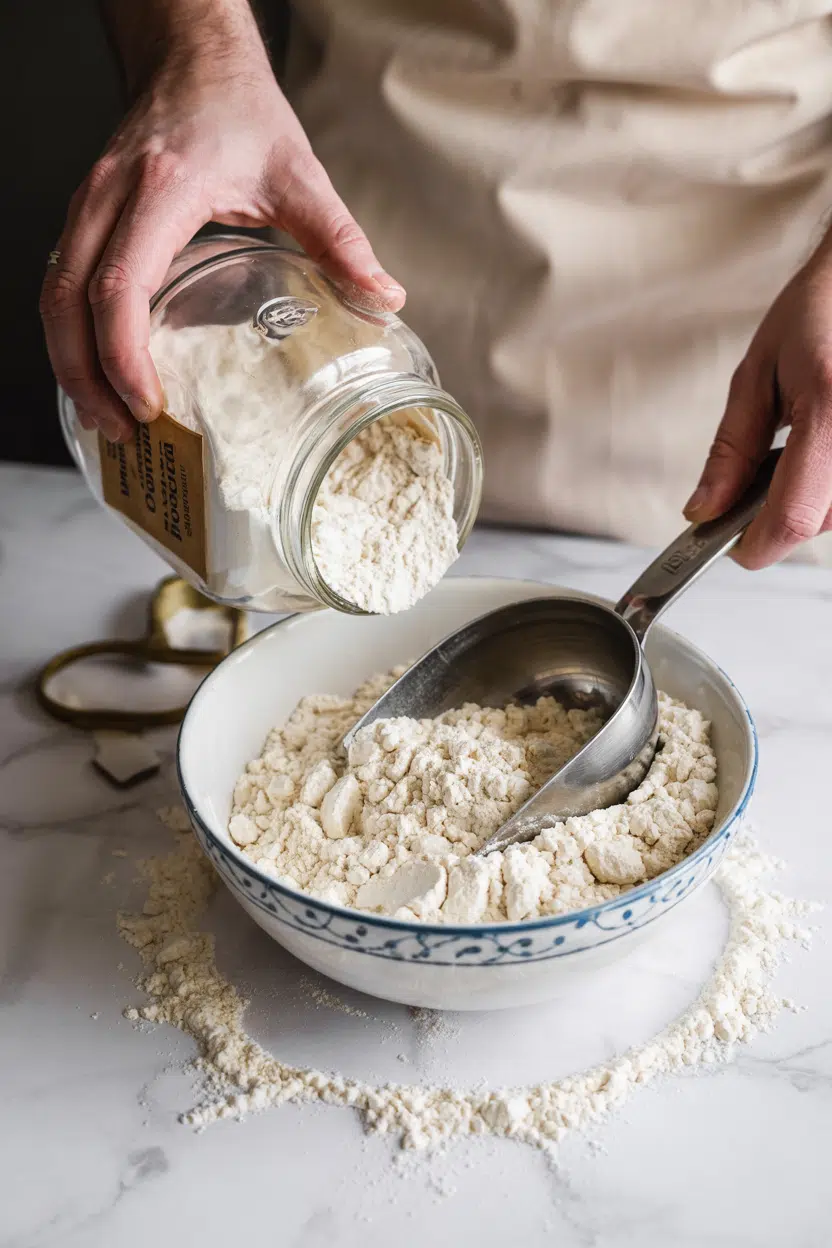
Raw AP flour tastes almost like nothing - a faint, starchy grain note with a slight chalkiness. Eat a pinch and you'll detect something between plain white bread and mild oat flour, though less sweet than either.
Heat changes everything. When you toast AP flour dry in a skillet or cook it into a roux with butter, a nutty, biscuity aroma develops - that's the Maillard reaction browning the proteins. The longer you cook a roux, the deeper and more pronounced the flavor becomes, shifting from pale and starchy to rich and almost caramel-edged.
Hydrated flour in a batter or dough is equally neutral, which is the point. It carries other flavors - vanilla, butter, herbs - without competing.
How to Use All Purpose Flour
AP flour earns its name by covering an enormous range of tasks without swapping bags. Roux and slurries are the simplest: whisk flour into melted butter for a béchamel or gravies, or stir it into cold water before adding to a stew.
The protein content - firm enough to create gluten, mild enough not to toughen - makes it reliable across baking categories.
For yeasted breads and rolls, AP flour produces a slightly softer crumb than bread flour, which some bakers prefer for dinner rolls.
Anyone curious about alternatives to bread flour will find AP flour a workable substitute in most sandwich loaf recipes.
For cakes and cookies, all purpose flour swaps that work include cake flour (lower protein, softer crumb) and self-rising flour (includes leavening).
| Method | Best For | Tip |
|---|---|---|
| 🥗 Dusting/Dredging | Coating chicken, fish, vegetables before frying | Season the flour before dredging for better flavor throughout |
| 🍳 Roux / Slurry | Gravies, béchamel, stew thickening | Cook roux at least 1-2 minutes to eliminate raw flour taste |
| 🍞 Kneaded Dough | Bread, rolls, pizza dough, pasta | Rest dough 10-15 minutes before kneading to let gluten relax |
| 🥞 Batters | Pancakes, waffles, muffins, cake layers | Mix until just combined - lumps are fine in most batters |
How to Buy and Store All Purpose Flour
At the store, check the packaging date when visible and choose bags that feel dry without any clumping inside. Unbleached AP flour is the better pick for most uses - less chemical processing, similar performance.
Avoid any bag with a musty smell or visible moisture damage; that signals the flour has already started degrading.
Once opened, transfer flour to an airtight container and keep it in a cool, dark spot away from heat sources.
For detailed guidance on how long all purpose flour keeps under different conditions, the breakdown by storage method is worth checking before your next big bake.
For longer storage - six months or more - a sealed bag in the freezer protects both flavor and prevents pantry pests, lasting up to two years.
Where to Start With AP Flour
AP flour rewards those who use it regularly. If you're new to baking, start with a simple pancake or muffin batter - low stakes, quick results, and an easy read on how the flour behaves.
If you're expanding beyond basics, knowing cooking self rising flour perfectly shows how AP flour and leavening interact - useful before you try anything more ambitious.
Stock a 2-5 lb bag, keep it sealed, and replace it every six months if you bake infrequently.
Frequently Asked Questions
Yes, in practice. Plain flour (used in the UK and Ireland) and AP flour (North America) are both medium-protein refined wheat flours. Protein levels can vary slightly by brand, but the two are interchangeable in most recipes.
Yes. AP flour is milled from wheat and contains gluten proteins - gliadin and glutenin. It is not suitable for people with celiac disease or a wheat allergy.
Yes, with decent results. AP flour produces a slightly softer, less chewy loaf than bread flour because of its lower protein content. It works well for soft sandwich loaves and dinner rolls but won't match the chew of an artisan sourdough.
Use 1 cup AP flour minus 2 tablespoons, then add 2 tablespoons of cornstarch. This reduces the effective protein level, mimicking the lower-protein profile of cake flour for a softer crumb.
Most AP flour brands fall between 9% and 12% protein. Southern US brands like White Lily sit at the lower end (~9%), while brands like King Arthur land near 11.7%, making them closer to a light bread flour.



