
Khichdi - that humble one-pot of rice and legumes - would be unrecognizable without a handful of whole green mung beans stirred in.

The mung bean sits quietly in the same category as the role chickpea plays in stews and the role adzuki bean plays in sweets, yet it covers more ground than either. Split, whole, or sprouted, it shows up from Indian dals to Chinese congee to Korean bindaetteok pancakes.
The mung bean is a small green legume with a mildly sweet, nutty, earthy flavor. Use it whole in dal and khichdi, split as moong dal, or sprouted in salads. Dried beans keep for months; cooked or sprouted forms last a few days in the fridge.
What Is Mung Bean?
The mung bean (Vigna radiata) is a small round legume native to South Asia, cultivated across the Indian subcontinent and Southeast Asia for thousands of years.
Remember it later
Planning to try this recipe soon? Save it for a quick find later!
It belongs to the same family as lentils and black-eyed peas, though it cooks faster than most dried legumes and tolerates skipping the overnight soak.
You'll find it sold under several names depending on form. Whole green mung retains its thin olive-green skin. Split and hulled, it becomes split yellow moong dal - pale yellow, flat, and quick-cooking.
Sprouted, it transforms into the familiar white bean sprouts common in stir-fries and spring rolls.
- 🫘 Mung / moong bean - the whole dried green form, used in soups and khichdi
- 🟡 Moong dal - split and hulled; cooks to a creamy, porridge-like texture
- 🌱 Mung bean sprouts - germinated for 2-3 days; crisp, mild, and eaten raw or lightly cooked
- 🍮 Mung bean paste - cooked, sweetened, and used as a filling in Asian desserts
Unlike lentil's flavor and uses, which vary widely by variety, mung bean stays consistently mild across all its forms - making it one of the most approachable legumes for new cooks.
What Does Mung Bean Taste Like?
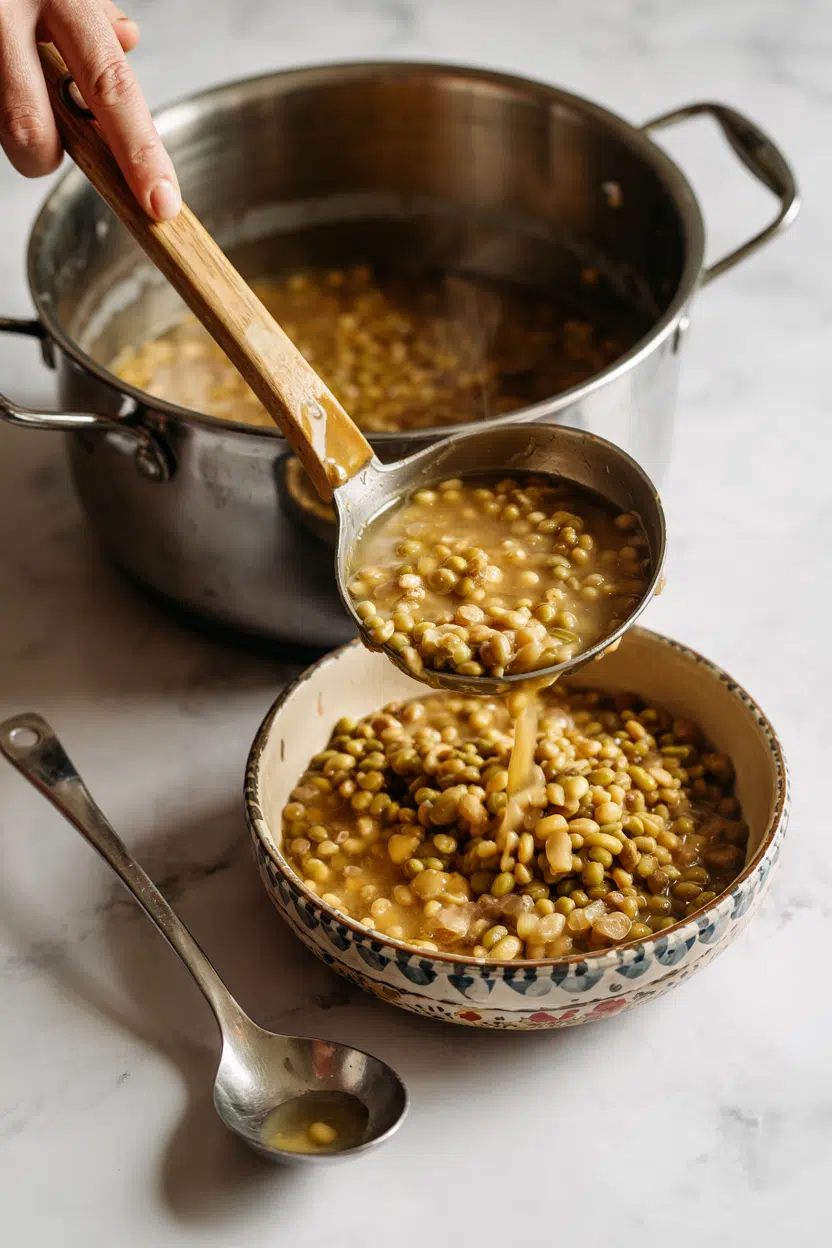
Mung bean has a mildly sweet, nutty, earthy flavor that stays subtle regardless of how you prepare it.
The closest comparison is edamame, though mung is softer and less grassy - understanding what makes edamame distinct helps clarify exactly where mung bean sits on the legume flavor spectrum.
Heat deepens the earthy note. Fully cooked whole beans turn soft and creamy, absorbing spices and aromatics without losing their identity.
Split moong dal goes even further - it collapses into a smooth, almost silky texture with a faint sweetness at the finish.
Sprouted mung is a different experience - crisper, fresher, and noticeably lighter in flavor than the cooked bean. The grassy note is more present in raw sprouts, though it mellows quickly with even brief heat.
How to Use Mung Bean
Indian and Chinese cooking use mung bean more than any other cuisine, though Southeast Asian and Korean kitchens have their own strong traditions with it. The bean's mild flavor means it takes on surrounding aromatics well - ginger, garlic, turmeric, and coconut milk all amplify it without competing.
| Method | Best For | Tip |
|---|---|---|
| 🫕 Simmered | Dal, khichdi, soups, congee | Soak whole beans 4-6 hours to cut cook time significantly |
| ⚡ Pressure-cooked | Split moong dal, fast weeknight dinners | No soak needed; 8-10 minutes at pressure gives a creamy result |
| 🌱 Sprouted | Salads, stir-fries, spring rolls | Rinse twice daily; sprouts are ready in 2-3 days |
| 🥞 Pan-fried | Mung bean chilla, bindaetteok pancakes | Soak, grind wet, and season the batter before cooking |
| 🍮 Pureed | Mung bean paste fillings for desserts | Cook until very soft, sweeten, then blend smooth |
A congee rice porridge recipe that adds whole mung beans gets body and protein without changing the congee's delicate character.
For a spiced dal, split yellow moong dal with turmeric, cumin, and a mustard seed tadka is the simplest entry point - a dal tadka yellow lentils recipe follows the same technique and spice logic.
If mung bean isn't available, a brief look at alternatives to mung bean will show which legumes come closest for each specific use case.
How to Buy and Store Mung Bean
At the store, whole green mung beans should look uniformly olive-green with smooth, uncracked skins and no sign of insect holes.
For split yellow moong dal, look for pale yellow pieces that are consistent in size and free of black specks, which signal old stock or moisture damage.
Storage is straightforward. Keep dried whole or split beans in an airtight container in a cool, dark pantry, away from heat and humidity.
Cooked mung and fresh sprouts go in a sealed container in the fridge. Refer to our guide on how long mung bean keeps for exact timelines by form - dried, cooked, and sprouted all differ considerably.
Start Here With Mung Bean
Split yellow moong dal is the fastest way in - no soak, pressure-cooked in under ten minutes, and forgiving enough for a first attempt. Once you're comfortable with that, move to whole green mung for texture, or try a three-day sprouting jar for a raw application.
The bean rewards patience. Long, slow simmering with aromatics unlocks the creamiest result.
Frequently Asked Questions
Same legume, different processing. Whole mung beans are the green, skin-on dried bean. Moong dal is mung bean split in half and hulled, resulting in pale yellow pieces that cook faster and break down into a creamy texture.
Yes. They provide plant protein, fiber, folate, and iron in a low-fat, gluten-free package. Sprouting increases vitamin C content and reduces antinutrients, which improves iron and zinc absorption.
Sprouted mung is noticeably fresher and crisper than the cooked bean, with a mild grassy note and subtle sweetness. The earthy depth of the dried bean largely disappears once it germinates.
Soaked whole mung beans simmer soft in about 30-40 minutes. Split moong dal takes 15-20 minutes on the stovetop, or 8-10 minutes under pressure - no soaking required.
Dried raw mung beans are not safe to eat - they need cooking to break down antinutrients and improve digestibility. Sprouted mung beans, however, are commonly eaten raw in salads once fully germinated.



