
You spot a bundle of soba noodles at a Japanese grocery, their dark gray-brown strands thinner than spaghetti and rougher to the touch, and you wonder what to actually do with them.

Unlike wheat-based pastas where the noodle is mostly background, soba brings its own toasted, earthy character to every dish - whether it ends up cold on a bamboo tray or submerged in a clear dashi broth.
If you already know what pairs with ramen noodles, soba will feel familiar but distinct; the buckwheat base adds a nuttiness that wheat noodles simply don't have.
Getting familiar with soy sauce swaps that work is also worth doing early, since soy is the backbone of nearly every soba dipping broth.
Soba noodles are thin Japanese buckwheat noodles with a nutty, earthy flavor and a firm bite. Served hot in broth or cold with a soy-dashi dipping sauce, they're a staple of Japanese cooking and adapt easily to salads and stir-fries. Dried soba keeps for months; fresh soba must be used within days.
What Is Soba Noodles?
Soba (蕎麦) is a Japanese noodle made from buckwheat flour, sometimes blended with wheat flour to improve texture and handling.
Remember it later
Planning to try this recipe soon? Save it for a quick find later!
Despite the name, buckwheat is not related to wheat - it's a seed crop more closely related to rhubarb, which gives soba its characteristic color and flavor profile.
The two main commercial types are juwari soba, made from 100% buckwheat, and ni-hachi soba, which blends roughly 80% buckwheat with 20% wheat flour.
Juwari is darker, coarser, and more intensely flavored; ni-hachi is smoother and a little easier to cook without breaking.
A third variety, cha soba, incorporates green tea powder for a subtle herbal note and pale green color.
Soba originates broadly across Japan but is especially tied to Nagano prefecture, where the cold mountain climate historically suited buckwheat cultivation.
In contrast to what makes udon noodles distinct - their thick, chewy wheat-flour construction - soba is thin, somewhat fragile, and built around a completely different grain base.
- 🌾 Juwari soba - 100% buckwheat, gluten-free, dark and coarse
- 🍜 Ni-hachi soba - 80/20 buckwheat-wheat blend, most widely available
- 🍵 Cha soba - buckwheat noodles with matcha added, pale green and mildly herbal
What Does Soba Noodles Taste Like?
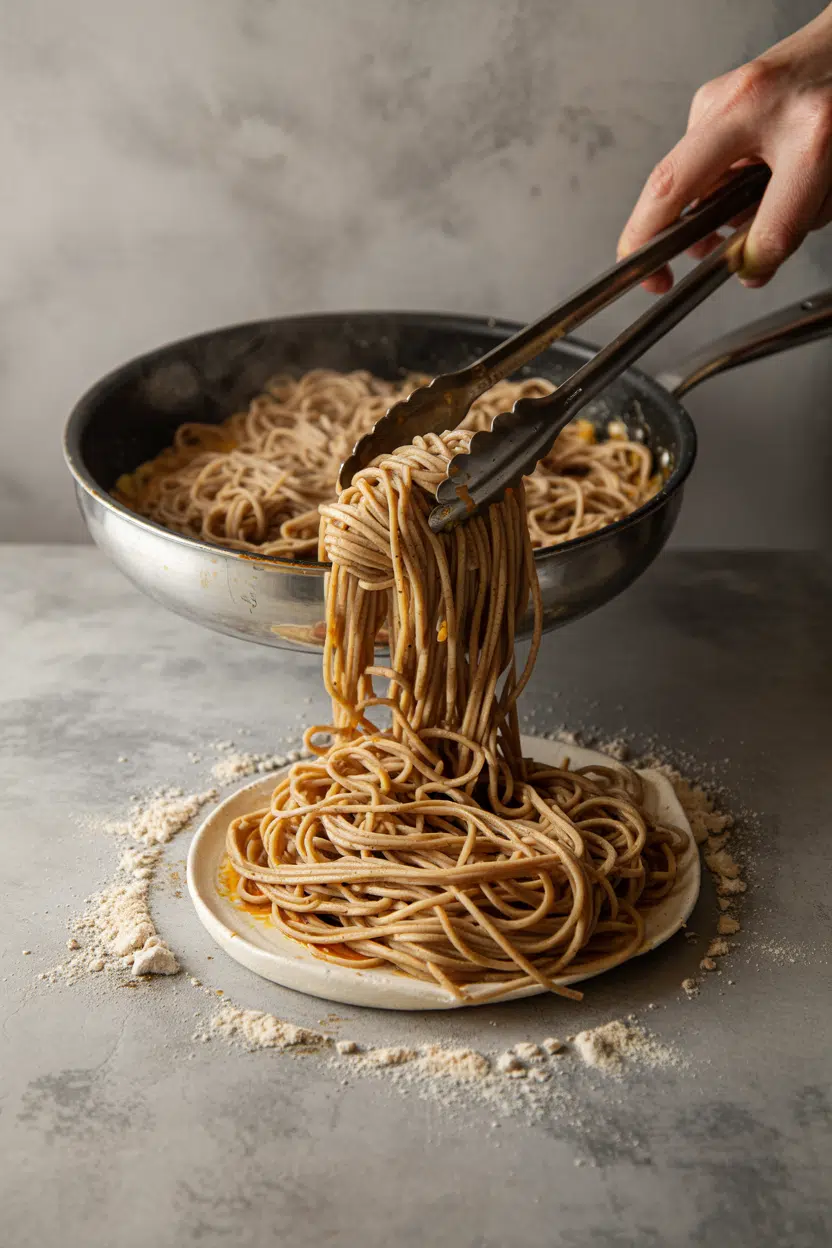
Soba has a moderate, clearly defined flavor - it doesn't fade into the background the way white wheat pasta does.
The dominant note is toasted buckwheat nuttiness, similar in character to lightly roasted oats or whole-grain rye bread, layered over a mild earthiness.
There's a faint natural sweetness that comes through particularly in cold preparations, where the noodle isn't competing with a hot broth.
Heat softens the earthiness slightly and makes the aroma more pronounced - you'll catch a bready, grainy smell when the noodles hit boiling water.
Texture changes significantly depending on temperature. Hot soba has a slippery, tender surface that yields quickly; cold soba firms up and turns springy, which is why zaru soba - the chilled preparation - has such a satisfying bite.
How to Use Soba Noodles
Soba splits cleanly into two service styles: hot and cold. Both are worth knowing, because the noodle behaves differently in each and calls for different pairings.
For cold preparations, boil the soba just until tender (typically 4-6 minutes), then shock it immediately in ice water to stop cooking and firm up the texture.
Zaru soba is the classic result - chilled noodles on a bamboo tray, served alongside a soy-dashi dipping broth, grated daikon, scallion, and a small amount of wasabi.
The scallion is traditional here; if you're out, swapping out scallion is worth planning for before the dish suffers. Nori adds a briny backdrop that works well with the earthy buckwheat; understanding what makes nori distinct explains why the pairing is so consistent across Japanese preparations.
For hot service, kake soba - noodles in a clear soy-dashi broth - is the foundational preparation.
Tempura soba adds crispy fried shrimp or vegetables alongside the broth, keeping the crunch separate from the liquid.
Soba also works in stir-fries: parboil the noodles, then toss them briefly over high heat with sesame oil, soy, and vegetables.
Avoid heavy cream sauces - they overpower the buckwheat's nuttiness entirely.
| Method | Best For | Tip |
|---|---|---|
| ❄️ Cold/Chilled | Zaru soba, sesame salads, daikon-scallion bowls | Ice-shock immediately after boiling for the best springy texture |
| 🍲 Hot Broth | Kake soba, tempura soba, nabemono | Don't boil in the broth - add pre-cooked noodles at the end |
| 🥢 Stir-Fried | Yakisoba-style dishes, quick weeknight bowls | Parboil first, then finish in a very hot pan with minimal liquid |
| 🥗 Dressed/Salad | Cold sesame-soy noodle salads, grain bowls | Toss with sesame paste or tahini dressing while noodles are still cold |
How to Buy and Store Soba Noodles
At the grocery, check the ingredient label first. 100% buckwheat (juwari) soba will be dark gray-brown, with a coarse, textured surface. Ni-hachi blends look smoother and lighter - that's fine for most cooking, but not for gluten-free needs.
For fresh soba, look for pliability and a faint toasted smell; dry, cracked fresh noodles are past their window.
Store dried soba in a cool, dry pantry in its original sealed packaging or an airtight container - it will keep for months to a year.
Fresh soba goes in the refrigerator and should be used within 3-5 days.
Cooked soba stays good for 2-3 days refrigerated, though it will clump; rinse with cold water before using again.
For signs that stored noodles have turned, the guide on soba noodles spoilage signs covers what to look for.
The dipping broth matters almost as much as the noodle itself. If your pantry is missing dashi, the roundup on alternatives to dashi powder is a useful reference before you start.
Where to Start With Soba
New to soba?
Begin with zaru soba - it's the simplest preparation and shows the noodle's flavor without interference.
Boil, shock in ice water, and serve cold with a store-bought mentsuyu or a simple soy-dashi dip.
Once the cold version makes sense, move to kake soba in a hot broth.
If soba isn't available, swapping out soba noodles outlines the closest alternatives worth trying.
The buckwheat character is genuinely hard to replicate, however - when you can find it, use it.
Frequently Asked Questions
Mostly, yes - soba is a Japanese noodle made primarily from buckwheat flour. However, many commercial soba blends include wheat flour, so not every soba is 100% buckwheat. Only juwari soba is purely buckwheat with no wheat added.
Only 100% buckwheat (juwari) soba is gluten-free. Most packaged soba contains wheat flour and is not safe for celiac or gluten-sensitive diets. Always read the full ingredient list, not just the front label.
Most dried soba cooks in 4-6 minutes in boiling unsalted water. Start checking at 4 minutes - soba overcooks quickly and turns mushy. For cold service, drain and transfer immediately to ice water.
Cold soba is dipped strand by strand into a small cup of soy-dashi tsuyu, often with wasabi stirred in. Hot soba is eaten directly from the broth bowl with chopsticks and a spoon for the soup.
Yes, cooked soba keeps for 2-3 days refrigerated. The noodles will clump together, so rinse them under cold water and toss briefly before using. Texture is best on day one.



