
Red currants are the closest stand-in for pomegranate seeds, used 1:1, because they are just as tart and just as red. They are mostly a summer fruit, so the year-round swap is dried tart cherries or dried cranberries, which keep the sourness but chew instead of pop.
No fruit copies the crisp seed inside each aril, so add a spoonful of toasted pistachios or pecans if you want that crunch back. Recipes that call for pomegranate juice or molasses need a different fix, because those season the dish instead of topping it.
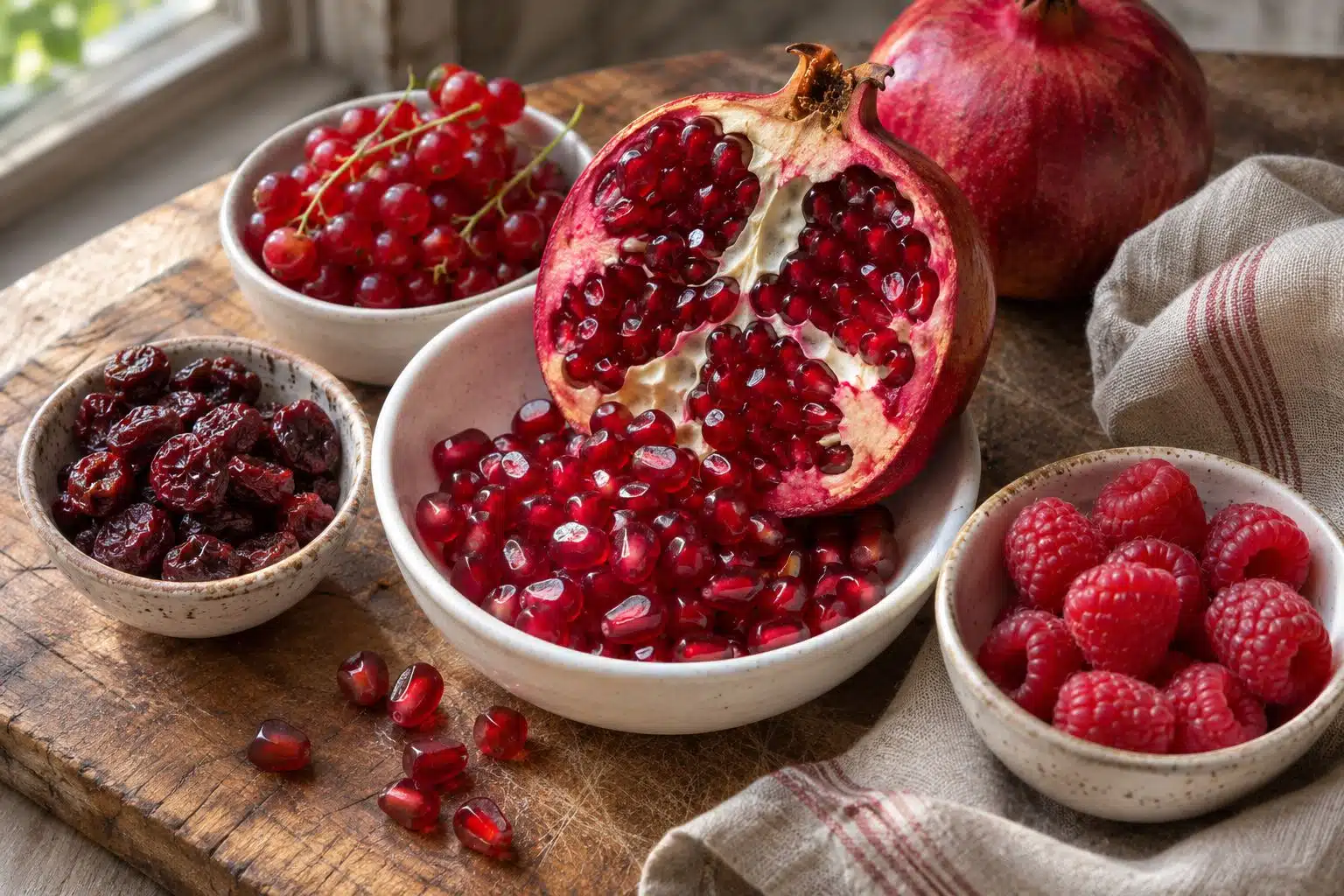
What Do Pomegranate Seeds Do in a Dish?
Each red, juicy aril (the part everyone calls a pomegranate seed) adds three things at once, and the dish decides which one you can't lose.
Remember it later
Planning to try this recipe soon? Save it for a quick find later!
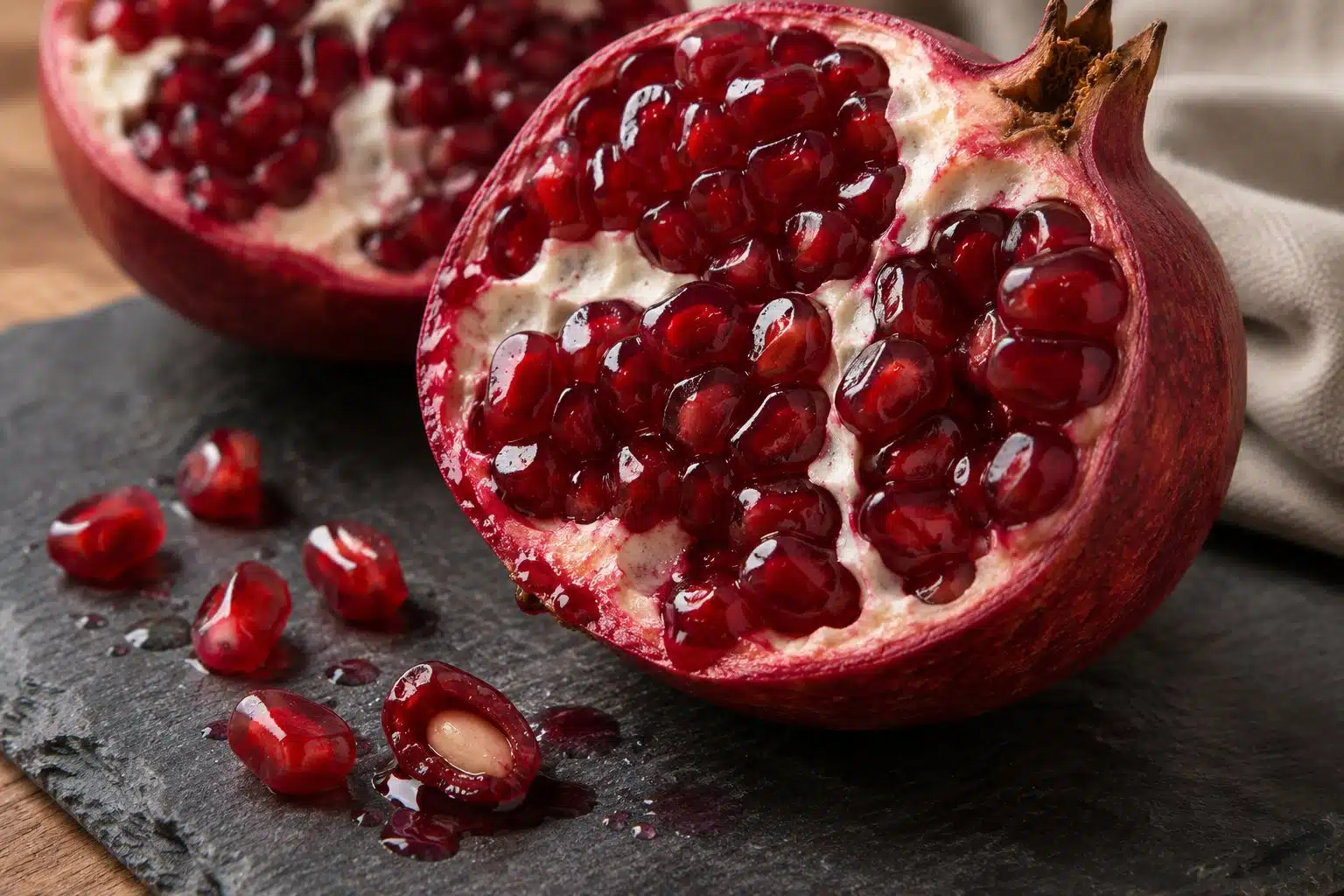
- Sour juice: Each aril bursts with tart-sweet juice that cuts through salty feta, rich lamb, and creamy dips such as labneh.
- Crunch: A small crisp seed sits inside every aril, so the bite is a quick pop followed by a light crunch.
- Red color: The ruby red stands out on green leaves, pale grains, and white yogurt, which is half the reason cooks use it as a garnish.
In a salty, creamy dish such as a Mediterranean grain bowl with feta, the sour burst matters most, so red currants or dried tart cherries do the job.
A salad that is already sharp, like fattoush with its sumac and lemon, loses little without them. Nigella.com says it has found no good substitute for the seeds and suggests extra herbs or pickled onions instead.
The Best Pomegranate Seed Substitutes, Ranked
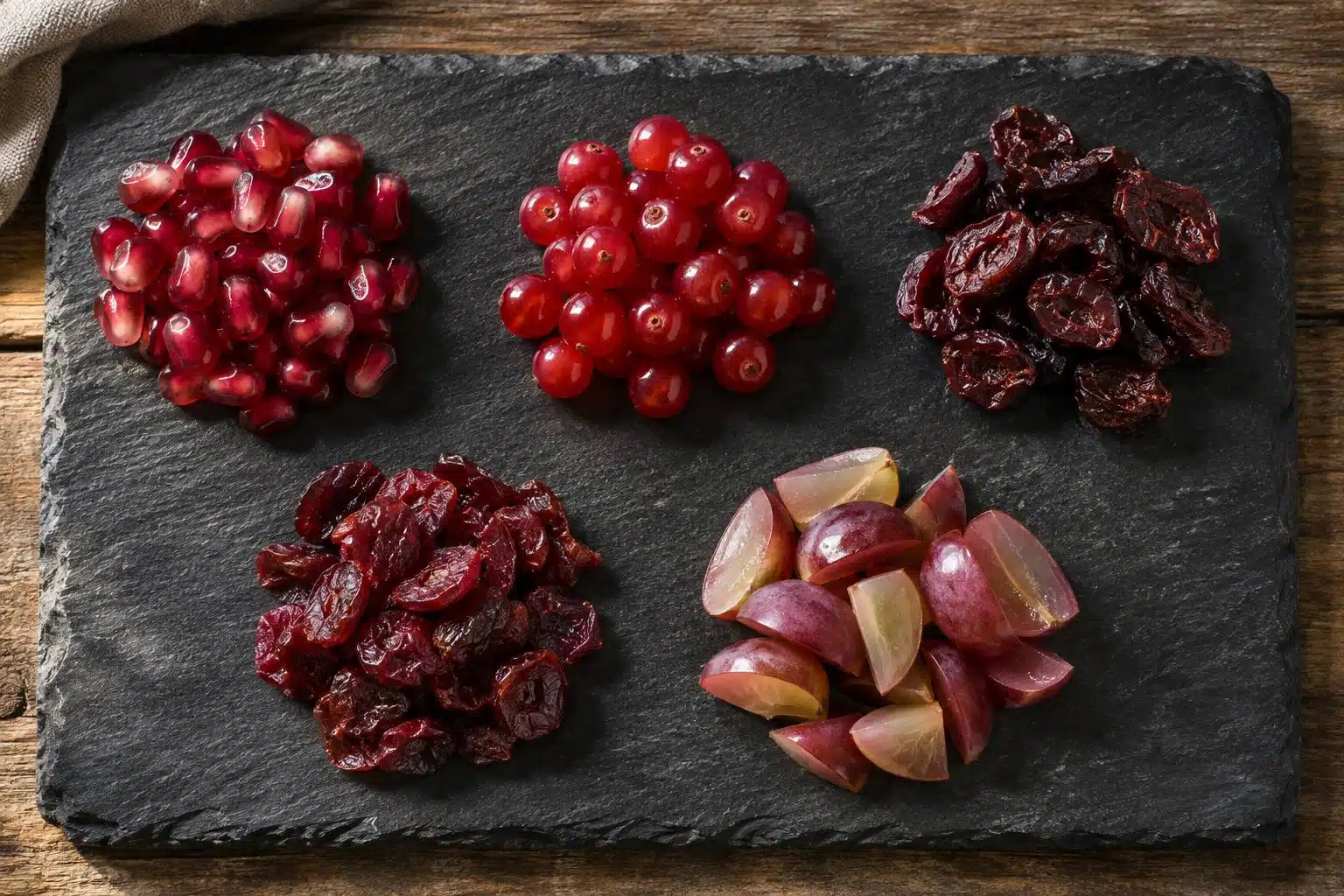
These six swaps are ranked by how closely they copy the sour burst and the red color. Every ratio is by volume, so ½ cup of seeds becomes ½ cup of the swap.
| # | Substitute | Best For | Ratio | Key Note |
|---|---|---|---|---|
| 1 | Red Currants | 🥗 Salads | 1:1 | Tart and juicy, summer only |
| 2 | Dried Tart Cherries | 🍳 Grain Bowls | 1:1 | Sour but chewy |
| 3 | Dried Cranberries | ✨ Everyday | 1:1 | Sweeter, easy to find |
| 4 | Raspberries | 🍰 Desserts | 1:1 | Soft, bleeds pink |
| 5 | Red Grapes | 🧀 Boards | 1:1 quartered | Sweet, needs lemon |
| 6 | Toasted Nuts | 🥜 Crunch | 1-2 Tbsp | Crunch only |
Only the currants copy both the tartness and the juicy pop. The dried fruits give up juice for chew, and the nuts only bring crunch.
1 – Red Currants
Use red currants 1:1. Fresh red currants are small, round and glossy, and their high acid content makes them clearly tart, which is the job the juice does in the original.
Pull the berries off the stems with a fork and add them at the last minute, since they leak when they sit in dressing. Taste the salad first, and add a little honey to the dressing if the currants make it too sharp.
- Works in: leafy salads, grain bowls, and roasted vegetables, where a juicy red bite is the point.
- Fails when: you shop outside summer, because red currants ripen from mid to late summer and are hard to find fresh the rest of the year.
2 – Dried Tart Cherries
Use dried tart cherries 1:1, and snip large ones in half so the pieces are close to the size of a seed. Sour cherries suit savory dishes well, which makes them the best year-round pick for rice, grains, and roasted meat.
Some brands add sugar, so read the label and cut the sugar in your dressing if the cherries are sweetened. If they feel leathery, soak them in warm water for 10 minutes, then drain and pat them dry.
- Works in: grain bowls, pilafs, and with roast lamb or chicken, where chew is welcome.
- Fails when: the dish needs a juicy burst, because dried fruit is chewy and the juice is gone.
3 – Dried Cranberries
Use dried cranberries 1:1. Dried cranberries are the easiest swap to find, and they are sour enough to stand in for the seeds, though neither fresh nor dried cranberries have the same crunch.
Most dried cranberries are sweetened, so they taste sweeter than pomegranate seeds. Check the label for added sugar, and add a squeeze of lemon to the dressing to bring the sourness back.
- Works in: kale salads, grain bowls, and yogurt bowls, mixed with chopped nuts.
- Fails when: the salad is delicate, because the dense, sweet pieces overpower soft leaves.
4 – Raspberries
Use fresh raspberries 1:1, torn in half. They look right and taste tart, but they are soft, so they break apart and stain everything pink if you toss them in.
Fold them in at the table, or scatter them on top after you plate. Frozen raspberries are too wet for a garnish, so keep them for dressings and sauces.
- Works in: yogurt bowls, desserts, and cheese boards, where a pink tint looks intended.
- Fails when: the dish sits or is served warm, because raspberries collapse within minutes.
5 – Red Grapes
Quarter red grapes and use them 1:1. They give you juicy pops and a red-purple color, but they are much sweeter and almost never sour.
Add a squeeze of lemon juice to the dressing to make up for the missing tartness, and the grapes work in a fruit salad or on a cheese board.
- Works in: fruit salads, cheese boards, and chicken salad, where sweetness is fine.
- Fails when: the dish is rich or savory, because grapes can't cut fat the way pomegranate does.
6 – Toasted Nuts for the Crunch
No fruit matches the crisp seed, so add 1 to 2 tablespoons of chopped toasted pistachios, pecans, or slivered almonds per serving next to one of the fruit swaps. Toast them in a dry pan until fragrant.
Nuts bring crunch and a little richness but no sourness, so they work alongside the fruit, not in place of it.
Which Swap Fits Which Dish?
| If You're Making | Pick | Why |
|---|---|---|
| Leafy Salad | Red currants | Juicy and tart against bitter leaves |
| Grain Bowl | Dried tart cherries and pistachios | Chew and crunch hold up in warm grains |
| Roasted Lamb | Dried tart cherries | Sourness cuts the fat |
| Yogurt or Labneh | Torn raspberries | Pink and soft against creamy |
| Cheese Board | Quartered red grapes | Sweet against salty cheese |
The table matches each dish to the job the seeds do in it, so a creamy dip gets a soft fruit and a fatty roast gets a sour dried one.
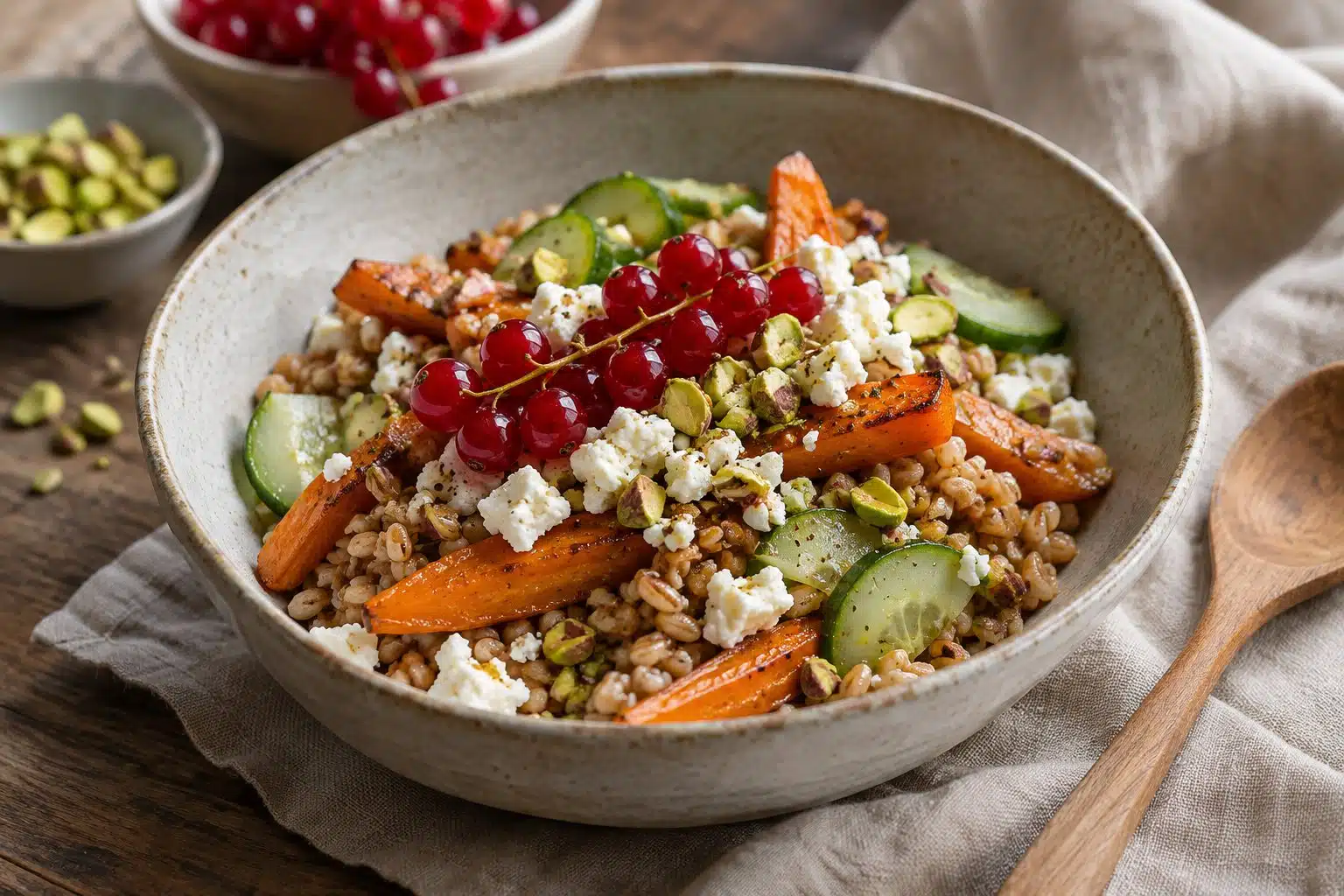
Heat is the thing to watch. Fresh berries soften and bleed in warm dishes, so add currants and raspberries at the table, and let the dried fruits go in with the grains.
What If the Recipe Calls for Pomegranate Juice or Molasses?
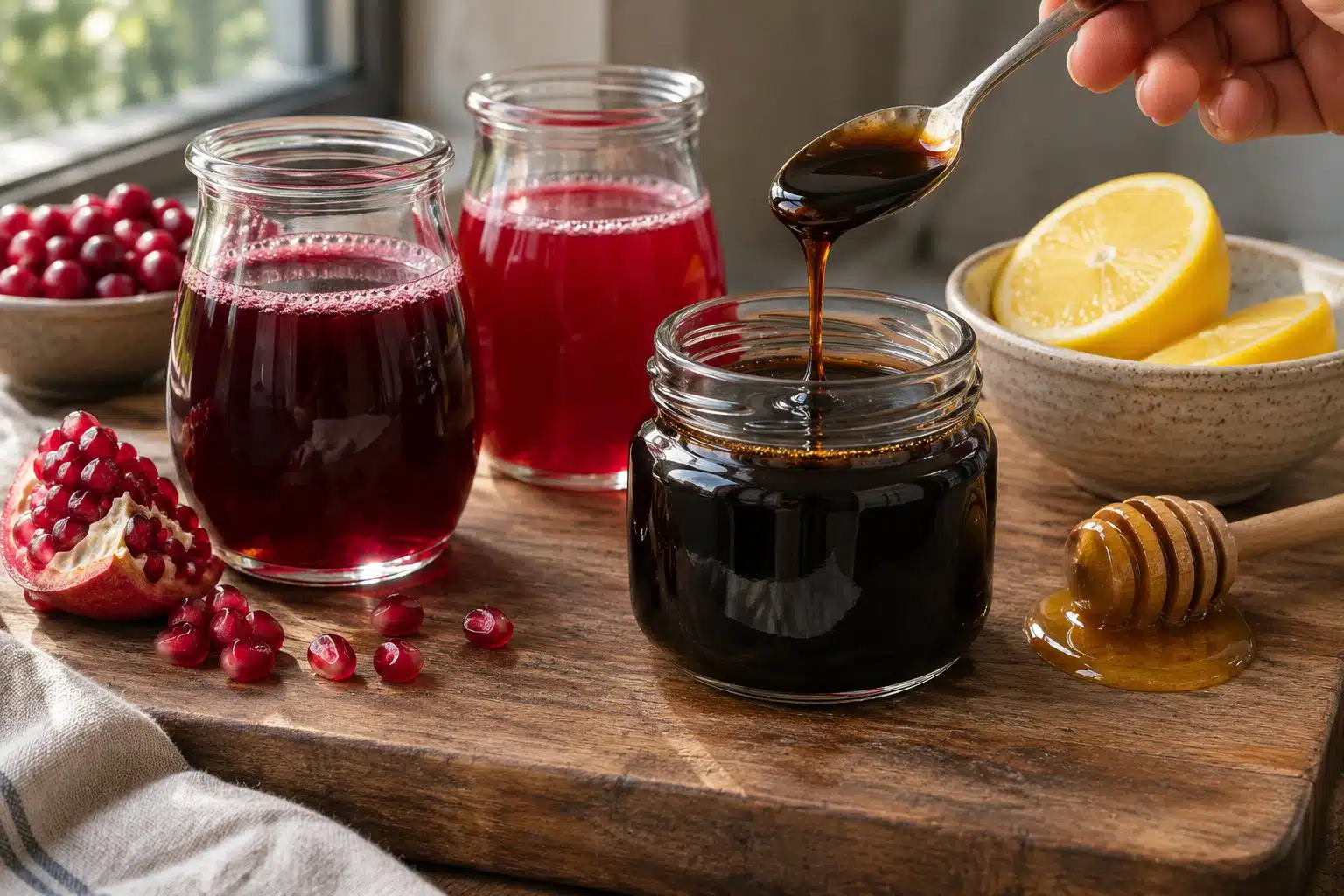
Juice and molasses season the whole dish, so a fruit garnish can't replace them. You need something sour, a little sweet, and dark red.
Pomegranate Juice
Use unsweetened cranberry juice 1:1, which is the closest in color and sourness. If the dressing tastes too sharp, stir in a teaspoon of honey.
When a recipe wants the real juice, Nigella.com says bottled works only if it is fresh, unsweetened juice, not a sweetened juice drink.
Pomegranate Molasses
Pomegranate molasses is juice cooked down until it is thick, dark and sour, and some brands add sugar.
Stews such as Persian fesenjān and meat marinades get their sweet-sour flavor from it. Three pantry swaps get close.
- Lemon juice and honey: Mix equal parts and use 1:1, which is the fastest fix and tastes bright.
- Balsamic vinegar: Start with ¾ of the amount and adjust, knowing that balsamic vinegar turns the dish darker and more wine-like.
- Cranberry juice: Simmer it with a tablespoon of sugar until it thickens, then start with half the amount.
Can I Just Leave the Seeds Out?
Yes, when the dish is already sharp and the seeds are only garnish. Add extra herbs or quick-pickled red onion so the plate does not look bare.
How Many Pomegranates Make a Cup of Seeds?
One medium fruit yields roughly 1 to 1½ cups of seeds, depending on its size and how fully you pick them out. A single whole fruit is enough for most salads and bowls.
Can I Use Pomegranate Juice Instead of Seeds on a Salad?
In the dressing, yes. A spoonful of unsweetened juice can replace part of the lemon juice or vinegar and adds sourness and a pink tint, but it gives no pop or crunch on top.
Do Dried Cherries and Cranberries Need Soaking?
Not if they are soft. If they feel stiff, soak them in warm water for 10 minutes, drain, and pat them dry so they don't water down the dressing.



