
You spot a small jar of zaatar at a Middle Eastern grocery, and the label doesn't tell you much beyond the name. Open it and you get a hint: a bright, lemony-herb smell that cuts through immediately.

This Levantine spice blend sits somewhere between a finishing sprinkle and a full-on condiment - closer in spirit to dukkah than to a single dried herb, but far more tart and less nutty.
Zaatar is a Levantine herb-and-spice blend of dried thyme, ground sumac, and toasted sesame seeds. It's tangy, herbal, and mildly savory - used as a finishing sprinkle, a wet paste with olive oil, or a dry rub for meat and bread.
What Is Zaatar?
Zaatar is a dried herb-and-spice blend from the Levant - Lebanon, Syria, Palestine, and Jordan all have their own versions. At its core, it combines dried wild thyme (sometimes oregano or hyssop), ground sumac, toasted sesame seeds, and salt.
Remember it later
Planning to try this recipe soon? Save it for a quick find later!
The name "zaatar" actually refers to both the blend and the wild herb at its base - a source of real confusion on spice shop labels. You'll also see it spelled za'atar, zahatar, or zahter depending on transliteration from Arabic.
Regional recipes vary significantly: Palestinian blends tend to be more sumac-forward and sour, while Lebanese versions often lean heavier on sesame.
Most commercial blends sold in Western grocery stores are mild-to-moderate in sourness and herb intensity, which makes them accessible for first-time buyers. However, the best jars come from specialty Middle Eastern shops, where turnover keeps the sumac fresh and fragrant.
What Does Zaatar Taste Like?
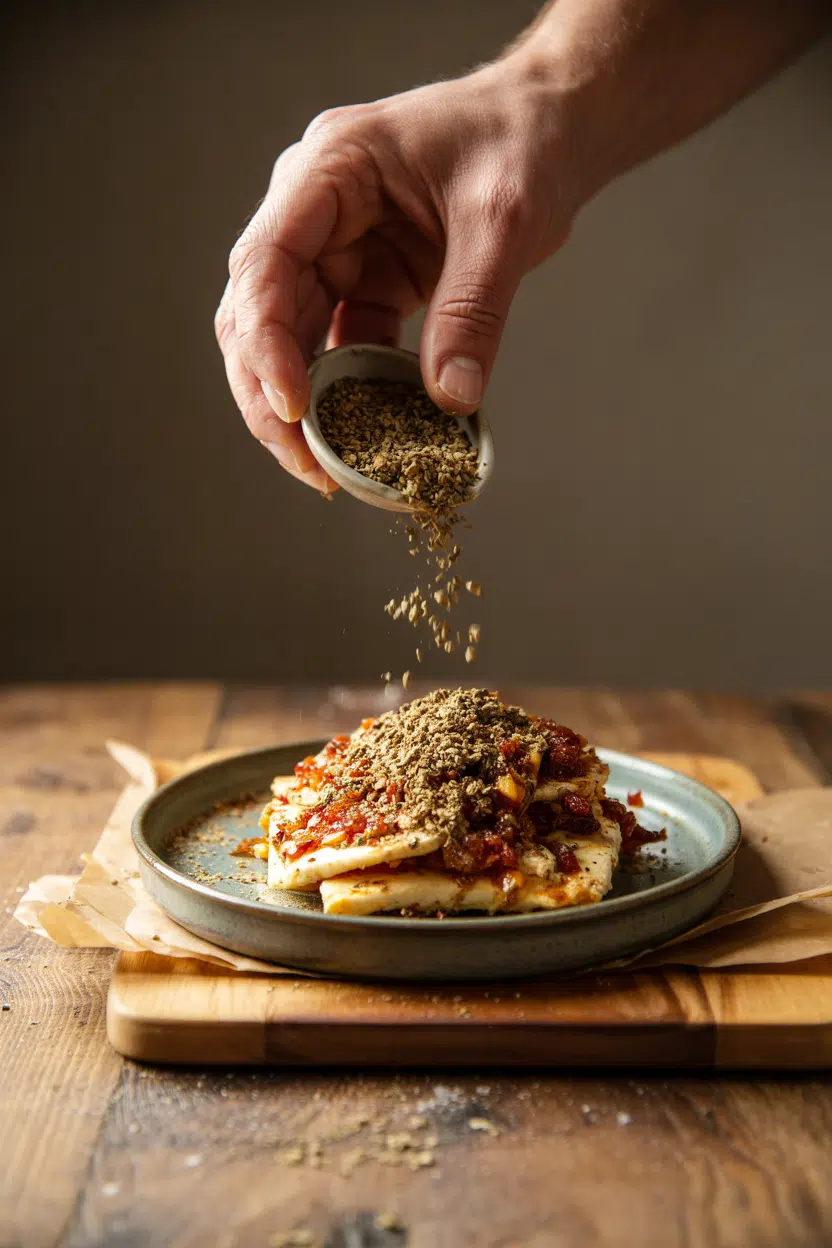
Sumac drives the first impression: a sharp, citrus-like sourness that's closer to lemon zest than vinegar. Underneath that, the dried thyme or oregano adds a resinous, slightly piney earthiness. Then the toasted sesame seeds round everything out with a quiet, nutty warmth.
Heat changes the profile. Used as a finishing sprinkle, you get the full sour-herb brightness.
Baked or roasted into a dish, the sumac mellows and the thyme turns warmer and more savory. If you've had dried oregano in a Mediterranean marinade, you already know half the flavor - zaatar adds the citrus kick and sesame depth that oregano alone can't provide.
How to Use Zaatar
Zaatar pulls double duty: it works dry as a finishing sprinkle or wet as a paste mixed with olive oil. The wet version is where it shines most.
Stir a tablespoon of zaatar into two tablespoons of good olive oil, then brush it over flatbread dough before baking - that's manakish, one of the most common Levantine breakfasts.
| Method | Best For | Tip |
|---|---|---|
| 🥗 Finishing Sprinkle | Labneh, hummus, warm rice, roasted vegetables | Add after plating - heat kills the bright sumac note |
| 🍞 Olive Oil Paste | Flatbreads (manakish), brushed on pita before toasting | Use a 1:2 ratio of zaatar to oil for even spread |
| 🍗 Dry Rub | Chicken thighs, fish fillets, lamb chops before grilling | Press firmly into the protein; let it sit 15 minutes minimum |
| 🥗 Stirred Into Dressings | Vinaigrettes, yogurt-based sauces, marinades | Whisk with lemon juice and olive oil for an instant salad dressing |
Zaatar fits naturally into Lebanese and Palestinian cooking, though it works in any context calling for a lemony-herb hit. Classic pairings include labneh or plain yogurt, roasted eggplant, cauliflower, and cucumber-tomato salads.
Chicken and lamb take it well as a dry rub. For something less expected, try a thin spread of zaatar-oil on toast with a drizzle of honey - the savory-sweet contrast works.
Avoid pairing it with delicate floral teas or very sweet desserts without a savory anchor - the tartness fights rather than complements.
How to Buy and Store Zaatar
A good jar shows visible sesame seeds and coarse reddish-brown sumac flecks. If the blend looks uniformly gray or powdery with no seeds, it likely lacks sufficient sumac or fresh thyme - skip it.
Smell before buying when possible; a flat, dusty scent means the sumac has oxidized and the thyme has faded.
Store zaatar in an airtight, opaque container away from heat and direct light. The sesame seeds are the first to go stale, so use your nose as the guide.
Full zaatar storage life details break down the storage window by form and conditions - but in practical terms, opened zaatar stays bright for about three to six months. Blends made with olive oil already mixed in should be refrigerated and used within a week.
Where to Start with Zaatar
If you're new to it, start with the labneh-and-olive-oil dip - it requires nothing but a bowl and five minutes. That single combination shows you everything: the tang from sumac, the herb backbone, and the sesame texture.
From there, consider a dry rub on chicken thighs before roasting. If you want to experiment with the individual components, sumac swaps and zaatar swaps can help you understand what each element brings to the blend.
- 🫙 First use - Mix with olive oil and spoon over labneh or thick yogurt
- 🍗 Second use - Press onto chicken thighs and roast at high heat
- 🫓 Third use - Brush on pita or flatbread dough before baking
Frequently Asked Questions
It's both, depending on context. As a blend, zaatar is a spice mix combining dried herbs and ground sumac. The word also names the specific wild herb - a type of thyme or hyssop - used as its base ingredient.
Yes, and raw is often best. Sprinkling it directly over labneh, yogurt, or eggs without cooking preserves the bright sumac tang and herbal aroma. Heat mellows those notes significantly.
The core trio is dried thyme (or oregano/hyssop), ground sumac, and toasted sesame seeds. Most blends also include salt, and some regional versions add cumin, fennel seeds, or dried marjoram.
Not spicy at all in the chili-heat sense. The intensity comes from tartness and herb pungency, not capsaicin. Children and heat-sensitive eaters generally tolerate it without any issue.
It won't become unsafe, but the flavor degrades. Stale zaatar loses its sumac tang first, then the thyme aroma flattens. If the blend smells like dusty paper rather than herbs, replace it.



