
You spot a squat jar of dukkah at a specialty store - coarse, sandy-looking, somewhere between a spice blend and a nut mix - and you're not quite sure what to do with it.
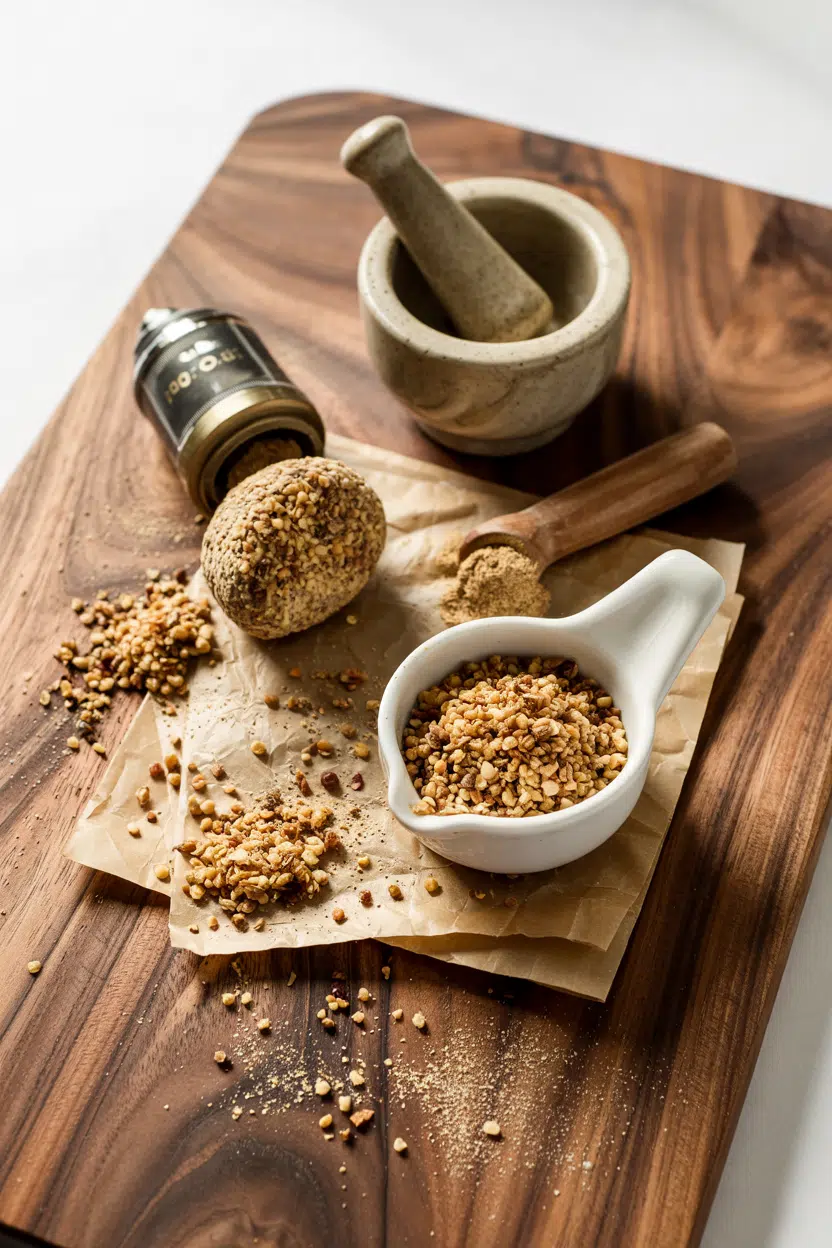
It's not as recognizable as storing dukkah correctly matters, but first you need to know what's actually in that jar and why it earns a permanent spot in your pantry.
Unlike single-note seasonings, this Egyptian blend brings crunch, warmth, and aroma all at once.
Dukkah is an Egyptian dry blend of toasted nuts, sesame seeds, and warm spices. It's coarse in texture, moderately intense in flavor, and used primarily as a dip base, finishing sprinkle, or crust for proteins. Store in an airtight container and use within 1-3 months.
What Is Dukkah?
Dukkah - also spelled duqqa, dukka, or dokka - is a coarsely ground dry blend from Egypt with roots stretching back centuries in North African and Eastern Mediterranean kitchens.
Remember it later
Planning to try this recipe soon? Save it for a quick find later!
It belongs to the dry spice-and-nut blend category, meaning it's neither a paste nor a pure powder but something textured in between.
The base is always toasted nuts, typically hazelnuts or almonds, combined with sesame seeds, coriander seeds, and cumin.
From there, recipes vary widely by household and region - some versions add dried mint, black pepper, or fennel seeds, while others keep it minimal and let the hazelnuts speak.
- 🌰 Hazelnut dukkah - the classic Egyptian version; rich and slightly sweet from the roasted nuts
- 🫘 Almond dukkah - slightly drier and milder, popular in home kitchens as a nut-swap
- 🌿 Seed-only dukkah - made without tree nuts using sunflower or pumpkin seeds; suits nut-free diets
- 🧂 Spiced variations - some blends add baharat, smoked paprika, or chili for additional layers
No breadcrumbs means it's naturally gluten-free, though commercial blends sometimes add them as filler.
What Does Dukkah Taste Like?
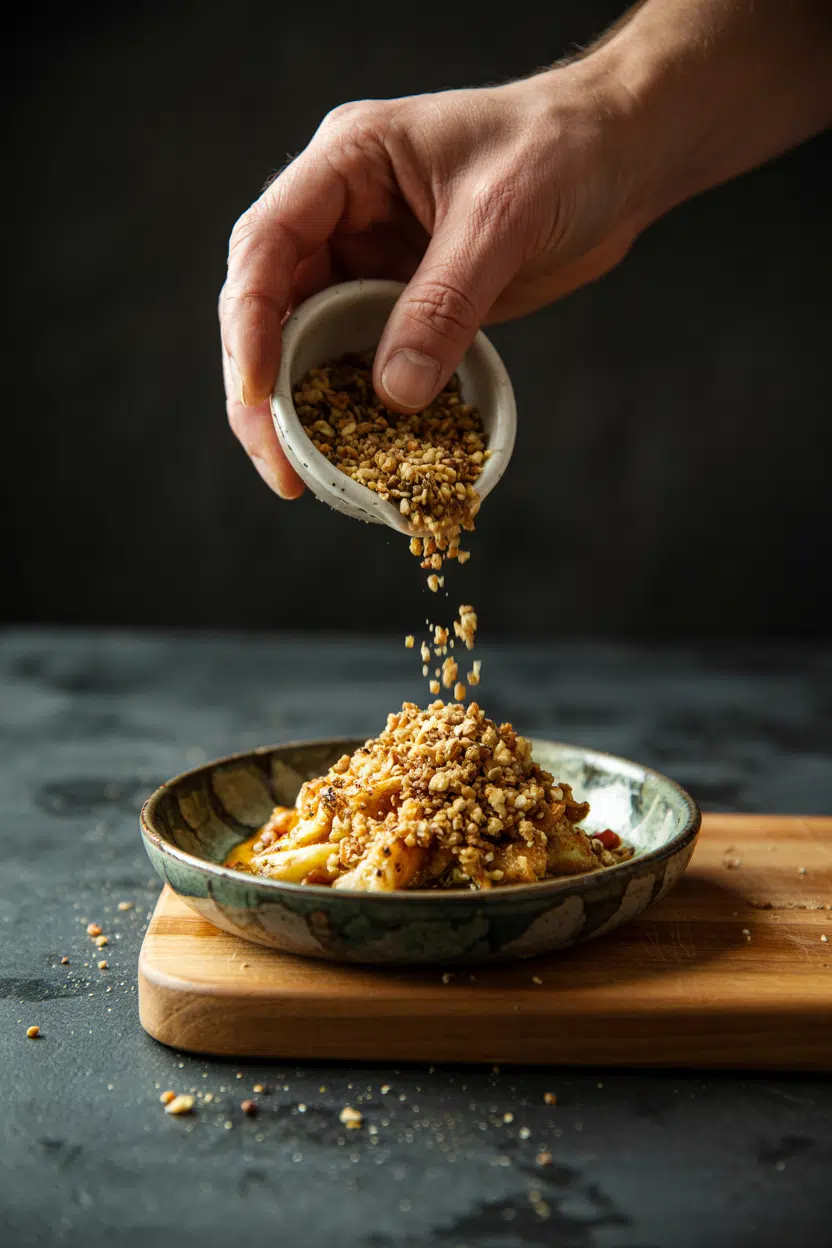
Think of dukkah as toasted sesame-nut granola that went savory. The dominant notes are nutty and toasty, with a rounded earthiness from coriander seeds and a low, warm hum of cumin underneath.
It reads closer to za'atar than to a hot spice blend - there's no significant heat.
If you're familiar with the taste of ras el hanout, dukkah is gentler and crunchier, without the floral or bitter notes that blend can carry.
The texture is part of the flavor experience. Each bite delivers a short crunch followed by a powdery finish - that contrast is what makes it work as a dip coating rather than just a seasoning.
How to Use Dukkah
The most traditional method involves two small bowls: one of good olive oil, one of dukkah. Tear bread, dip it in the oil, press it into the dukkah.
That's the Egyptian street-food move, and it works because the oil carries the fat-soluble aromatics straight into the crust.
Beyond bread, dukkah adapts well across a range of applications. Keeping roasted vegetables fresh is one concern, but getting them into the oven with a dukkah crust is a bigger reward - eggplant and carrots both take it well.
| Method | Best For | Tip |
|---|---|---|
| 🥗 Finishing Sprinkle | Hummus, grain bowls, labneh, salads | Add at the last second to preserve crunch |
| 🍗 Crust/Rub | Chicken, salmon, sea bass before roasting | Press firmly into an oil or egg-wash coating |
| 🫙 Dip Base | Bread dipping with olive oil, pita | Use a wide, shallow bowl for easy coverage |
| 🧈 Compound Butter | Steak, roasted carrots, finishing corn | Fold 1-2 tablespoon into softened butter |
| 🥣 Stirred-In | Yogurt, labneh, tahini dips | Mix gently - don't grind it down further |
If you're using alternatives to pita bread for the classic dip, flatbreads, sourdough, or even crackers all hold up.
For a richer preparation, making compound butter (herb) at home follows the same logic - dukkah folds into softened butter the same way herbs do, and it holds well for a week refrigerated.
Dukkah plays across Egyptian and Levantine cooking, but modern fusion kitchens have taken it further - scattered over avocado toast, mixed into vinaigrettes, or pressed into cheese logs as a coating.
How to Buy and Store Dukkah
Good dukkah should look coarse. Reject any jar where the contents have collapsed into a fine, uniform powder - that means either over-processing or moisture damage.
- ✅ Visible nut pieces - intact sesame seeds and chunky nut fragments signal fresh, coarse grind
- ✅ Fresh toasted aroma - should smell warm and nutty, not flat or musty
- ⚠️ Ingredient list check - confirm hazelnut vs almond if nut allergies are a concern
- ⚠️ No breadcrumbs - added fillers dilute the blend and can introduce gluten
Shelf life depends heavily on nut content. Pantry storage in a sealed container works for 1-3 months; refrigeration extends that to 4-6 months. For the full picture on storing dukkah correctly, fat oxidation from the nut oils is the main enemy - keep it away from heat and light.
Where to Start with Dukkah
Start with bread and olive oil. That single combination shows you what dukkah actually does - the crunch, the aroma, the way it coats without overwhelming.
If a blend runs out and you need dukkah swaps that work, za'atar with added crushed nuts comes closest in both function and flavor profile.
Move to proteins next. A dukkah-crusted salmon fillet or pressed-on chicken thigh is a fast, high-return use that requires almost no technique.
From there, the grain bowl and hummus applications follow naturally - you'll start seeing it as a textural seasoning, not just a dip.
Frequently Asked Questions
The core ingredients are toasted hazelnuts or almonds, sesame seeds, coriander seeds, and cumin. Most recipes add salt and sometimes dried herbs like mint. Commercial blends vary, so check the label for fillers like breadcrumbs.
Yes, traditional dukkah contains only nuts, seeds, and spices - no animal products. Always verify commercial blends haven't added dairy-based fillers, but standard recipes are fully plant-based.
Yes. Replace tree nuts with toasted sunflower seeds, pumpkin seeds, or a mix of both. The texture stays coarse and the flavor remains earthy, though you lose some of the richness hazelnuts or almonds provide.
At room temperature in a sealed container, 1-3 months. Refrigerated, it holds up to 4-6 months. Rancid-smelling or flat-tasting dukkah should be discarded regardless of date.
Za'atar is herb-forward - dried thyme or oregano with sumac and sesame - while dukkah leads with nuts and warm spices. Za'atar is finer in texture; dukkah is coarser and richer from the nut content.



