
Stracciatella cheese is fresh mozzarella curd torn into shreds and mixed with cream, so the closest swap is to rebuild it: tear a fresh mozzarella ball and soak it in heavy cream for about 30 minutes.
If you would rather buy something, burrata is the best stand-in, because its creamy center is stracciatella. Ricotta, mascarpone, cream cheese and cottage cheese also work, but they give you soft spoonfuls where stracciatella gives milky strands.
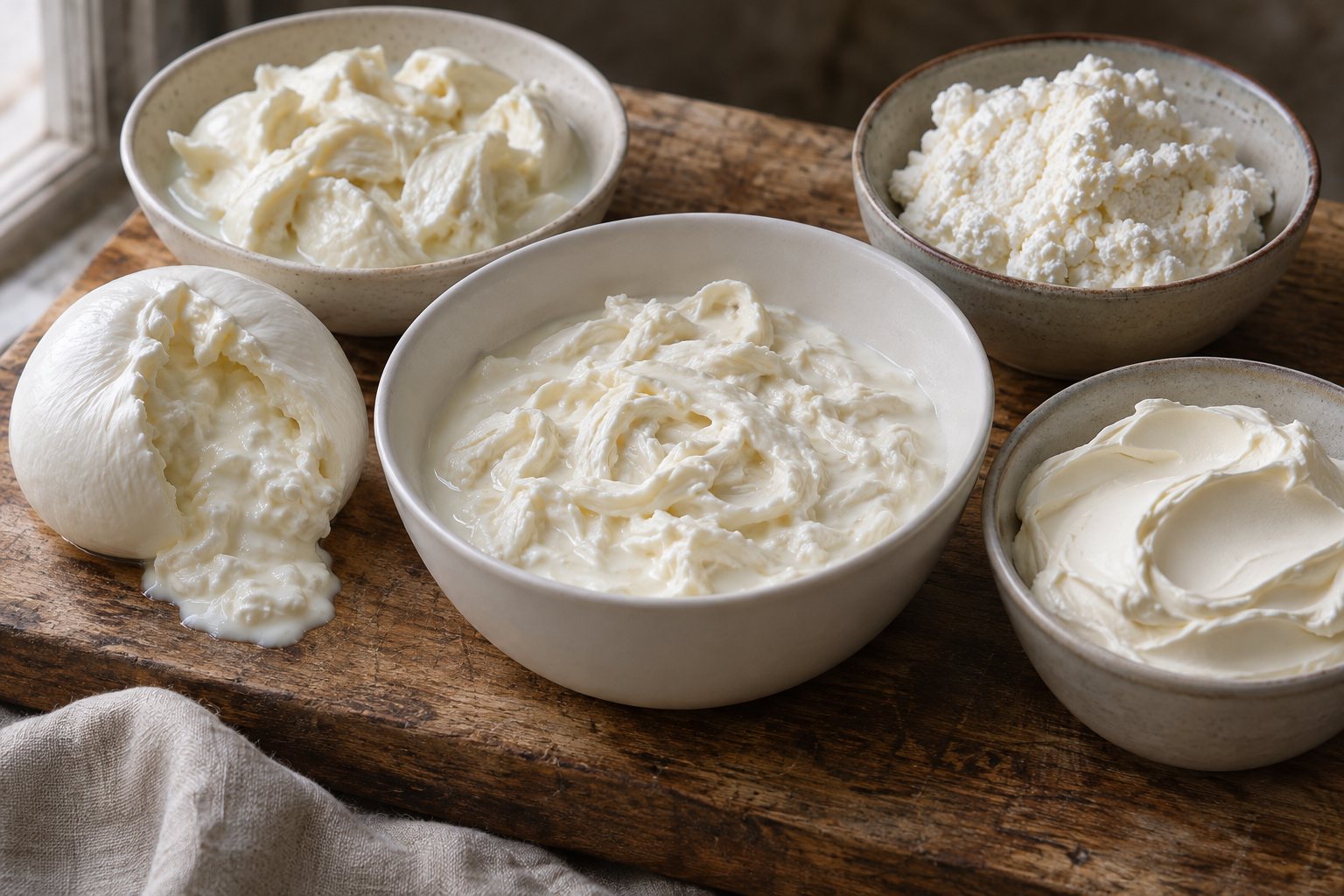
Torn fresh mozzarella soaked in heavy cream is the closest swap. Use it in equal volume and let it soak about 30 minutes.
Burrata is the best store-bought pick at equal volume, because its center is stracciatella.
Pick ricotta for baked fillings and mascarpone or thinned cream cheese for sauces, since none of them has strands.
What Does Stracciatella Do in a Dish?
Stracciatella is the filling of burrata: shredded mozzarella curd bound with cream. It tastes mild and milky with only a slight tang.
Remember it later
Planning to try this recipe soon? Save it for a quick find later!
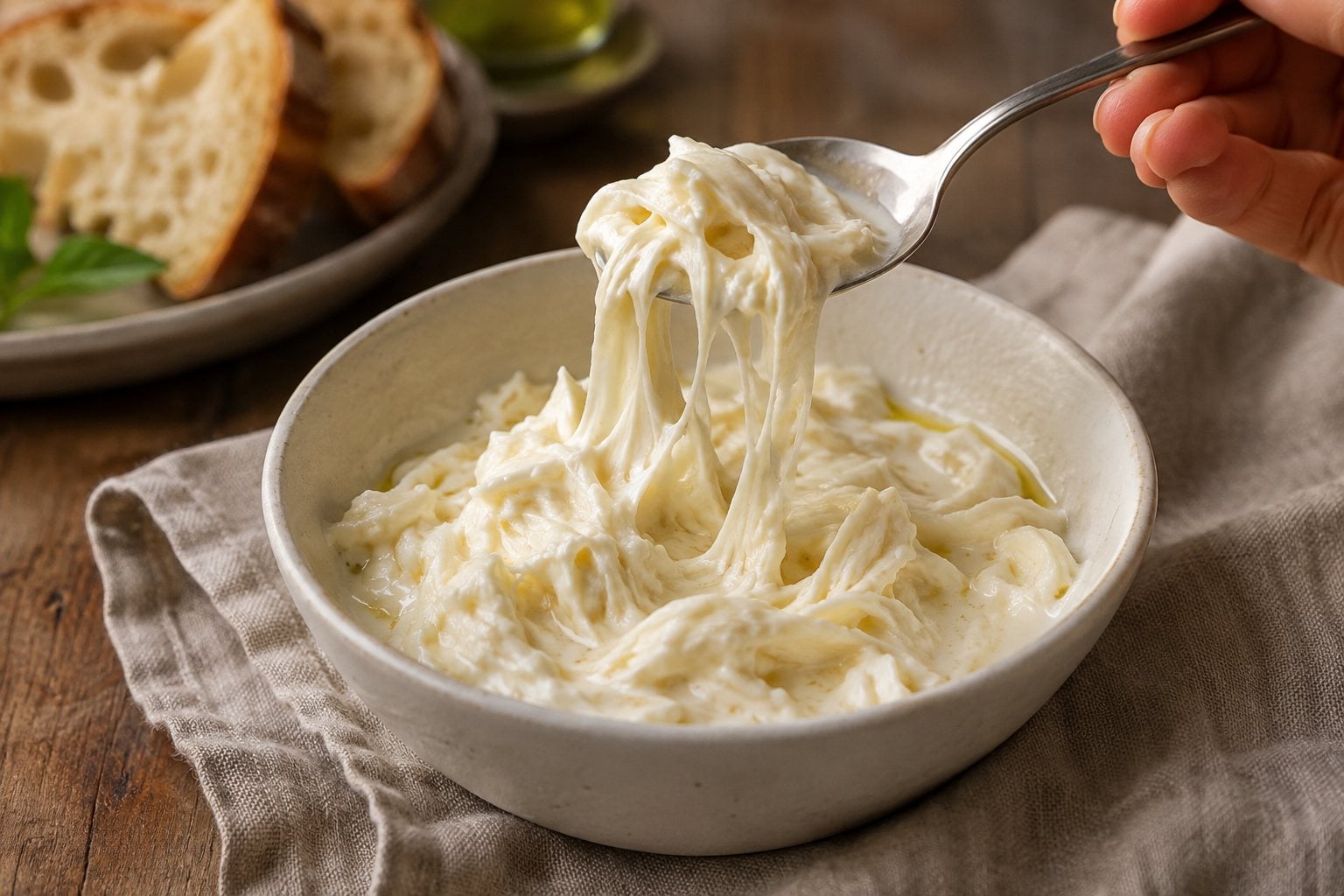
That mix does three jobs, and the swap you pick has to cover the ones your dish needs:
- Soft, milky fat: the cream loosens the shreds, so you can spoon them over hot or cold food.
- Strands: the torn curd gives a tender, stringy bite that ricotta's grains and mascarpone's smooth cream cannot copy.
- Mild flavor: it is only slightly tangy, so it sits on tomato, basil or hot pasta without taking over.
Cooks mostly use it as a finishing cheese. It goes on a pizza straight from the oven, over hot pasta where the heat softens it into a light sauce, or on tomatoes and toast.
For those jobs, your swap needs to be soft enough to spoon and mild enough to leave the tomato alone. In a baked filling, the strands disappear once everything is mixed, so you can give up the strands and pick on flavor and cost.
6 Best Substitutes for Stracciatella Cheese, Ranked
The list runs from closest to stracciatella to the swaps that need the most adjusting. The table gives each ratio and the one thing that changes in your dish.
| # | Substitute | Best For | Ratio | Key Note |
|---|---|---|---|---|
| 1 | Torn Fresh Mozzarella and Cream | ✨ Both | Equal volume | Closest strands |
| 2 | Burrata | ✨ Both | Equal volume | Same filling, plus shell |
| 3 | Ricotta and Cream | 🍳 Cooking | 1:1 | Grainy, mildly sweet |
| 4 | Mascarpone | ✨ Both | ¾ the amount | Richer, no strands |
| 5 | Thinned Cream Cheese | 🍳 Cooking | 1:1, thinned | Tangy, dense |
| 6 | Full-Fat Cottage Cheese | ✨ Both | Small dollops | Small curds, milder |
1 – Torn Fresh Mozzarella Soaked in Cream
This is how stracciatella is built, so it lands closest in strands, creaminess and mildness. Tear a ball of fresh mozzarella into thin shreds, pat them dry, and stir in cold heavy cream.
Let the bowl sit in the fridge for about 30 minutes so the shreds soak up the cream. We would start with 1 tablespoon of cream and a pinch of salt for every ½ cup of shreds, then add more cream a teaspoon at a time until the shreds look wet and loose.
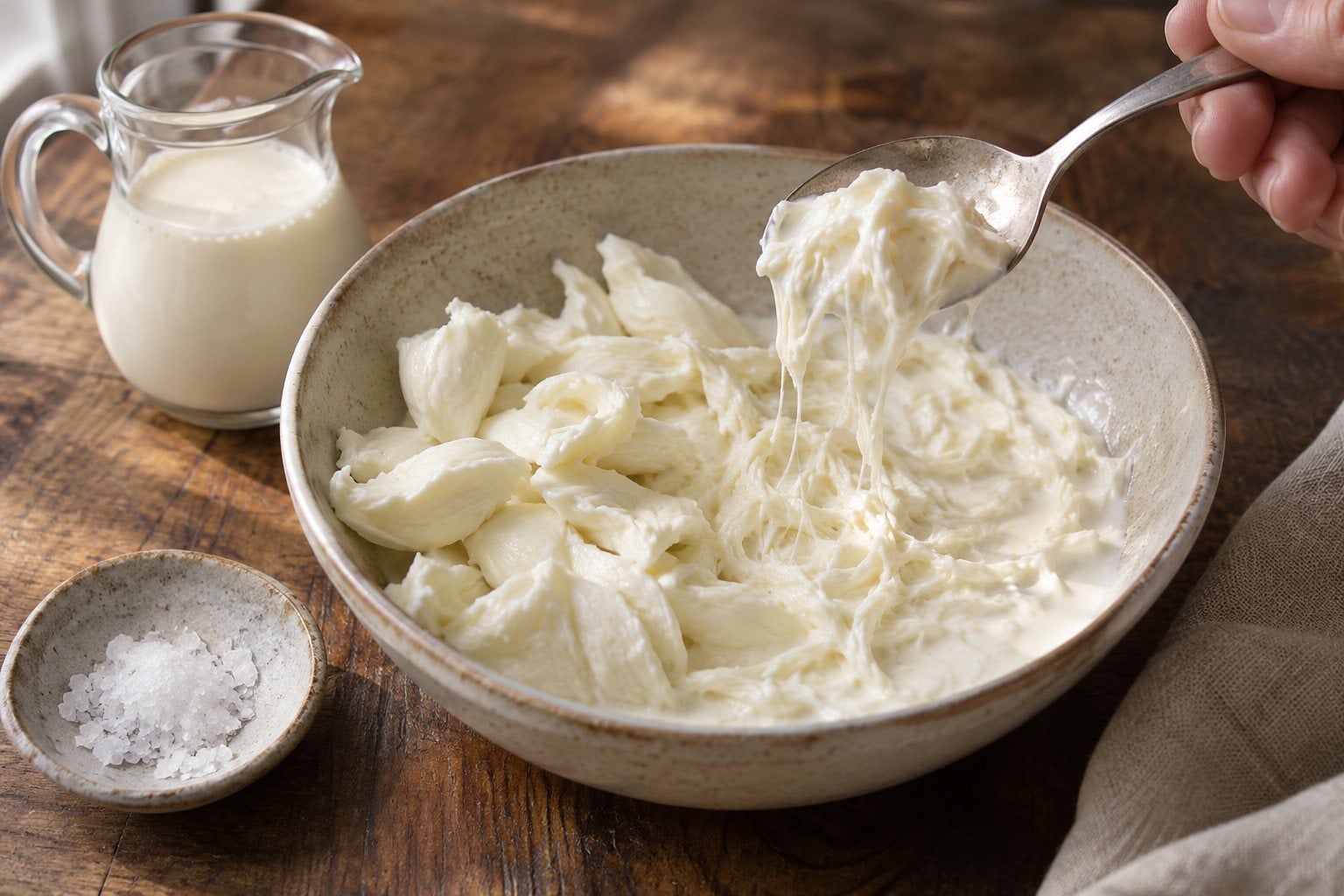
- Ratio: the finished mix replaces stracciatella at equal volume.
- Best for: pizza after baking, tomatoes, bruschetta and tossed pasta.
- Texture: soft strands in loose cream, a little less stringy than the real thing.
- Flavor: mild milk and cream with no tang.
Skip it if you can only find bagged shredded mozzarella, which is a poor base for this mix (see the warning below).
2 – Burrata
Burrata cheese is stracciatella wrapped in a mozzarella shell, so you are using the same filling. Cut the ball open, spoon out the center, and tear the shell into small pieces to fold in or leave on top.
Use equal volume. Take it out of the fridge about 30 minutes before serving, and add it after baking or after the pasta is drained, because it is a finishing cheese. The shell adds a chew that stracciatella does not have.
Sliced over tomatoes, it works the same way as in our tomato burrata salad. If the shop is out of burrata too, our burrata substitutes page lists what to use next.
- Ratio: equal volume of burrata filling and torn shell for stracciatella.
- Best for: cold plates, pizza after baking and hot pasta.
- Flavor: the same creamy taste as stracciatella, with a mild mozzarella shell.
Watch for: the center is slightly less liquid than stracciatella, so stir in a spoonful of cream if your dish needs a looser mix. It also keeps only a couple of days after purchase, so buy it close to the meal.
3 – Ricotta Mixed with Cream
Ricotta swaps 1:1 and is easy to find, but it is slightly grainy, mildly sweet and lower in fat than stracciatella. Stir in a spoonful of heavy cream or a little butter, plus salt and pepper, to make it richer and closer to the filling.
Ricotta's grains stay grains, so it wins where strands would vanish anyway. It makes a good filling for baked pasta, like the one in our stuffed shells with ricotta and spinach, and it also spoons well onto toast, pizza and pasta.
- Ratio: 1 cup of ricotta for 1 cup of stracciatella.
- Best for: baked fillings, pasta and toast.
- Texture: soft and fine-grained, with no strands.
Skip it if the dish is cold and the strands are the point, as on a plate of sliced tomatoes. Our ricotta substitutes guide helps when the tub is empty too.
4 – Mascarpone
Mascarpone is silky, spreadable and richer than stracciatella, with a buttery, faintly sweet taste. It suits creamy pasta sauces, salads and toast, but it has no strands at all.
Because it is thicker and richer, start with about three-quarters of the amount the recipe calls for and add more to taste. A pinch of salt helps, since the sweetness stands out most on tomatoes.
Mascarpone, covered in our mascarpone guide, is thick enough to spread on toast like butter, so it also works on crostini where stracciatella would run.
- Ratio: ¾ cup of mascarpone for 1 cup of stracciatella, then adjust.
- Best for: creamy sauces, pasta salads and spreads.
- Flavor: buttery and slightly sweet, richer than stracciatella.
Skip it if you want a light, milky topping, because mascarpone makes the plate heavier.
5 – Thinned Cream Cheese
Cream cheese is smooth, dense and tangier than stracciatella, so it only fits dishes that can take a little acid. Use it 1:1 in place of the creamy part, and thin it first so it spoons like stracciatella.
Stir in milk or cream a tablespoon at a time until it loosens. For strands, fold in torn fresh mozzarella, which brings the texture closer without adding more tang.
Start from plain cream cheese, not a flavored tub, because chive or garlic will run through the whole dish.
- Ratio: 1 cup of cream cheese, thinned with milk or cream, for 1 cup of stracciatella.
- Best for: pasta sauces, dips and spreads.
- Flavor: slightly tangy, so taste before you add lemon or vinegar elsewhere.
Skip it if the dish is a delicate cold plate, where the tang will be the first thing you taste.
6 – Full-Fat Cottage Cheese
Check the label, because cottage cheese comes in several fat levels. Full-fat has small, toothsome curds in a little milk and tastes milder and less tangy than low-fat versions.
It will not give you strands, but the small curds read as soft pieces. Use small dollops, not a 1:1 swap, on tomatoes, melon or berries, or blend it with cream and Parmesan for a pasta sauce.
- Ratio: start with ¾ cup of cottage cheese for 1 cup of stracciatella and add dollops as needed.
- Best for: fruit and tomato salads, and blended pasta sauces.
- Texture: small, separate curds in a little milk.
Skip it if you need a smooth cream, since the curds stay visible in anything you spoon it onto.
Which Swap Works for Which Dish?
Pick by the job the cheese does on the plate. Cold or finishing dishes need strands and a mild taste, and baked or sauced dishes can use any soft, creamy cheese.
| If You Are Making | Pick | Why |
|---|---|---|
| Pizza | Torn mozzarella and cream | Strands go on after baking |
| Tomatoes | Burrata | Mild and spoonable when cold |
| Hot Pasta | Burrata or ricotta | Warmth softens them into sauce |
| Stuffed Shells | Ricotta | Strands vanish in the filling |
| Sauces | Mascarpone or cream cheese | Smooth and thick |
| Fruit Salad | Cottage cheese | Small curds, mild taste |
The table shows that strands matter most on pizza and cold plates. In baked and sauced dishes, flavor and richness decide the swap.
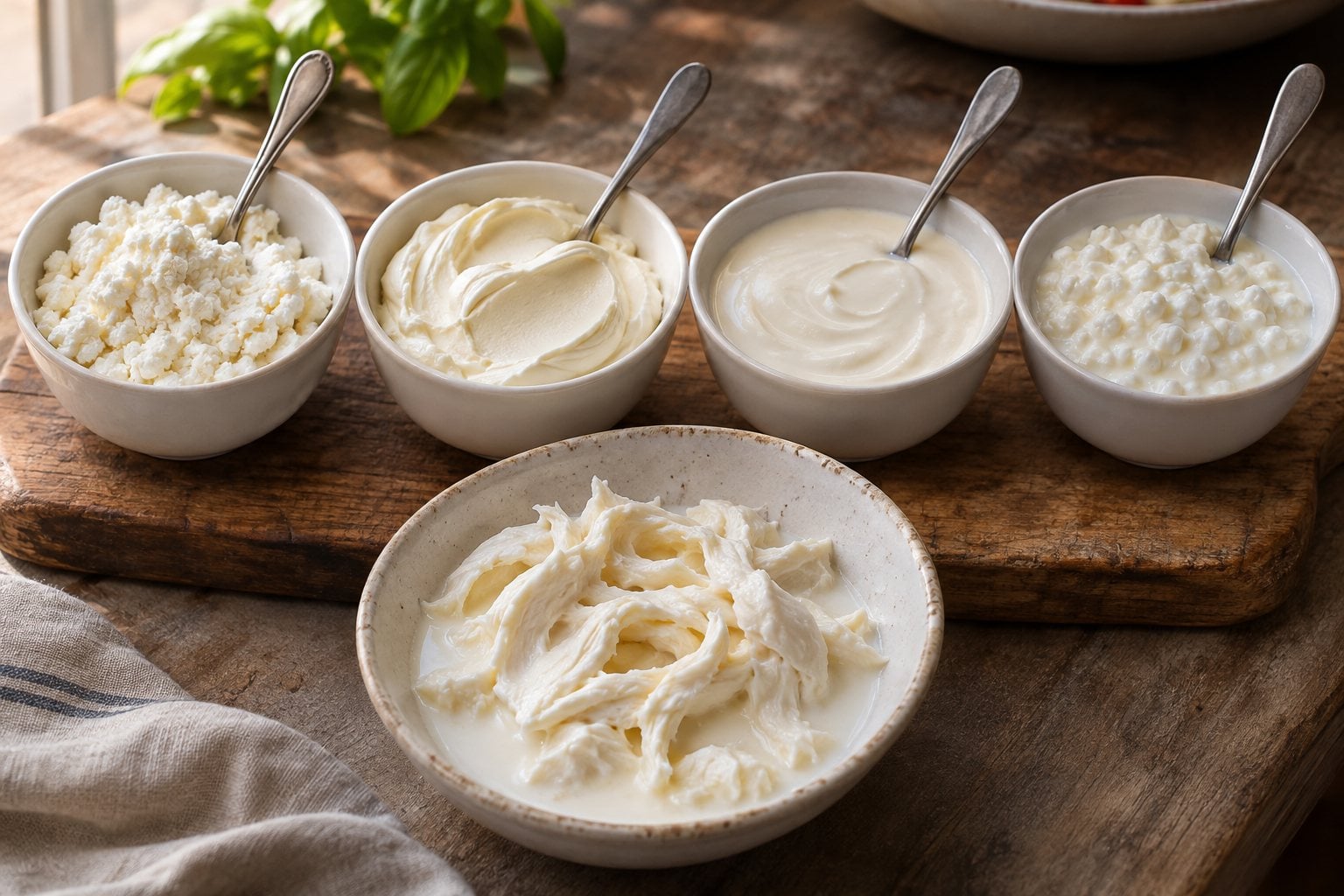
What Goes Wrong with These Swaps?
Three smaller problems show up in the kitchen:
- Watery mix: fresh mozzarella comes packed in liquid, so pat it dry before you add cream, or the cream thins into a pool.
- Flat taste: season the torn-mozzarella mix with a pinch of salt, and taste ricotta before you use it for the same reason.
- Too much tang: cream cheese and cottage cheese are tangier, so skip any extra lemon or vinegar in the dish until you have tasted it.
Treat a homemade mix like opened stracciatella: keep it in the fridge and plan to use it within 24 to 48 hours.
Is Stracciatella Soup or Gelato the Same Thing?
No. The word means "little shreds" in Italian. Stracciatella soup is a Roman egg-drop soup with no cheese of this kind in it, and stracciatella gelato is milk gelato with flakes of chocolate.
Can You Freeze Stracciatella or the Cream Mix?
Better not to. Recipes From Italy advises against freezing burrata because it changes the texture and flavor, and the mix has the same filling. Make it fresh instead, since it only takes about 30 minutes of soaking.
Where Can You Buy Stracciatella?
Some supermarkets sell it in tubs, sometimes labeled as burrata filling, but it can be hard to find because it keeps only a few days. If your store does not carry it, burrata or the torn mozzarella mix above covers the same job.



