
Crack open a bottle of refined soybean oil and there's almost nothing to smell - a faint breath of something clean and neutral, maybe the ghost of a legume if you try hard enough.

That near-invisibility is exactly the point: soybean oil is one of the most widely used cooking oils on the planet precisely because it doesn't get in the way.
Cooks reaching for a neutral high-heat oil often rotate through options like sunflower oil stand-ins or consider swapping out peanut oil, but soybean oil holds its own place in that conversation.
A clear, pale-yellow vegetable oil pressed from soybeans, soybean oil has a nearly neutral flavor with a faint nutty or beany note in unrefined versions. It handles high heat well, blends into emulsions cleanly, and appears in everything from deep-frying to mayonnaise to baked goods.
What Is soybean oil?
Soybean oil is a vegetable oil extracted from the seeds of Glycine max, the soybean plant first domesticated in China thousands of years ago.
Remember it later
Planning to try this recipe soon? Save it for a quick find later!
Today it is one of the highest-volume edible oils produced globally, used across commercial food processing and home kitchens alike.
Three main forms reach the market. Refined soybean oil is solvent-extracted and then bleached and deodorized, producing the clear, pale-gold oil sold in most supermarkets. Cold-pressed or expeller-pressed versions skip chemical solvents, leaving a slightly more pronounced aroma and a slightly darker color. Hydrogenated soybean oil - the most processed form - is the solid or semi-solid fat used in margarine and shortening; always check labels, since partially hydrogenated versions contain trans fats.
You may also see it labeled as soy oil, soya oil, or Glycine max oil, depending on the country.
Just as keeping avocado oil fresh depends on understanding how processing affects oxidation, the same logic applies to choosing between refined and cold-pressed soy versions.
What Does soybean oil Taste Like?
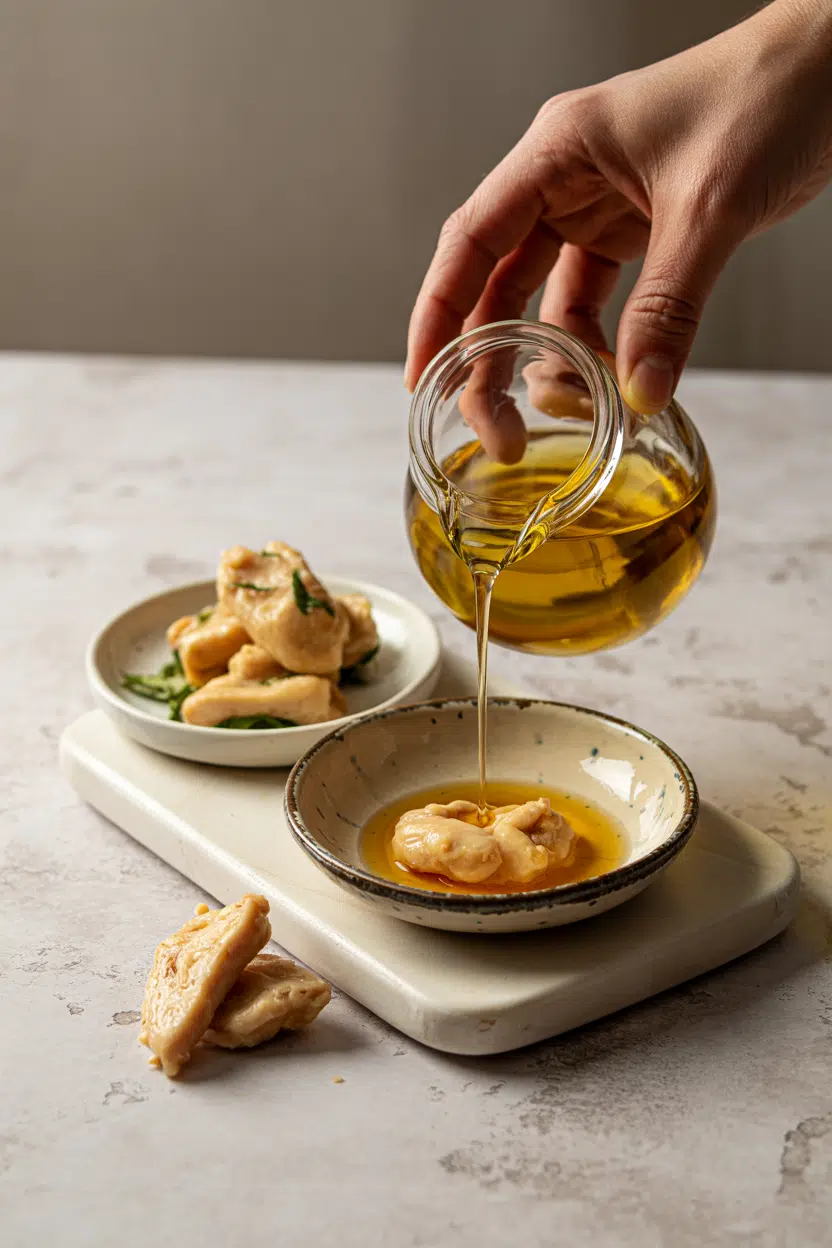
Refined soybean oil is about as close to flavorless as cooking fat gets. There's a faint nuttiness and a very mild sweetness, but it won't announce itself in a finished dish.
That neutrality is why it ends up in so many commercial products - it carries other flavors without competing.
Unrefined cold-pressed soybean oil shifts the profile noticeably - a grassy, slightly beany note emerges that resembles the raw soybean itself.
It's not sharp, however, it's distinct enough that some people notice it in delicately seasoned dishes.
Side by side, refined soybean oil tastes very close to canola oil and light sunflower oil; all three occupy the "stays out of the way" end of the oil spectrum.
Where it differs from olive oil swaps that work is that soybean oil brings none of olive oil's fruity or peppery character - it's a background player by design.
How to Use soybean oil
High-heat frying is where refined soybean oil earns its place. Its smoke point sits above 450°F, making it reliable for deep-frying, stir-frying, and commercial cooking lines where oil stays hot for hours. Chinese kitchens lean on it for high-heat wok cooking; Korean home cooks use it for pan-frying banchan; some Japanese tempura shops use it in their fry blends.
| Method | Best For | Tip |
|---|---|---|
| 🍟 Deep-Frying | Chicken, tofu, donuts, extruded snacks | Refined only - cold-pressed can smoke unevenly at high heat |
| 🥘 Stir-Frying | Vegetables, tofu, meat in wok cooking | Pre-heat the wok before adding oil for best sear |
| 🥗 Cold Emulsification | Mayonnaise, vinaigrettes, creamy dressings | Add oil slowly for stable emulsification with vinegar or mustard |
| 🍰 Baking | Cakes, muffins, quick breads needing a neutral fat | Swap 1:1 for other neutral oils; reduces saturated fat vs. butter |
Its emulsification properties make it a natural base for mayonnaise and salad dressings - it's the oil in most store-bought mayo.
Pairing it with rice vinegar and soy sauce, or with garlic and ginger in a stir-fry sauce, works well because the oil amplifies without interfering.
Citrus-based vinaigrettes, mustard dressings, and ginger-sesame sauces all behave cleanly with it.
If you're after more character in a dish, note that alternatives to canola oil or soybean oil stand-ins can bring more flavor when that's the goal.
How to Buy and Store soybean oil
Look for refined soybean oil in a clean, clear bottle with a pale-gold color and no cloudiness. A tight cap and an intact seal matter - oil oxidizes quickly once air gets in.
Cold-pressed versions will look slightly darker; avoid any bottle with a sticky rim, which signals previous leakage and exposure.
- 🏪 Buy refined - for neutral flavor, high heat, and the longest shelf life
- 🌿 Buy cold-pressed - only if you want that mild bean/grassy note, and plan to use it within a few months
- ⚠️ Read hydrogenated labels carefully - avoid "partially hydrogenated" to steer clear of trans fats
- 🕶️ Store away from light and heat - a dark pantry shelf beats a cabinet next to the stove
For a full breakdown of what affects how long this oil holds up, soybean oil's shelf life depends heavily on whether the bottle has been opened and how it's stored.
Unrefined versions turn rancid faster than refined - expect 3-6 months after opening versus 6-12 months for refined.
Margarine made from soybean oil follows different rules; see margarine swaps that work if you're using it as a fat component in baking.
Start With the Right Bottle
Soybean oil isn't a single product - it ranges from flavorless refined oil built for high-heat frying to cold-pressed versions with detectable beany character.
If you're new to it, start with refined: it performs across frying, baking, and emulsification without demanding any adjustment in your recipes.
Cold-pressed suits cooks who want a mild background note in uncooked dressings or simple pan applications. Either way, avoid hydrogenated versions unless your recipe specifically calls for a solid fat.
Once you know which type fits your kitchen, this oil earns its shelf space reliably.
Frequently Asked Questions
No. Soy sauce gets its salty, fermented flavor from brewed soybeans, not from the oil. Refined soybean oil is nearly tasteless - the two share a source ingredient but have nothing in common on the palate.
Yes - refined soybean oil handles deep-frying well. Its smoke point exceeds 450°F, it stays stable under extended heat, and its neutral flavor won't compete with the food being fried.
Yes, they're the same product under different regional names. "Soya oil" is common in the UK and parts of Asia; "soybean oil" is used in North America. Both come from Glycine max seeds.
It provides polyunsaturated fats, including linoleic acid, and vitamin E tocopherols. The main concern is its high omega-6 to omega-3 ratio - balance it with oils higher in omega-3s like flaxseed or walnut oil.
Refined versions hold up well - 6 to 12 months after opening if stored correctly. Cold-pressed soybean oil oxidizes faster, typically within 3 to 6 months. Heat, light, and an open cap all accelerate rancidity.



