
You reach for peanut oil mid-recipe and it's not there. The problem isn't the missing bottle-it's knowing which swap matches what peanut oil actually does in your dish: high-heat frying, neutral flavor, or just enough body to coat without competing.
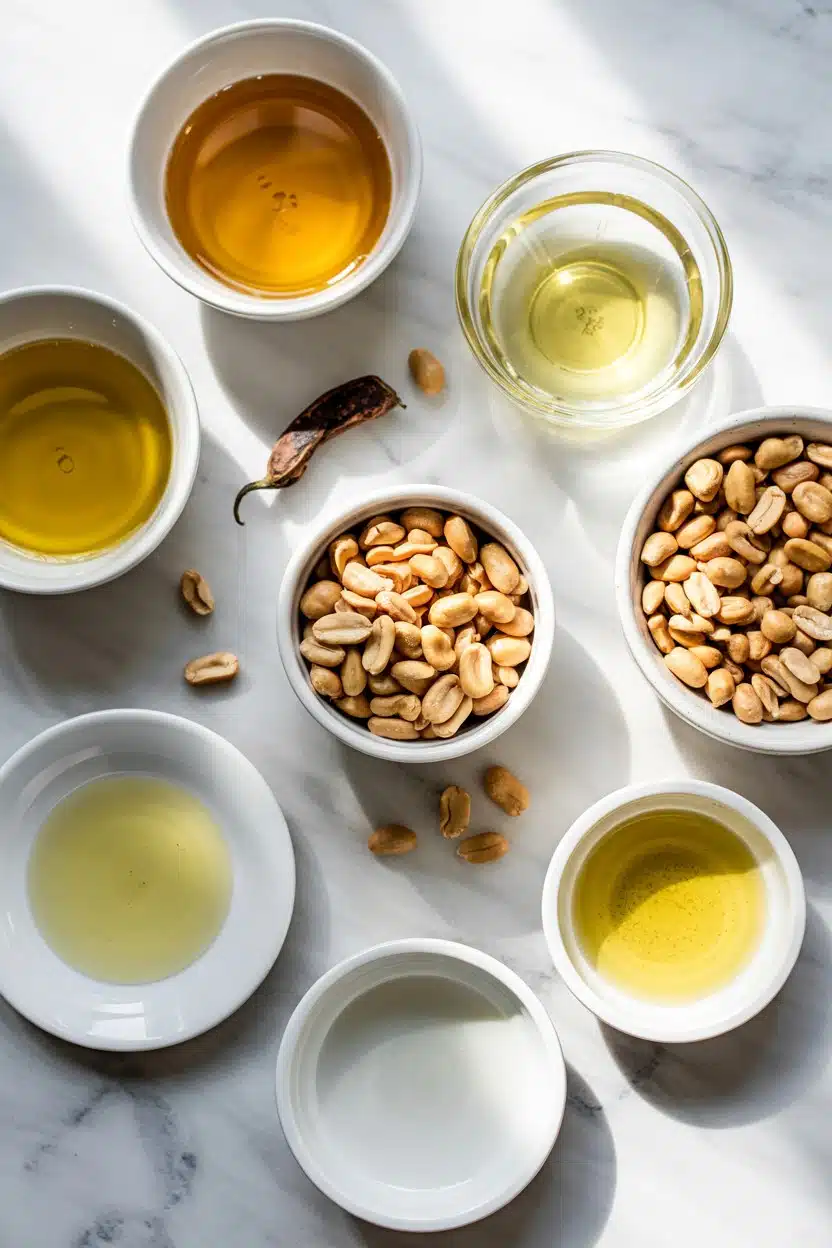
Most neutral oils work at similar ratios, but smoke point and flavor weight vary enough to change results. Pick based on how hot you're cooking and whether you need that faint nuttiness or want something completely blank.
| # | Substitute | Best For | Ratio | Key Note |
|---|---|---|---|---|
| 1 | Canola Oil | ✨ Both | 1:1 | Neutral, lighter body |
| 2 | Vegetable Oil | ✨ Both | 1:1 | Mild, less nutty |
| 3 | Toasted Sesame Oil | 🍳 Cooking | ½:1 | Strong, aromatic finish |
| 4 | Sunflower Oil | 🍳 Cooking | 1:1 | Light, slightly sweet |
| 5 | Grapeseed Oil | ✨ Both | 1:1 | Clean, faintly nutty |
| 6 | Light Olive Oil | 🍳 Cooking | 1:1 | Fruity, medium heat only |
| 7 | Avocado Oil | ✨ Both | 1:1 | Buttery, high smoke point |
7 Smart Peanut Oil Swaps When You're Out
Each substitute below works at a 1:1 ratio unless noted otherwise. Match smoke point to your cooking method first, then adjust for flavor if the dish depends on that subtle nuttiness.
Remember it later
Planning to try this recipe soon? Save it for a quick find later!
1 - Canola Oil
Canola oil handles high heat just as well and disappears into stir-fries, fried chicken, or sautéed vegetables without shifting flavor. Use 1 tablespoon per 1 tablespoon of peanut oil.
The body runs lighter, so you lose that faint richness peanut oil adds to dressings or marinades. Results vary by dish-a Canola Oil swaps by recipe type guide narrows the field when texture matters more than you'd expect.
Skip if: you want a noticeable nutty note in the finished dish.
High-Heat Frying
Works for: crisp results without smoking
Skip if: you need robust flavor
Cold Dressings
Works for: vinaigrettes that stay light
Skip if: you want oil to add body
2 - Vegetable Oil
Vegetable oil works in any recipe calling for peanut oil-frying, roasting, baking-and keeps flavor completely neutral. Swap 1 tablespoon per 1 tablespoon.
The mildness means it won't add the faint nuttiness some dishes expect, but it also won't compete with sauces or spice blends. Each substitute behaves a little differently, so a simple Vegetable Oil substitutes list helps when you're out of both.
Quick tips:
- Use the same temperature and timing as your recipe specifies.
- Store in a cool, dark cabinet to prevent off flavors.
Skip if: you're making a dish where oil flavor matters, like tahini-based sauces.
3 - Toasted Sesame Oil
Toasted sesame oil brings a bold, nutty aroma that works as a finishing drizzle or stir-fry flavoring-not for high-heat frying. Use half the amount (½ tablespoon per 1 tablespoon of peanut oil) because the intensity runs strong. Add it at the end of cooking to preserve the fragrance; prolonged heat dulls the flavor and can turn it bitter. If you're missing both oils, instead of Sesame Oil try these for lighter alternatives that still add depth.
Skip if: you need a neutral base or plan to fry above 350°F.
4 - Sunflower Oil
Sunflower oil handles high heat cleanly and carries a light, slightly sweet flavor that won't overpower marinades or fried foods. Use 1 tablepoon per 1 tablespoon of peanut oil, and expect a smoother finish without the faint nuttiness. The subtle sweetness works well in baked goods or dishes where you want oil to stay in the background. When choosing between high-heat options, Sunflower Oil substitutes ranked sorts swaps by smoke point and flavor weight.
Skip if: you need a completely flavorless base or a richer mouthfeel.
5 - Grapeseed Oil
Grapeseed oil stays clean and light with a faint nutty edge-closer to peanut oil than most neutral options. Swap 1 tablespoon per 1 tablespoon and use it for frying, roasting, or cold dressings without worrying about flavor clash.
The smoke point tops 420°F, so it won't break down under high heat. It costs more than canola or vegetable oil, but the flavor balance makes it worth keeping on hand.
Here's what to know:
- Works in vinaigrettes without turning heavy or greasy.
- Stays stable during deep frying or searing at high temps.
- Pairs well with delicate proteins like fish or tofu.
If you're out of grapeseed too, quick Grapeseed Oil replacements to try covers similar clean-tasting options that match the smoke point.
Skip if: budget is tight-canola or sunflower oil cost less for similar results.
| Use | Ratio | Notes |
|---|---|---|
| Stir-frying | 1:1 | High smoke point; won't burn |
| Salad dressing | 1:1 | Light body; no heaviness |
| Baking | 1:1 | Neutral enough for most recipes |
6 - Light Olive Oil
Light olive oil (also called refined olive oil) handles medium-heat cooking-sautéing, roasting under 400°F-but it brings a mild fruity note instead of peanut oil's neutrality. Swap 1 tablespoon per 1 tablespoon and watch the temperature; push past 400°F and it starts smoking. The fruitiness works in Mediterranean-leaning dishes or anywhere you'd welcome a hint of olive character, but it won't disappear the way peanut oil does. When you're missing both oils, Olive Oil alternatives to try covers neutral backups for high-heat needs.
Skip if: you're deep-frying or need a completely blank base.
7 - Avocado Oil
Avocado oil matches peanut oil's high smoke point (480°F+) and adds a mild, buttery finish that works in both frying and baking. Use 1 tablespoon per 1 tablespoon-no adjustments needed.
The flavor stays neutral enough for most dishes, but the richness can feel heavier in delicate vinaigrettes or light sauces. It costs more than canola or vegetable oil, so save it for recipes where high heat or a smoother mouthfeel makes a difference.
Quick specs:
- Stable at searing and deep-frying temps without breaking down.
- Adds a subtle creaminess to roasted vegetables or grilled proteins.
Skip if: you're watching budget or making a dish where oil should vanish completely.
Before You Swap Peanut Oil
Most of these swaps work without changing the recipe, but the best choice depends on your cooking method and whether you need a completely neutral base. For high-heat frying, canola, sunflower, grapeseed, or avocado oil all hold up without smoking. For finishing or flavoring, toasted sesame oil adds depth but can't handle direct heat.
- Closest match - Grapeseed oil for similar clean nuttiness
- Easiest grab - Canola oil for pantry convenience
- High-heat winner - Avocado oil for searing and frying
Frequently Asked Questions
Light or refined olive oil works for medium-heat frying up to 400°F, but extra-virgin olive oil smokes too quickly. For deep-frying or high-heat searing, canola, grapeseed, or avocado oil are safer picks.
Vegetable oil is more neutral-it won't add the faint nutty note peanut oil brings. If flavor matters, grapeseed oil comes closer; if you just need a blank base, vegetable oil works fine.
Yes-canola, vegetable, grapeseed, or avocado oil all work at a 1:1 ratio. The texture stays the same, but you'll lose any nutty undertone the recipe expected.
Both are similar in fat content and smoke point. Sunflower oil has slightly more polyunsaturated fat; peanut oil has a bit more monounsaturated fat. For cooking purposes, they're close enough that health differences won't change your dish.
Yes-combine what you have (peanut, canola, vegetable, or grapeseed) to reach the amount you need. Smoke points average out, and flavor stays neutral as long as you avoid strong-tasting oils like toasted sesame.
7 Best Substitutes for Peanut Oil
Ingredients
Method
- Choose substitute based on your cooking method and desired flavor-consider smoke point and nuttiness.
- For high-heat frying, use canola, sunflower, grapeseed, or avocado oil at a 1:1 ratio.
- For finishing or flavoring with nutty aroma, use toasted sesame oil at half the amount, adding it at the end of cooking.
- Measure substitute oil according to the indicated ratio, usually 1 tablespoon per tablespoon of peanut oil.
- Adjust quantity as needed if stronger flavor or lighter body is desired, especially for dressings or marinades.
- Taste the dish after substitution to ensure flavor and consistency meet expectations and adjust if necessary.



