
The best shishito pepper substitute is Padrón pepper, used 1:1. It blisters in a hot skillet the same way, though Padróns run hotter on average, about 500 to 2,500 Scoville units against 50 to 200.
If you can't find them, cubanelle peppers are the next best swap for blistering.
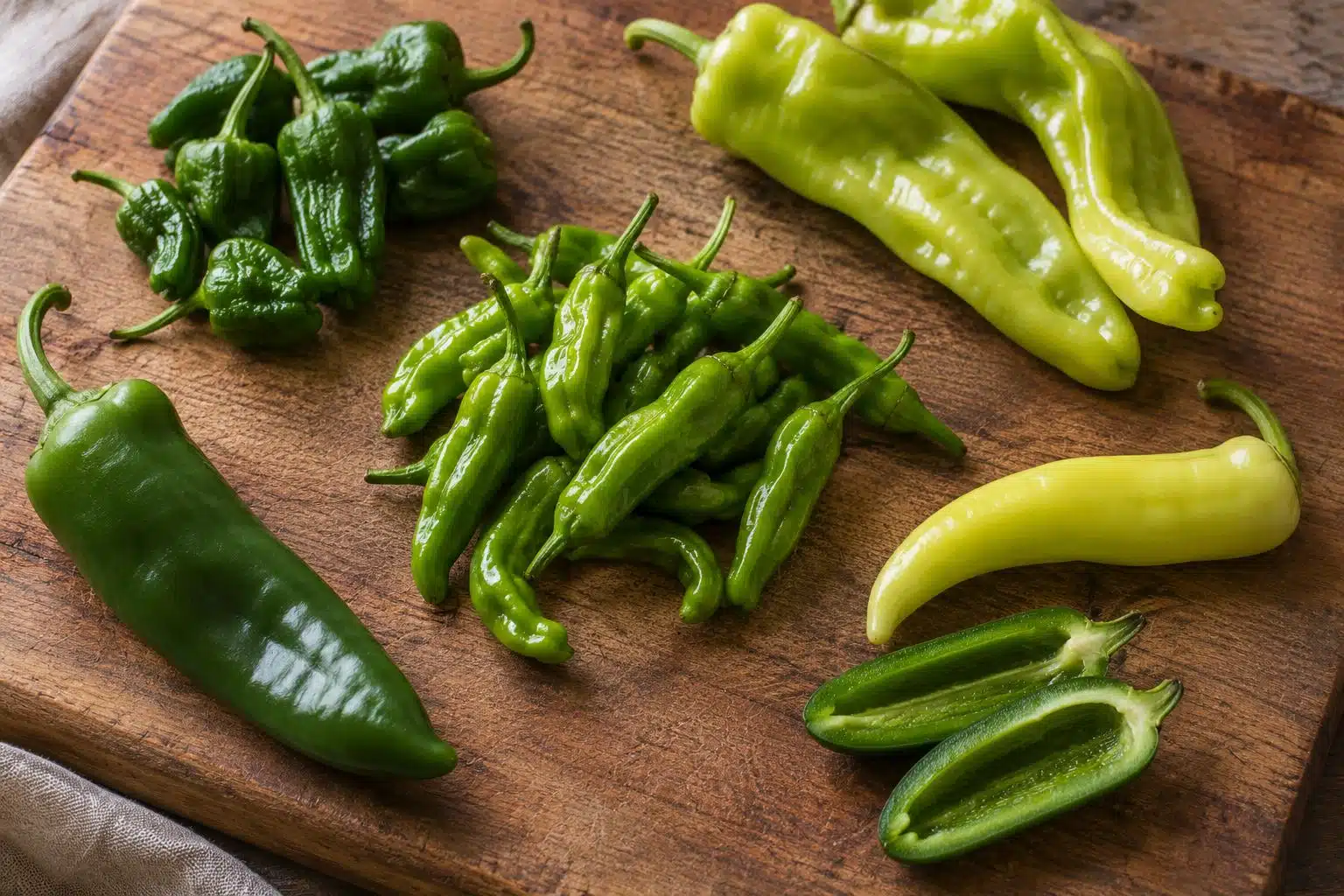
For roasting or grilling, Anaheim or banana peppers work. The one swap that can go wrong is the jalapeño: use half as much and remove the seeds and white membrane, or it will overpower the dish.
Padrón peppers come nearest to shishitos. Use them 1:1, but they run hotter, about 500 to 2,500 Scoville units against 50 to 200.
Cubanelle peppers are the easiest to find. Cut them into finger-length pieces and blister them like shishitos, though they taste sweeter.
For roasting, grilling or stir-fries, use Anaheim or banana peppers, but skip them for quick blistered appetizers because their walls are thicker.
What Does a Shishito Pepper Do in a Dish?
Fresh shishito peppers are small, finger-long and usually picked green. Three traits decide which swap works, and each substitute below copies some of them but not all.
Remember it later
Planning to try this recipe soon? Save it for a quick find later!
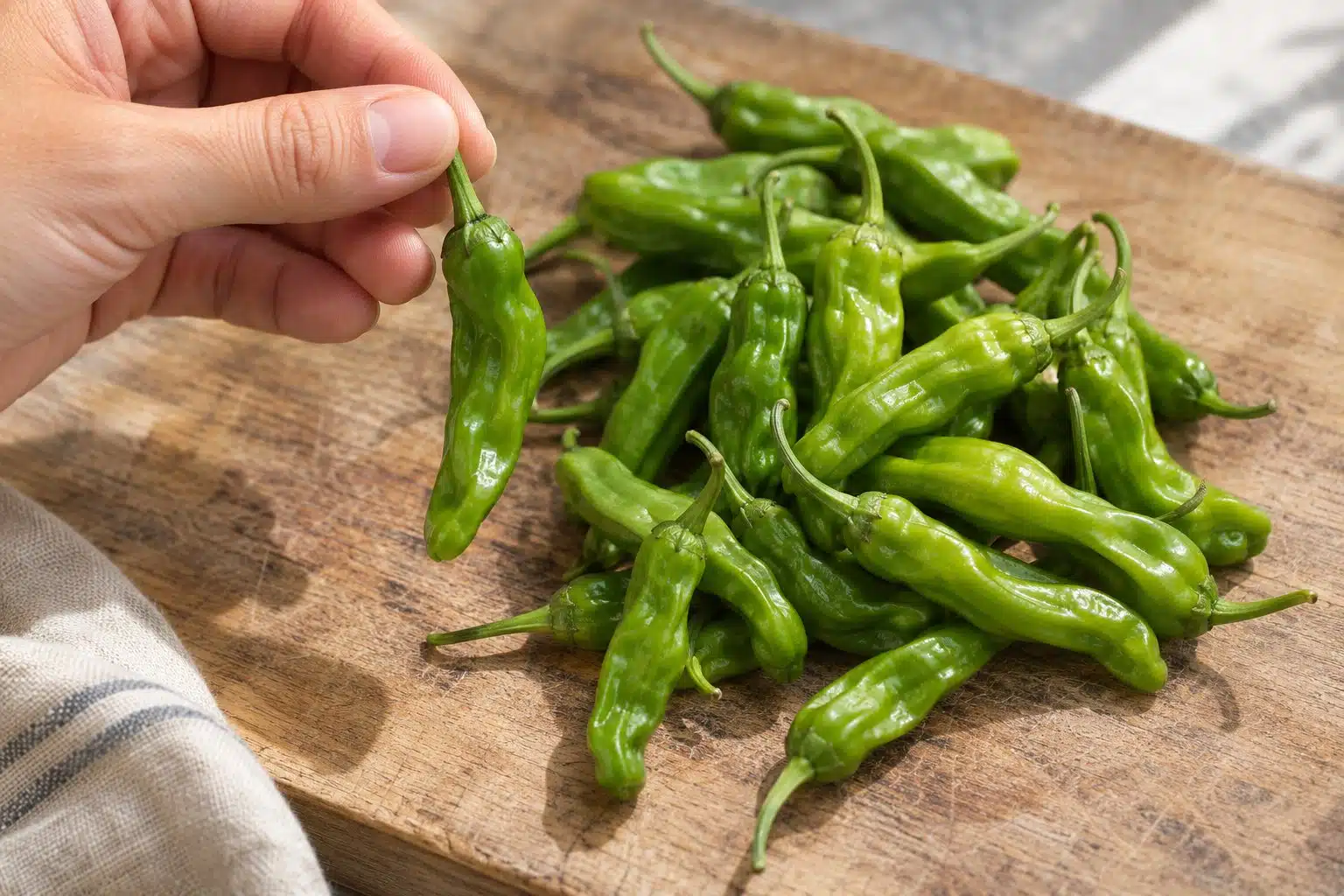
- Mild heat with a surprise: shishitos run about 50 to 200 Scoville units, but roughly 1 in 10 is noticeably spicy.
- Thin walls: the skin blisters and chars in a few minutes in a hot pan, before the inside turns soft.
- Cooked and eaten whole: you hold the stem and bite the pepper, so any thicker pepper has to be cut up, which changes the dish.
That gives you a simple rule: for blistered appetizers, wall thickness and size matter most, and for stir-fries and sauces, only mildness matters. For raw dishes, you need crunch and sweetness instead of char.
The 7 Best Substitutes for Shishito Peppers, Ranked
The table ranks swaps for the most common use first, blistering. 1:1 means the same weight of pepper, cut to about the size of a shishito.
| # | Substitute | Best For | Ratio | Key Note |
|---|---|---|---|---|
| 1 | Padrón Peppers | ✨ Both | 1:1 | Closest, but hotter |
| 2 | Cubanelle Peppers | ✨ Both | 1:1 | Thin walls, sweeter |
| 3 | Friggitello Peppers | 🍳 Cooking | 1:1 | Right size, hard to find |
| 4 | Anaheim Peppers | 🍳 Cooking | 1:1 | Roast or grill, taste first |
| 5 | Banana Peppers | 🍳 Cooking | 1:1 | Use fresh, not jarred |
| 6 | Sweet Mini Peppers | 🥗 Raw | 1:1 | No heat, sweeter |
| 7 | Jalapeño Peppers | 🍳 Cooking | ½ volume | Deseed, much hotter |
Only the first three copy the thin walls that make shishitos blister. The rest suit roasting, stir-fries or raw dishes better than a hot pan.
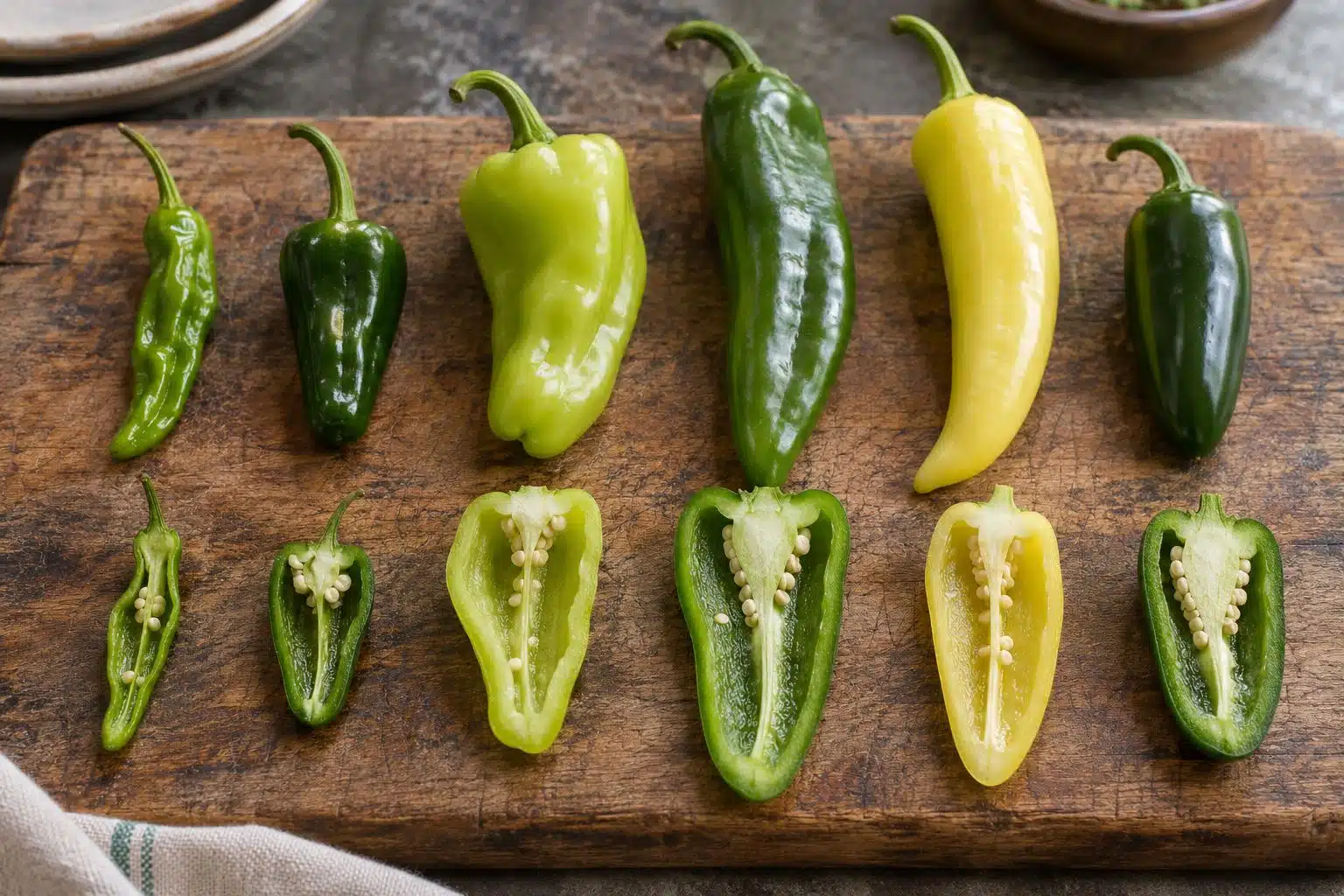
1 – Padrón Peppers
Padrón peppers are the closest swap, used 1:1. Like shishitos, they are small, thin-walled green peppers, and Spanish cooks fry whole in olive oil until the skin blisters and the pepper collapses.
Padróns are hotter on average, about 500 to 2,500 Scoville units against 50 to 200 for shishitos, and they get spicier as they ripen. Buy the smallest green ones, and warn guests that more of them will bite.
- Same cooking method: a hot skillet or the broiler blisters them in minutes, with coarse salt added at the end.
- Flavor: they taste a little nuttier and earthier and slightly less sweet than shishitos.
- Catch: they can be hard to find outside specialty stores and farmers markets.
2 – Cubanelle Peppers
Cubanelle peppers have thin walls that blister well, so they are the easiest store-bought swap for a blistered appetizer. Use 1:1 by weight, and cut them into finger-length pieces so they cook like shishitos.
They are sweeter and larger, with mild heat of about 100 to 1,000 Scoville units. You lose the occasional spicy pepper, and the char tastes sweeter than smoky.
- Cooked: sliced pieces brown on the cut edges in a hot pan and stay tender, which is why they suit a stir-fry like Chinese-style beef pepper steak.
- Raw: they are sweet and tender enough for salads and crudité platters.
- Catch: cooked whole, they are too big to eat by the stem, so always slice them.
3 – Friggitello (Sweet Italian Frying) Peppers
Friggitelli are sweet Italian peppers picked small, about 3 to 4 inches long, so they match a shishito's size better than any other swap. Use them 1:1, whole, in a skillet.
- Heat: mild at about 100 to 500 Scoville units, with a slight bitterness that works well with salt and lemon.
- Catch: most supermarkets don't carry them, so look in Italian or specialty markets. Once you find them, they also replace the bell peppers in a skillet of Italian sausage and peppers.
- Jarred ones: in the US, friggitelli are often sold as pepperoncini, usually pickled. A jarred one is soft and sour, so it will not blister like a fresh shishito.
4 – Anaheim Peppers
Anaheim peppers suit roasting, grilling and stuffing. Use 1:1, cut into strips or spears, and expect more body than a shishito.
Heat runs about 500 to 2,500 Scoville units and varies from pepper to pepper. Taste a small piece before you add the full amount.
- Roasted: they develop smoky sweetness like shishitos, and the extra flesh adds body to the dish.
- Thicker walls: they take longer to soften and char, so skip them in quick blistered appetizers.
5 – Banana Peppers
Banana peppers are sweet and tangy with heat of 0 to 500 Scoville units. Use 1:1 in stir-fries, roasted vegetables and grilled skewers, where their firmer flesh keeps its shape.
Buy fresh ones, not jarred. Most banana peppers in stores are pickled, and the brine adds tang and softens them, so they taste nothing like a blistered shishito.
- Roasting: they take longer to soften than shishitos because the flesh is thicker.
- Raw: they are too crisp and tangy for a direct shishito swap in raw dishes.
- Blistering: they won't blister as lightly, so skip them where a delicate char is the point.
6 – Sweet Mini Peppers
Sweet mini peppers have no heat and are crisp, colorful and sweeter than shishitos. Use them 1:1 in salads, crudité platters and as raw garnishes.
Their walls are thicker than a shishito's, closer to a small bell pepper. Slice or halve them for cooked dishes, and add a pinch of chili flakes if the recipe needs any spice.
7 – Jalapeño Peppers (Deseeded)
Jalapeños replace shishitos in cooked dishes only if you use half the volume and remove the seeds and white membrane first. The heat sits mostly in that membrane around the seeds.
Even deseeded, they are hotter. Jalapeños run about 2,500 to 8,000 Scoville units against 50 to 200 for shishitos, and red ones are riper and often hotter, so pick green.
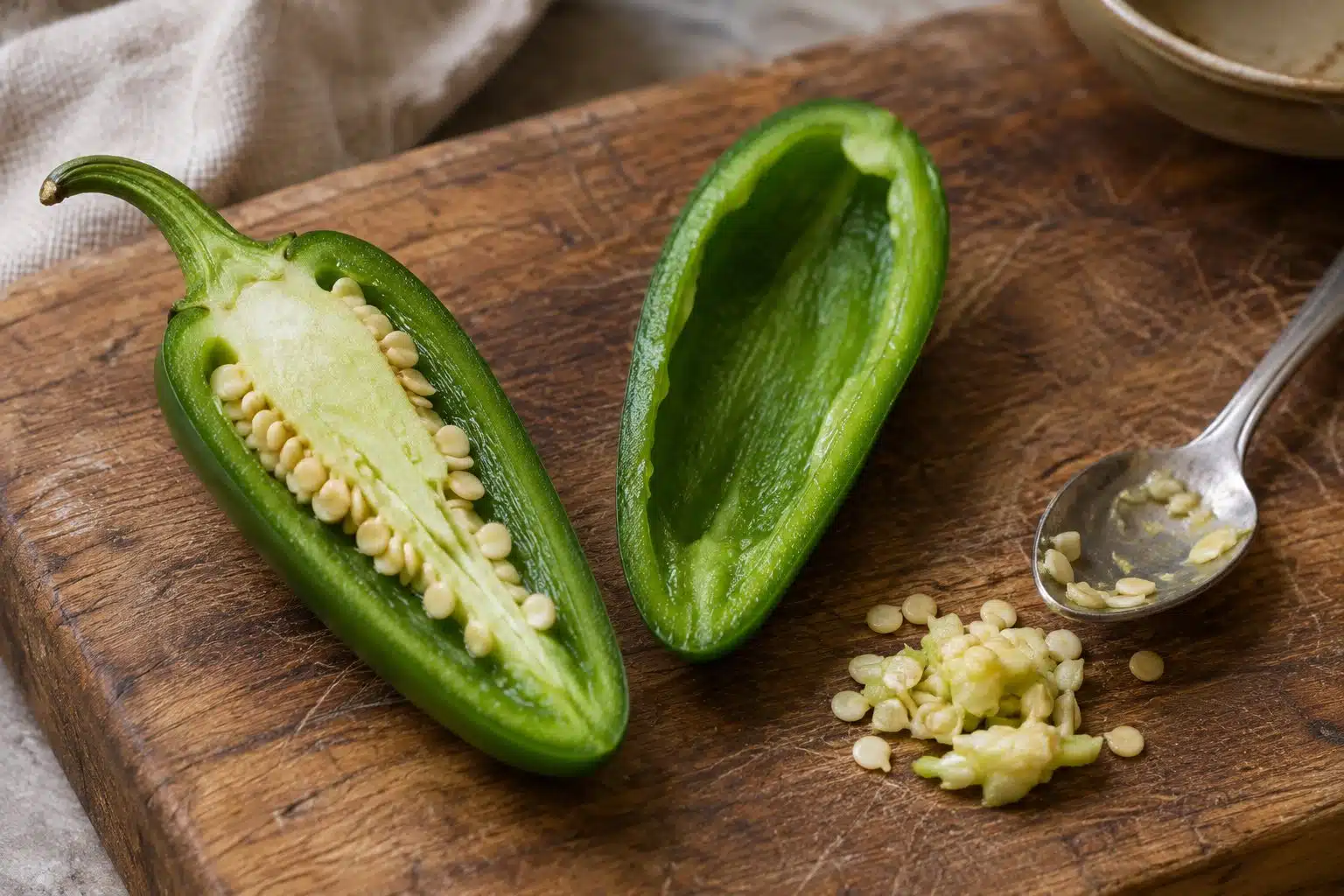
- Works in: stir-fries, sauces and cooked dishes where you control how much goes in.
- Fails in: blistered appetizers, because the thick walls won't blister the same way and every bite is hot.
Which Substitute Fits Which Dish?
| If You're Making | Pick | Why |
|---|---|---|
| Blistered appetizer | Padrón or cubanelle pieces | Thin walls char in minutes |
| Grilled or roasted | Anaheim or banana | Fleshier walls hold their shape |
| Stir-fry or sauce | Cubanelle or Anaheim | Mild, easy to cut to size |
| Raw salad or platter | Sweet mini or cubanelle | Crisp with no cooking |
| A real kick | Deseeded jalapeño, half amount | Stands in for the spicy one in ten |
The table puts the swaps that blister at the top and the ones that only suit cut-up dishes below them.
If the recipe chops the shishitos into a sauce, marinade or relish, texture no longer matters and a simple blend is enough. For each shishito, dice one small fresh banana pepper and add a pinch of smoked paprika, tasting as you go.
The banana pepper gives mild sweetness and tang, and the paprika adds the smoky note a blistered shishito would have brought. Do not use this blend in a dish that needs whole blistered peppers, because it has no fresh crunch.
How Do You Blister a Substitute Like a Shishito?
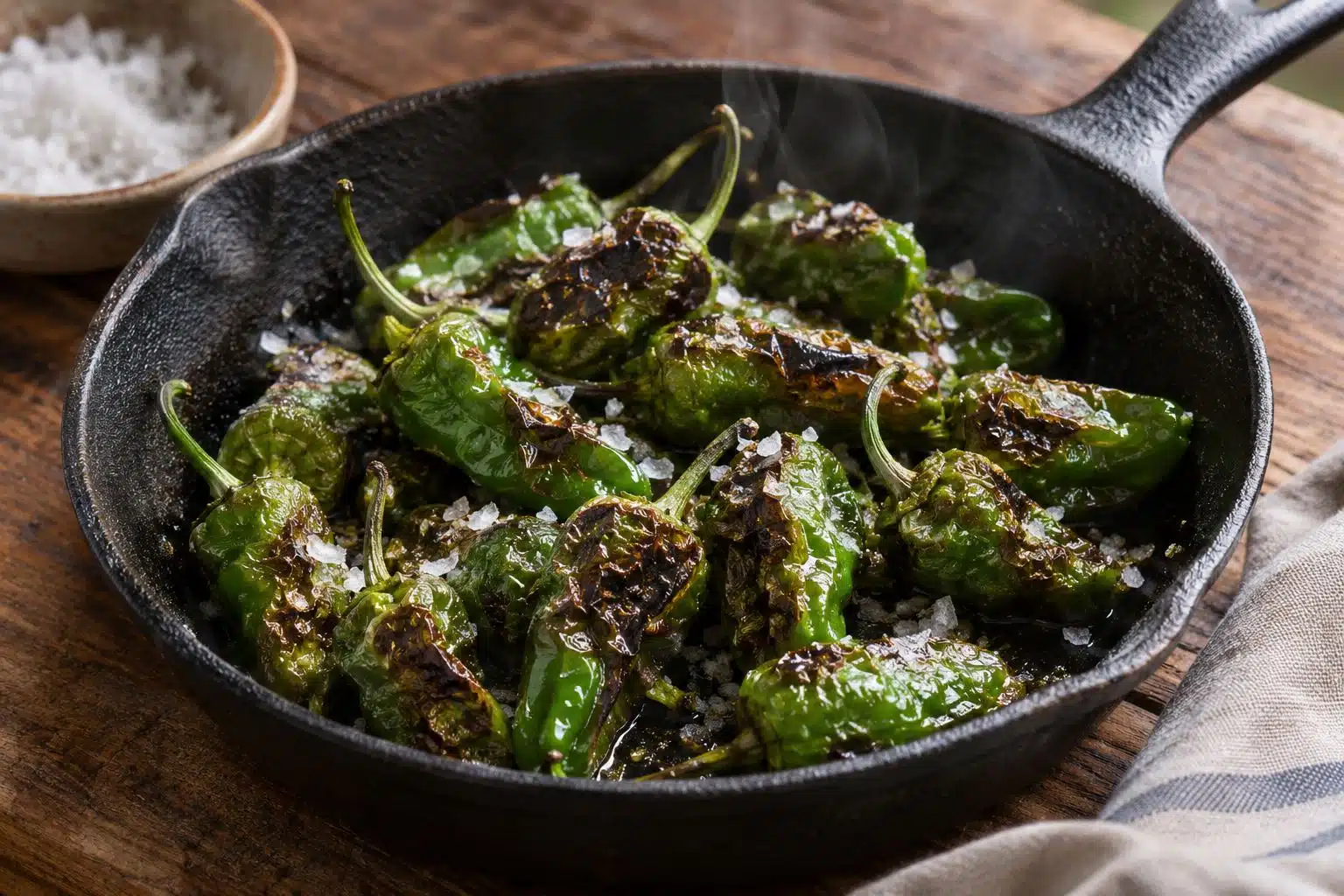
Padrón, cubanelle and friggitello peppers all blister the way shishitos do. A hot, dry pan is what gives the char.
- Prep the peppers. Leave small peppers whole and poke a small hole in each so steam can escape, and cut cubanelles or Anaheims into finger-length pieces.
- Heat the pan. Warm a cast-iron skillet over medium-high until a flick of water sizzles, then add a thin film of a high smoke point oil such as avocado or canola.
- Cook 5 to 8 minutes. Spread the peppers in one layer and turn them until they are blistered and charred in spots, allowing a few extra minutes for thicker pieces.
- Salt at the end. Season right after they leave the pan, while the skin is still hot.
Dry the peppers well and do not crowd the pan, or they steam instead of blistering.
The broiler works too: skewer the peppers or spread them on a sheet pan and turn them once the tops char.
Frequently Asked Questions
Only as a different dish. Bell peppers are bigger, thicker-walled and have no heat, so cut them into strips and add red pepper flakes if you want spice.
About 1 in 10 shishitos is spicy, because hot, dry weather and plant stress build up more capsaicin, so heat varies even on one plant. Padróns do the same, which is why a Galician saying goes that some Padróns bite and some don't.
Only for jalapeños, which are too hot otherwise. Padrón, banana, Anaheim, cubanelle and sweet mini peppers don't need it.
No. Dried peppers lack the tender-crisp texture and fresh flavor of blistered shishitos, so use a fresh mild pepper like Padrón or cubanelle.
Not serrano, which is about 10,000 to 23,000 Scoville units against 50 to 200 for shishitos. Poblanos are mild but large and thick-walled, so roast and slice them like Anaheims instead of blistering them whole.



