
You spot it on the shelf between all purpose flour in cooking and bread flour in cooking, and it's easy to pass over.

Pastry flour occupies a specific lane - low-protein, finely milled, built for tenderness - and if you've ever wondered why your pie crust came out tough or your biscuits dense, this flour is likely the missing piece.
Pastry flour is a soft wheat flour with roughly 8-9% protein. It produces tender, crumbly baked goods by limiting gluten development. Use it for pie crusts, biscuits, scones, and muffins - anywhere a delicate crumb matters more than chew.
What Is Pastry Flour?
Pastry flour is a refined wheat flour milled from soft wheat varieties, yielding a protein content of around 8-9%.
Remember it later
Planning to try this recipe soon? Save it for a quick find later!
That low protein count is the defining feature - it's what separates this flour from swapping out all purpose flour territory and from the higher-protein swapping out bread flour range entirely.
You'll sometimes see it labeled soft wheat flour or baker's pastry flour. It occasionally gets mislabeled as "pastry AP," which causes real confusion at the shelf.
It's distinct from cake flour too - pastry flour sits between cake and all-purpose in terms of protein, making it more structured than cake flour but far softer than AP.
The texture of the raw flour itself is fine and powdery, similar to cake flour, but with slightly more body.
No significant varieties or subtypes exist at the consumer level - what you find in most stores is a single bleached or unbleached version.
- 🌾 Protein content - approximately 8-9%, lower than AP (10-12%) but higher than cake flour (6-8%)
- 🏷️ Alternate names - soft wheat flour, baker's pastry flour; avoid anything labeled "pastry AP"
- 🌍 Origin - temperate soft wheat-growing regions across North America and Europe
- 🆚 Not the same as cake flour - cake flour is more delicate; pastry flour has slightly more substance
What Does Pastry Flour Taste Like?
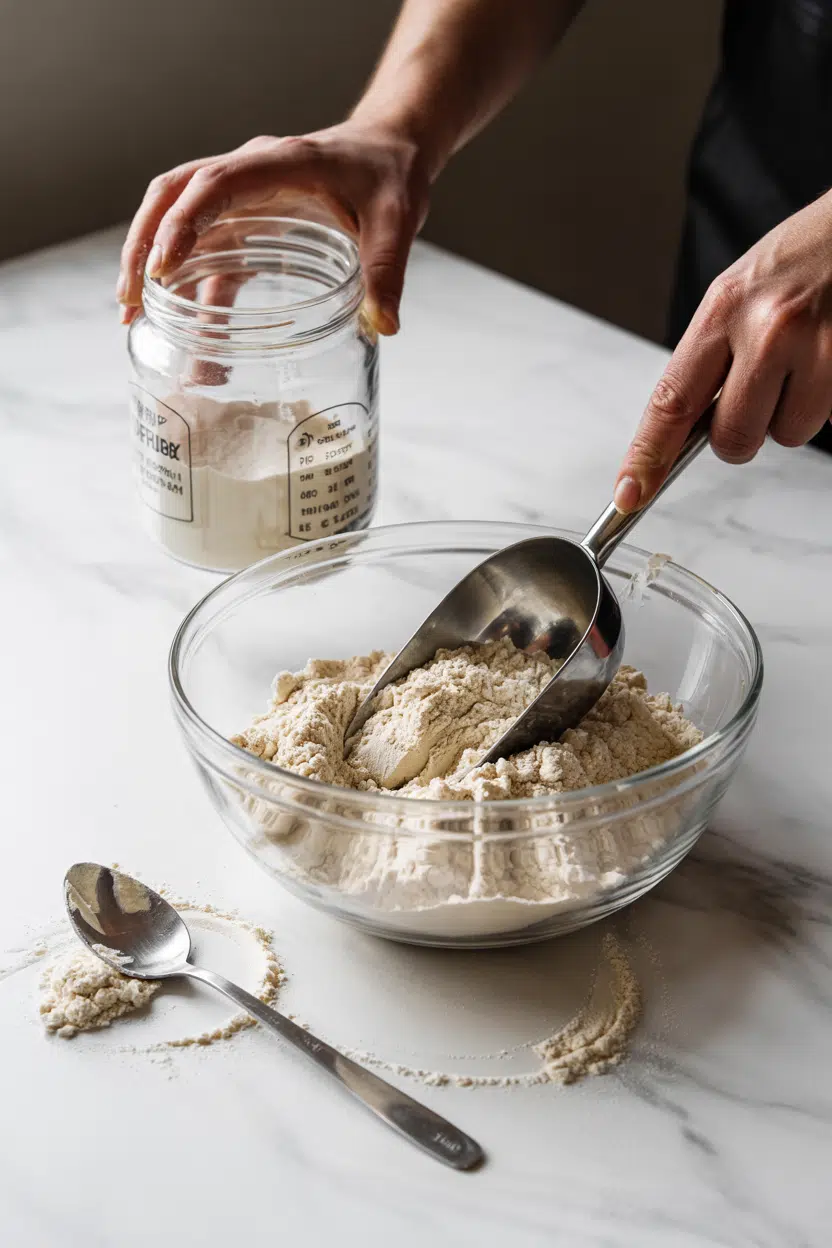
On its own, pastry flour is mild and nearly neutral. There's a faint grainy sweetness and a soft wheaty note when you smell it fresh from the bag - nothing sharp, nothing bitter.
Baked, the flour steps back and lets other ingredients lead. Butter, vanilla, and sugar read clearly because the flour itself contributes almost no competing flavor.
Compared to cake flour, pastry flour adds just a touch more substance - you notice it mostly as a slightly more grounded crumb rather than any distinct taste.
How to Use Pastry Flour
Pastry flour earns its place in recipes where gluten development is the enemy. The goal is always tenderness, and that means handling the flour as little as possible.
In pie crusts and shortcrust pastry, cold butter or lard gets cut into the flour before any liquid touches it.
This coats the protein strands early, limiting gluten formation.
The result is a flaky, fragile crust that shatters cleanly.
For biscuits and scones, the method is similar - minimal mixing after liquid is added keeps the crumb soft rather than rubbery.
| Method | Best For | Tip |
|---|---|---|
| 🥧 Cold-fat cutting | Pie crusts, shortcrust, galette doughs | Keep butter cold; work fast to avoid warming the fat |
| 🥐 Light mixing | Biscuits, scones, muffins | Stop mixing the moment dry streaks disappear |
| 🥞 Whisking/thin batters | Dutch baby pancakes, cream puff blends | Combine with a higher-protein flour for structure in choux |
| 🍪 Creaming | Tender cookies that shouldn't turn crisp | Reduce mix time after adding flour - don't overwork |
Pastry flour pairs especially well with buttermilk or sour cream, which add mild tang while keeping the crumb open.
Cinnamon, nutmeg, and vanilla all work cleanly against its neutral base.
American biscuit and pie traditions, French galettes, and British scone recipes all lean on soft wheat flours for this reason.
If you don't have it on hand, there are practical pastry flour stand-ins that can work in a pinch.
How to Buy and Store Pastry Flour
At the store, check the label first - the bag should say "pastry flour" explicitly, not pastry blend or pastry AP.
If you're uncertain, flip it over and read the nutrition panel; protein per serving should land around 2-3g per 30g serving, which confirms the 8-9% range.
All flour has a finite window, and understanding flour's shelf life helps you decide how much to stock at once. Pastry flour lasts 6-8 months in the pantry when unopened; once open, use it within 3-6 months.
For storing pastry flour correctly beyond that window, refrigeration extends it to 9-12 months and freezing takes it up to a year.
- 📦 Airtight container - transfer from the bag immediately to block moisture and pests
- ❄️ Refrigerate or freeze long-term - soft wheat oils in low-protein flour go stale faster than in AP or bread flour
- 🗓️ Label with the date - opened flour looks identical whether it's fresh or two years old
The question of whether your stored flour is still good is similar to about can i use expired cake flour - smell and texture tell you more than the date alone.
Where to Start With Pastry Flour
Skip the elaborate laminated doughs on your first use.
A simple biscuit or single-crust pie is the clearest way to feel what low-protein flour actually does - the dough handles differently from AP almost immediately, and the baked result makes the difference obvious.
Once you've baked a biscuit or pie crust with it, the rationale clicks fast. Reach for it any time a recipe calls for a crumbly, tender result - and leave it on the shelf when a recipe calls for chew.
Frequently Asked Questions
No. Cake flour has a lower protein content of around 6-8%, making it more delicate. Pastry flour sits slightly higher at 8-9%, giving baked goods a little more structure while still producing a tender crumb.
Pastry flour typically runs 8-9% protein. Check the nutrition label: 2-3g of protein per 30g serving confirms you're in the right range.
You can, but results will be tougher. All-purpose flour's higher protein (10-12%) builds more gluten, which tightens crusts and biscuits. Mixing 50% AP with 50% cake flour is a closer approximation.
Yes, compared to all-purpose flour. Lower protein means less gluten forms when liquid is added, so fat layers stay more distinct during baking. Flakiness also depends on cold fat and gentle handling.
Not effectively. Bread needs a strong gluten network to trap gas and hold its rise, which requires at least 10-12% protein. Pastry flour's weak protein structure tears under vigorous kneading.



