
Cheshire is the closest substitute for Lancashire cheese, used 1:1 by weight. Both are moist, crumbly English cow's-milk cheeses, so Cheshire crumbles over a dish or bakes into a pie the way Lancashire does.
If your recipe melts the cheese, as in Welsh rarebit or cheese on toast, buy mild white cheddar instead, because young cheese flows smoothly under heat. Feta is the one to avoid in hot dishes: it is brined, salty and keeps its shape.
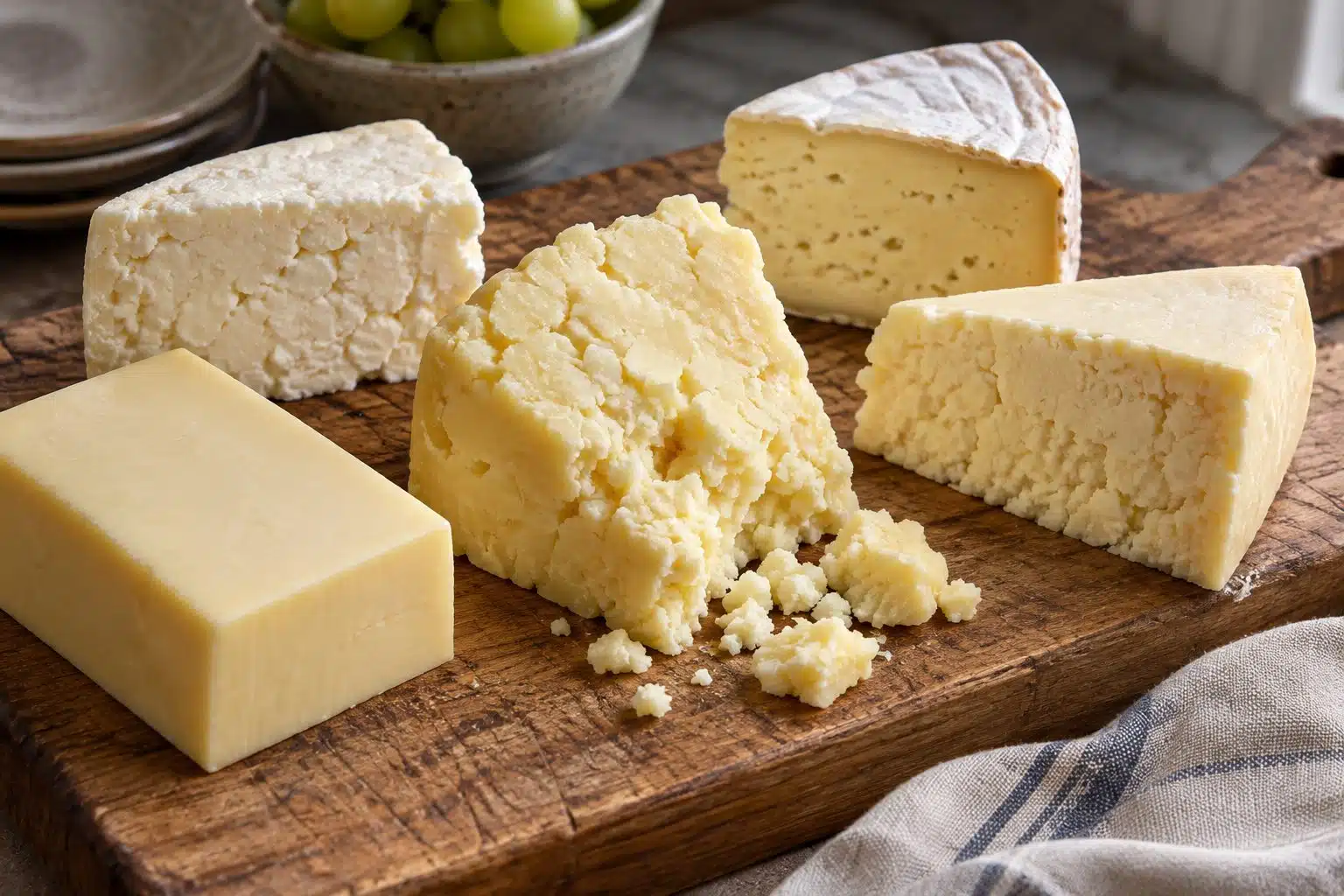
Which Kind of Lancashire Does Your Recipe Mean?
Lancashire is three cheeses sold under one name, and the right swap depends on which one your recipe wants. The names on the label are creamy, tasty and crumbly.
Remember it later
Planning to try this recipe soon? Save it for a quick find later!
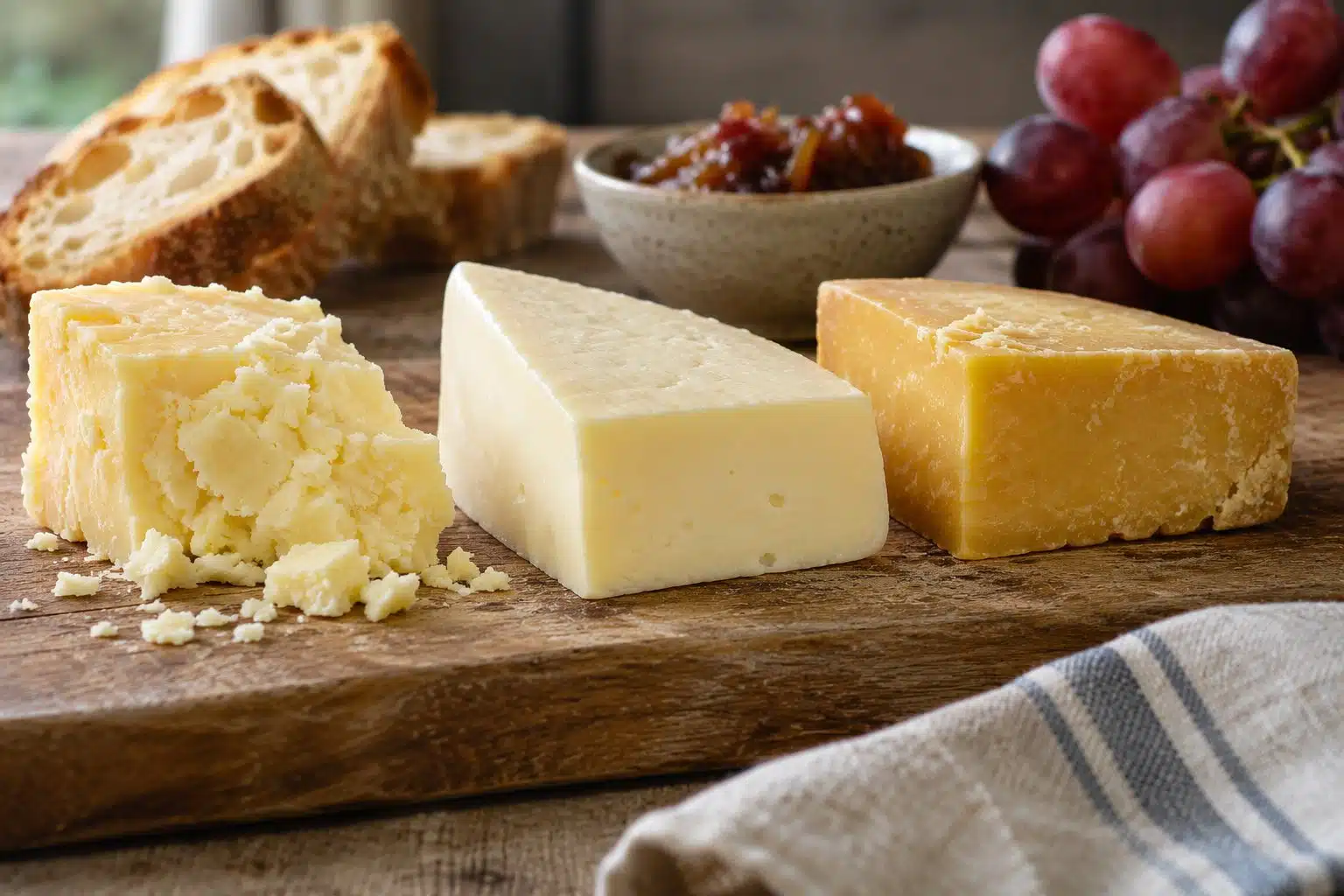
- Creamy Lancashire is aged 4 to 12 weeks and has a fluffy texture and creamy flavor. It is the toasting cheese, because it does not turn stringy when it melts.
- Tasty Lancashire is made the same way but aged from 12 weeks up to 24 months, which gives it a mature, nutty taste.
- Crumbly Lancashire dates from the 1950s and is made from a single day's milk, then aged 6 to 8 weeks. It is fresh, high in acid and breaks apart in your fingers.
Creamy and tasty Lancashire blend curd made on two or three different days, and that mix is what makes them soften without going stringy. No substitute copies it exactly, so the melting swaps below get close but never match.
| If You Want | Pick | Why |
|---|---|---|
| Crumble | Cheshire or Caerphilly | Same moist, fresh crumble |
| Melt | Mild white cheddar | Young cheese flows smoothly |
| Mild board cheese | Wensleydale | Supple, honeyed, no sharp edge |
A recipe that says "crumbled Lancashire" wants the first row. One that grills or stirs the cheese into a sauce wants the second.
The 7 Best Lancashire Cheese Substitutes
Six of the seven swap 1:1 by weight, so a 4-ounce piece of Lancashire becomes a 4-ounce piece of the substitute. Feta is the exception, and the list runs from the closest texture to the biggest change.
| # | Substitute | Best For | Ratio | Key Note |
|---|---|---|---|---|
| 1 | Cheshire | ✨ Both | 1:1 | Moist crumble, saltier |
| 2 | Caerphilly | ✨ Both | 1:1 | Lemony tang |
| 3 | Wensleydale | ✨ Both | 1:1 | Sweeter, milder |
| 4 | Mild White Cheddar | 🍳 Cooking | 1:1 | Melts, no crumble |
| 5 | Red Leicester | 🍳 Cooking | 1:1 | Mellow, orange color |
| 6 | Colby | 🍳 Cooking | 1:1 | Soft, mild, milky |
| 7 | Feta | 🍳 Cooking | ¾ | Much saltier |
Rows 1 to 3 crumble like Lancashire, rows 4 to 6 are better at melting, and feta is the only one that changes how much salt the dish needs.
1 – Cheshire, the Closest Match
Cheshire is a dense, semi-hard cheese that stays moist and crumbles, with a mild, salty taste. That puts it next to crumbly Lancashire in a pie filling, over soup or grated onto a baked dish.
- Salt: Cheshire tastes saltier than creamy Lancashire, so taste a pinch before you season the recipe and use unsalted butter where you have the choice.
- Color: Buy white Cheshire, because the red kind is colored with annatto and turns a pale filling orange.
- Crumble: Cheap block Cheshire is drier and less crumbly than a wedge cut from a wheel, so choose the wedge when the crumble matters.
2 – Caerphilly for a Lemony Edge
Caerphilly is a hard, crumbly white cheese with a mild taste and a tang of lemon. It ripens in as little as two weeks, so it stays fresh and moist, which is the same quality that makes crumbly Lancashire taste bright.
It carries real salt too, so go easy on added salt, as you would with Cheshire. Use it in tarts, pasties and over salads, or on a board with fruit. If you cannot find Caerphilly either, our Caerphilly substitutes page shows what to buy in its place.
3 – Wensleydale for the Mildest Crumble
Wensleydale is supple and crumbly with a slight honey aroma, and it pairs well with sweet apples and fruit cake. Use it 1:1 where Lancashire sits on a board or crumbles over a salad.
Buy it plain for savory cooking. In the US it is often sold with cranberries mixed in, and fruit would clash in a cheese and onion filling or a rarebit.
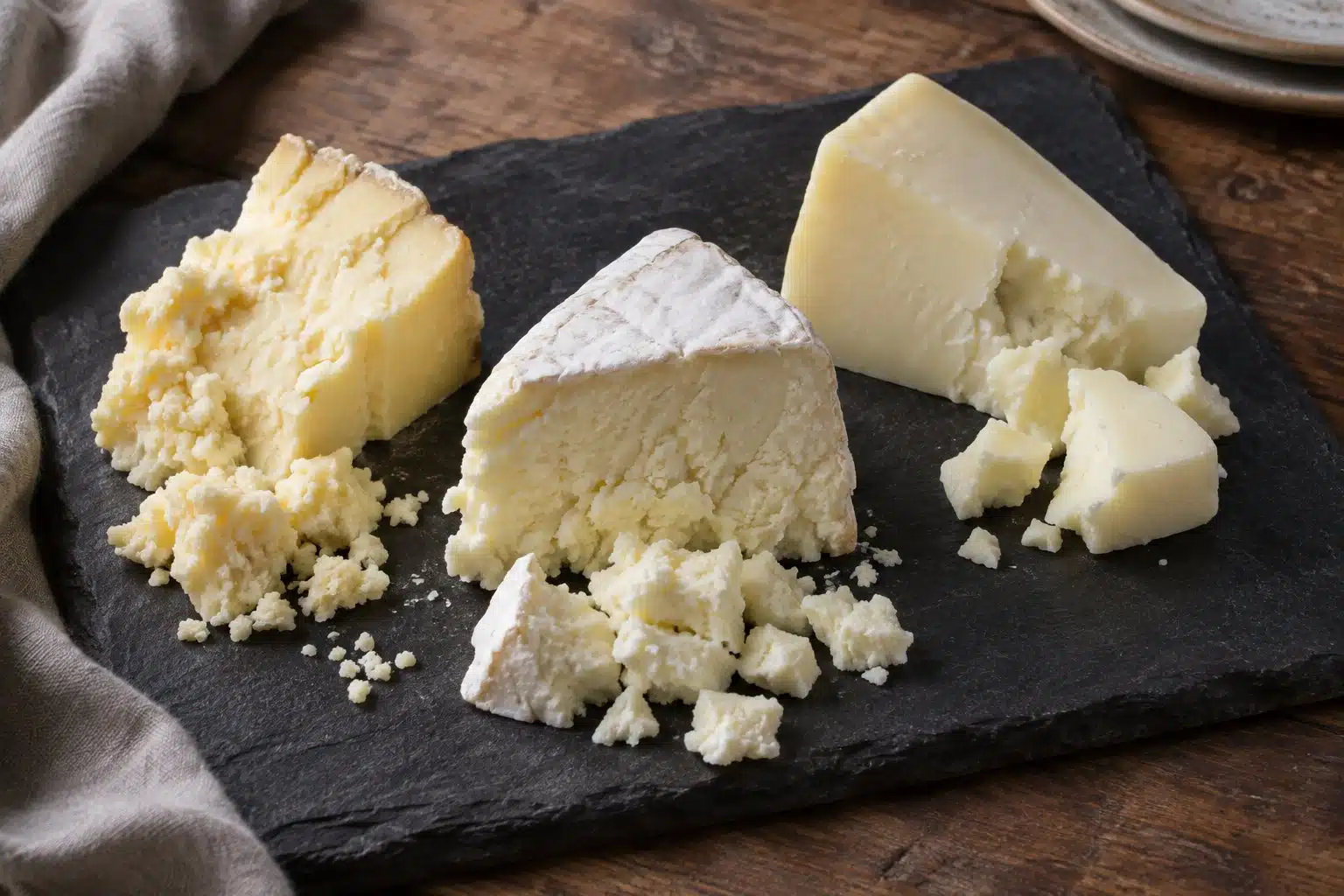
It is milder than Lancashire, so a pie or toastie needs a bit more pepper or mustard to taste as sharp. Wensleydale also tends to soften rather than flow, so do not count on it for a smooth melt.
4 – Mild White Cheddar for Anything That Melts
Young cheese melts best, because its protein network is still flexible. Aged cheese needs more heat and tends to clump and let fat separate, so pick mild or medium cheddar and skip the extra-sharp block.
Use it 1:1 for creamy Lancashire in cheese on toast, rarebit and sauces. Many rarebit recipes use mature cheddar for its bite, so if you want that tang, stir in a little extra mustard and keep the heat low, because a sauce that gets too hot can split the cheese.
The trade-off is texture. Cheddar slices and grates cleanly but never crumbles, so it cannot replace Lancashire on a salad or a board.
5 – Red Leicester for a Mellow, Firm Crumb
Traditional Red Leicester is firm, dry and friable, like a crumbly cheddar, with a slightly sweet, mellow flavor. Use it 1:1 in pie toppings, scones and anywhere you would sprinkle crumbly Lancashire.
Age sets the flavor: a young wedge is very mild, and it picks up a noticeable tang after about six months. Red Leicester is colored with annatto, so it tints a white sauce orange. Block-pressed versions from large dairies are moister and creamier, and they crumble less.
6 – Colby, the Supermarket Fallback
Colby is moister and softer than cheddar, with a mild, milky flavor, and you can find it in almost any US grocery store. It is a young cheese, which helps it soften quickly under a grill or in a sauce.
Use it 1:1 for melting jobs when nothing better is on the shelf. Colby Jack, which is Colby marbled with Monterey Jack, is an acceptable stand-in if the plain block is sold out. You lose both the tang and the crumble.
7 – Feta for Cold, Crumbled Dishes Only
Feta is brined, so it is far saltier and tangier than any Lancashire. Use three-quarters as much, cut the other salt in the dish, and taste before adding more.
Feta is a high-acid cheese that holds its shape instead of melting, so it stays in crumbs under a grill and never turns into a sauce. Keep it for salads and savory pastry fillings, where its brine is welcome.
Which Swap for Which Dish?
British recipes that use Lancashire usually fall into four jobs: melt on toast, bake in a filling, cut into dough, or crumble cold. The table matches each job to a swap and the one adjustment it needs.
| Dish | Best Swap | Adjustment |
|---|---|---|
| Welsh rarebit, cheese on toast | Mild or medium white cheddar | Add cheese over low heat |
| Cheese and onion pie or pasties | Cheshire, or mild white cheddar | Taste before salting |
| Cheese scones | Red Leicester or cheddar | Cut in cold, 1:1 |
| Cauliflower cheese sauce | Mild white cheddar or Colby | Stir in small handfuls |
| Salad, soup or board | Caerphilly or Wensleydale | Crumble by hand, 1:1 |
Where two cheeses are listed, the first is the closer match and the second is easier to find.
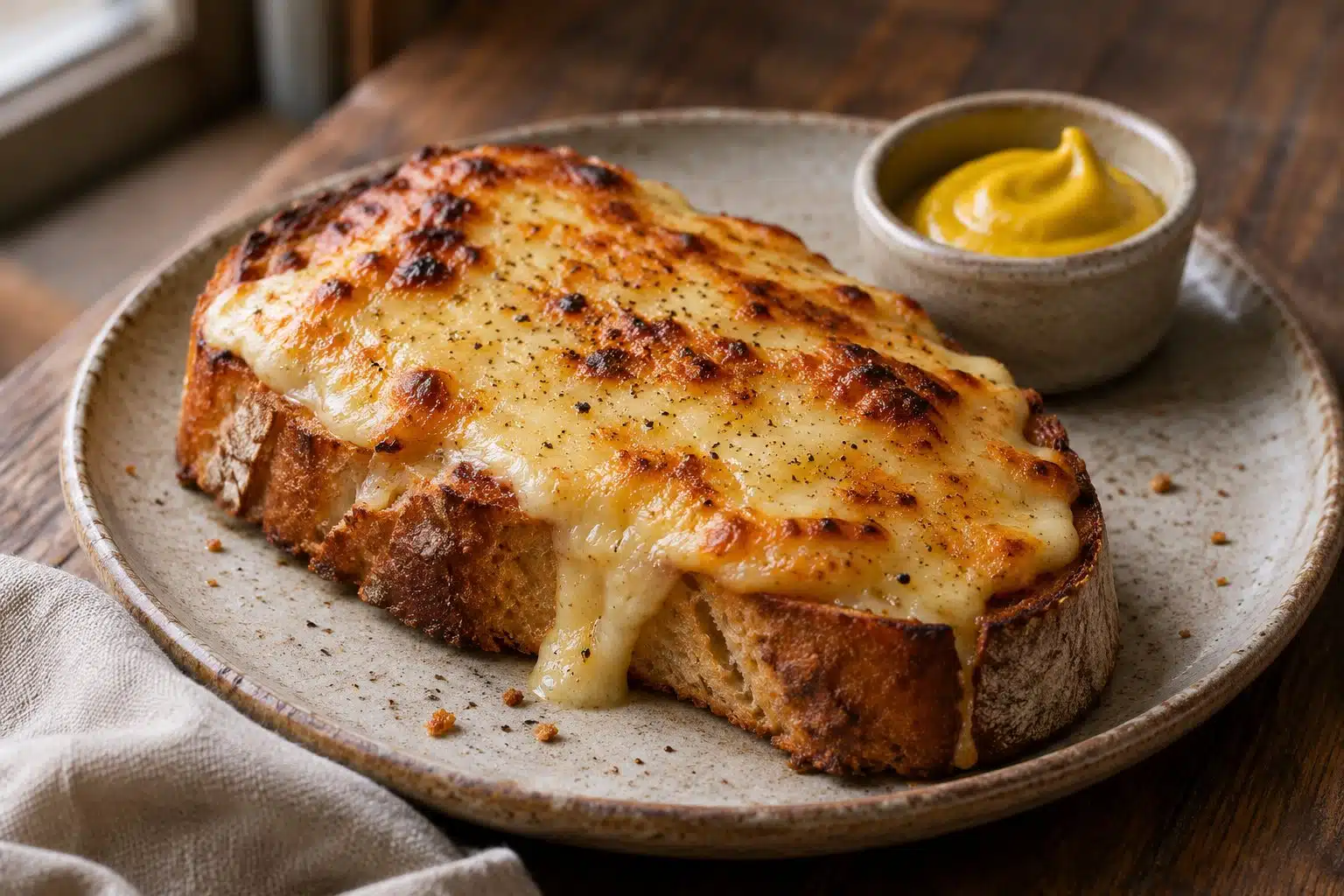
- Cheese and onion fillings: Cheshire or a mild white cheddar goes in 1:1, and our air fryer cheese and onion pasties already use cheddar, which makes that the easy match there.
- Cheese scones: Work in cold Red Leicester or cheddar, and our savory breakfast scones with cheddar show the cheddar version.
- Cauliflower cheese: Stir mild white cheddar or Colby into the warm sauce a handful at a time, and our sides for cauliflower cheese cover what goes on the plate next to it.
Swaps That Look Right but Fall Short
Young Gouda and Monterey Jack both melt well, so they turn up in lists of Lancashire swaps. Both taste sweeter and flatter than any style of Lancashire, and neither crumbles.
Does Lancashire cheese melt well?
Creamy and tasty Lancashire melt well and do not turn stringy, which is why creamy Lancashire is the classic toasting cheese. Crumbly Lancashire is a fresh, high-acid cheese made for crumbling, so expect it to soften less smoothly.
Is Lancashire cheese the same as Cheshire?
No. They are separate English cheeses with a similar crumbly, moist body. Cheshire is dense and semi-hard with a mild, salty taste and ages 4 to 8 weeks, while Lancashire comes in creamy, tasty and crumbly styles.
Can you freeze Lancashire cheese?
Yes, but plan to cook with it afterward. Thawed firm cheese turns crumbly and is no good for slicing. Grate or crumble it, freeze it in small airtight portions for no more than 6 months, and thaw it in the fridge for 2 to 3 days. Grated cheese can go onto a hot dish still frozen.



