
A grilled cheese with sliced cheddar pulling apart in long, golden threads, or a ploughman's lunch with a thick wedge sitting beside sharp mustard and pickles - these are the scenes where cheddar does its best work.

It's one of the most copied cheeses in the world, yet the real thing has a depth that mild imitations can't match, and even colby jack cheese in dairy recipes rarely reaches the same savory complexity.
From a grocery-store block to a two-year aged farmhouse wheel, cheddar covers more ground than almost any other cheese category.
Cheddar cheese is a firm, pressed cow's-milk cheese from Somerset, England. It ranges from smooth and mild when young to crumbly, sharp, and nutty with age. It melts well, grates easily, and anchors British and American cooking alike.
What Is cheddar cheese?
Cheddar originates from the village of Cheddar in Somerset, southwest England, where cheesemakers were producing it as far back as the 12th century.
Remember it later
Planning to try this recipe soon? Save it for a quick find later!
Its defining production step - the cheddaring process - involves cutting the curd into slabs, stacking them, and repeatedly turning them to expel whey and develop a dense, close-knit paste.
Today, West Country Farmhouse Cheddar holds Protected Designation of Origin status in the UK, meaning it must be made in Somerset, Dorset, Devon, or Cornwall from local milk.
Most supermarket cheddar is made far from England, however, and skips traditional aging in favor of speed.
Age determines category more than anything else:
- ⏱️ Mild cheddar - aged 2-3 months; smooth, soft, and easy-melting
- 🧀 Sharp cheddar - aged 6-12 months; firmer, tangier, and more pronounced in flavor
- ⭐ Extra-sharp or aged cheddar - 12 months and beyond; crumbly, crystalline, deeply savory
- 🟠 Orange vs. white cheddar - color comes from annatto dye and has no effect on flavor or aging
What Does cheddar cheese Taste Like?
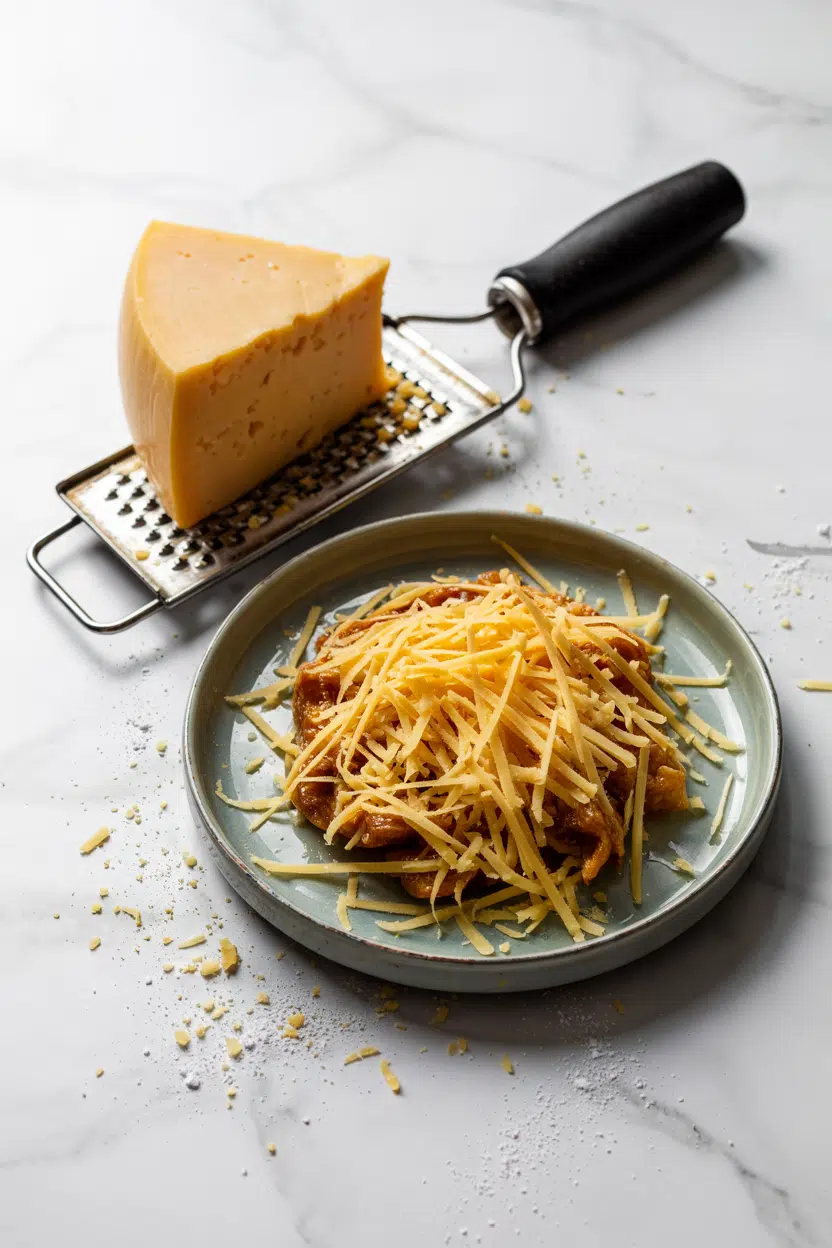
Young, mild cheddar tastes clean and buttery, with a gentle dairy sweetness and almost no sharpness. It's the closest in character to Colby - smooth on the palate, easy-going, and unremarkable on its own.
Aged cheddar is a different experience entirely. Sharp cheddar delivers a pronounced tang, a lingering nuttiness, and a slight earthiness that deepens with every additional month of aging.
The comparison to using gruyere cheese for creaminess holds at the older end of the spectrum - both cheeses develop similar savory, nutty complexity, though cheddar stays drier and more acidic.
Heat changes the character further. Melted mild cheddar turns creamy and mild-sweet; melted aged cheddar can turn slightly oily if pushed too hard, releasing fat before the proteins have a chance to stretch.
How to Use cheddar cheese
Cheddar's range across heat and temperature is what makes it so central to British and American cooking. At room temperature, it holds its shape cleanly for cheese boards.
Under heat, it melts into sauces, soaks into bread, and forms the golden crust on a gratin.
| Method | Best For | Tip |
|---|---|---|
| 🥗 Raw / Sliced | Cheese boards, sandwiches, ploughman's lunch | Pair with crisp apple or pear to cut richness |
| 🫕 Melting | Grilled cheese, nachos, cheese sauce, macaroni | Use mild or medium; aged cheddar splits more easily |
| 🧁 Baking | Savory scones, biscuits, cheese straws, pastry dough | Grate from frozen for even distribution in dough |
| ✨ Grating / Finishing | Baked potatoes, gratins, soups, vegetable dishes | Use sharp or aged for maximum flavor impact |
Cheddar pairs naturally with apples, pears, and crusty bread, and the pairing with brown ale or a single-malt whisky is a classic British pub move. Scallions, caramelized onions, and bacon all amplify its savory edge.
Avoid pairing it with overly acidic fruit compotes - they compete with cheddar's own tang rather than complementing it.
How to Buy and Store cheddar cheese
Buying by color is a trap. Orange cheddar gets its hue from annatto dye - it signals nothing about flavor or quality. Instead, focus on texture: a young block should feel firm and smooth with no cracks; an aged block should show a slightly rough surface and, ideally, small white calcium lactate crystals inside the paste when cut.
For storage, wrap the cut surface in cheese paper or parchment, then loosely bag it. This lets the cheese breathe without drying out.
Keep it away from strong-smelling foods in the fridge, and treat the shelf life of your dairy section the same way you'd track milk's shelf life - use dates as a guide, not a guarantee.
Shelf life at a glance:
- 📦 Unopened block - 6-8 weeks refrigerated
- ✂️ Opened block - 3-4 weeks, tightly wrapped
- 🧂 Shredded cheddar - 1-2 weeks; pre-shredded dries and molds faster
- 🏆 Aged blocks - keep longer and continue developing flavor in the fridge
For a full breakdown of how to manage opened and unopened blocks, the guide to cheddar cheese in dairy recipes covers the details.
Where to Start with Cheddar
Start with a medium or sharp cheddar if you're cooking - mild cheddar disappears into dishes, while aged adds clear flavor without being aggressive. For cheese boards, go aged and crumbly alongside something crisp and fresh.
If you want to branch out from cheddar, look at cheddar cheese stand-ins that hold up in the same melting and grating roles.
Sharp cheddar rewards attention - grate it fresh, melt it slowly, and it will outperform anything pre-shredded at the same price point.
Frequently Asked Questions
Cheddar is a hard cheese. It's made by pressing the curds firmly and aging the block, which removes moisture and creates a firm, dense paste. Older cheddar gets progressively drier and more crumbly.
Those white specks are calcium lactate crystals, which form as moisture evaporates and lactic acid concentrates during aging. They're harmless and actually signal well-aged cheddar with good flavor development.
The difference is aging time. Mild cheddar is aged 2-3 months and tastes clean and buttery; sharp cheddar is aged 6-12 months and develops a pronounced tang and firmer texture.
Mild and medium cheddar melt smoothly over low heat. Aged cheddar can separate and turn oily if overheated because its lower moisture content makes it less forgiving.
Yes, though the texture becomes crumbly after thawing, making it better for cooking than eating straight. Grate it before freezing and it works well in baked dishes and sauces.



