
Kabocha squash earns its place in the kitchen through sheer substance - dense, starchy flesh that cooks down to a creamy, almost custard-like texture while its natural sugars caramelize into something deeply nutty and sweet.
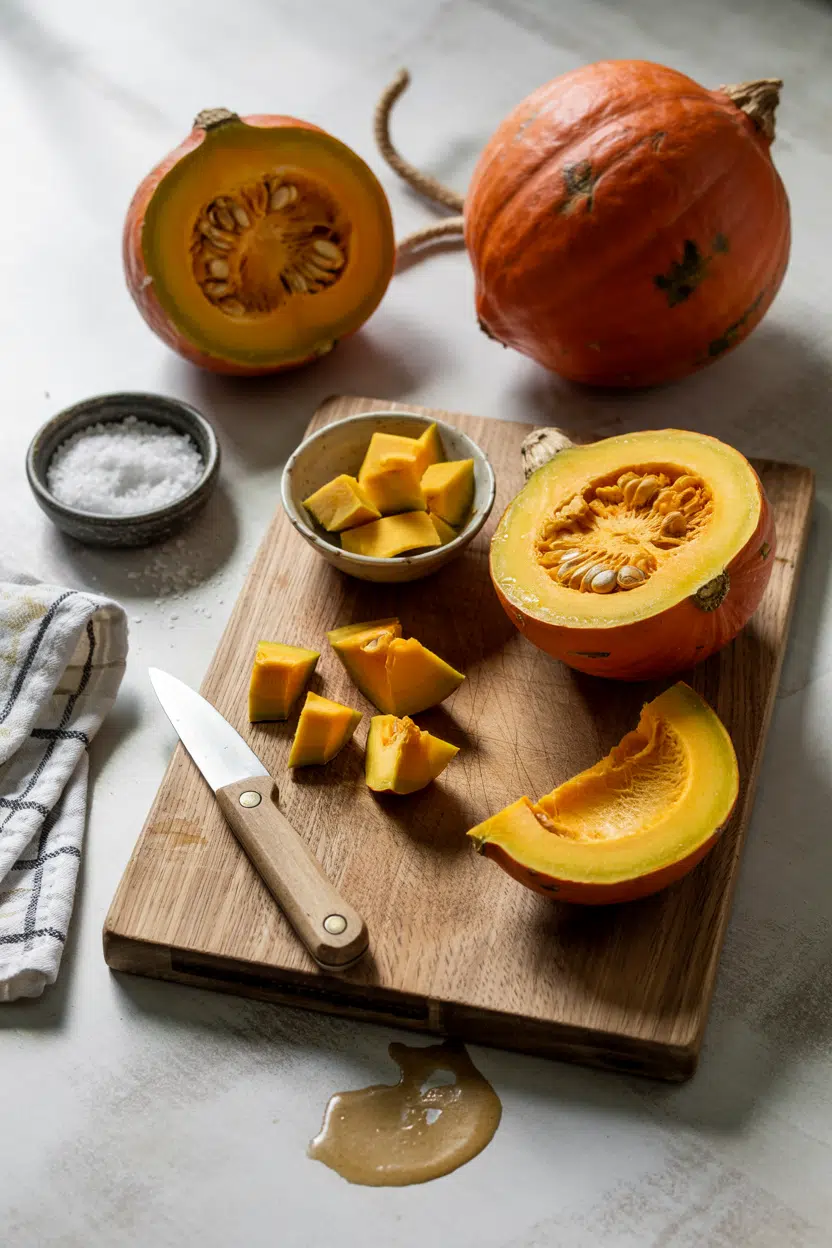
It does what alternatives to acorn squash and sweet potato stand-ins only approximate: it holds structure through long braises, soaks up bold seasonings without disappearing, and brings a richness that lighter squash varieties can't match.
Kabocha is a Japanese winter squash with dark green knobbly skin and bright orange flesh. It tastes sweet and nutty - closer to chestnut than most squash - with a dry, dense starch that becomes creamy when cooked. Use it roasted, simmered, pureed, or fried.
What Is Kabocha Squash?
Kabocha is a winter squash native to Japan, though its roots trace back to Central America - Portuguese traders introduced it to Japan in the 16th century, where it was refined into what we know today.
Remember it later
Planning to try this recipe soon? Save it for a quick find later!
Also called Japanese pumpkin, it belongs to the Cucurbita maxima species alongside other large, dense squash varieties.
The exterior is dark green, hard, and knobbly - sometimes streaked with pale green or grayish patches. Inside, the flesh is a vivid deep orange, significantly drier and denser than butternut squash.
It's a compact squash, typically weighing between two and four pounds.
You'll also see it labeled kuri kabocha or simply "kaboccha" in Japanese markets. There are green-rind varieties, which are most common, and red-skinned cultivars that appear occasionally in specialty stores.
All share that same hallmark: starchy, firm flesh that collapses into a smooth, thick puree when heat is applied.
What Does Kabocha Squash Taste Like?
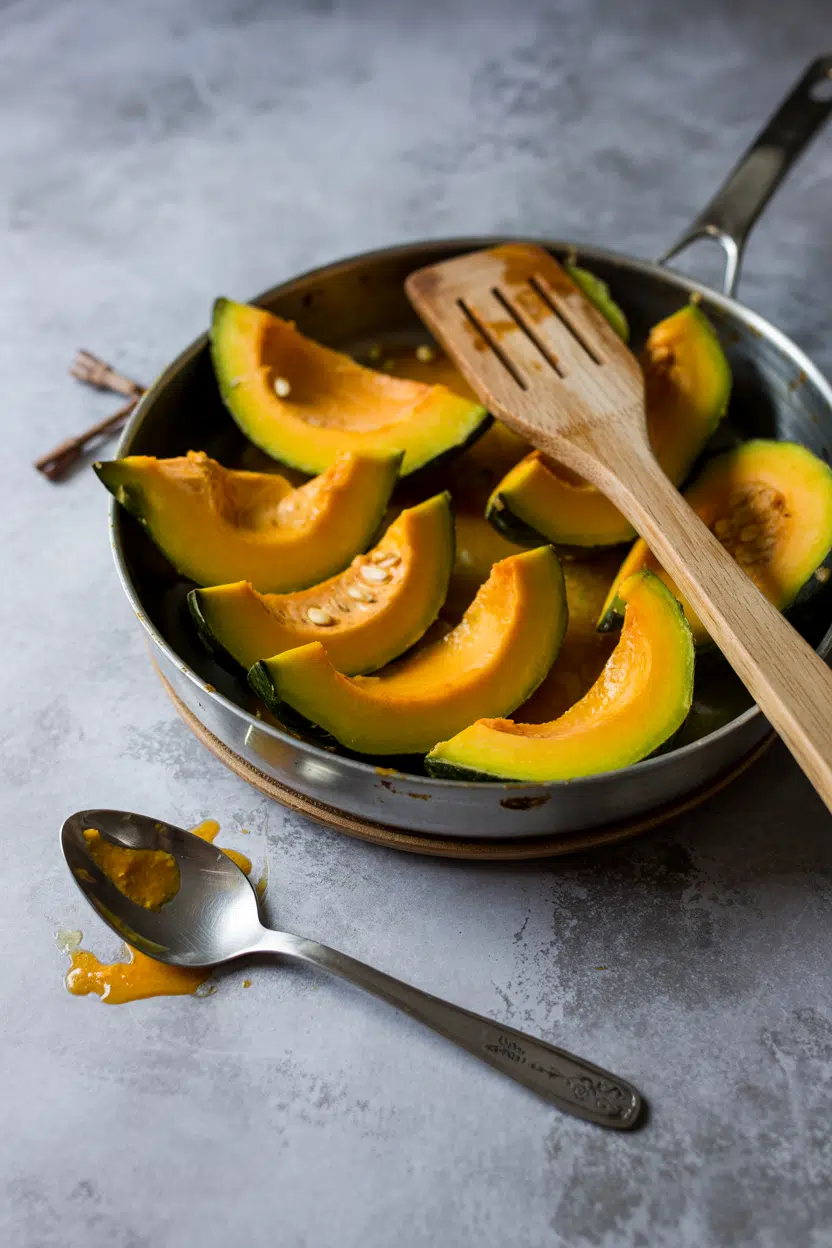
Kabocha tastes sweet in a way that feels roasted even before it hits the oven. The natural sugars lean toward brown sugar and caramel rather than the fresh, mild sweetness of butternut.
Underneath that sweetness sits a nutty, chestnut-like depth with a subtle earthy umami note that keeps it from tasting one-dimensional.
Compared to sweet potato's flavor and uses, kabocha is nuttier and drier with less residual moisture - it won't weep liquid into a filling or soup.
Heat intensifies everything: roasted kabocha develops caramelized edges with a toasty aroma that raw squash only hints at.
The profile of the taste of pumpkin overlaps loosely, however kabocha is notably richer and less watery in both taste and texture.
How to Use Kabocha Squash
Kabocha's dry, dense flesh makes it one of the few squash types that holds its shape through long cooking - an important quality in stews and braises where waterlogged squash turns to mush.
Start by halving it and scooping the seeds; a sharp, heavy knife is essential since the rind is very hard.
| Method | Best For | Tip |
|---|---|---|
| 🔥 Roasting | Wedges, side dishes, grain bowls | High heat (425°F) caramelizes sugars; season with soy and sesame |
| 🍲 Simmering | Nimono, curries, stews | Use mirin and soy broth; add late so it absorbs flavor without dissolving |
| ♨️ Steaming | Purees, soups, fillings | Retains color and shape better than boiling; great base for potage |
| 🍤 Tempura | Appetizers, Japanese menus | Thin slices fry fast; sweet flesh contrasts well with light batter |
| 🥧 Baking | Tarts, pies, mashed fillings | Mashed kabocha is drier than pumpkin - less likely to make soggy pastry |
Pairing kabocha with soy sauce, mirin, and ginger is the Japanese baseline - it's the foundation of nimono, a simmered dish where the squash absorbs a savory-sweet broth. Miso and brown butter both amplify the nutty undertones. Coconut milk with curry spices is a natural Southeast Asian direction; the richness of the milk balances kabocha's dense starch without overwhelming it.
For cooks outside those traditions, roasted kabocha works well with brown butter and sage, maple glaze, or simply roasted garlic and thyme. It fits naturally into grain bowls and risotto where its sweetness creates contrast.
If you're short on kabocha, swapping out kabocha squash with butternut or sweet potato is possible, though neither replicates its dry, nutty texture exactly.
How to Buy and Store Kabocha Squash
Pick up a kabocha and look for a hard, unblemished rind in deep green - soft patches or a wet stem are signs of overripeness. Tap it: a hollow sound suggests the flesh inside is properly dry and ripe.
The stem should feel corky and dry, not damp.
Whole kabocha stores exceptionally well.
Keep it in a cool, dry spot away from direct sunlight - a pantry shelf or basement works.
Once cut, wrap tightly in plastic or store in an airtight container in the fridge.
For full guidance on keeping kabocha squash fresh through each stage, storage conditions matter more than most people realize.
Cooked kabocha keeps for 3-4 days refrigerated.
Where to Start with Kabocha
If this is your first kabocha, roast it. Cut into wedges, toss with oil, soy sauce, and a pinch of sesame, and roast at high heat until the edges caramelize.
That single preparation shows you everything the squash does well.
From there, butternut squash stand-ins can help you understand what makes kabocha distinct - its drier starch and nuttier finish are apparent the moment you put the two side by side.
Cooks who enjoy sweet potato in savory dishes will find kabocha a natural next step.
It rewards seasoning, handles heat confidently, and keeps its shape when other squash falls apart.
Frequently Asked Questions
No. Both are winter squash, however kabocha is a different species (*Cucurbita maxima*) from most pie pumpkins (*Cucurbita pepo*). Kabocha is significantly drier, nuttier, and denser than common pumpkin flesh.
Yes - the skin softens fully when cooked and is edible. Roasted kabocha skin turns slightly crisp at the edges and has a mild, earthy flavor that most people find pleasant rather than tough.
Kabocha is nuttier, drier, and sweeter than butternut squash. Butternut has a milder, more watery sweetness; kabocha delivers a chestnut-like depth with less moisture in the finished flesh.
A whole, unblemished kabocha lasts 3-6 weeks at cool room temperature. Once cut, refrigerate it in an airtight container and use within 3-5 days.
Not always. For roasting and simmering, the skin softens and is edible - peeling is optional. For smooth soups or pureed fillings, peeling after steaming or roasting is easier and gives a cleaner result.



