Most people assume sweet potato is just a sweeter, more colorful stand-in for white potato. That assumption leads to undercooked centers, bland mashes, and roasted cubes that steam instead of caramelize.
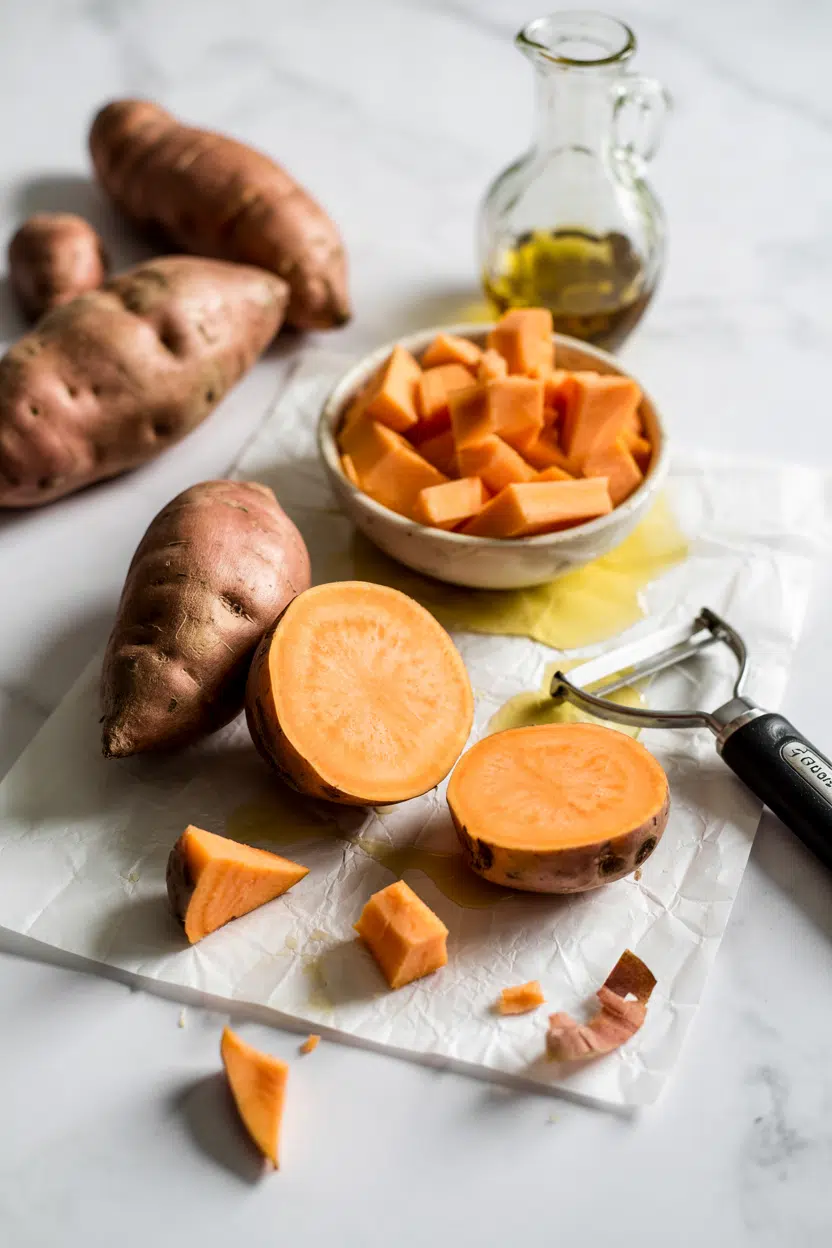
Sweet potato rewards specific handling - higher sugar content means it behaves differently under heat than any other root vegetable. Get that right, and it becomes one of the most useful ingredients in a savory kitchen.
Sweet potato is a starchy root tuber with naturally high sugar content that deepens to caramel and earthiness under heat. It excels roasted, mashed, or pureed. Raw tubers store 2-4 weeks in a cool pantry.
What Is Sweet Potato?
Sweet potato (Ipomoea batatas) is a starchy root tuber domesticated thousands of years ago in Central and South America. It belongs to the morning glory family - no botanical relation to white potato whatsoever.
Remember it later
Planning to try this recipe soon? Save it for a quick find later!
In North American grocery stores, it's frequently mislabeled as a yam, which is an entirely different plant genus (Dioscorea) native to Africa and Asia. True yams are drier, starchier, and rarely sold outside specialty markets.
Flesh color and texture vary widely across varieties:
- 🟠 Orange-fleshed - the most common type in US stores; moist, high-sugar, and deeply caramel when roasted
- ⬜ White or yellow-fleshed (boniato) - firmer, drier, less sweet; used across Caribbean and Latin American kitchens
- 🟣 Purple-fleshed - dense and mildly sweet with an earthy, almost wine-like undertone; popular in Japanese cooking as satsumaimo
The orange variety is what most recipes mean by default. When a recipe specifies boniato or purple sweet potato, technique and timing shift noticeably.
What Does Sweet Potato Taste Like?
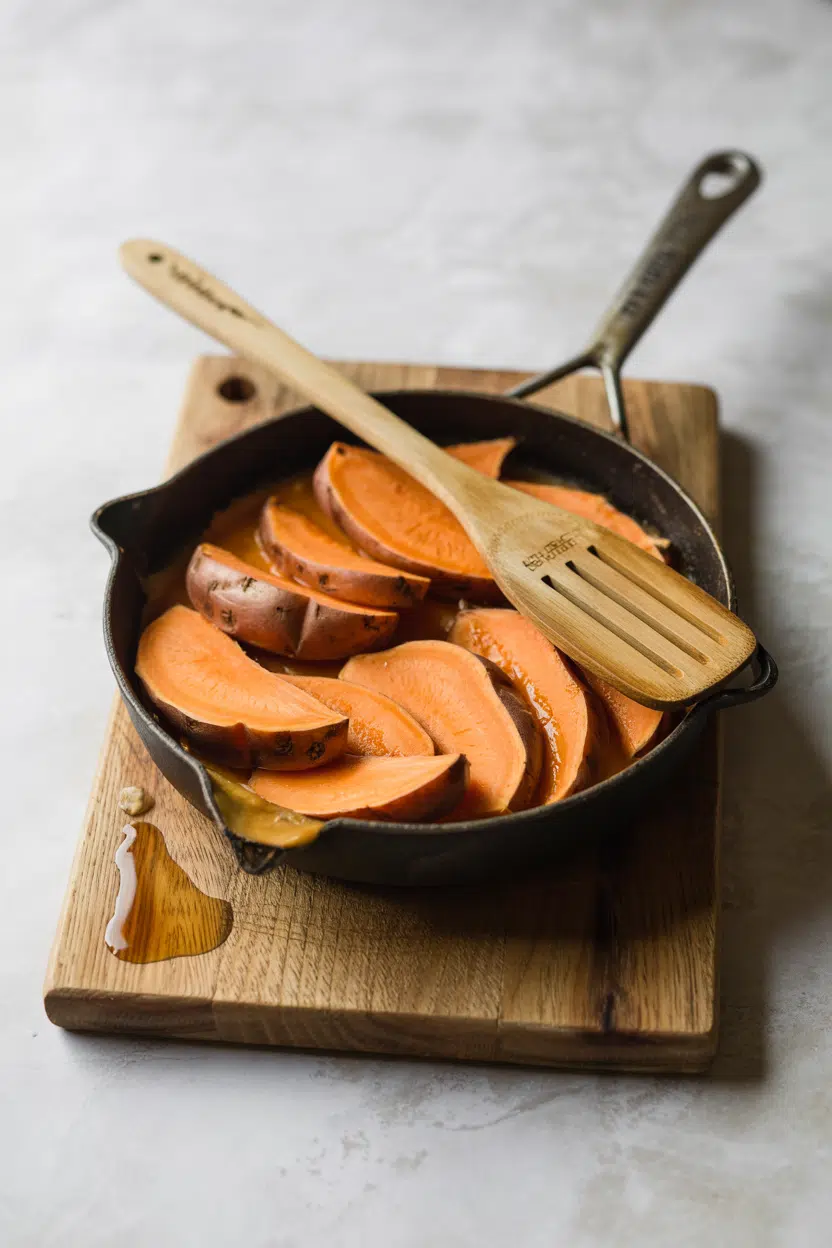
Raw sweet potato is mild and faintly sweet - almost understated. Heat changes everything.
As it cooks, natural starches convert to sugars, which is why a roasted sweet potato tastes dramatically sweeter than a raw one. The effect is most pronounced above 300°F (149°C), where those sugars start to caramelize at the surface.
The closest comparison is roasted carrot or pumpkin - that same vegetal sweetness - but with more starchy body and a deeper caramel finish. It's sweeter and moister than white potato, and far less neutral.
Purple and white varieties are noticeably less sweet and firmer in texture. They read more savory and hold their shape better under long cooking.
How to Use Sweet Potato
Sweet potato handles a wider range of heat than most roots. Roasting is where its character really comes through: cut into cubes, tossed in oil, and cooked at high heat until the edges caramelize and pull slightly from the flesh.
Whole baked sweet potato works similarly to a baked white potato but cooks faster and collapses more at the center. Mashed sweet potato is richer and naturally creamier, needing less butter than white mash to achieve a smooth texture.
Coconut milk works especially well in place of dairy.
Pureeing into soups or bisques requires no thickener - the starch does that naturally. For savory contrast in curries or West African stews, the natural sweetness balances heat and acid without added sugar.
| Method | Best For | Tip |
|---|---|---|
| 🔥 Roasting | Caramelized sides, salads, grain bowls | Use 425°F (220°C) minimum; flip once halfway |
| 🍠 Baking whole | Simple sides, stuffed meals | Pierce skin and bake on foil to catch syrup |
| 🥣 Boiling + mashing | Smooth mash, pie filling, fritters | Drain thoroughly - excess water makes mash gluey |
| 🍟 Frying or air-frying | Sweet potato fries, chips | Soak cut pieces in cold water first to reduce sugar sticking |
| 🍲 Stewing | Curries, soups, West African stews | Add in the last 20 minutes - it softens quickly |
Flavor pairings that reliably work: warm spices (cinnamon, ginger, nutmeg), rosemary and thyme for savory applications, and a splash of citrus or vinegar to cut the inherent sweetness.
When a recipe calls for it and you're out, reviewing your sweet potato stand-ins helps narrow down which substitute actually fits the dish.
How to Buy and Store Sweet Potato
Choose tubers that feel solid and heavy for their size. The skin should be smooth and taut with intact tapered ends - no soft spots, wet blemishes, or visible sprouts.
Flesh color signals how the tuber will cook. Orange-fleshed varieties (often labeled Beauregard or Garnet) yield moist, sweet results. White and purple types stay firmer and dryer - useful when you want texture to hold through long braising.
For a clear comparison of white-fleshed varieties, the guide on preparing boniato vs batata properly covers the handling differences in detail.
Store whole raw tubers in a cool, dark, ventilated space at 55-60°F (13-16°C). They last 2-4 weeks this way.
Cut or cooked sweet potato goes into the fridge and keeps for 3-5 days. Knowing the sweet potato spoilage signs saves you from cooking one that's already past its window.
Start with Roasting
If you're new to cooking sweet potato, roast it first. Cut into 1-inch cubes, coat in oil, and give it space at high heat.
That's where the caramel flavor develops, and it tells you exactly what this ingredient can do. From there, mashing and pureeing follow the same logic - high heat, enough time, and no excess moisture.
Frequently Asked Questions
Heat activates amylase enzymes in the flesh, which break down starches into maltose - a simple sugar. This conversion peaks around 135-170°F (57-77°C) during slow cooking, which is why a long-baked sweet potato tastes far sweeter than a boiled one cooked quickly.
They're entirely different plants. Sweet potatoes are Ipomoea batatas; true yams are Dioscorea species native to Africa and Asia, with dry, starchy flesh and bark-like skin. Most "yams" sold in US supermarkets are actually orange-fleshed sweet potatoes.
Both, depending on context. Botanically it's a root vegetable, but nutritionally it's categorized as a starchy food alongside potatoes and corn. Dietitians typically count it toward starch intake rather than non-starchy vegetable servings.
Discard it if the skin shows wet, sunken soft spots, mold, or the flesh has turned dark brown or black inside. Small fibrous sprouts alone don't mean it's inedible - cut them away and check that the flesh is still firm throughout.
Not categorically. Sweet potatoes have more beta-carotene and slightly more fiber, while white potatoes have more potassium and a lower calorie count per gram. The better choice depends on what your diet is already missing.