A grater does one thing knives cannot: it converts firm, dense ingredients into shreds, flakes, or fine particles that melt, blend, or distribute in ways chunks never will.

Drop finely grated Parmigiano-Reggiano over hot pasta and it dissolves instantly into the sauce - coarsely sliced, it just sits there.
Understanding comparing lemon extract vs lemon zest options shows exactly why fresh zest - produced by a microplane - carries aromatic oils that no liquid extract can fully replicate.
The same logic applies when comparing allspice vs nutmeg options - freshly grated whole nutmeg outperforms pre-ground every time.
A grater is a metal shearing tool - not a food - that converts firm ingredients into shreds, zest, or fine particles. It contributes no flavor of its own when clean and in good condition. Choose the right face for the job: microplane for zest and hard spices, box grater for cheese and vegetables.
What Is a Grater?
A grater is a handheld or box-style metal tool with sharp perforations that shear food against an abrasive surface.
Remember it later
Planning to try this recipe soon? Save it for a quick find later!
Each hole is stamped or punched to create a raised cutting edge - the food passes across those edges and breaks into fine particles, ribbons, or coarse shreds depending on hole size.
The tool falls into a few distinct types worth knowing:
- 🔲 Box grater - Four faces with different hole sizes; handles shredding, slicing, and fine grating in one tool
- 🔪 Microplane / rasp grater - Long, narrow, ultra-sharp teeth; produces feather-light flakes from citrus zest, hard cheeses, ginger, and whole spices
- 🥄 Flat / paddle grater - Single-face tool, compact and easy to store, suitable for table-side grating
- 🫙 Rotary grater - A drum mechanism that turns against food; popular for tableside Parmigiano service
The terms zester and microplane are often used interchangeably, though a microplane refers specifically to the rasp-style tool developed from woodworking rasps.
A classic zester produces long, thin strips of peel - a different result from the fine dust a microplane creates.
What Does a Grater Taste Like?
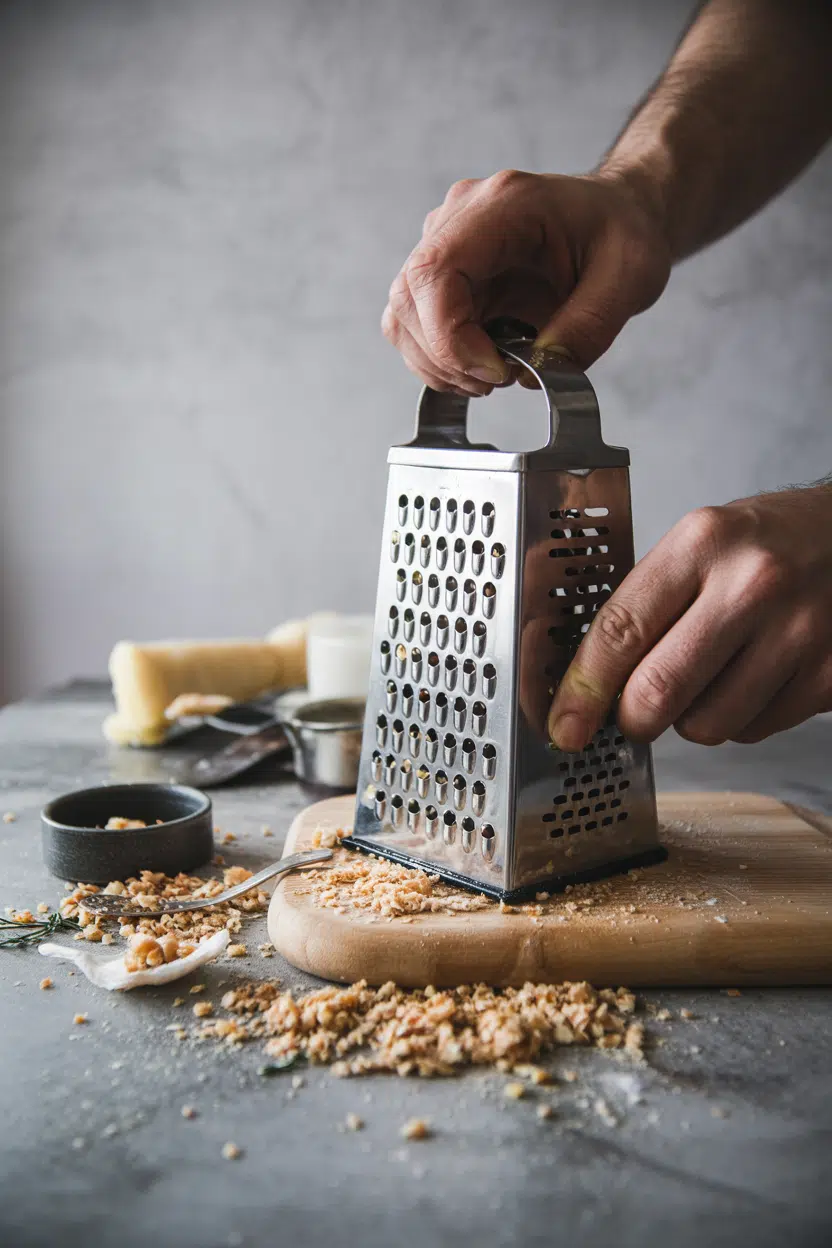
A clean, well-maintained grater contributes nothing to flavor. That's exactly the point - it's a mechanical tool, not an ingredient.
The one exception is a rusty or heavily worn grater. Corroded teeth can transfer a faint metallic note to food, similar to the faint off-taste from a new, unseasoned baking sheet or a worn stainless pan.
What the grater does affect is the sensory experience of the food it processes. Finely grated nutmeg releases volatile oils immediately - coarsely chopped nutmeg does not.
The tool changes the surface area, and surface area changes flavor intensity.
How to Use a Grater
The right face for the job matters more than the brand.
Using the wrong hole size wastes food, clogs the tool, and produces uneven texture.
For raw carrots destined for coleslaw - if you're working with carrot swaps that work like parsnip or kohlrabi - the large-hole face of a box grater gives you the even bite-sized shreds you need.
For grating garlic directly into dressings, a microplane distributes it smoothly without visible chunks, which is useful when building chili garlic sauce swaps that work at home.
| Method | Best For | Tip |
|---|---|---|
| 🥗 Raw Finishing | Citrus zest, hard cheese over pasta, grated garlic into dressings | Grate directly over the dish so volatile oils don't evaporate |
| 🍳 Pre-Cook Shredding | Potato latkes, carrot fritters, zucchini bread batter | Salt and squeeze shredded vegetables to remove excess moisture before cooking |
| 🍞 Into Batters & Doughs | Grated stale bread for breadcrumbs, grated butter into pastry | Freeze butter briefly before grating - it shreds instead of smearing |
| ✨ Garnishing | Chocolate curls over tarts, nutmeg over drinks, fine cheese snow | Use a cold microplane for chocolate - warmth melts the surface and clogs teeth |
A few pairings consistently show what the tool does best. Parmigiano-Reggiano on a microplane becomes a snow-light cloud that melts into cacio e pepe without clumping.
Whole nutmeg grated fresh delivers immediate aromatic punch. Chocolate shaved over a tart or hot drink gives visual contrast and a melt-on-contact texture that pre-bought chocolate flakes won't match.
Potato latkes rely entirely on the large-hole box grater face - the coarse shreds hold together in the pan while the interior stays tender.
After grating, squeeze the potato shreds firmly in a cloth to remove starch water; this step decides whether the latke crisps or steams.
For advice on keeping latkes fresh after the batch is cooked, storage method matters as much as technique.
Don't reach for a grater with soft spreadable cheeses like brie or ricotta - they smear against the teeth and clog immediately. Very wet produce like ripe tomatoes does the same.
When you genuinely don't have the tool on hand, checking out alternatives to grater will show which workarounds actually produce comparable results.
How to Buy and Store a Grater
Look for crisp, uniformly punched holes with no jagged burrs along the edges - burrs tear food rather than shear it, and they're nearly impossible to fix.
The frame should feel rigid; a grater that flexes under moderate pressure will bend further with use.
Storage is straightforward but important.
Hang the grater or store it upright so air circulates around the teeth - cramming it under heavy items bends the plate and dulls the edges.
Rinse it immediately after use, before food dries into the holes, and dry it fully before putting it away.
For more detail on keeping grater fresh long-term, proper drying is the single most important habit.
A well-maintained grater lasts indefinitely. Replace it when shredding requires noticeably more force or produces bent, torn shreds rather than clean cuts.
Start Here
If you're deciding which grater to reach for first, box grater plus microplane covers nearly every task in a home kitchen.
Use the box grater's large holes for potatoes and carrots, the medium holes for block mozzarella and cheddar, and the microplane for Parmigiano, citrus zest, fresh ginger, and whole spices.
Understanding the differences between parmesan vs parmigiano reggiano will also clarify why the choice of cheese affects which grater face works best.
- 🧀 Start with cheese - Use the medium or fine box grater face; reserve the microplane for aged hard cheeses like Parmigiano or Pecorino
- 🍋 Start with zest - A microplane is non-negotiable here; box grater fine holes produce strips, not fine dust
- 🥔 Start with vegetables - Large-hole box grater for latkes and slaws; salt and drain after grating
Frequently Asked Questions
Not directly - a clean grater adds no flavor. However, it increases surface area dramatically, which intensifies how strongly a food's existing flavor registers. Finely grated nutmeg or garlic tastes sharper than the same amount coarsely chopped.
A microplane is a type of grater - specifically a rasp-style tool with extremely fine, sharp teeth. Standard box graters have larger holes and produce coarser results. Use a microplane when you need feather-light texture, like cheese snow or citrus zest dust.
A classic zester has small holes that pull long thin strips of peel, while a microplane grater produces fine, powdery zest. Most cooks prefer the microplane result for cooking since it distributes more evenly into batters, sauces, and dressings.
Rinse immediately after use before food dries and clogs the holes. Scrub with a stiff brush - never a cloth, which catches on the teeth. Dry fully before storing to prevent rust.
Yes - a food processor with a shredding disc works for block cheeses, and a sharp knife can produce rough crumbles from hard aged cheeses. Neither matches the fine, even texture of a microplane for finishing dishes like pasta or risotto.