Product note: ForkliftKitchen may earn a commission from qualifying purchases made through product links on this page. Learn more.
Lawry's Signature Steakhouse Marinade is the best steak marinade for most weeknight cooks. Its garlic, onion, red pepper, tomato, vinegar, and spice profile tastes at home on beef, while the 15-minute direction fits a dinner that was not planned yesterday.
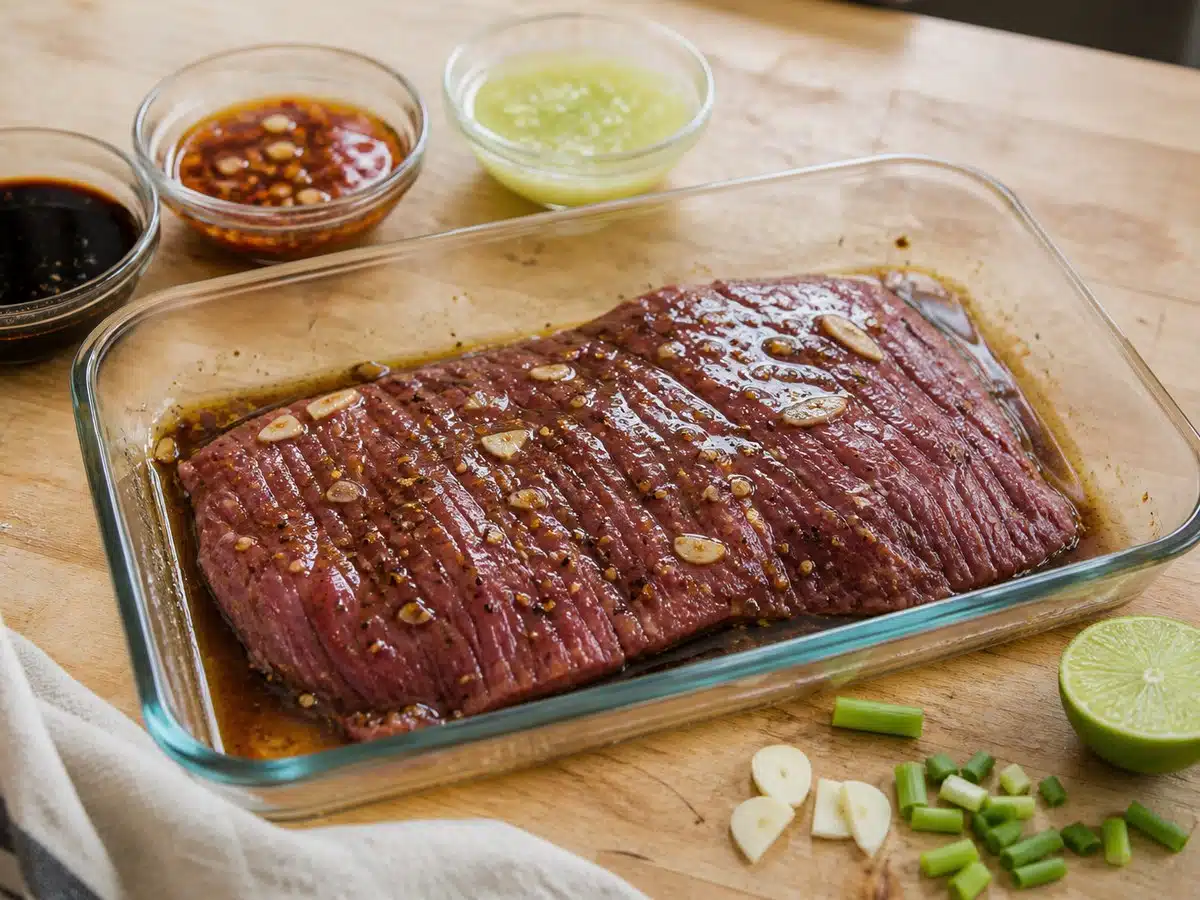
A steak marinade can add pepper, fruit, soy, and acid, then undo the dinner by leaving the surface too wet, too salty, or too sweet for a clean sear.
The right bottle therefore depends on more than flavor. A concentrated soy marinade needs a shorter hand than a mild steakhouse blend, and a fruit-sweet Korean sauce needs closer heat control than a tart lime-and-vinegar pouch.
We compared seven current products by formula, steak-cut fit, stated timing, salt pressure, sweetness, heat behavior, package format, and exact catalog identity. This is a packaged wet-marinade ranking, so dry rubs, homemade recipes, and finishing-only steak sauces stay outside it.
Allegro Original is the brighter soy-lime alternative. Choose bibigo when thin beef and sweet Korean barbecue are the plan, or the McCormick Brazilian Steakhouse pouch when one grill session should not leave another bottle in the refrigerator.
7 Steak Marinades, Ranked by What They Do at the Grill
Match the marinade to the grill plan, not just the flavor name.
Save this ranking
Comparing these products later? Save this ranking for a quick return.
Lawry's leads because it delivers a familiar steakhouse direction on a short clock without pushing every cut toward a sweet barbecue finish.
The seven products below have different roles. Formula, timing, and surface behavior count alongside flavor because the best bottle is still a poor buy if it oversalts the steak or scorches before the center cooks.
- 🥩 Steak fit. The profile needs a clear role on flank, skirt, sirloin, steak bites, kebabs, or a richly marbled cut.
- ⏱ Formula and clock. Salt concentration, acid, fruit, and sugar affect how forgiving the stated marinating time feels.
- 🔥 Searing behavior. Thin, sweet, or clingy formulas need different draining, drying, and heat control.
- 📦 Package usefulness. Bottle size, a single-use pouch, and repeat-use versatility determine whether the format suits the cook.
| # | Product | Best For | Key Note |
|---|---|---|---|
| 1 | Lawry's Signature Steakhouse | 🏆 Best Overall | Classic profile, 15 minutes |
| 2 | Allegro Original | 🌿 Soy-Lime | Bright and savory |
| 3 | bibigo Korean BBQ Original | 🍚 Korean BBQ | Pear, apple, sesame |
| 4 | McCormick Brazilian Steakhouse | 🍋 Single-Use | Garlic-lime pouch |
| 5 | Dale's Original | ⚡ Concentrated | Fast savory seasoning |
| 6 | Bachan's Original | 🍣 Japanese-Style | Soy, mirin, ginger |
| 7 | A.1. New York Steakhouse | 🌶 Black Pepper | Tangy steak-sauce profile |
1. Lawry's Signature Steakhouse Marinade

Lawry's Signature Steakhouse has the broadest useful role in this ranking. Garlic, onion, red bell pepper, chili pepper, cumin, tomato, and vinegar point toward a recognizable steakhouse flavor without turning the steak into teriyaki or sweet barbecue.
The 15-minute direction is its practical advantage. That short window suits sirloin, flank steak, kebabs, and steak bites when dinner needs more seasoning than salt and pepper but cannot wait for a long soak.
The marinade has enough tomato and starch to cling better than a thin soy blend.
Drain the steak and blot the surface before high heat so the coating browns instead of sitting wet in the pan.
Lawry's is a safer first bottle than Dale's when salt intensity worries you, and a less sweet route than bibigo or Bachan's. It will not bring the fresh lime edge of McCormick or Allegro.
Choose it for classic grilled-beef dinners with mushrooms, potatoes, or onions. Skip it when Korean-style sweetness, Japanese ginger, or a sharp citrus profile is the whole reason for marinating.
- Steak-specific garlic and pepper profile
- Short 15-minute direction
- Works across several everyday cuts
- Less bright than lime-forward picks
- Coating needs to be blotted before searing
- Not the right lane for Korean barbecue
2. Allegro Original Marinade

Allegro Original turns away from tomato and toward lime, soy, vinegar, and garlic. That contrast earns second place because the formula can sharpen a beef dinner without covering it in a thick or heavily sweet sauce.
The brand directs cooks to marinate both sides for 30 to 45 minutes.
Flank steak and skirt steak make sense here because their broad surfaces take on the soy-lime profile before the meat is sliced across the grain.
Allegro is thinner than Lawry's, so it drains readily. The soy base still brings salt, and pouring in more liquid does not make the steak season more evenly once the surface is coated.
Pick it over McCormick when you want a reusable bottle and a more soy-led result. Pick the Brazilian pouch when lime, garlic, and one-session convenience matter more than keeping leftovers.
The caveat is restraint. This is not the bottle to pair with an already salty side, and it needs less extra seasoning at the grill than a mild marinade would.
- Bright lime and vinegar edge
- Reusable all-purpose bottle
- Published 30-to-45-minute direction
- Soy base adds meaningful salt
- Less cling than tomato-led bottles
- Not a sweet glaze-style marinade
3. bibigo Korean BBQ Sauce Original

bibigo is the sweetest and most specifically Korean barbecue choice here.
Apple and pear concentrates round the soy sauce, while onion, garlic, ginger, sake, and sesame move the profile away from an American steakhouse bottle.
Thin beef is its natural setting. Bulgogi-style slices expose plenty of surface to the sauce and cook quickly, letting the fruit, garlic, and sesame remain part of the dinner rather than a faint note on a thick steak.
The brand calls for at least 30 minutes. Because sugar and fruit brown quickly, shake off excess sauce and watch direct heat closely, especially on small pieces that finish before a thick steak would.
Choose bibigo over Bachan's when pear, apple, and sesame are the appeal. Bachan's is thinner and more ginger-mirin driven, making it easier to use beyond a Korean-style beef dinner.
This is not the neutral choice for a ribeye.
Its sweetness and aromatics have a strong identity, and that identity works best when rice, scallions, vegetables, or lettuce wraps are part of the plan.
- Clear Korean barbecue profile
- Pear and apple support sweet-savory beef
- Well suited to thin slices
- Sweeter than steakhouse marinades
- Needs close heat control
- Too assertive for a neutral steak dinner
4. McCormick Grill Mates Brazilian Steakhouse 30 Minute Marinade

The five-ounce McCormick pouch solves a storage problem as much as a flavor problem. It covers one to two pounds of meat, then leaves no open bottle competing for refrigerator space.
Vinegar, spices, garlic, and lime create the brightest profile in the list. The official directions point to a 30-minute marinade and name flank steak, sirloin, skirt steak, and steak skewers, which keeps the product focused on cuts that suit a lively surface treatment.
Its portion also reduces guesswork for an occasional griller. A pouch is less economical for repeated steak nights, but it is useful when the alternative is throwing away half a forgotten bottle.
McCormick feels more garlic-lime driven than Allegro, while Allegro supplies the deeper soy lane.
Neither offers the tomato-and-pepper steakhouse familiarity of Lawry's.
Use it for skewers or thin steaks with fresh herbs and citrus-friendly sides. A sweet glazed dinner or a deeply savory soy profile calls for another pick.
- No partly used bottle
- Clear 30-minute direction
- Bright garlic and lime profile
- Less useful for frequent cooks
- One flavor per pouch
- Acid-forward lane is not universal
5. Dale's Original Steak Seasoning

Dale's is for the cook who wants seasoning to move quickly and does not confuse more liquid with more control. Despite the Steak Seasoning name, the brand classifies the product as a liquid marinade.
The savory profile is concentrated, so it can make a mild cut taste seasoned on a short schedule. Steak bites and sirloin tips benefit more than an expensive ribeye that already has enough beef and fat to stand on its own.
Quantity and time matter here.
Coat the meat evenly, follow the package, and taste the rest of the meal before adding another salty sauce or side.
Dale's ranks below the gentler bottles because its useful strength is also its limitation. Allegro adds lime and vinegar to soften the soy-led direction, while Lawry's spreads its flavor across tomato, pepper, garlic, and onion.
Buy Dale's when fast savory intensity is the goal. Skip it when you want a forgiving first bottle, fruit sweetness, or a marinade that can sit unnoticed while other dinner tasks run long.
- Fast savory impact
- Useful on small steak pieces
- Reusable 16-ounce bottle
- Concentration demands restraint
- Can crowd salty side dishes
- Not ideal for a subtle ribeye
6. Bachan's Original Japanese Barbecue Sauce

Bachan's earns a place because it behaves more like a thin Japanese-style sauce and marinade than an American barbecue glaze. Soy sauce and mirin form the base, with ginger, green onion, rice vinegar, garlic, and toasted sesame oil adding a lighter aromatic direction.
The bottle can marinate beef, then a clean reserved portion can finish rice or vegetables.
That versatility helps a cook who does not want a steak-only product in the pantry.
On steak, the sweet soy formula suits ribeye slices, steak bites, and rice bowls better than a thick whole steak cooked over fierce direct flame. Drain and blot the meat because surface sugar can darken quickly.
Compared with bibigo, Bachan's drops the pear-and-apple emphasis and leans harder into mirin and ginger. Compared with Allegro, it is sweeter and less lime-driven.
The 17-ounce bottle is useful only if those other jobs sound appealing. A shopper seeking black pepper, tomato, or a one-use packet will get more value from a different lane.
- Soy, mirin, ginger, and garlic profile
- Useful beyond steak
- Thin enough to pour and drain easily
- Sugar can darken quickly
- Less steakhouse-specific
- Large bottle for one dinner
7. A.1. New York Steakhouse Marinade

A.1. New York Steakhouse is the pick for someone who wants marinade to echo the tang of steak sauce.
Black pepper and onion lead, while tomato and tamarind keep the profile sharper than a plain garlic marinade.
The bottle makes sense for burgers, sirloin, steak sandwiches, or grilled beef that will already be served with onions and a tangy condiment. Its flavor identity is familiar, but it is less neutral than Lawry's.
A.1. sits at the edge between marinade and finishing-sauce expectations.
Use the New York Steakhouse marinade as directed rather than assuming the thicker Original table sauce follows the same formula or clock.
This ranks seventh because black pepper and tang are narrower than the all-purpose role of Lawry's or Allegro. For the right cook, that specificity is the purchase reason rather than a flaw.
Choose it when peppered steak sandwiches sound better than Korean beef or lime-bright skewers. Skip it if the plate already has an assertive steak sauce waiting at the table.
- Clear black-pepper and onion lane
- Tangy tomato and tamarind profile
- Reusable 16-ounce bottle
- Narrower than the top picks
- Can duplicate a finishing sauce
- Not suited to sweet Asian-style beef
A Marinade Cannot Rescue Every Steak Cut
More exposed surface makes marinade flavor louder.
Flank steak, skirt steak, sirloin tips, kebab pieces, and steak bites give the liquid many edges to coat, so their cut shape often matters more than the price of the bottle.
Flank and skirt steak also get sliced across the grain for serving. A lime, soy, garlic, or fruit-forward surface therefore appears in many small bites instead of remaining on the outside edge of one thick portion.
A richly marbled ribeye asks a different question. Its fat and browned beef already carry the plate, so a concentrated or sweet marinade can compete with the reason you bought the cut.
Salt, pepper, and a dry surface may be the stronger route when added sauce flavor is not the goal.
Sirloin sits between those cases. It can carry Lawry's familiar steakhouse profile, Allegro's soy-lime edge, or Dale's concentrated seasoning, but smaller pieces need a lighter hand because every face meets the marinade.
| Steak Plan | Useful Marinade Lane | Good Match | Watch For |
|---|---|---|---|
| Flank or skirt | Soy-lime or garlic-lime | Allegro or McCormick | Long acid exposure |
| Thin Korean beef | Fruit-sweet soy | bibigo | Fast sugar browning |
| Sirloin or kebabs | Classic steakhouse | Lawry's | Wet surface |
| Steak bites | Concentrated savory | Dale's | Too much salt |
| Ribeye slices | Japanese savory-sweet | Bachan's | Covering the beef |
| Whole rich ribeye | Often no wet marinade | Dry seasoning | Lost crust |
Salt, Acid, and Sugar Need Different Clocks
Follow the bottle's clock, then be especially cautious when the formula is concentrated. Lawry's states 15 minutes, Allegro states 30 to 45 minutes, McCormick states 30 minutes, and bibigo calls for at least 30 minutes.
Those directions are not interchangeable.
Dale's concentrated savory liquid can season quickly, while vinegar and lime in Allegro or McCormick make a short planned window more sensible than an automatic overnight soak.
Fruit, mirin, and sugar change the cooking side of the equation. bibigo and Bachan's can produce appealing browning, but excess sauce on direct heat can darken before a thick steak reaches the center temperature you want.
Food safety supplies the firm boundary. Marinate beef in the refrigerator, not on the counter.
The USDA warns that very long exposure can make meat mushy, and any marinade that touched raw beef must be discarded or boiled before it becomes a baste or sauce.
Dry the Surface Before the Steak Hits the Heat
Marinated does not have to mean wet at the grill. Liquid on the outside absorbs heat and produces steam before the surface can brown, so the final handling step can matter more to the crust than another hour in the bag.
Lift the steak out, let excess marinade drain, and blot the surface with clean paper towel. Use clean tongs and a clean plate so the cooked steak does not return to raw-meat juices.
Sweet formulas need the closest attention. bibigo and Bachan's should not carry a heavy dripping coat onto fierce direct heat, while thinner Allegro and McCormick marinades usually drain with less effort.
- Remove: lift the steak from the marinade without pouring the bag into the pan.
- Drain: give thin cuts and small pieces time to shed liquid from every edge.
- Blot: pat the surface rather than wiping away every trace of seasoning.
- Separate: move cooked steak to clean tools and a clean serving plate.
Steak Marinade Questions to Settle Before You Open the Bottle
The cut, clock, and heat still control the result. These answers cover the final decisions that the front label cannot settle by itself.
What is the best steak marinade to buy?
Lawry's Signature Steakhouse Marinade is the strongest general first choice. It combines a familiar garlic, onion, pepper, tomato, and vinegar profile with a short 15-minute direction. Allegro is better when lime and soy sound more useful than tomato and pepper.
Can I marinate steak overnight?
Use the timing printed on the exact product. Several picks here call for only 15 to 45 minutes, and concentrated salt or acid does not become automatically better with more time. Always keep the meat refrigerated.
Does bottled marinade tenderize steak?
Marinade changes the surface more readily than the center of a thick steak. Acid and salt can alter surface texture, but no bottle turns every cut tender. Cut choice, slicing direction, and cooking still matter.
Is a pouch better than a bottle?
The McCormick Brazilian Steakhouse pouch is better for one session or a small kitchen because it covers one to two pounds and leaves no open bottle. A reusable bottle makes more sense when steak, kebabs, or grilled vegetables appear often.
Should I marinate ribeye?
Only when you specifically want the marinade flavor. A richly marbled ribeye already brings fat and beef character, so a wet sweet or concentrated coating can be unnecessary. Bachan's suits sliced ribeye for a rice bowl better than it suits a purist steakhouse presentation.
Can I use the steak marinade as a sauce?
Reserve a clean portion before adding raw beef. If marinade has already touched raw meat, the USDA says it must be boiled before reuse; otherwise, discard it. Never pour used cold marinade over cooked steak.