
You spot it at the farmers market in late September - small, dark green, deeply ribbed, sitting in a pile next to the gargantuan butternuts and pale spaghetti squash.

Acorn squash gets overlooked partly because of its size, and partly because cooks aren't sure what to do with it.
That's worth fixing.
Among winter squash, it's one of the most practical: the shell becomes a natural bowl for stuffing, the flesh roasts quickly, and the flavor stays mild enough to work across both savory and sweet preparations.
If you've been curious about replacements for kabocha squash or swapping out spaghetti squash, acorn squash often lands in that conversation.
Acorn squash is a small, ribbed winter squash with orange-yellow flesh that turns sweet and tender when roasted. It's milder than butternut or kabocha, pairs well with butter, maple, and sage, and stays good for weeks whole or up to five days cut in the fridge.
What Is Acorn Squash?
Acorn squash is a winter squash native to North America, domesticated by Indigenous peoples in the eastern United States long before European contact.
Remember it later
Planning to try this recipe soon? Save it for a quick find later!
Its common name comes from its shape - a compact, acorn-like form with pronounced ridges running from stem to tip.
The rind is typically dark forest green, sometimes streaked with orange patches as it ripens; fully yellow varieties exist but are less common in markets.
Inside, the hollow seed cavity holds a web of seeds and stringy pulp that's scooped out before cooking, leaving dense, orange-yellow flesh.
You'll also see it labeled pepper squash or acorn pumpkin at some farm stands, though both refer to the same thing.
It sits alongside butternut and kabocha in the winter squash category, meaning its tough rind protects it through long storage - a useful trait in a cool pantry.
Understanding pumpkin and its flavor helps put acorn squash in context, since both belong to the same Cucurbita family but taste quite different.
What Does Acorn Squash Taste Like?
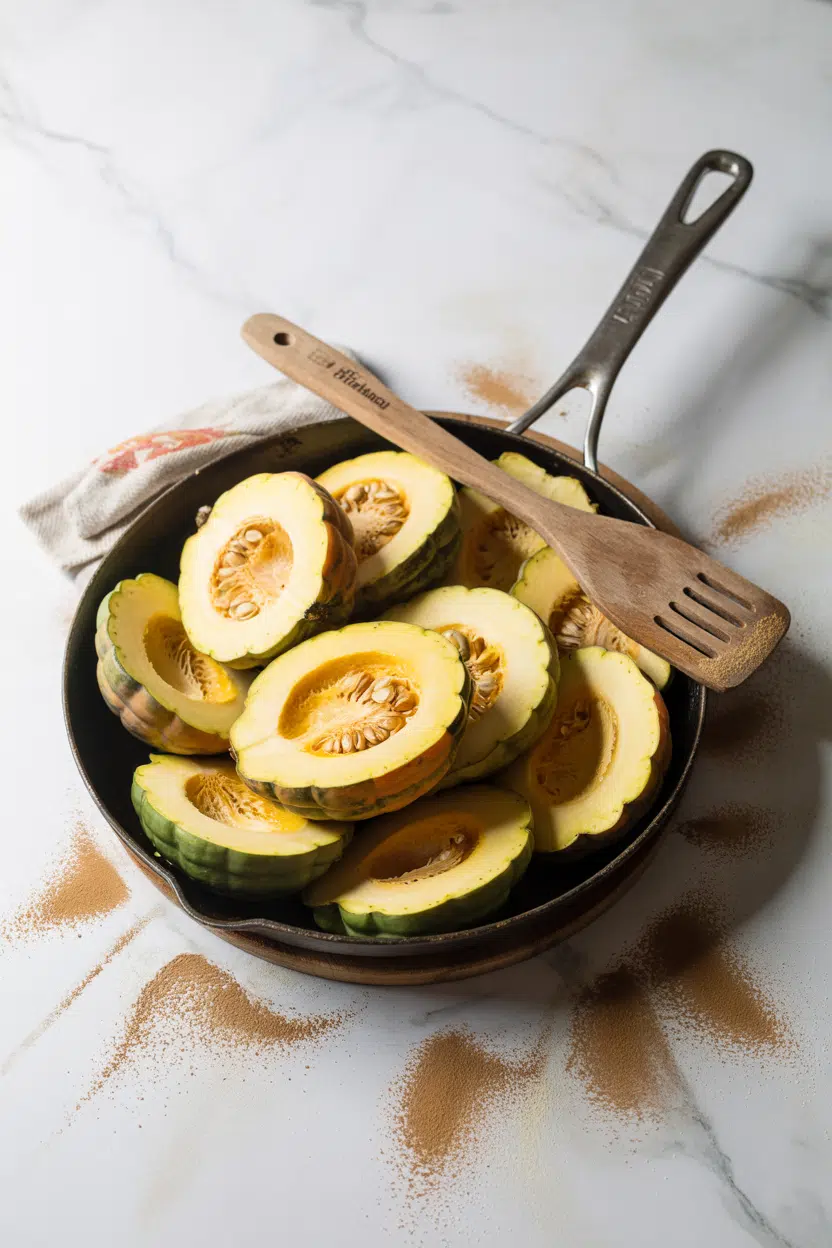
Raw acorn squash barely hints at its cooked potential - the flesh is dense, starchy, and faintly sweet. Heat changes everything. Roasting draws out natural sugars, and the flesh shifts from firm and bland to golden, tender, and mildly sweet with a nutty, buttery undertone.
Compared to butternut squash, acorn is noticeably milder and less sugary. The taste of kabocha squash runs richer and more intensely sweet - acorn squash sits below both on the sweetness scale.
That restraint is actually useful: it takes on seasonings without fighting them.
How to Use Acorn Squash
Acorn squash is most often halved and roasted cut-side down, then flipped to finish with butter and maple syrup in the cavity - a method that caramelizes the flesh and requires almost no prep work.
Its natural bowl shape makes stuffing straightforward; the shell holds a filling of grains, sausage, or quinoa without any extra vessel.
| Method | Best For | Tip |
|---|---|---|
| 🔥 Roasting halves | Simple sides, stuffed presentations | Start cut-side down for 25 min, then flip to caramelize |
| 🫕 Baking stuffed | One-dish meals with grains or sausage | Par-cook filling before adding so both finish together |
| 🍲 Simmering + pureeing | Soups with sage and cream | Roast first for deeper flavor before blending |
| 🥘 Pan-searing cubes | Sheet-pan roasts, warm salads | Par-boil cubes briefly so the interior cooks through |
| 🥧 Baking into sweets | Pies, bars, spiced fillings | Blend with cinnamon, nutmeg, and sugar after roasting |
Acorn squash anchors American autumn cooking - New England and Midwest recipes lean on it for cold-weather sides alongside roasted chicken and braised pork.
It pairs cleanly with maple syrup (or a honey alternative if you're swapping out maple syrup), sage, thyme, and warm spices like nutmeg and smoked paprika.
Walnuts, pecans, apples, and dried cranberries add texture and contrast in stuffed preparations.
Avoid pairing it with overly assertive citrus - heavy lemon or lime can mask the squash's mild sweetness rather than brighten it. Delicate raw dressings also don't hold well against its dense, warm texture.
How to Buy and Store Acorn Squash
At the market, weight is the first signal. Lift two squash of similar size - the heavier one has denser flesh and less hollow air space.
Look for a dull, matte rind: shiny patches indicate surface moisture, which can mean uneven ripeness. Ribs should be firm and well-defined, not soft or collapsed.
Storage is simple for whole squash:
- 🧺 Whole, uncut - Keep in a cool, dry spot away from sunlight; lasts several weeks to 2 months.
- 🔪 Cut or halved - Wrap tightly in plastic or seal in an airtight container; refrigerate and use within 3-5 days.
- 🍲 Cooked flesh - Stores in the fridge for 3-4 days; reheat gently to avoid waterlogging.
Check for acorn squash spoilage signs before using stored squash - soft rind spots, off odor, or slimy flesh all mean it's past its window.
If you need an alternative mid-recipe, a guide to replacements for acorn squash covers the closest options by texture and sweetness level.
For the butternut side of things, swapping out butternut squash covers when the two are interchangeable and when they aren't.
Where to Start With Acorn Squash
New to it? Roast a half with butter and brown sugar first - that's the fastest path to understanding how the flesh behaves and what it naturally wants to be.
From there, stuffing is the logical next step: fill the roasted cavity with cooked grains, sausage, and sage, and you have a complete meal in the shell.
It holds well across dietary constraints - naturally gluten-free, low-fat, and rich in vitamin A and potassium from its beta-carotene content. The flavor is forgiving enough for beginners and structured enough to anchor a serious autumn menu.
Frequently Asked Questions
Acorn squash is one type of winter squash, not a separate category. Winter squash includes butternut, kabocha, delicata, and others - all share a hard rind and long shelf life, but differ in flavor intensity and texture.
Look for a patch of orange on the rind where it rested on the ground - that's a reliable ripeness indicator. The rind should resist fingernail pressure entirely; any give means it was harvested early or has started to deteriorate.
Technically yes, but the flesh is very dense, starchy, and barely sweet in its raw state. Heat is what converts the starches and releases the mild sweetness - raw acorn squash offers little of what makes it worth eating.
Yes - it's low in calories, provides dietary fiber, potassium, vitamin C, and significant vitamin A from beta-carotene. Notably, cooking increases carotenoid availability, so roasted acorn squash delivers more of those nutrients than raw.
Cut acorn squash lasts 3-5 days refrigerated when wrapped tightly in plastic or sealed in an airtight container. Cooked flesh has a slightly shorter window - use it within 3-4 days for best texture.



