You're doubling the batch and there's not enough food processor power to handle it all at once. A food processor chops, purees, and mixes faster than almost any other kitchen tool, but the same results come from different methods.
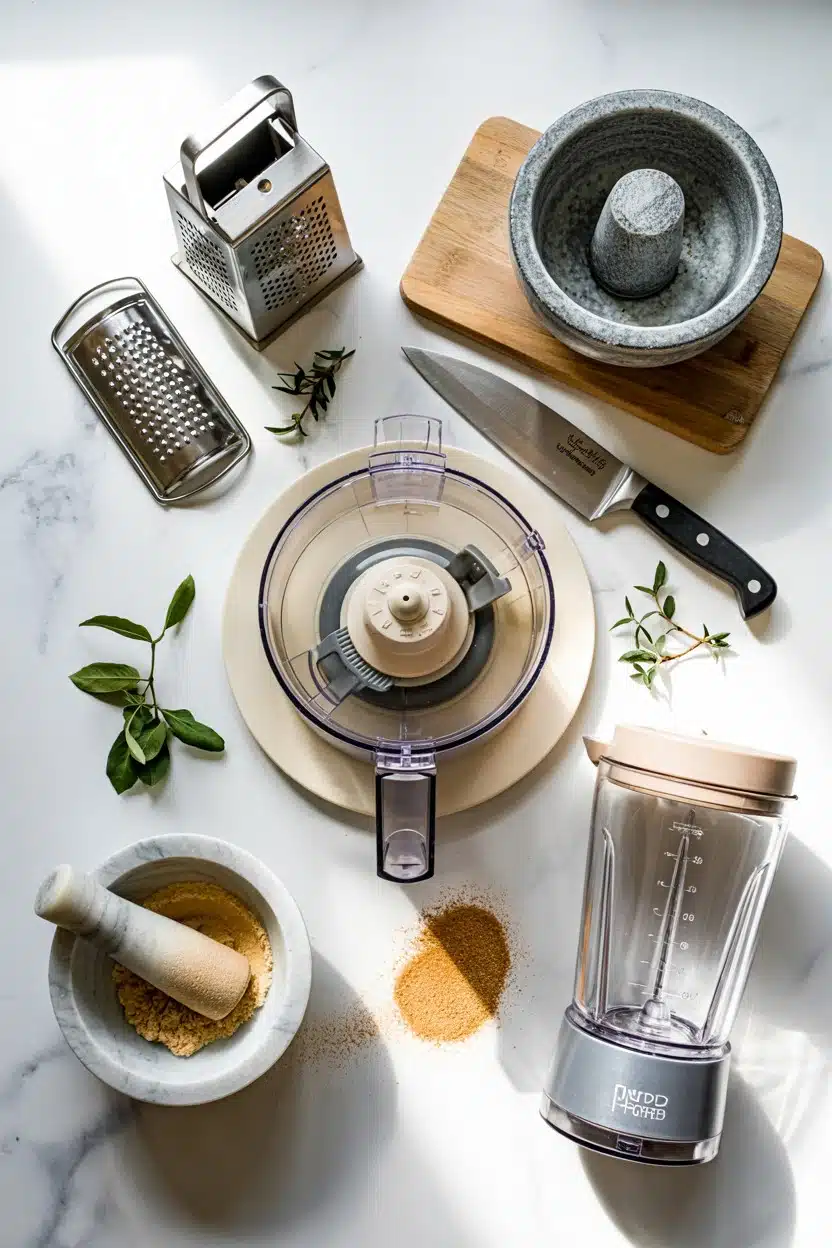
Blender and immersion blender best replace a food processor by handling liquids and soft ingredients efficiently. Texture and consistency are key factors to consider first. For chunkier results, manual tools work well. Always adjust processing time to avoid over-pureeing.
The right substitute depends on what you're processing-liquids blend differently than dry ingredients, and doughs need specific handling. Start with the closest match for your task, then adjust technique as needed.
| # | Substitute | Best For | Ratio | Key Note |
|---|---|---|---|---|
| 1 | Blender | 🍳 Cooking | 1:1 | Best for liquids and purees |
| 2 | Immersion Blender | 🍳 Cooking | As needed | Rustic texture, small batches |
| 3 | Box Grater | ✨ Both | 1:1 | Shredding only, no pureeing |
| 4 | Manual Chopper | 🍳 Cooking | 1:1 | Chunkier results, hand-powered |
| 5 | Stand Mixer | 🥧 Baking | 1:1 | Mixing and creaming only |
| 6 | Mortar & Pestle | 🍳 Cooking | As needed | Small batches, intense aroma |
| 7 | Knife & Board | ✨ Both | 1:1 | Full control, more effort |
7 Best Food Processor Alternatives for Recipes
These options range from common countertop appliances to basic hand tools. The closest matches handle liquids and soft ingredients well, while manual options work better for chopping tasks.
Remember it later
Planning to try this recipe soon? Save it for a quick find later!
1 - Blender
A blender processes soups, sauces, smoothies, and any liquid-heavy mixture with ease. The tall, narrow jar creates a vortex that pulls ingredients down into the blades.
Add enough liquid to keep things moving-about half a cup minimum for most recipes. The texture runs smoother than a food processor, sometimes too smooth for chunky salsas or roughly chopped nuts.
If you're also out of a blender, common Immersion Blender swaps ranked covers handheld options that handle similar tasks.
Skip if: you need to chop dry ingredients or make thick doughs.
Blender
Works for: Smooth soups, sauces, and purees
Skip if: Processing nuts, dough, or dry ingredients
Immersion Blender
Works for: Blending directly in pots and bowls
Skip if: Making large batches or thick mixtures
2 - Immersion Blender
This handheld tool works directly in the pot, bowl, or container. No transferring hot soup to a blender jar.
The texture stays chunkier than a standard blender or food processor. Pulse in short bursts and move the blade around to catch all the ingredients.
Quick specs:
- Best for small batches - One to two cups at a time works well.
- Angle matters - Keep the blade submerged to avoid splattering.
Don't have an immersion blender either? Check replacements similar to Immersion Blender for alternatives that blend in tight spaces.
3 - Box Grater
A box grater handles shredding tasks that a food processor's grating disc normally covers. Cheese, zucchini, carrots, and potatoes all work well.
Use the coarse side for hash browns and coleslaws, the fine side for hard cheeses and citrus zest. The four-sided design gives you options without switching attachments.
The essentials:
- Stable surface - Place a damp towel under the grater to prevent sliding.
- Knuckle guard - Stop when you're down to a small nub.
- Even pressure - Long strokes beat short, choppy ones.
- Clean immediately - Dried cheese sticks in the holes.
If you're also missing a grater, what to use for Grater has workarounds using knives and peelers.
Skip if: you need to puree, chop, or mix anything.
4 - Manual Chopper
A pull-cord or push-down manual chopper handles onions, garlic, herbs, and nuts without electricity. The results run chunkier than a food processor.
Work in small batches-overloading jams the mechanism. Three to four pulls gives you a rough chop; eight to ten gets closer to minced.
Key details:
- Size limit - Cut ingredients into one-inch pieces first.
- Wet vs dry - Wet ingredients process faster than dry ones.
Skip if: you need to process more than two cups at once or make smooth purees.
| Use | Ratio | Notes |
|---|---|---|
| Chopping onions | 1 cup max | 4–6 pulls for rough dice |
| Mincing garlic | 6–8 cloves | 8–10 pulls until fine |
| Grinding nuts | ½ cup | Pulse to avoid nut butter |
5 - Stand Mixer
A stand mixer with the paddle attachment creams butter, mixes batters, and kneads doughs. It replaces the food processor for any mixing task-not chopping or pureeing.
Use low speed to start, then increase as ingredients combine. The paddle works for cookie doughs and cake batters; switch to the dough hook for bread.
What to expect:
- No chopping - You still need to prep ingredients by hand first.
- Volume capacity - Most bowls hold four to five quarts, handling large batches easily.
- Temperature control - Metal bowls chill butter faster; warm them for yeast doughs.
- Scrape often - Stop and push ingredients down from the sides.
Skip if: your recipe needs chopping, shredding, or pureeing.
6 - Mortar & Pestle
A mortar and pestle grinds spices, makes pastes, and crushes garlic better than any machine. The slow grinding releases more aromatic oils than blade-chopping.
Start with a rocking motion, then switch to pounding once ingredients break down. Work in small batches-a quarter cup of peppercorns or six garlic cloves at a time.
Pesto, curry pastes, and spice blends all benefit from this method. The texture stays rustic, with visible bits rather than uniform smoothness.
No mortar and pestle either? See simple Mortar And Pestle substitutes list for crushing options using kitchen tools you already have.
Skip if: you need to process large quantities quickly.
7 - Knife & Board
A sharp chef's knife handles every chopping task a food processor does-just slower. The results give you full control over size and texture.
Rock the blade for herbs and garlic. Use a forward push for onions and carrots. A bench scraper helps move chopped piles without dulling your knife edge.
Here's what to know:
- Keep it sharp - A dull knife slips and crushes instead of cutting.
- Claw grip - Curl your fingertips under to protect them.
Skip if: you're processing large volumes or need hands-free operation.
Making Food Processor Substitutes Work
The best substitute depends on what your recipe actually needs. Pureeing tasks go to blenders; chopping tasks work with manual choppers or knives; mixing tasks belong to stand mixers.
- Closest match - Blender for anything liquid-based
- Easiest grab - Knife and cutting board, already in every kitchen
- Manual option - Box grater for shredding without electricity
Frequently Asked Questions
No, blender motors aren't designed for thick doughs and can overheat or burn out. Use a stand mixer with a dough hook or knead by hand instead.
A blender works well for hummus-add extra liquid to help it blend smoothly. Stop and scrape down the sides several times during processing.
Yes, but work in small batches and pulse carefully. Over-processing turns nuts into butter quickly, so stop when you reach the texture you want.
Freeze the cheese for 20 minutes, then use a sharp knife to cut thin slices and chop into small pieces. A vegetable peeler also creates thin shavings for hard cheeses.
Blenders need liquid to create the vortex that pulls food into the blades. For dry chopping, use a manual chopper or knife instead-blenders aren't designed for that task.
7 Best Substitutes for Food Processor
Ingredients
Method
- Identify the main task: puree, chop, or mix to select the appropriate substitute.
- For purees or liquids, use a blender. Add about ½ cup liquid to help blending and maintain texture.
- Use immersion blender for small batches, blending directly in containers without transferring.
- For shredding tasks, use a box grater with stable surface and even pressure to shred ingredients.
- Chop onions, herbs, or nuts with a manual chopper in small batches; avoid overloading the device.
- Use stand mixer for mixing batters or kneading dough; hand prep chopping needed beforehand.
- Grind spices or crush aromatics with mortar and pestle using rocking and pounding in small quantities.
- Hand chop with knife and cutting board for full texture control in small batches where machine is unavailable.
- Adjust quantities and textures as needed; taste and check consistency before final use.