
The closest couscous substitute is fine bulgur, which you soak in boiling water like couscous and measure 1:1 by dry volume.
If you need a gluten-free swap, use quinoa, because couscous is made from wheat and so are bulgur, freekeh, barley and Israeli couscous.
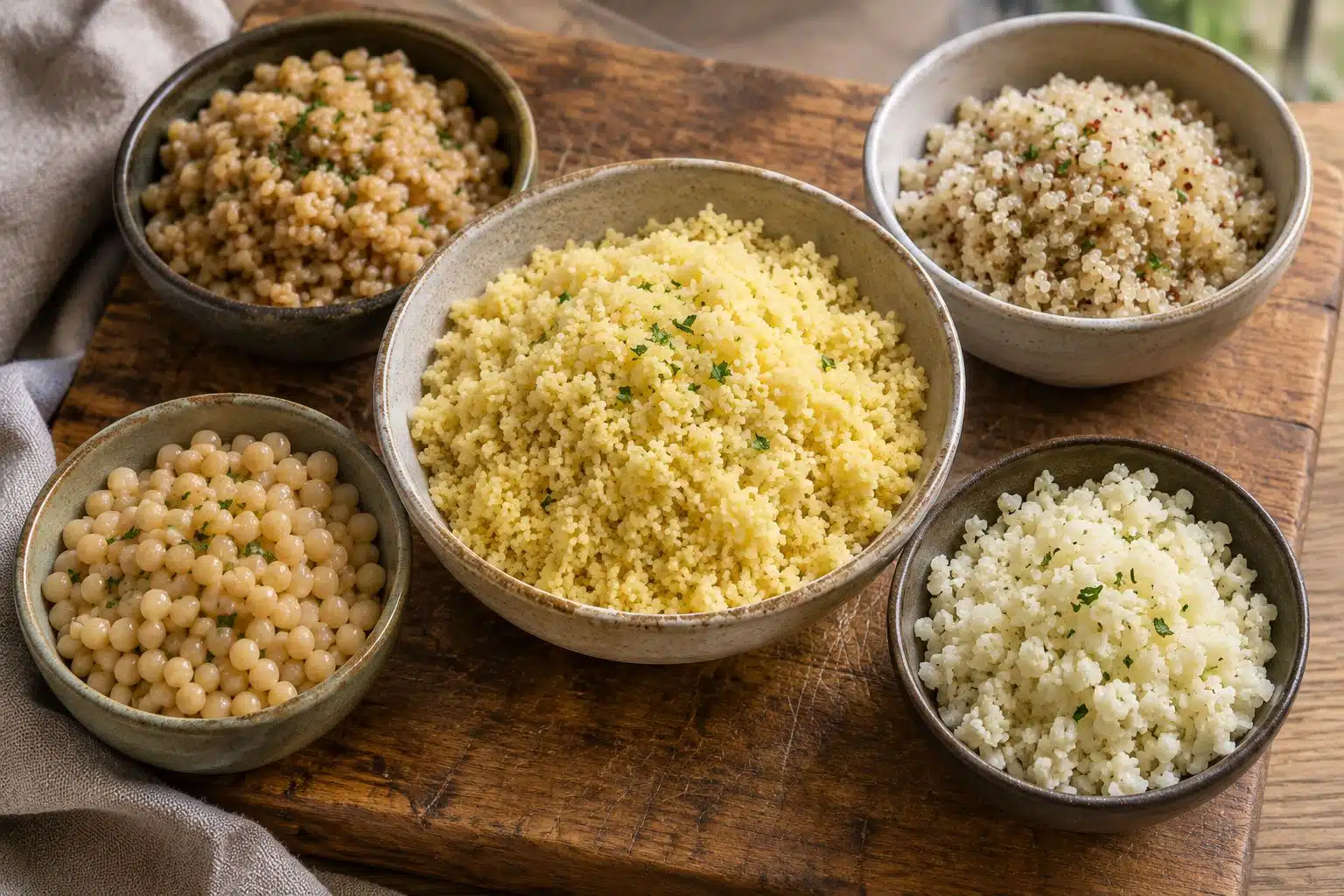
Fine bulgur is closest to couscous in method: pour boiling water over it and wait 10 to 15 minutes.
Quinoa is the best gluten-free swap. Simmer it in 1¾ to 2 cups of water per cup for about 15 minutes.
Every swap is 1 cup for 1 cup, but couscous is ready in 5 minutes while the swaps take 3 to 45 minutes, so plan your timeline.
What Does Couscous Do in a Recipe?
Couscous is tiny granules of semolina, a flour milled from durum wheat, and that is why it contains gluten.
Remember it later
Planning to try this recipe soon? Save it for a quick find later!
It cooks by sitting in hot water, about 1 part couscous to 1 part boiling water, covered and off the heat for 5 minutes. Some brands ask for a little more water, so check the box.
Four jobs of couscous decide which swap suits your dish:
- Speed. Couscous is ready in 5 minutes with no simmering, so a swap that needs 15 to 45 minutes changes your dinner timeline.
- Fine, fluffy grains. Every substitute below is larger or chewier than couscous, so pick the one whose chew your dish can take.
- Soaking up sauce. Couscous usually sits under a saucy stew such as Moroccan lamb tagine, and a firmer grain like quinoa or freekeh stays separate instead of melting into it.
- Neutral flavor. Couscous tastes mostly of mild wheat, so nutty quinoa or smoky freekeh will show up in the finished dish.
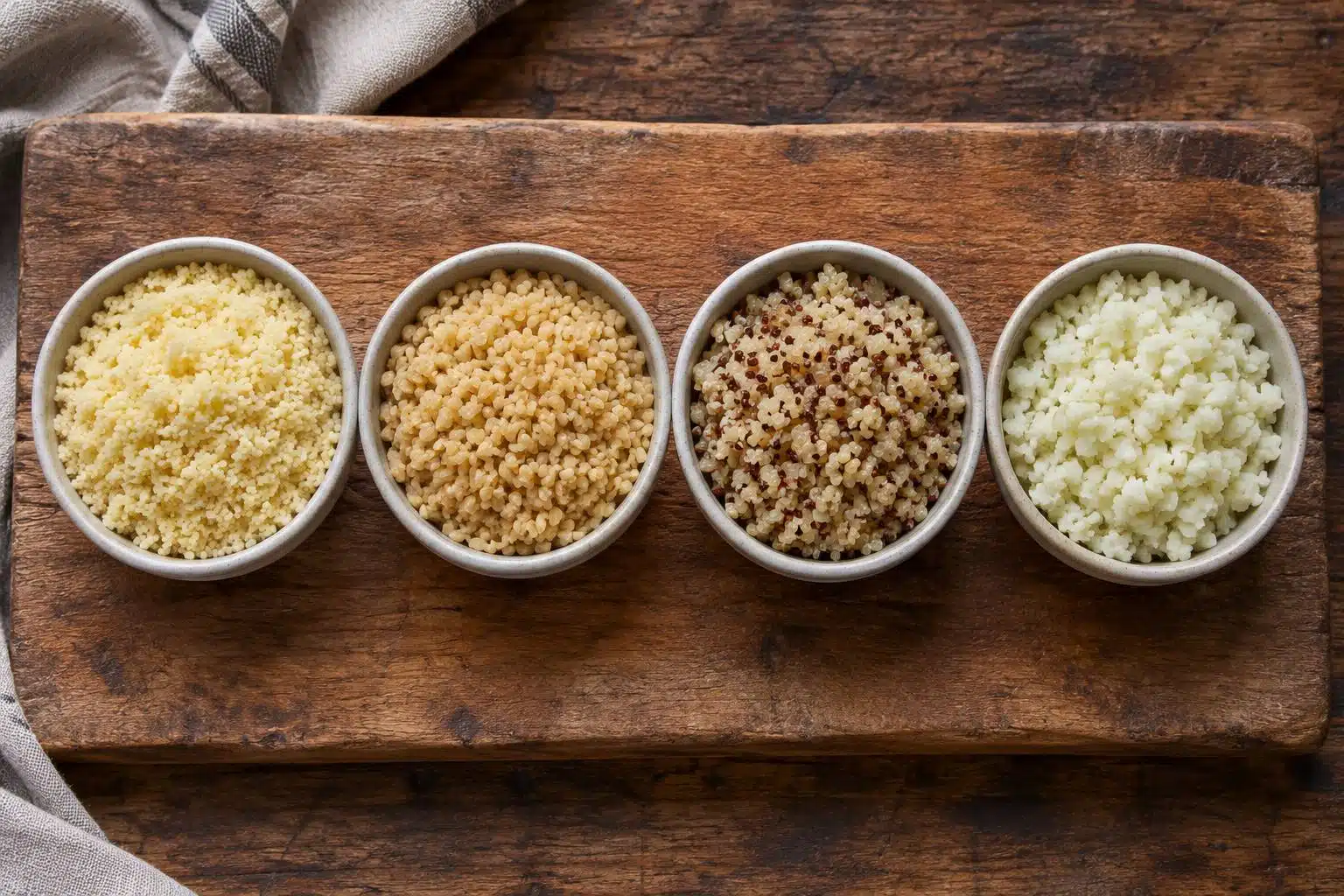
7 Couscous Substitutes and How to Cook Each
Swap by dry volume, 1 cup for 1 cup, then cook the substitute by its own rules.
| # | Substitute | Best For | Ratio | Key Note |
|---|---|---|---|---|
| 1 | Quinoa | 🌾 Gluten-Free | 1:1 | Nutty, about 15 min |
| 2 | Bulgur Wheat | 🍳 Tabbouleh | 1:1 | Earthy, soaks 10-15 min |
| 3 | Rice | 🌾 Gluten-Free | 1:1 | Neutral, 12-15 min plus rest |
| 4 | Cauliflower Rice | 🌱 Low-Carb | 1:1 | Soft, 3-4 min sauté |
| 5 | Israeli Couscous | 🍳 Warm Salads | 1:1 | Chewy, 8-10 min |
| 6 | Freekeh | 🍳 Pilafs | 1:1 | Smoky, 20 min cracked |
| 7 | Pearled Barley | 🍳 Soups | 1:1 | Hearty chew, 25-30 min |
The ratio is the same in every row, but the cooking times range from 3 minutes for cauliflower rice to 30 minutes for barley, and whole freekeh takes about 45.
1 – Quinoa
Quinoa is the best gluten-free swap and a good pick for cold salads and grain bowls. It stays in separate grains, so it feels firmer and slightly crunchier than couscous, and it tastes nutty.
Use 1 cup of dry quinoa for 1 cup of dry couscous, but cook it as a grain. Simmer it covered in 1¾ to 2 cups of water for about 15 minutes, rest it 5 minutes off the heat, then fluff with a fork.
- Rinse first. Quinoa carries a natural coating called saponin that tastes bitter and soapy, and a fine-mesh strainer under running water removes it.
- Water sets the texture. About 1¾ cups of water per cup gives separate grains, while 2 cups gives softer, wetter quinoa.
Skip if: you need the fine, fluffy texture of traditional couscous.
2 – Bulgur Wheat
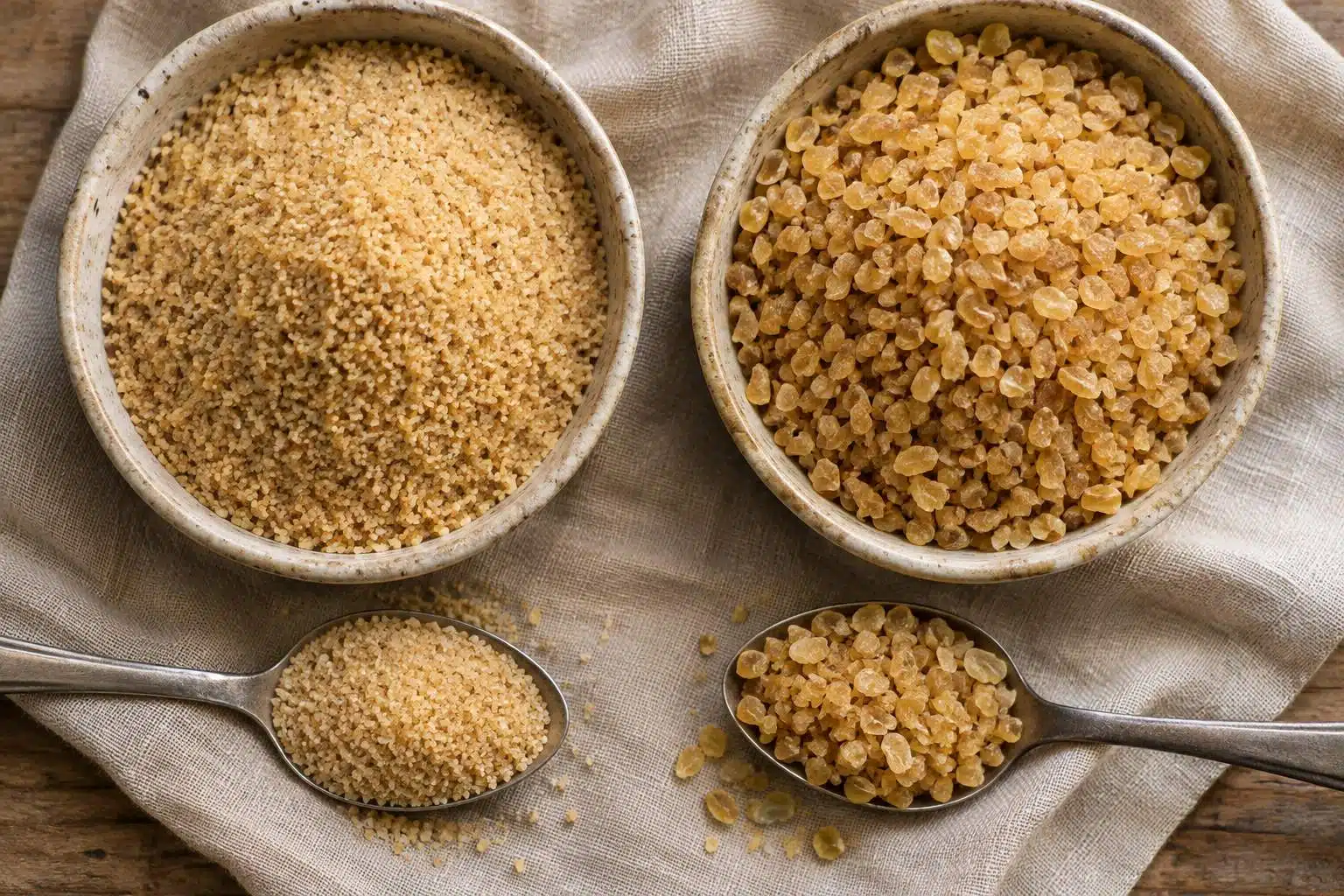
Bulgur is cracked wheat with an earthy, wheaty flavor and more chew than couscous, close to what you taste in tabbouleh with parsley. It is also the swap closest to couscous in method, because fine bulgur softens in hot water without cooking.
Swap cup for cup. Pour about 1½ cups of boiling water per cup of fine bulgur, cover, and wait 10 to 15 minutes, adding more hot water if the grains stay hard.
Medium and coarse grinds are usually simmered instead, in 1½ to 2 cups of water per cup for 12 to 15 minutes, so follow the grind number on your package.
- Grind sets the time. Finer bulgur absorbs water faster than coarse, so start checking early.
Skip if: you need a gluten-free swap, because bulgur is wheat.
3 – Rice
Long-grain or basmati rice gives you individual grains that stay separate. The flavor is mild, so it works as a neutral base for stews and stuffings, and basmati adds a light floral aroma.
Use 1 cup of rice for every 1 cup of couscous, with about 1½ to 2 cups of water per cup of rice, depending on the type. Plan on 12 to 15 minutes of simmering plus 5 to 10 minutes of resting, against 5 minutes for couscous.
- Rinse before cooking. Rinsing washes off surface starch, which keeps the grains from clumping.
- Best uses. Rice works well in stuffings and as a bed for braised dishes.
- Cold salads. Cool the rice quickly, ideally within an hour, keep it in the fridge and eat it within 24 hours, as Food Standards Scotland advises.
Skip if: you need a side that is ready in 5 minutes.
4 – Cauliflower Rice
Cauliflower rice drops the carbs and gives you a lighter, vegetable-forward base. It is softer than any grain here, and it picks up dressings and sauces quickly.
Swap 1:1 by volume. Sauté it in a dry pan for 3 to 4 minutes until the steam stops, just enough to take the raw bite off, because cooking it longer turns it mushy.
- Season well. The flavor is mild, so add salt, lemon or herbs before you serve it.
- Frozen bags. They hold extra water, so the dry pan matters most with frozen cauliflower rice.
Skip if: you want the hearty chew of a true grain.
5 – Israeli Couscous
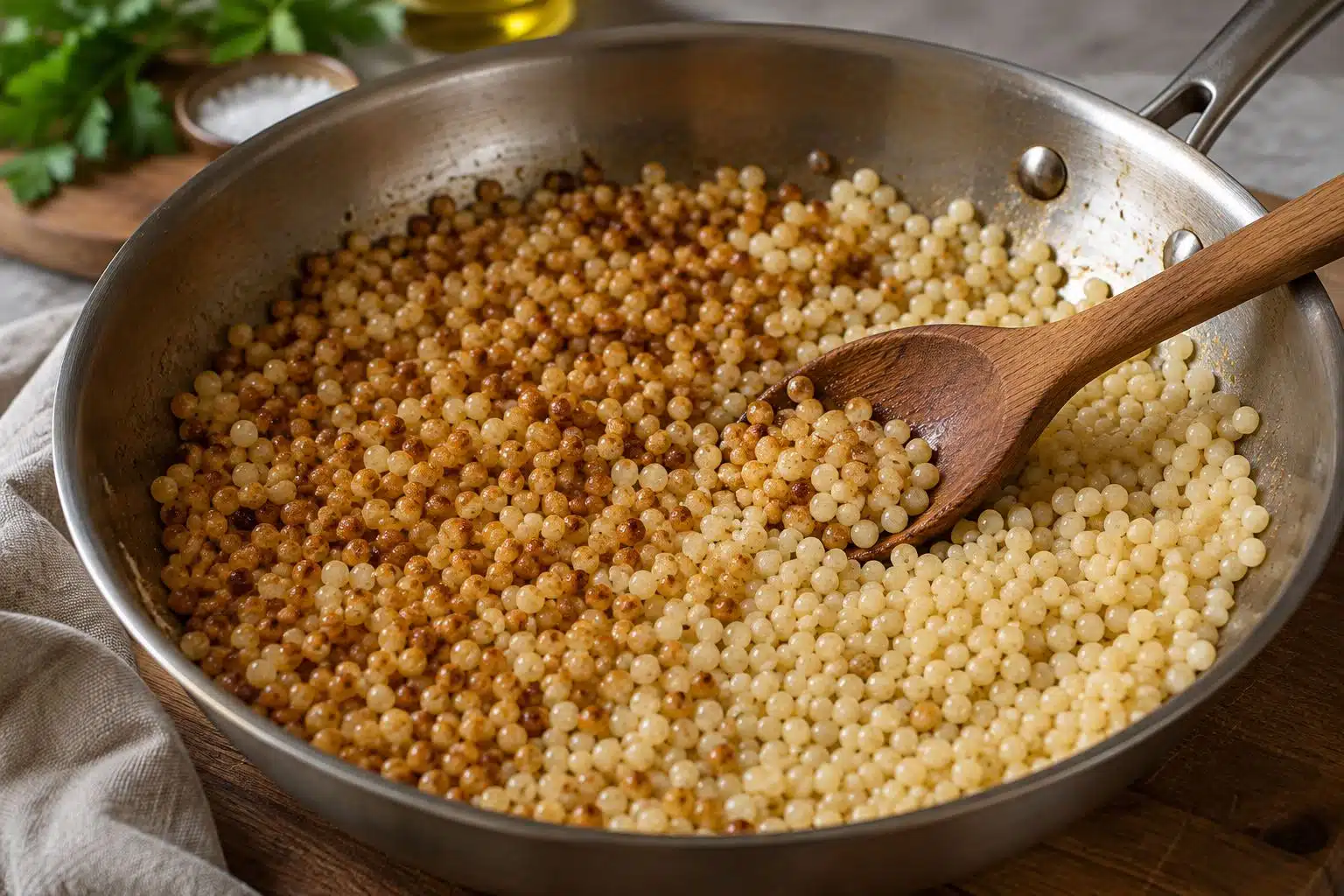
Israeli couscous (pearl couscous) is still wheat pasta, just in larger, chewier pearls. They toast well and hold up in dishes with bold sauces, and they work warm or cold.
Use a 1:1 swap and boil the pearls in salted water like pasta for 8 to 10 minutes, tasting from minute 8, then drain.
- Toast first. Browning the dry pearls in a pan before adding water gives a nuttier flavor.
- Drain well. Leftover water makes the pearls soggy, so shake the colander before serving.
- Soup friendly. The pearls hold their shape in soups better than regular couscous.
- Orzo in a pinch. If you only have rice-shaped orzo pasta, cook it like pasta and expect a smoother bite and the same gluten.
Skip if: you need the fine texture of regular couscous or a gluten-free dish.
6 – Freekeh
Freekeh is young green durum wheat that is roasted and cracked, which gives it a smoky, nutty flavor. The texture stays chewy and slightly firm, so it adds more interest than plain couscous.
Use 1 cup of freekeh for every cup of couscous, simmered in about 2½ cups of broth for about 20 minutes if cracked and about 45 minutes if whole.
- Season lightly. Freekeh has more flavor on its own, so start with less salt and spice than you would use on couscous.
- Cold salads. Let it cool completely before dressing so it does not turn gummy.
- Warm pilafs. Toasting it in butter before adding the liquid deepens the flavor.
- Pairings. The smokiness suits grilled vegetables, lamb and stuffed vegetables with Mediterranean spices.
Skip if: you want a mild, neutral grain that stays in the background, or you need gluten-free.
7 – Pearled Barley
Pearled barley is a filling, chewy grain that holds up in soups and warm salads. The flavor is mildly nutty, and it turns creamier than couscous once fully cooked.
Swap 1:1 by volume, but plan for 25 to 30 minutes of simmering in about 3 cups of water per cup. In soups, add it for the last 30 minutes so it stays firm.
- Broth friendly. Barley absorbs broth well, so it suits risotto-style dishes.
Skip if: you need a gluten-free option or a quick-cooking grain, because barley contains gluten.
Which Couscous Substitute for Which Dish?
Match the grain to the dish first, then check the clock.
| If You Want | Pick | Why |
|---|---|---|
| Cold Salads | Quinoa or Israeli couscous | Both stay firm after chilling and hold dressing |
| Tabbouleh | Bulgur | Cracked wheat gives the earthy chew the dish expects |
| Saucy Stews | Israeli couscous or freekeh | Pearls and cracked grains stay chewy in bold sauces |
| Soups | Pearled barley or Israeli couscous | Both hold their shape in the pot |
| A Fast Side | Fine bulgur or Israeli couscous | Ready in 8 to 15 minutes against 25 or more for barley |
| Gluten-Free | Quinoa or rice | Naturally gluten-free and easy to find |
What Are the Best Gluten-Free Couscous Alternatives?
Regular couscous is not gluten-free, so use one of these.
- Quinoa. It is the closest in use, small and round, though larger and slightly crunchier than couscous.
- Rice. Short-grain rice is slightly stickier than couscous, while basmati stays fluffier.
- Cauliflower rice. Its mild flavor takes dressings well, and it is the lowest-carb option here.
- Millet and sorghum. Millet is a small round grain that simmers in about 2 cups of water per cup for 20 minutes, and sorghum is nutty and slightly larger than couscous.
- Buckwheat groats. Despite the name, buckwheat is not wheat, and it is listed among the naturally gluten-free grains.
Naturally gluten-free grains can pick up gluten during harvesting and processing.
The Celiac Disease Foundation advises buying grains tested to under 20 parts per million and skipping bulk bins.
Frequently Asked Questions
Yes, measure 1 cup of dry substitute for 1 cup of dry couscous, but change the water and time. Quinoa and rice take 1½ to 2 cups of water and 12 to 15 minutes, and barley takes about 3 cups and 25 to 30 minutes.
Orzo works best in place of Israeli couscous; cook it like pasta and drain it. It is wheat pasta, so it is not gluten-free, and the bite is smoother than regular couscous.
Orzo is the nearest wheat swap for giant couscous, and quinoa is the best gluten-free one, though it is smaller and crunchier.
Slightly: quinoa adds nuttiness, freekeh brings smokiness, and cauliflower rice tastes more vegetal, while rice and barley stay mild.
Quinoa is the best match, and rice is the easiest to find. Buy packs labeled gluten-free if you need to avoid cross-contact.



