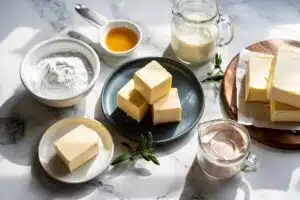
You reach for clotted cream mid-recipe and it's not there. That thick, lightly sweet richness is hard to mimic, but a few swaps come close enough to keep your dish on track.

The swap depends on how clotted cream behaves in your recipe-spreading, topping, or mixing into batter. Match the texture and fat content first, then adjust for flavor if needed.
When we need clotted cream for topping or baking, we use mascarpone, crème fraîche, or heavy cream + butter because they give a similar rich, thick, and silky finish. The main risk is looseness, so we keep swaps cold and thicken as needed. For a direct stand-in, we mix 1 cup heavy cream + 2 tablespoon melted butter, then chill until spoonable.
7 Smart Clotted Cream Swaps When You're Out
These options range from direct matches to workable stand-ins. Pick based on what you're making and what's already in your fridge.
Remember it later
Planning to try this recipe soon? Save it for a quick find later!
| # | Substitute | Best For | Ratio | Key Note |
|---|---|---|---|---|
| 1 | Heavy Cream & Butter | ✨ Both | ¾ cup cream + ¼ cup butter per 1 cup | Richer, less thick |
| 2 | Mascarpone | 🥧 Baking | 1:1 | Creamier, slightly sweeter |
| 3 | Crème Fraîche | 🍳 Cooking | 1:1 | Tangier, thinner |
| 4 | Greek Yogurt | 🥧 Baking | ¾ cup per 1 cup | Tangier, less rich |
| 5 | Double Cream | 🍳 Cooking | 1:1 | Very rich, less dense |
| 6 | Ricotta & Cream Mix | 🥧 Baking | Equal parts ricotta + cream | Lighter, slightly grainy |
| 7 | Whipped Coconut Cream | 🌱 Dairy-Free | 1:1 | Coconut taste, lighter |
1 - Heavy Cream & Butter
Mix three parts heavy cream with one part melted butter to get close to clotted cream's fat content and spreadability. The result is richer and less thick, but it works in scones, shortcakes, and baked goods where you need a smooth, buttery layer.
Stir the butter into cold cream just before using. The mixture doesn't hold as long as clotted cream, so apply it right away or chill it briefly to firm up.
If you're short on heavy cream as well, Heavy Cream swaps that match narrow the fat-content range for better results.
Skip if: you're serving it cold as a standalone topping-it separates faster than clotted cream.
Heavy Cream & Butter
Works for: baking and spreading where fat content matters
Skip if: you need a thick, scoopable texture that stays stable
Mascarpone
Works for: desserts and toppings where sweetness helps
Skip if: you're cooking with high heat-it breaks easily
2 - Mascarpone
Mascarpone is creamier and slightly sweeter than clotted cream, making it a natural fit for desserts, tarts, and fruit toppings. It spreads easily and holds its shape at room temperature.
Use it straight from the container for a direct swap. The mild sweetness complements berries, scones, and pastries without adding sugar.
Here's what to know:
- Texture - Smoother and softer than clotted cream, so it won't hold as firm on warm items.
- Sweetness - Adds a subtle sugary note; reduce added sugar if your recipe already includes it.
- Heat sensitivity - Breaks when cooked at high temperatures; stick to cold or barely warm dishes.
- Storage - Keeps for about a week in the fridge; cover tightly to prevent drying.
Out of mascarpone too? Replacements similar to Mascarpone cover creamier dairy options that hold up in desserts.
Skip if: your dish involves simmering or baking above 300°F-mascarpone curdles under direct heat.
3 - Crème Fraîche
Crème fraîche delivers tang and a thinner consistency than clotted cream, so it works best in dishes where a hint of acidity balances sweetness or richness. It melts into sauces and soups without splitting, making it more heat-stable than clotted cream.
Swap it 1:1 in recipes that call for a creamy finish. The acidity cuts through sweet components, so use it with caution in desserts unless you want that contrast.
If you're missing crème fraîche as well, easy Creme Fraiche swaps that work keep the tangy profile intact.
Skip if: the recipe depends on a neutral, sweet cream-crème fraîche shifts the flavor toward sour.
4 - Greek Yogurt (Full Fat)
Greek yogurt adds tang and moisture, but it lacks the richness of clotted cream. Use three-quarters of a cup for every cup of clotted cream to account for the thinner texture and higher water content.
It works in baking where you need moisture and a slight tang, like muffins, pancakes, or quick breads. Stir it gently-overmixing makes batters dense.
- Thickness - Thicker than sour cream but thinner than clotted cream; drain excess whey if it looks watery.
- Acidity - More pronounced than crème fraîche; reduce lemon juice or vinegar in the recipe.
- Baking performance - Adds moisture and tenderness but doesn't replicate the fat-coated crumb clotted cream gives.
- Temperature - Curdles if added to hot liquids; fold it in at the end off heat.
If Greek yogurt isn't available either, Greek Yogurt substitutes for cooking cover thicker dairy swaps.
Skip if: you need a rich, neutral cream for a topping-yogurt's tang dominates.
| Use | Ratio | Notes |
|---|---|---|
| Topping for scones | 1:1 mascarpone or double cream | Closest texture and sweetness |
| Baking into cakes | ¾ cup Greek yogurt per 1 cup | Adds moisture, reduces fat slightly |
| Finishing sauces | 1:1 crème fraîche | Tangier, more heat-stable |
5 - Double Cream
Double cream is very rich and smooth, but it's less dense than clotted cream. It works well as a topping or finishing layer where you want luxury without the thick, scoopable texture.
Use it 1:1 in recipes that call for clotted cream. It pours more easily, so it won't sit as firmly on scones or baked goods.
Missing double cream as well? Easy Double Cream swaps that work list similar high-fat options.
Skip if: you need a firm dollop that holds its shape-double cream runs and spreads quickly.
6 - Ricotta & Cream Mix
Mix equal parts ricotta and heavy cream to get a lighter, slightly grainy texture that mimics clotted cream's thickness. The ricotta adds body, while the cream smooths out the graininess.
Use it in baking or layered desserts where a spreadable cream is needed. Stir until smooth before adding to batters or dolloping onto pastries.
- Texture - Slightly grainy compared to clotted cream; blending helps but won't make it completely smooth.
- Flavor - Mild and slightly sweet; ricotta's milkiness balances the cream's richness.
If you're short on heavy cream too, easy Heavy Cream swaps that work help you match the fat level.
Skip if: the recipe needs a perfectly smooth cream-ricotta's graininess shows through.
7 - Whipped Coconut Cream
Whipped coconut cream is lighter and sweeter than clotted cream, with a distinct coconut flavor. It works in dairy-free desserts, fruit toppings, and vegan baking where you need a thick, scoopable cream.
Chill a can of full-fat coconut cream overnight, scoop out the solid layer, and whip until fluffy. Use it 1:1 in place of clotted cream.
What to expect:
- Flavor - Coconut taste is noticeable; it pairs well with tropical fruits and chocolate but clashes with savory or citrus-heavy dishes.
- Texture - Lighter and airier than clotted cream; it deflates faster at room temperature.
Out of coconut cream as well? Tested Coconut Cream replacements cover plant-based options that hold up in desserts.
Skip if: you need a neutral dairy flavor-coconut dominates the taste.
Before You Swap Clotted Cream
The right choice depends on what you're making. For scones and spreading, heavy cream mixed with butter comes closest.
For desserts where sweetness helps, mascarpone or double cream work well.
Try a few and see which you prefer.
- Closest match - Heavy cream and butter for richness and spreadability
- Easiest grab - Mascarpone for desserts and toppings
- Dairy-free option - Whipped coconut cream for vegan dishes
Frequently Asked Questions
Yes, but mix it with melted butter-¾ cup cream to ¼ cup butter per cup of clotted cream. Straight heavy cream is too thin and lacks the fat content clotted cream brings.
Mascarpone is creamier and slightly sweeter, but it doesn't have clotted cream's lightly cooked, caramelized flavor. It works best in desserts where the sweetness complements other ingredients.
Yes. Heavy cream mixed with butter, mascarpone, and Greek yogurt all work in baking. Adjust the fat content and reduce any added liquid slightly to avoid a too-wet batter.
Clotted cream is thicker and has a higher fat content (55-60%) with a slightly cooked flavor. Double cream is smoother and pours more easily, making it better for finishing dishes than scooping onto scones.
Sour cream adds too much tang and is thinner than clotted cream. If it's your only option, use full-fat sour cream and reduce any acidic ingredients in the recipe, but expect a noticeably different flavor.
7 Best Substitutes for Clotted Cream
Ingredients
Method
- Select your substitute based on the dish type-baking, spreading, topping, or cooking.
- For Heavy Cream & Butter, mix ¾ cup heavy cream with ¼ cup melted butter just before use.
- Use mascarpone straight from the container for a creamy, slightly sweet substitute at a 1:1 ratio.
- Swap crème fraîche 1:1 for a tangier, thinner, and more heat-stable option in cooking or sauces.
- Use ¾ cup full-fat Greek yogurt for every 1 cup of clotted cream. Drain whey if watery and fold in gently off heat.
- Use double cream 1:1 as a rich, smooth substitute but note it pours more easily, so it won't hold firm shapes.
- Mix equal parts ricotta and heavy cream to create a lighter, slightly grainy textural substitute. Stir until smooth before use.
- Whip solid coconut cream after chilling overnight and use 1:1 for a dairy-free, coconut-flavored alternative.
- Adjust any added acidic ingredients when using tangy substitutes like Greek yogurt or crème fraîche to avoid overly sour flavors.
- Apply or mix substitutes promptly as some, like heavy cream & butter, separate faster than clotted cream.