Product note: ForkliftKitchen may earn a commission from qualifying purchases made through product links on this page. Learn more.
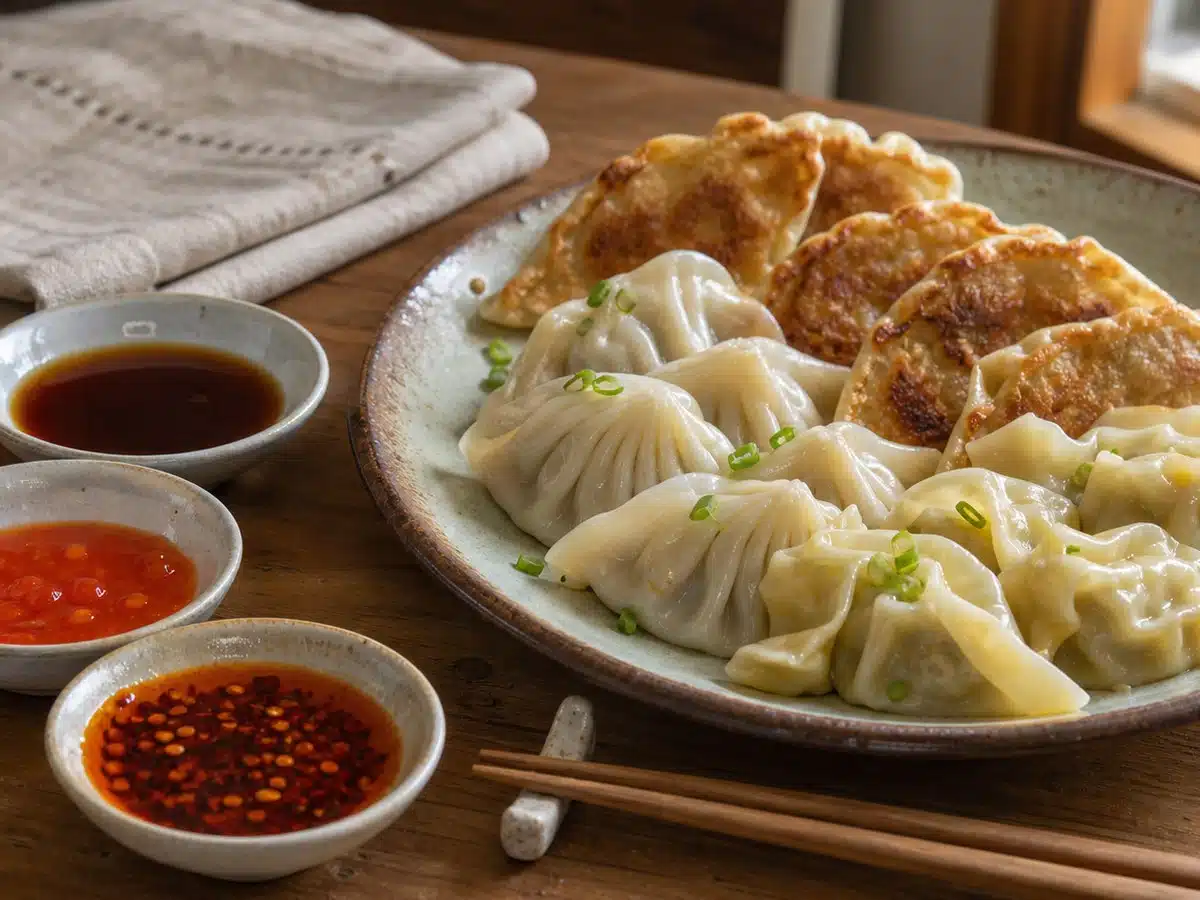
The crisp skirt on a pan-fried pork gyoza does not need a syrupy bath, and a shrimp dumpling should not disappear under sesame oil. A useful sauce fills the gap in the bite: acid for rich pork, measured heat for beef, or a light savory edge for a delicate filling.
Ajinomoto Gyoza Dipping Sauce is the best dumpling sauce overall. Its thin soy-and-rice-vinegar base adds tang, garlic, and savory depth without glazing over a pan-fried wrapper; it contains wheat and soy and brings less chile or sesame than the bolder picks.
I compared each exact bottle by soy-vinegar balance, sweetness, chile heat, sesame, garlic, cling, allergens, size, and the way it contacts a wrapper. A thin sauce can take a quick dunk; a sticky or oil-rich sauce works better as a dab or drizzle.
This ranking covers ready-to-pour retail sauces. It leaves out homemade recipes, plain soy sauce, black vinegar by itself, crunchy chile condiments, frozen-food packets, and bottles whose current package reference could not be matched exactly.
5 Dumpling Sauces Ranked by Tang, Heat, and Cling
Ajinomoto wins because it behaves like a dipping sauce instead of a glaze. The sauce runs off after a corner dunk, leaving vinegar, soy, and garlic on the folds while the browned base stays above the bowl.
Save this ranking
Comparing these products later? Save this ranking for a quick return.
The other bottles earn narrower jobs. Wei-Chuan turns up chile and sesame, Dumpling Daughter adds brown-sugar cling, Fly By Jing coats soft wrappers with aromatic oil, and Dynasty offers a lighter-sugar three-pack.
- 🎯 Correction, not cover. The sauce should add missing acid, heat, sweetness, or aroma without erasing the filling.
- 🥟 Wrapper fit. Thin sauces favor quick dipping; thick and oily sauces need a dab or drizzle.
- 🍽 Distinct use. Every bottle must solve a different dumpling decision instead of repeating the same soy-vinegar profile.
- 🚨 Allergen clarity. Wheat, soy, and sesame limits matter as much as heat or sweetness.
- 🔍 Exact package. The flavor, bottle size, count, and current package reference must agree.
| # | Sauce | Best For | Flavor and Texture |
|---|---|---|---|
| 1 | Ajinomoto Gyoza Dipping Sauce | 🏆 Classic Gyoza | Thin, tangy, savory, lightly garlicky |
| 2 | Wei-Chuan Hot Dumpling Sauce | 🌶 Rich Pork | Hotter, sweet-tangy, sesame and garlic |
| 3 | Dumpling Daughter Spicy Sweet Soy | 🍯 Sweet Heat | Brown-sugar sweet, chile warmth, more cling |
| 4 | Fly By Jing Sweet and Spicy Sichuan Chili Sauce | 🔥 Soft Wrappers | Oil-rich, sweet, savory, aromatic chile |
| 5 | Dynasty Potsticker Gyoza Dipping Sauce | 📦 Three-Pack | Thin, sesame-forward, low sweetness |
1. Ajinomoto Gyoza Dipping Sauce
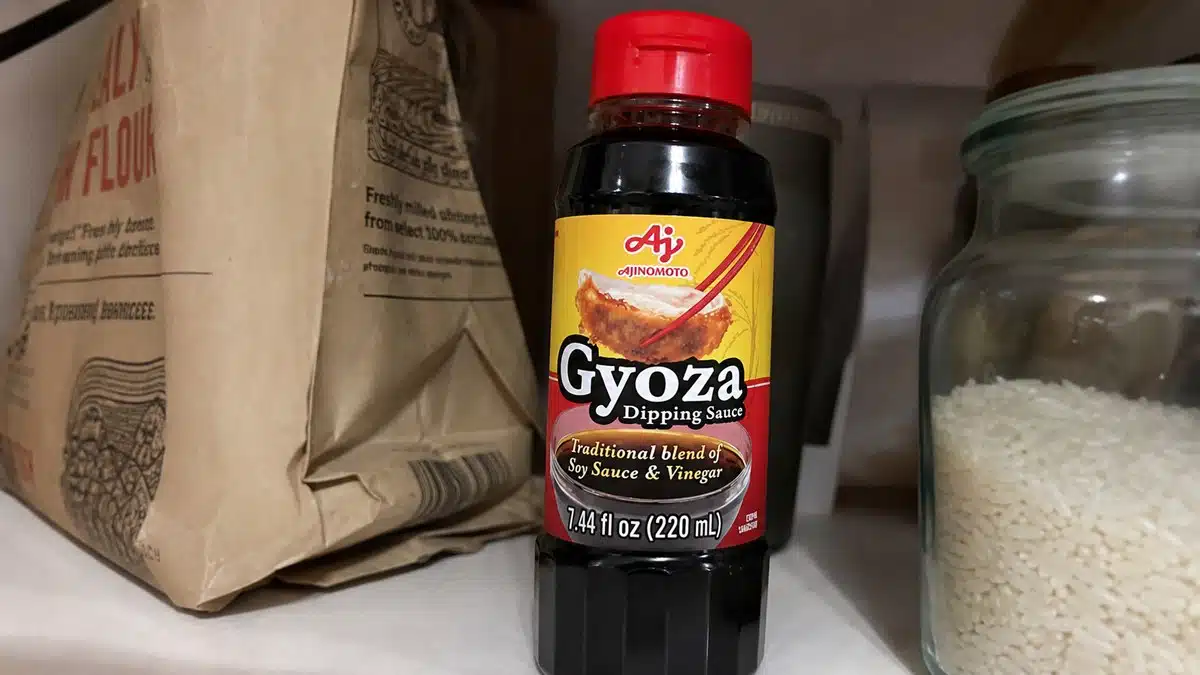
Ajinomoto gives pan-fried gyoza what the wrapper and filling often lack: a clean acidic edge. The soy sauce supplies salt and savoriness, while sugar vinegar and garlic keep the dip from tasting like plain soy poured into a bowl.
Its thin body is part of the win. Dip one pleated corner, lift, and the extra sauce falls away before it can soak the browned skirt; that makes it easier to taste pork, chicken, cabbage, or chive in the next bite.
The formula also includes monosodium glutamate, disodium inosinate, and disodium guanylate. Those seasonings deepen the savory note, so start with a small pool rather than submerging an already salty frozen gyoza.
Pick Ajinomoto when you want tang before heat or sweetness. It contains wheat and soy, and shoppers who want toasted sesame or a chile-oil finish should move down the list.
- Thin enough for a quick corner dunk
- Rice-vinegar tang cuts a rich filling
- Garlic and umami without a heavy glaze
- Contains wheat and soy
- Not the hottest choice
- No strong toasted-sesame finish
2. Wei-Chuan Hot Dumpling Sauce
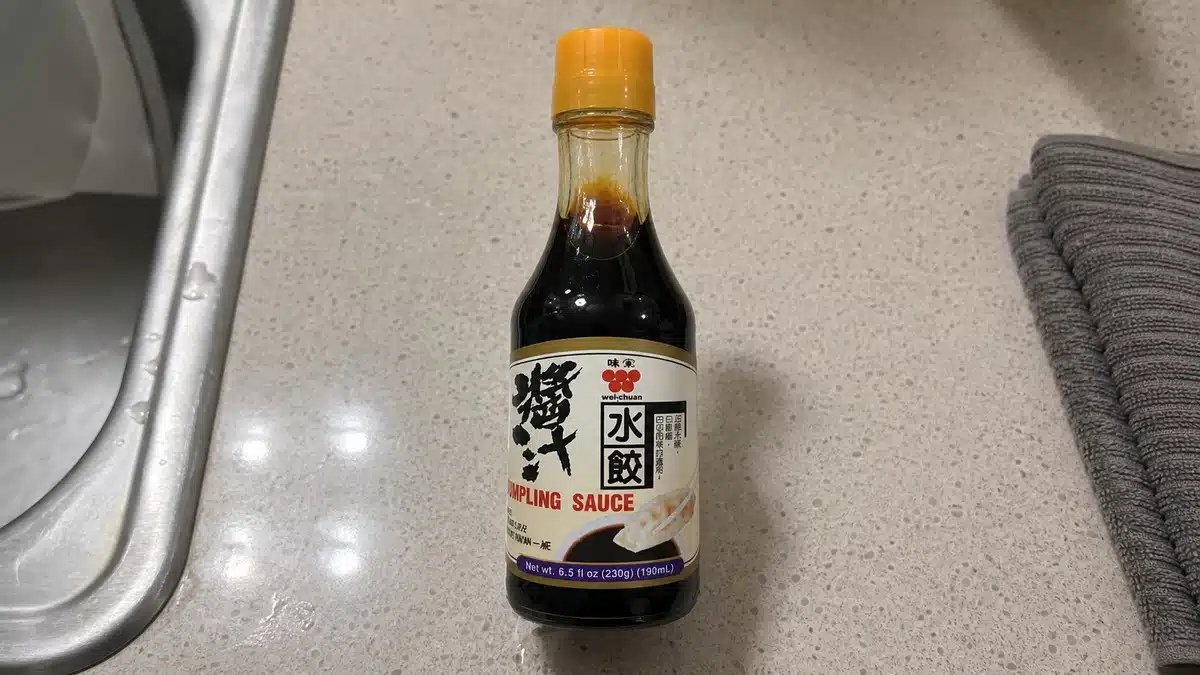
Wei-Chuan Hot is for the eater who finds a classic gyoza dip too polite. Vinegar still cuts through pork fat, but sugar, blended sesame oil, garlic, mustard flavor, and chile extract make the sauce rounder and more aromatic than Ajinomoto.
The heat comes as part of a seasoned sauce, not as a cap of loose chile oil. That gives every quick dip some sweetness and sesame along with the chile, which works well with boiled pork dumplings and thick-skinned jiaozi.
A delicate shrimp filling can get lost here. The sauce has more going on than a clean soy-vinegar dip, so use a shallow dish and touch only one edge of steamed seafood or vegetable dumplings; anyone avoiding sesame should use a verified bottle or review these sesame oil substitutes for a homemade bowl instead.
Choose Wei-Chuan Hot when a rich dumpling needs acid, chile, and sesame in one pour. The exact bottle contains soy, wheat, and sesame, and the flavor is too forceful for an allergen-sensitive shared bowl.
- More heat than the classic picks
- Vinegar still balances rich meat
- Sesame and garlic add a fuller finish
- Contains soy, wheat, and sesame
- Can cover delicate shrimp
- Small 6.5-fluid-ounce bottle
3. Dumpling Daughter Spicy Sweet Soy
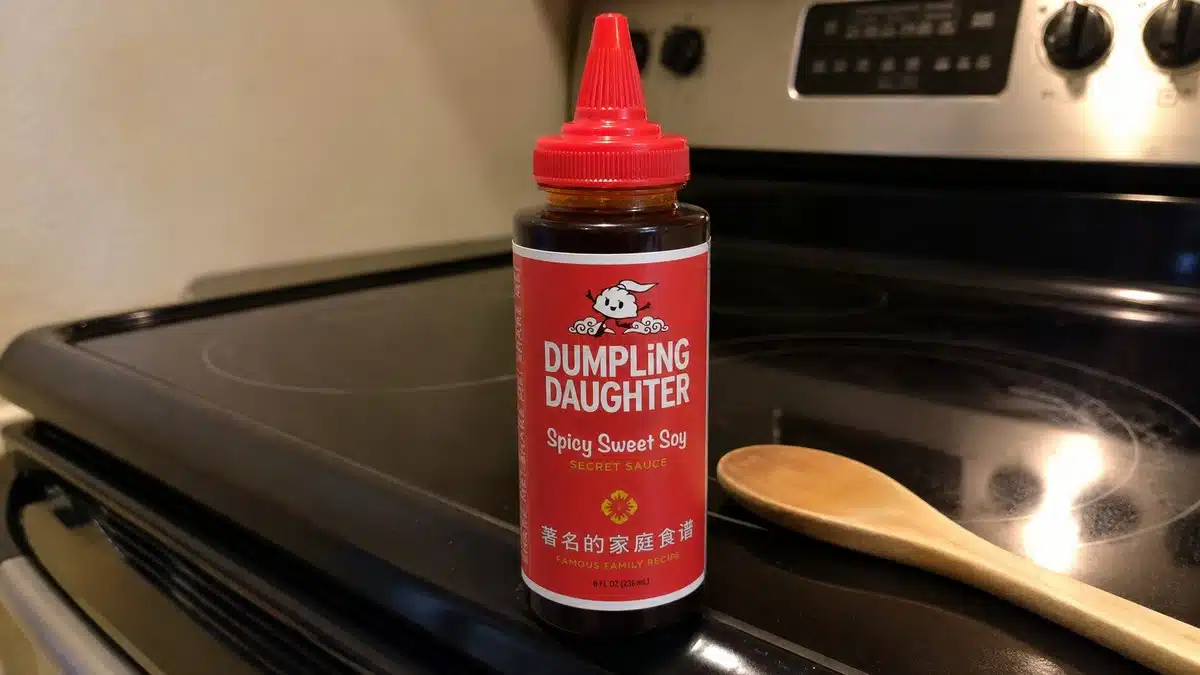
Brown sugar reaches the tongue first, then chile oil warms the finish. Dumpling Daughter feels closer to a light glaze than a sharp dipping vinegar, so it suits eaters who want one glossy streak to stay on the wrapper.
That cling changes the best pairing. A steamed pork bun-style dumpling, soup dumpling, or soft vegetable wrapper has no crisp base to protect, and a small dab can add sweetness without running into the plate.
Use restraint with soup dumplings. The broth already carries salt, fat, and aromatics; bite a small opening, let steam escape, then add a little sauce to the top instead of dunking and diluting the soup.
Buy Spicy Sweet Soy when brown-sugar sweetness is part of the goal. But its cling and sweetness can soften a crisp skirt and hide delicate shrimp; anyone seeking a tart restaurant-style gyoza dip will find Ajinomoto cleaner.
- Brown sugar and chile arrive in one sauce
- Clings to steamed wrappers
- Eight-ounce single bottle
- Sweeter than a classic gyoza dip
- Can soften a crisp skirt
- Easy to overuse on soup dumplings
4. Fly By Jing Sweet and Spicy Sichuan Chili Sauce
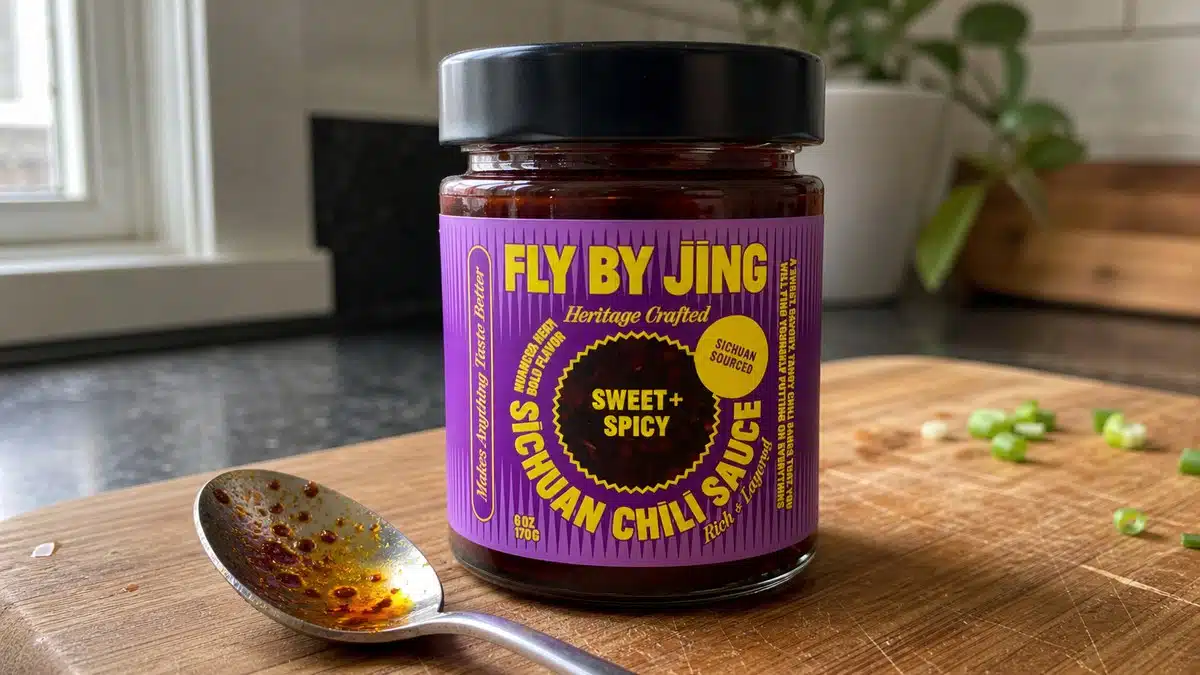
This is the oily outlier. Fly By Jing built the sauce around the sweet, savory, chile-coated character associated with Zhong dumplings, so the jar works as a finishing sauce across a broad, soft wrapper rather than a thin pool for repeated dunking.
The oil carries dried-chile and garlic aroma, soy sauce adds salt, brown sugar softens the edges, and mushroom powder extends the savory finish. Stir the jar before serving because the seasoned oil and heavier solids do not always move at the same speed.
Drizzle it over boiled wontons or steamed dumplings, then turn them once in the bowl. A full soak can make the wrapper slick, and thinner wonton wrapper alternatives need even less contact.
Choose Fly By Jing when the sauce should be a visible part of the dish. It contains wheat, soy, and sesame, and its oil-rich body is a poor fit for anyone who wants a bright, lean vinegar dip.
- Distinct sweet-hot Sichuan lane
- Garlic, chile, sesame, and mushroom depth
- Excellent coverage for soft wrappers
- Contains wheat, soy, and sesame
- Oilier than a standard dipping sauce
- Six-ounce jar goes quickly when poured
5. Dynasty Potsticker Gyoza Dipping Sauce
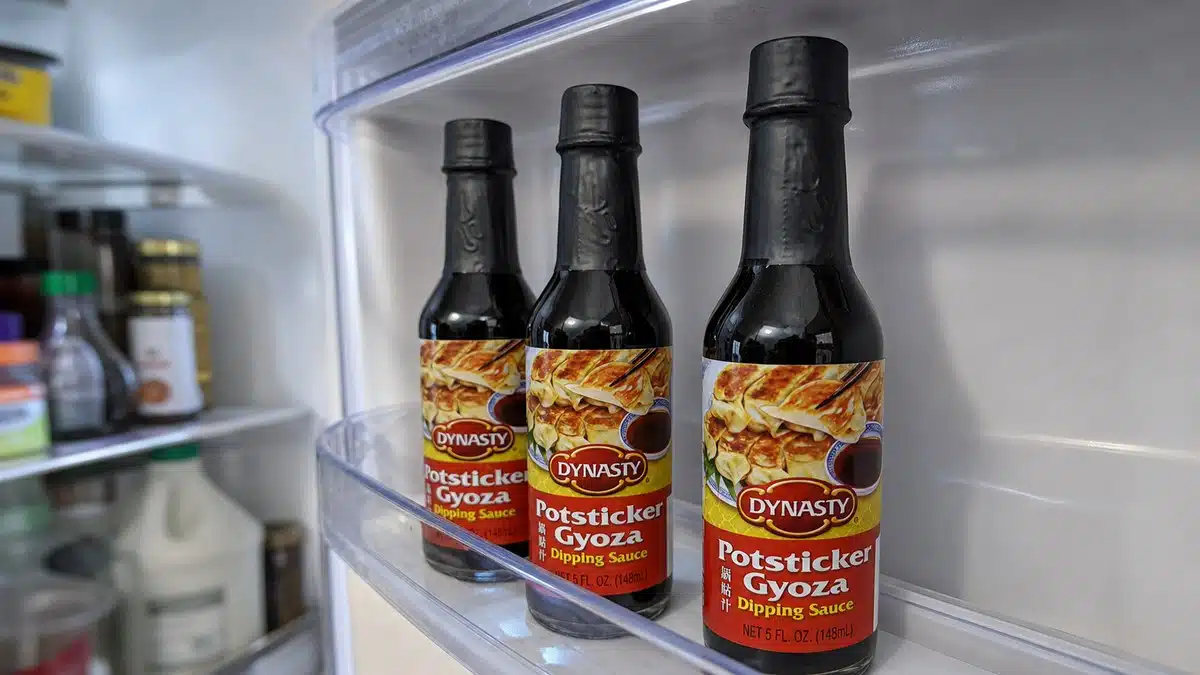
Dynasty starts with water, then soy sauce, sugar, distilled vinegar, and sesame oil. The result is a thin sauce with only one gram of sugar per tablespoon, so it tastes less candied than the brown-sugar and Zhong-style picks.
Sesame oil gives the dip a roasted aroma even though its body stays fluid. That combination works with potstickers when the eater wants a quick dunk and a clear sesame note, but not the sweetness of Dumpling Daughter.
The current pack contains three 5-ounce bottles. That is useful for frequent dumpling nights or two households, yet a casual eater should check storage directions and realistic turnover before buying more sauce than one refrigerator needs.
Pick Dynasty when low sweetness, sesame, and bottle count matter more than chile complexity. It contains wheat, soy, and sesame; shoppers who need a wheat-free dipping base should compare the exact labels in our best tamari sauce guide.
- Three small bottles in the exact listing
- Only one gram of sugar per tablespoon
- Thin texture with sesame aroma
- Contains wheat, soy, and sesame
- Less chile character
- Three bottles may be too much for light use
Which Dumpling Sauce Should You Buy for Each Dumpling Style?
The filling has already made half the sauce decision. Pork and beef bring fat and salt, shrimp brings sweetness, vegetables can be delicate or earthy, and soup dumplings add their own seasoned broth.
Start there.
A rich pork or beef potsticker usually needs acid or chile more than another layer of sugar. Ajinomoto gives it rice-vinegar lift, while Wei-Chuan adds chile and sesame when the meat can stand up to a stronger finish.
Shrimp, chive, and mild vegetable dumplings need a lighter hand. A thin corner dip keeps the filling clear; a brown-sugar glaze or heavy sesame pour can make several different fillings taste alike.
Soup dumplings are already wet, hot, and seasoned inside. Set the dumpling on a spoon, open the wrapper carefully, then dab sauce on top so the broth stays in the bite instead of leaking into a shared bowl.
Boiled wontons and steamed wrappers have no browned skirt to save. Their broad, soft surfaces can take a small Fly By Jing drizzle or a clinging touch of Dumpling Daughter without sacrificing crispness.
| Dumpling | What It May Need | How to Use It | Best Pick |
|---|---|---|---|
| Pan-fried pork gyoza | Acid to cut fat | Quick corner dunk; avoid soaking the crisp skirt | Ajinomoto |
| Boiled beef or pork dumpling | Chile and sesame | Shallow dip; do not fill the bowl too deep | Wei-Chuan Hot |
| Shrimp or chive dumpling | Light savory tang | Touch one fold; avoid heavy brown sugar | Ajinomoto or Dynasty |
| Soup dumpling | Sweet heat at the edge | Dab on top; avoid full submersion | Dumpling Daughter |
| Boiled wonton | Aromatic oil and chile | Drizzle, then turn; do not use it like thin soy sauce | Fly By Jing |
Dunk, Dab, or Drizzle? Match the Sauce to the Wrapper
A dunk, dab, and drizzle put different amounts of sauce on the same dumpling. Choose the motion from the sauce body and the wrapper, not from the size of the dipping dish.
Contact matters.
Thin Ajinomoto and Dynasty sauces belong in a shallow dunk. Touch a pleated corner, lift at once, and keep the crisp base above the liquid so vinegar and sesame season the bite without softening it.
Dumpling Daughter and Wei-Chuan need a smaller dab when sweetness or heat is concentrated. Put the sauce on one fold or one side, then taste the filling before adding more; unlike a citrus-led ponzu sauce, neither bottle is meant to make the bite feel lean.
Fly By Jing belongs on the dumpling rather than under it. A narrow drizzle spreads its chile oil and garlic over soft boiled or steamed wrappers; pooling the jar at the bottom makes the last dumplings much oilier than the first.
How to Rescue a Dumpling Sauce Bowl That Tastes Wrong
Test the sauce with one corner of the actual dumpling before changing it. A pork filling can make salt feel heavier, while a plain steamed wrapper can soften the same sauce.
Change one variable at a time. Water lowers everything, vinegar sharpens sweetness without adding soy, and extra soy adds savoriness but also raises salt.
- Too salty: add one teaspoon of water, stir, and retest; if the bowl turns flat, add a few drops of rice vinegar rather than more soy.
- Too sweet: add rice vinegar by the half teaspoon until the edge returns; avoid adding sesame oil, which makes the bowl richer without removing sugar.
- Too hot: increase the total bowl with a mild soy-vinegar sauce or a little water, then retest; plain soy sauce alone can trade heat for too much salt.
Dumpling Sauce Questions Before You Open the Bottle
Read the bottle you receive. Ingredients, storage directions, and package details can change.
Does dumpling sauce need refrigeration after opening?
Follow the exact label. Specialty sauces can contain oil, garlic, sugar, or other ingredients beyond soy and vinegar; cap the bottle cleanly and follow the package directions for sauce storage after opening.
Are these dumpling sauces gluten-free?
Do not assume so. Soy sauce commonly contains wheat, and wheat appears in several exact products here; check the current ingredient and allergen panel rather than using the word dumpling as a diet signal.
Can I use dumpling sauce on soup dumplings?
Yes, but dab instead of dunking. Put the dumpling on a spoon, vent the hot broth carefully, and add a small amount to the wrapper so the sauce does not wash out the soup.
Can I mix two bottled dumpling sauces?
Yes. A thin vinegar-led sauce can loosen a sweet or oily one, but the mixed bowl now carries every allergen from both labels, so keep it separate from food for anyone with wheat, soy, or sesame restrictions.
Is black vinegar the same as rice vinegar?
No. Black vinegar is darker and more aromatic, while unseasoned rice vinegar usually tastes cleaner and lighter; either can add acid, but each changes the sauce in a different direction.
Should everyone share one dipping bowl?
Separate bowls are better. They let each person control heat and sweetness, reduce bitten-food contact, and make it easier to keep an allergen out of one serving.