Product note: ForkliftKitchen may earn a commission from qualifying purchases made through product links on this page. Learn more.
Tamari sits next to soy sauce, but the bottle you choose changes the salt hit, dipping balance, and how quickly the pantry runs dry.
We included Amazon-available tamari sauces with exact product-specific links, then compared each bottle by dipping flavor, stir-fry usefulness, salt control, bottle size, label fit, and whether the format makes sense for a first try or a refill shelf.
Best Tamari Sauce, Ranked
Kikkoman Gluten-Free Tamari Soy Sauce 10 oz is the bottle I would buy first for dipping and everyday seasoning. San-J, Eden, and the larger jug picks make more sense when sodium level, organic labels, or frequent cooking matter more.
Save this ranking
Comparing these products later? Save this ranking for a quick return.
Choose by use case.
- 🫙 Dipping balance: tamari should taste rounded enough for dumplings, sushi, rice bowls, and snack plates without feeling harsh.
- 👅 Cooking usefulness: the best bottles need enough depth for stir-fries, marinades, noodles, and pan sauces.
- 📦 Salt control: reduced-sodium options matter when the sauce is going into dressings, glazes, or recipes that already have salty ingredients.
- 🔍 Bottle size: a 10 oz bottle is safer for tasting, while a 64 oz jug only makes sense for repeat use.
- 🛒 Exact product match: each buy link points to the same bottle or jug named in the card.
| Rank | Tamari sauce | Best for | Key note |
|---|---|---|---|
| 1 | Kikkoman Gluten-Free Tamari 10 oz | 🏆 Dipping and first buys | Small bottle with a familiar all-purpose profile |
| 2 | San-J Organic Tamari Reduced Sodium 10 oz | 🧂 Salt control | Reduced-sodium branch for marinades and dressings |
| 3 | Eden Organic Tamari 10 oz | 🌱 Organic pantry use | Classic brewed-style bottle for shoppers who want Eden |
| 4 | San-J Organic Tamari 64 oz | 🫙 Frequent cooking | Large jug for stir-fries, marinades, and refills |
| 5 | Kikkoman Gluten-Free Tamari 64 oz | 💰 Bulk value | Big-jug version for Kikkoman households |

1. Kikkoman Gluten-Free Tamari Soy Sauce 10 oz
Kikkoman Gluten-Free Tamari Soy Sauce 10 oz is the safest first buy because it behaves like an everyday table bottle. It is small enough to test, familiar enough for soy-sauce drinkers, and direct enough for dipping without committing to a jug.
The flavor lane is salty, savory, and clean rather than syrupy or smoky. That makes it useful beside savory party dips, dumplings, sushi, steamed vegetables, and simple rice bowls where the sauce is part of the bite.
It also works as a finishing splash after a stir-fry comes off the heat. Use it the way you would use a compact bottle of pasta sauce for weeknight backup: reachable, practical, and not oversized.
The tradeoff is bottle size. If you cook with tamari several times a week, the 10 oz bottle will disappear quickly.
- Small bottle is easy to test
- Good dipping and finishing format
- Gluten-free product branch
- Not the best value for heavy cooking
- Less label detail than organic-focused picks
🍣 Best with: dumplings, sushi, rice bowls, steamed broccoli, noodles, and simple snack boards.

2. San-J Organic Tamari Reduced Sodium 10 oz
San-J Organic Tamari Reduced Sodium 10 oz is the pick when you want tamari flavor but need more room to season around it. The reduced-sodium branch is especially useful when garlic, miso, broth, fish sauce, or salty toppings are already in the dish.
The bottle still reads like tamari, with a dark savory base and enough body for marinades. It is easier to build a glaze with this pick because you can add sweetness, heat, or acid without oversalting as quickly.
That makes it a better kitchen sauce than a pure table sauce. It belongs in dressings, quick marinades, and pan sauces where you might also reach for hot honey to balance salt with sweetness.
Do not buy it only because it says reduced sodium. If you want the most direct dipping bottle, the Kikkoman 10 oz pick is simpler.
- Reduced-sodium branch gives more seasoning control
- Organic tamari label
- Useful for marinades and dressings
- Less punchy as a straight dipping sauce
- Small bottle is not ideal for bulk cooking
🍚 Best with: chicken marinades, noodle dressings, roasted vegetables, tofu, ginger, garlic, and sesame oil.

3. Eden Organic Tamari Soy Sauce 10 oz
Eden Organic Tamari Soy Sauce 10 oz is the organic pantry pick for shoppers who want a compact bottle with a more traditional sauce feel. It is not the cheapest path, but it gives the shelf a different lane from Kikkoman and reduced-sodium San-J.
The flavor reads deeper and rounder than a very light table sauce, with more fermented savoriness and less quick table-salt snap. That makes it useful in cooked applications where the tamari needs to sit behind vegetables, rice, tofu, mushrooms, or noodles rather than dominate the plate.
Think of it as a pantry flavor builder with a thinner pour than glaze and enough aroma to wake up plain starch. It can support a bowl of microwave rice, a quick mushroom saute, or a spoonful in soup without pushing the whole dish toward one sharp salt note.
The caveat is label checking. This is the Eden organic tamari branch in a 10 oz bottle, so buy it for that bottle and product line rather than assuming it is interchangeable with every soy sauce on the shelf.
- Organic pantry bottle
- Good cooked-sauce depth
- Compact size for occasional use
- Not the strongest value pick
- Not the clearest reduced-sodium choice
🥢 Best with: rice bowls, mushrooms, tofu, noodle bowls, vegetable soups, and simple broths.
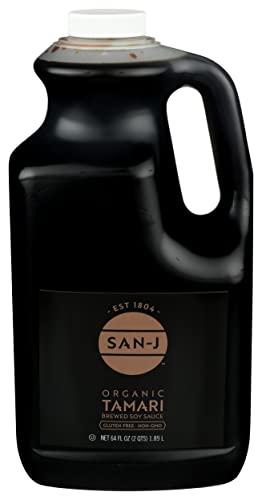
4. San-J Organic Tamari Gluten Free Soy Sauce 64 oz
San-J Organic Tamari Gluten Free Soy Sauce 64 oz is for cooks who already know they use tamari constantly. The jug format solves a different problem from the small bottles: running out during stir-fry weeks, marinade batches, and meal-prep sauces.
The flavor role is broad and kitchen-focused. It can season wok vegetables, tofu, chicken, mushrooms, broths, and glazes where you need enough savory depth to carry through heat.
Buy this when the sauce is an ingredient, not just a dip. It makes more sense beside pantry staples than beside occasional snack foods like potato chips, even though a little tamari can still sharpen a dip.
The drawback is commitment. A 64 oz jug is too much for a shopper who is still deciding whether tamari belongs in the kitchen.
- Large refill-size jug
- Organic and gluten-free product branch
- Useful for frequent cooking and marinades
- Too large for first-time testing
- Requires pantry space and steady use
🥟 Best with: stir-fries, tofu, chicken marinades, mushroom dishes, sesame noodles, and freezer meal prep.

5. Kikkoman Gluten-Free Tamari Soy Sauce 64 oz
Kikkoman Gluten-Free Tamari Soy Sauce 64 oz is the bulk choice when you like the Kikkoman profile but need much more of it. It keeps the same practical all-purpose role as the smaller winner, only in a format built for refilling and repeat cooking.
The jug is useful for households that season rice, noodles, vegetables, and proteins several times a week. It also makes sense when tamari is part of a sauce routine with vinegar, sesame oil, ginger, garlic, or chili crisp.
Compared with the San-J jug, this pick is less about organic-label shopping and more about familiar taste in a bigger container. It is the more direct bulk route for shoppers who already trust Kikkoman.
Skip it if you only need a dipping bottle. The 10 oz winner is easier to store, pour, and test beside sauces like Japanese shoyu sauce when you only need a small savory accent.
- Bulk version of a familiar profile
- Good for refill bottles
- Gluten-free product branch
- Not organic-focused
- Oversized for occasional dipping
🍜 Best with: refill bottles, big stir-fries, rice bowls, noodles, marinades, and weekly meal prep.
Which Tamari Sauce Should You Buy by Use Case?
Buy a 10 oz bottle for dipping and trial runs, and buy a 64 oz jug only when tamari is already part of your weekly cooking. Bottle size is the fastest way to avoid the wrong purchase.
Match the sauce to the job.
| Use case | Best pick | Why it works |
|---|---|---|
| First bottle for dipping | Kikkoman Gluten-Free Tamari 10 oz | Small bottle, familiar profile, and easy table use. |
| Marinades and dressings | San-J Organic Tamari Reduced Sodium 10 oz | Reduced-sodium branch gives more room for garlic, ginger, sweeteners, and acid. |
| Organic pantry bottle | Eden Organic Tamari 10 oz | Compact bottle with an organic pantry role. |
| Frequent organic cooking | San-J Organic Tamari 64 oz | Large jug fits stir-fries, refills, and marinade batches. |
| Kikkoman bulk refills | Kikkoman Gluten-Free Tamari 64 oz | Same familiar branch in a larger format. |
How to Choose Tamari Sauce
Do not buy tamari by brand alone. Check the size, sodium branch, gluten-free wording, and organic label before deciding whether it belongs on the table or in the cooking pantry.
Read the front label first.
- Choose 10 oz: best for tasting, dipping, and small households.
- Choose 64 oz: best for refill bottles, weekly stir-fries, and marinade batches.
- Choose reduced sodium: best when the sauce is joining other salty ingredients.
- Choose organic: best when that label is part of your pantry standard.
- Check gluten-free wording: buy only the exact product branch that matches your dietary needs.
Tamari can also change how creamy or savory foods taste. If you are building a dipping spread, it can sit next to richer choices like high-protein yogurt sauces or a spicy honey glaze.
For stir-fry planning, rice noodles soak up salty sauces quickly, and rice noodle texture changes fast when the pan is too wet.
Frequently Asked Questions
The Tamari Sauce I Would Buy First
Kikkoman Gluten-Free Tamari Soy Sauce 10 oz is the tamari sauce I would buy first for most kitchens. It is the easiest small bottle to use for dipping, rice bowls, and quick savory seasoning.
Start small.
Choose San-J Reduced Sodium when salt control matters, Eden when the organic pantry bottle is the priority, and one of the 64 oz jugs only when tamari already has a steady place in your cooking routine.