
You spot it at the market and pause - those glossy, dark-green stalks with small flowering buds look familiar but aren't quite broccoli. Chinese broccoli, also called gai lan or kai-lan, is a leafy Brassica that holds its own anywhere other sturdy greens would go, from a quick weeknight stir-fry to a slow-cooked braise.

Cooks who regularly work with bok choy cooking methods or swapping out mustard green will find gai lan fits naturally into that same repertoire.
Here's what you're actually buying, how it tastes, and how to cook it well.
Chinese broccoli (gai lan) is a leafy Brassica with thick, crunchy stems and glossy dark-green leaves. It has a mild bitterness, a faint mustard tang, and stays crisp when cooked quickly. Best used in stir-fries, blanched as a side, or steamed with soy. Refrigerate and use within a week.
What Is Chinese Broccoli?
Chinese broccoli is a leafy green in the Brassica family, originating from Southern China and Southeast Asia.
Remember it later
Planning to try this recipe soon? Save it for a quick find later!
It goes by gai lan in Cantonese and kai-lan in Malay and other Southeast Asian languages - both names refer to the same plant.
Unlike head broccoli, gai lan is eaten stem-to-leaf. The plant produces thick, meaty stalks, broad dark-green leaves, and small flower buds that are harvested before they fully open.
It is closer in form to kale than to the broccoli you'd find in a Western produce aisle.
There's also a baby gai lan variety, which has thinner stems, smaller buds, and a slightly more tender texture throughout.
For cooks looking at alternatives to choy sum, gai lan is a frequently cited option because both share similar stem-and-leaf structure, though gai lan has thicker stalks and a more pronounced bite.
- 🌿 Full-size gai lan - thick stems, wide leaves, earthy and slightly bitter
- 🌱 Baby gai lan - thinner stems, uniformly small buds, milder flavor and quicker cooking time
What Does Chinese Broccoli Taste Like?
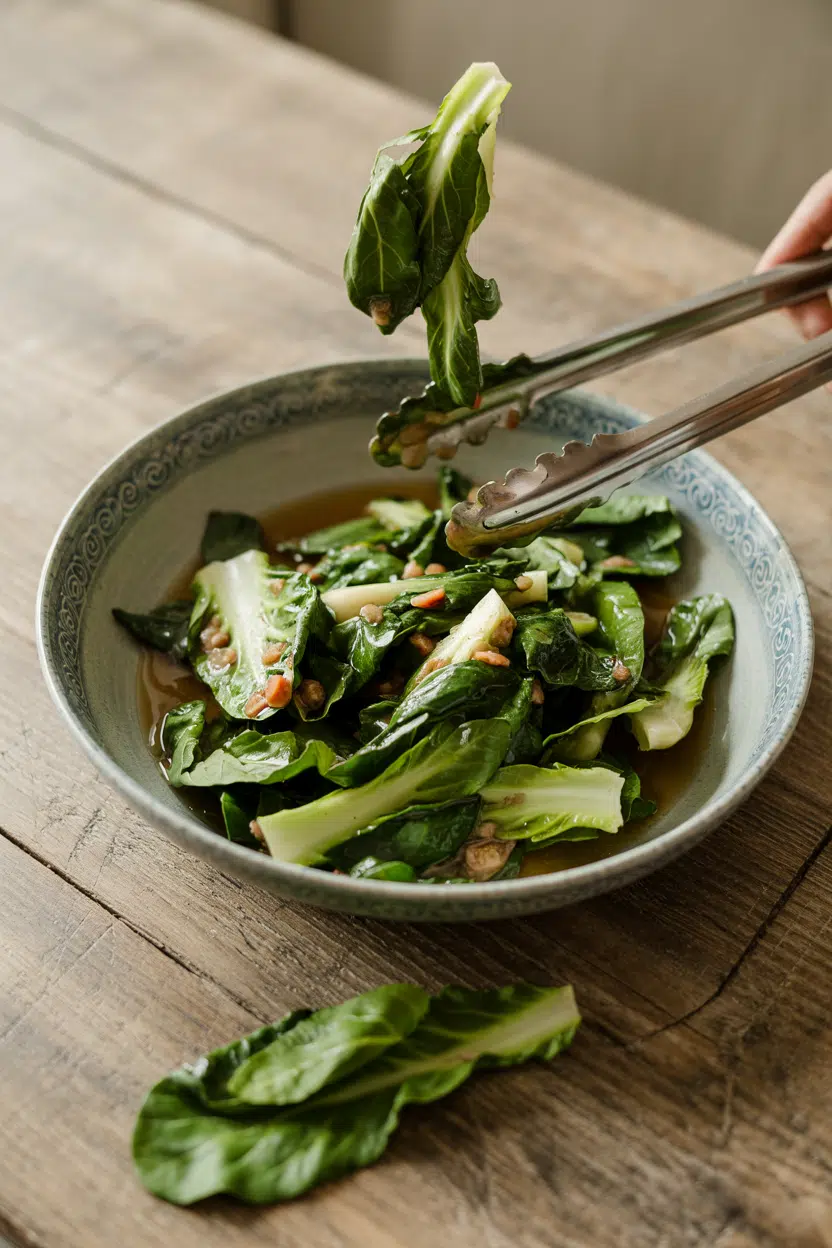
Gai lan's flavor sits between tender kale and broccoli rabe - it carries a mild bitterness without the sharp pepperiness that makes rabe polarizing. There's a faint mustard tang, a clean green note, and a subtle sweetness that comes forward when the vegetable is briefly blanched or stir-fried over high heat.
Heat changes the flavor noticeably. A short stir-fry over high heat keeps bitterness mild and brings out sweetness in the stems.
Overcooking shifts things - the sulfur compounds in the Brassica release more strongly, and you lose the clean green note that makes gai lan worth cooking in the first place.
Cooks who find broccoli rabe too aggressive often prefer gai lan, and anyone considering swapping out broccoli rabe will find gai lan is the more approachable option.
How to Use Chinese Broccoli
Cantonese cooking built its reputation for gai lan on one preparation: blanched or stir-fried, finished with oyster sauce and a drizzle of hot oil over the top. It's the standard side dish in dim sum restaurants and a staple in home kitchens across Southern China and Southeast Asia. That preparation alone is worth learning.
Beyond that, gai lan handles a range of methods well.
It pairs naturally with garlic, ginger, soy sauce, and sesame oil - all of which balance or soften its mild bitterness.
Thinly sliced beef and tofu are common protein pairings; both absorb the same seasoning profile.
For a complete spread, consider what dishes alongside stir fry work with these Cantonese flavors.
| Method | Best For | Tip |
|---|---|---|
| 🔥 Stir-fry | Cantonese side dishes, noodle bowls, fried rice | High heat, 2-3 minutes max to keep stems crisp |
| 💧 Blanch & shock | Cold sides, sesame-soy salads, meal prep | 30-60 seconds in boiling water, then ice bath immediately |
| ♨️ Steam | Tender result for oyster sauce finish | 4-5 minutes over simmering water; serve immediately |
| 🍲 Light braise | Beef and black bean sauce dishes | Add gai lan near the end; stems need only 4-6 minutes |
Gai lan also works well charred briefly on a grill and finished with citrus - a less traditional approach that gives the stems a smoky edge. Avoid long, slow stews; the stems turn pithy and the leaves dissolve.
How to Buy and Store Chinese Broccoli
At the market, look for firm, glossy stems with no soft spots or pithy sections. Leaves should be dark green and flat - not yellowed, wilted, or spotted.
Buds should be tightly closed; open flowers mean the plant is past its prime. For baby gai lan, the stems should be uniformly thin with small, consistent buds throughout.
At home, wrap loosely in a damp paper towel and place in a perforated plastic bag in the crisper drawer.
This keeps humidity up while allowing enough airflow to prevent rot.
Proper handling makes a real difference, and preparing chinese broccoli properly starts with how you store it.
Use within 3-7 days; baby gai lan is best within three to four days.
If gai lan isn't available, a guide to alternatives to chinese broccoli can help you find the right stand-in for your dish.
And if oyster sauce is also out of stock, oyster sauce stand-ins covers the most practical swaps for that sauce specifically.
Start With the Stir-Fry
New to gai lan? The oyster sauce stir-fry is the entry point. High heat, two minutes, a generous pour of oyster sauce, and you'll understand immediately why this vegetable anchors so many Cantonese menus.
- 🔥 For crunch - stir-fry over the highest heat your pan will take, add stems first
- 💧 For softness - blanch briefly, shock in ice water, finish with soy-sesame dressing
- 🍲 For a richer dish - add to a light braise with beef and black bean sauce in the final minutes
Pick one method, cook it once, and you'll find it becomes a weekly habit.
Frequently Asked Questions
No, they are different plants, though both are Brassicas. Gai lan has thicker, crunchier stems and a milder, less earthy bitterness than curly or lacinato kale. The leaf texture is also smoother and less fibrous.
High heat and short cooking time are the main tools - two to three minutes in a hot wok keeps bitterness mild. Blanching in salted boiling water for 30-60 seconds also softens the bitter edge noticeably before finishing with sauce.
Yes, though the stems are quite firm and the bitterness is more pronounced uncooked. Thinly shaving raw stems into a slaw with an acidic dressing works better than eating them whole.
Baby gai lan suits quick stir-fries and steamed dishes where uniform tenderness matters. Its thinner stems cook in about half the time of mature stalks, making it better suited to dishes where you want stem and leaf to finish together.
Yes, gram for gram gai lan is notably high in calcium compared to head broccoli, alongside vitamin A and vitamin C. It also contains glucosinolates, which is worth knowing for anyone sensitive to cruciferous vegetables in large amounts.



