
Most cooks treat matzo meal as a seasonal swap-in - something you buy once for Passover, make matzo balls, and forget about.
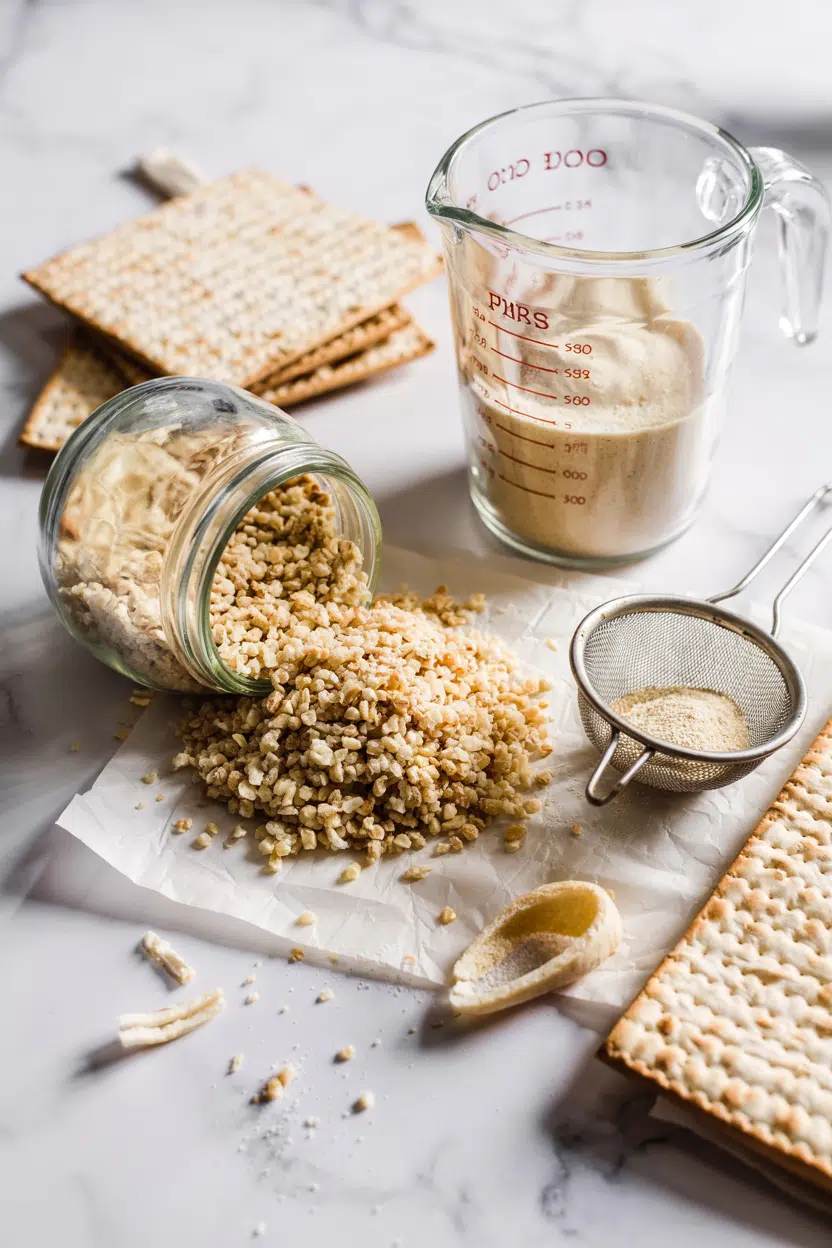
That's a narrow read on an ingredient that works hard in fish in cooking, stuffings, kugels, and fried coatings year-round, and if you're already careful about storing kugel correctly, keeping matzo meal on the shelf costs you almost nothing.
Matzo meal is finely ground matzah - unleavened flatbread dried and milled to a sandy crumb. It tastes like plain dry breadcrumbs with a mild toasted-wheat note, and works as a binder, breading, or thickener wherever a neutral, yeast-free grain base is needed.
What Is Matzo Meal?
Matzo meal is ground matzah - the flat, crisp, unleavened bread traditionally eaten during Passover, pulverized into a coarse-to-fine grain.
Remember it later
Planning to try this recipe soon? Save it for a quick find later!
It sits in the pantry staple category alongside dried breadcrumbs and cracker crumbs, but it's made without any leavening agents, yeast, or additives.
Its roots are in Ashkenazi Jewish and Eastern European Jewish home cooking, where every part of matzah was put to use across the eight days of Passover.
You'll see it labeled matzah meal, matzoh meal, or matzo cake meal depending on grind size - cake meal is finer and better suited to delicate batters.
The coarsest form goes by matzo farfel, which are irregular broken pieces rather than uniform granules.
Standard matzo meal comes from wheat flour and water alone, baked fast and hard, then ground down.
If you ever need to make it at home, you can break plain matzah sheets and pulse them in a food processor - the same way you'd approach making fresh breadcrumbs, though matzo meal's shelf life far outpaces bread's shelf life in a standard pantry.
What Does Matzo Meal Taste Like?
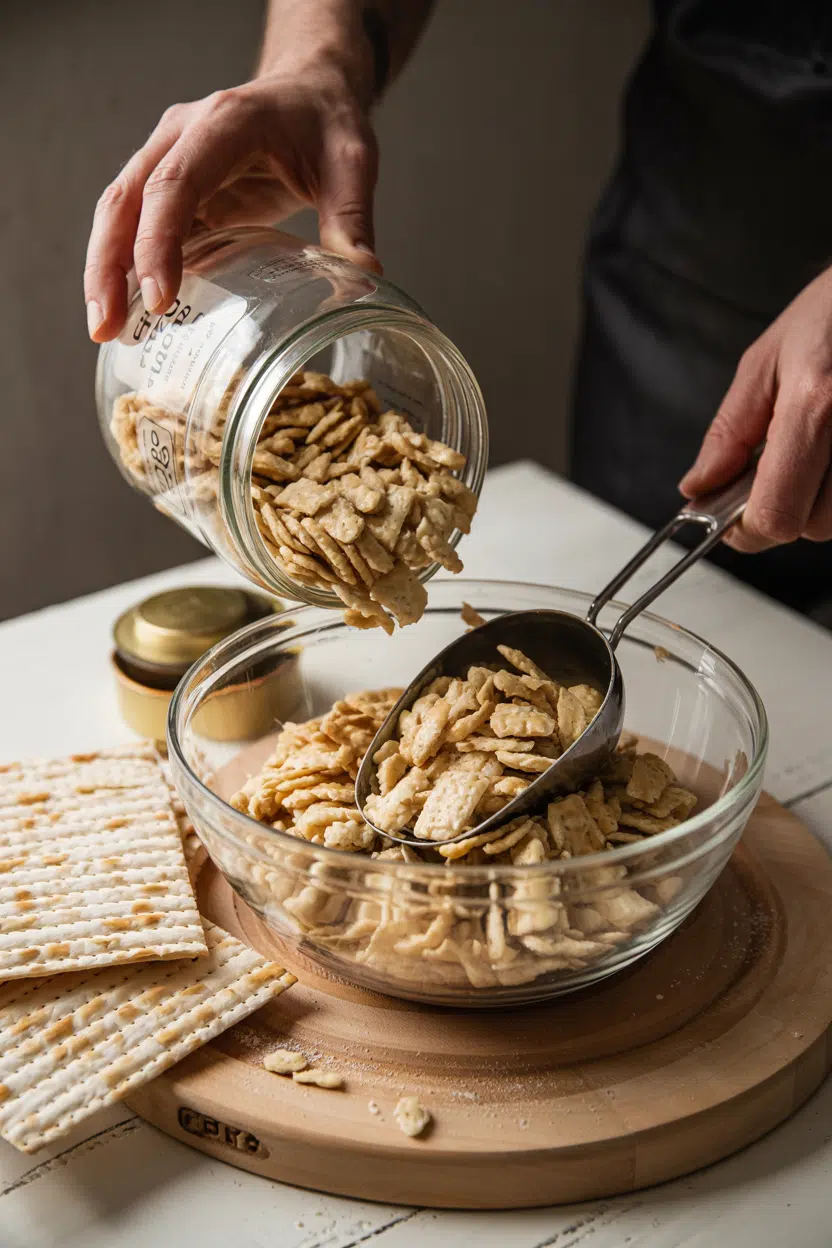
Matzo meal tastes close to unseasoned dry breadcrumbs - mild, faintly wheaty, with a clean toasted-grain note that doesn't carry the yeasty depth of regular breadcrumbs.
The slight nuttiness comes from how quickly matzah bakes at high heat, which toasts the surface without browning it deeply.
Raw, it has a dry, dusty quality. Once hydrated and cooked - in a matzo ball or a pan-fried fritter - it softens into a tender, slightly grainy crumb that holds its structure without becoming dense or gummy.
Its neutrality is the point. Unlike seasoned breadcrumbs, matzo meal won't compete with schmaltz, stock, or spice - it amplifies the surrounding flavors rather than adding its own.
How to Use Matzo Meal
Matzo meal's main job is structural: it binds, coats, and thickens without contributing strong flavor. That neutrality makes it adaptable across several methods.
The most iconic application is matzo balls - the soft dumplings simmered in chicken soup where matzo meal acts as the primary structure, held together by eggs and fat like schmaltz.
Getting the fat right matters; if you're working without rendered chicken fat, look into alternatives to schmaltz before adjusting the batter.
For chicken soup inspiration beyond the Ashkenazi tradition, a korean samgyetang ginseng chicken soup recipe shows how grain and dumpling elements cross into other soup cultures as well.
Beyond soup, it works well in a range of applications:
- 🥩 Meat binder - Mix into ground meat for meatloaf, meatballs, or gefilte fish to lock in moisture without changing the flavor profile.
- 🍗 Breading and coating - Press onto chicken or fish for a Passover-legal crust; it fries and bakes to a dry, even crunch.
- 🥚 Matzo brei - Soak broken matzah pieces (or use farfel), mix with beaten eggs, and pan-fry for a fast, satisfying breakfast dish.
- 🍲 Thickener - Stir small amounts into gravies, kugel custards, or stuffings to absorb liquid and set structure during baking.
When swapping out matzo meal in non-Passover recipes, plain dry breadcrumbs match most applications gram-for-gram, though they add a faint yeasty note matzo meal doesn't carry.
| Method | Best For | Tip |
|---|---|---|
| 🍲 Simmer | Matzo ball dumplings in soup | Chill batter before forming; don't overcrowd the pot |
| 🥩 Mix & Bake | Meatloaf, meatballs, gefilte fish | Use 2-3 tablespoon per pound of meat as starting ratio |
| 🍳 Coat & Fry | Schnitzel, fish fillets, fritters | Press firmly so coating adheres before hitting the pan |
| 🧁 Mix & Bake | Kugel custard, stuffing, pancake batter | Let mixture rest so meal absorbs liquid before baking |
How to Buy and Store Matzo Meal
Look for a sealed bag with pale-golden, even granules - no hard clumps, no dusty residue caking the bottom.
Near Passover, packaging marked "certified kosher for Passover" confirms the production line meets religious standards; outside the holiday season, standard matzo meal is widely available in the international or baking aisle.
Once opened, moisture is the only real enemy. Transfer the remainder to an airtight container and keep it in a cool, dry pantry away from the stove.
A full guide to storing matzo meal correctly covers what to check for before using older stock.
Unopened bags stay shelf-stable for many months. Opened and sealed properly, quality holds for 6-12 months - far longer than most fresh pantry items.
Start Here for Matzo Meal
If you're new to matzo meal, start with matzo balls. The recipe is forgiving, the ingredient behaves predictably, and the result makes the function immediately clear - you'll understand what it does to texture and structure after one batch.
From there, use it anywhere a neutral binder or dry coating is needed. If you already make oven-baked cod with breadcrumbs at home, swapping in matzo meal gives you a cleaner, yeast-free crust with near-identical crunch.
Frequently Asked Questions
Ground matzah - a flatbread made from only wheat flour and water, baked without any leavening. The dried matzah is milled to a coarse or fine crumb depending on the intended use.
Yes, in most cooked applications the swap is nearly 1:1. Matzo meal produces a slightly drier, less yeasty result - which works well for breading and binding but may be noticeable in recipes where breadcrumbs add flavor.
No. Standard matzo meal is made from wheat and contains gluten. Some brands produce oat-based matzo for Passover use, but those are not gluten-free either - oats carry cross-contamination risk unless certified.
An unopened bag stays shelf-stable for many months past purchase. Once opened, transfer to an airtight container - quality holds for 6-12 months before the toasty wheat flavor starts to go flat.
Grind size. Cake meal is milled much finer - closer to flour - and is used for delicate batters and baked goods where standard matzo meal would produce a gritty texture. They are not interchangeable in most recipes.



