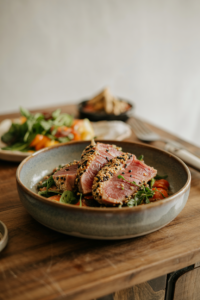
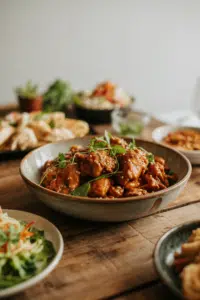
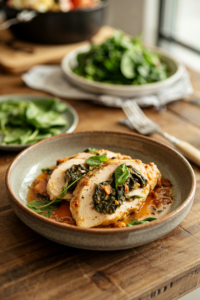
A whole chicken simmering in ginger-scented broth with sticky rice tucked inside. That's Samgyetang-Korean ginseng chicken soup that warms from the inside out.

The pot does most of the work. You stuff the bird, simmer it gently, and walk away for 90 minutes.
This is what we make when we need something nourishing that doesn't require constant attention. The rice cooks inside the chicken while the ginseng-infused broth builds flavor on its own.
Samgyetang is a Korean chicken soup where a whole young bird gets stuffed with glutinous rice, ginseng, and jujubes, then simmered until tender. The key is a gentle simmer-not a rolling boil-to keep the broth clear and the meat from toughening. You'll know it's ready when the chicken meat pulls easily from the bone and the rice inside is soft but intact.
Why This Recipe Works
Simmering a whole chicken at low heat extracts collagen without breaking down the meat fibers too quickly. The glutinous rice inside absorbs the herbal broth while releasing starch that gives the soup body. For a different approach to tender chicken with bold flavor, try this classic chicken dish-it uses high heat instead of slow simmering.
Remember it later
Planning to try this recipe soon? Save it for a quick find later!
Prep Time
20 min
Cook Time
90 min
Total Time
110 min
Servings
2-4 servings
Difficulty
Medium
Category
Main Dish
Quick Tip
Simmer gently; avoid boiling for clear broth
Best For
Weeknight | Health Recovery | Special Occasion
What makes this work:
- Young whole chicken gives tender meat - Cornish hens or small fryers have less connective tissue and cook evenly in 90 minutes
- Pre-soaked glutinous rice absorbs broth without bursting - 45 minutes of soaking softens the grains so they cook through inside the chicken cavity
- Gentle simmer keeps broth golden and clear - temperatures between 180-200°F extract flavor without creating foam or cloudiness
- Ginseng and jujubes build herbal sweetness slowly - the long cooking time mellows the bitterness and releases aromatic oils
- Skimming foam every 15 minutes removes impurities - this step is what separates restaurant-quality broth from murky home versions
What You'll Need
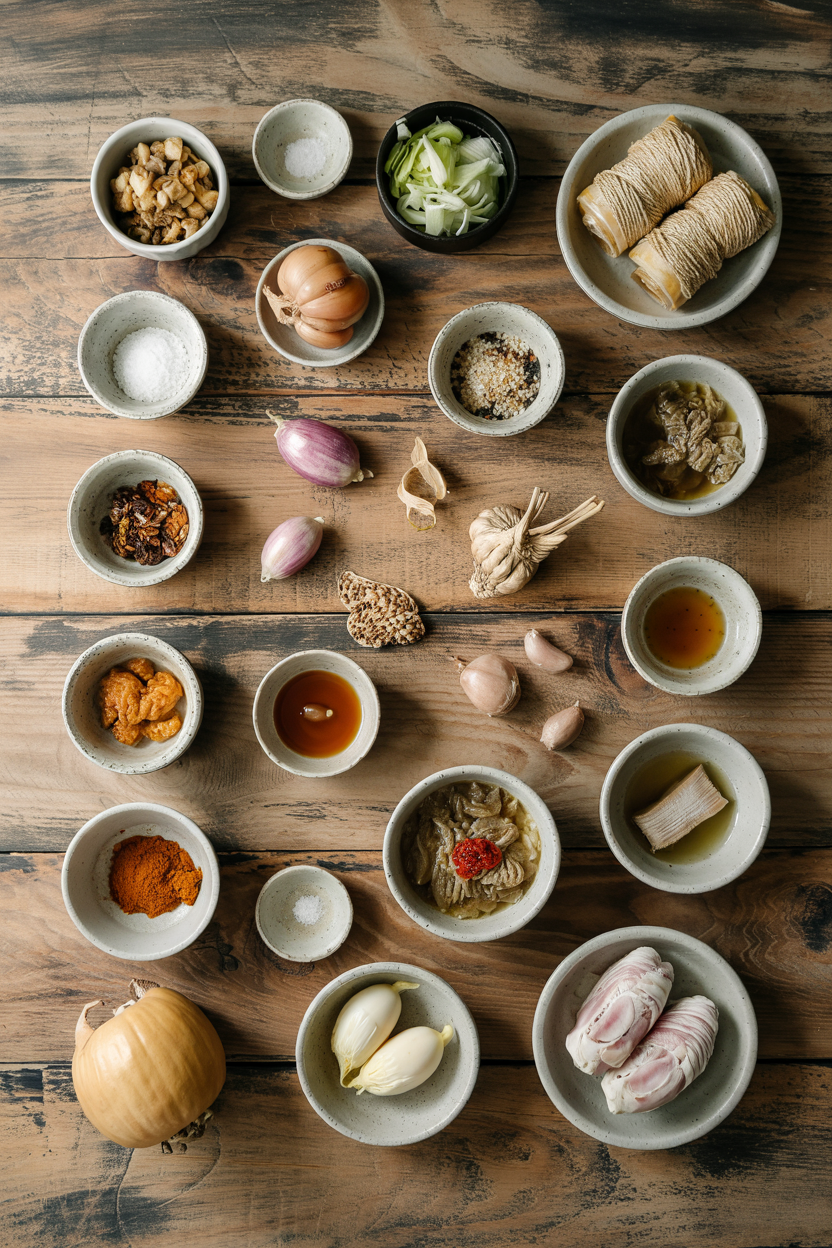
Grab a whole young chicken (2-3 pounds), glutinous rice, and fresh ginseng root at an Asian market. Everything else-garlic, jujubes, ginger-keeps in your pantry for weeks. If you want something with shorter cook time and bolder spice, check out this quick pakoras dish that skips the long simmer entirely.
- 1 whole young chicken (2-3 lbs) or Cornish hen
- ½ cup glutinous rice (sticky rice)
- 1-2 fresh ginseng roots
- 6-8 garlic cloves
- 1-inch ginger knob
- 2 scallions
- 6-8 jujubes (dried red dates)
- Salt and black pepper
- 8 cups water or chicken broth
Ingredient Details
- Whole young chicken
Use a 2-3 pound bird or Cornish hen-larger chickens take longer and the meat dries out before the rice cooks through - Glutinous rice
Soak 45 minutes minimum-dry rice won't cook fully inside the chicken and will stay crunchy in spots - Fresh ginseng root
Look for firm, unblemished roots at Asian markets-dried ginseng works but needs a 2-hour soak and tastes less aromatic - Jujubes (dried red dates)
These add natural sweetness without sugar-skip them and the broth tastes flat and one-note - Garlic cloves
Leave whole and unpeeled-they soften during simmering and can be squeezed out and eaten with the chicken - Water vs. chicken broth
Water is traditional and lets the ginseng shine-broth adds richness but can overpower the herbal notes - Scallions
Add just before serving to keep them bright green-cooking them in the broth turns them drab and mushy
Ingredient Swaps
You can adapt this based on what's in stock at your local market or what you already have. Most swaps work without changing the cooking method. For a completely different comfort meal with similar warming qualities, try a fluffy mashed potato dish that takes half the time.
Four swaps that work:
- Fresh ginseng root → dried ginseng - Soak dried ginseng in warm water for 2 hours before adding to the pot; flavor is slightly less aromatic but still herbal
- Glutinous rice → short grain white rice - The stuffing won't be as sticky but it still absorbs the broth; cooking time stays the same
- Whole young chicken → Cornish hen - Perfect for single servings; reduce simmer time to 60-75 minutes and check doneness earlier
- Jujubes → dried cranberries - Sweetness level is similar but the flavor profile shifts to tart instead of mellow; use half the amount
Fresh ginseng
Works for: Traditional flavor, aromatic broth, special occasions
Skip if: Can't find at Asian markets or budget is tight-dried works fine
Dried ginseng
Works for: Longer shelf life, easier to find, budget-friendly
Skip if: You want maximum aromatic punch-fresh has stronger herbal notes
Instructions
Plan for 20 minutes of active prep, then 90 minutes of simmering while you do other things. The chicken cooks at a gentle bubble-not a rolling boil-so the broth stays clear. If you need a side that comes together during the simmer, this homemade dressing recipe takes 10 minutes and adds tangy contrast to the rich broth.
Soak the rice and prep the chicken. Rinse ½ cup glutinous rice under cold water until the water runs clear, then soak in a bowl for 45 minutes. Rinse the whole chicken inside and out, pat dry with paper towels, and trim any excess fat from the cavity opening.
Stuff the chicken. Drain the soaked rice and stuff it into the chicken cavity along with 4-6 garlic cloves (unpeeled), 1-2 fresh ginseng roots, and 4-5 jujubes. Don't pack it tight-leave about an inch of space at the top so the rice has room to expand.
Start the simmer. Place the stuffed chicken in a large pot and add 8 cups of water or chicken broth. Add the remaining garlic cloves, jujubes, ginger, and 1 scallion (cut in half). Bring to a boil over high heat, then immediately reduce to low so the broth barely bubbles.
Simmer and skim. Let the chicken simmer for 90 minutes, skimming foam from the surface every 15 minutes with a ladle or strainer. The broth should never boil hard-adjust the heat as needed to maintain a gentle simmer. Check doneness at the 60-minute mark by pulling on a leg; if the meat resists, continue simmering.
Rest and serve. Turn off the heat and let the soup rest for 10 minutes. Remove the chicken to a cutting board, slice or pull apart the meat, and serve in bowls with the broth, rice, and softened garlic cloves. Garnish with chopped scallions and serve with salt and black pepper on the side for seasoning.
What to Serve With It
Samgyetang is already a complete meal, but banchan (small side dishes) add variety to the table. For more ideas on building a full Korean spread, check out these teriyaki chicken meal planning ideas-many of the same principles apply.
| Side Dish | Prep | Why It Works | How to Serve |
|---|---|---|---|
| Kimchi | Easy | Acidity cuts through the rich broth and adds crunch | Serve cold in a small dish on the side |
| Steamed rice | Easy | Soaks up extra broth and adds neutral bulk | Spoon broth over rice in individual bowls |
| Pickled vegetables | Easy | Bright, tangy contrast to the herbal soup | Arrange on a small plate alongside the main bowl |
| Blanched spinach with sesame | Easy | Adds freshness and a different texture | Drizzle with sesame oil and serve at room temperature |
| Korean pancakes (jeon) | Medium | Hearty and shareable for special occasions | Slice and serve with soy-vinegar dipping sauce |
Three ways to serve it:
- As a health tonic meal - Serve the soup with just salt and pepper on the side; let diners season to taste and eat the softened garlic cloves whole
- For weeknight comfort - Add a side of steamed rice and quick-pickled cucumbers; the rice soaks up broth while the pickles add crunch
- For special occasions - Set out assorted banchan (kimchi, seasoned bean sprouts, pickled radish) and serve with ginseng tea or barley tea
Store and Reheat
Leftover soup keeps its clarity and flavor for 3-4 days in the fridge. The rice inside the chicken will absorb more broth as it sits, so you may need to add water when reheating. If you're looking for another make-ahead option with similar comfort appeal, this simple homemade fry reheats well and adds crunch to any meal.
| Method | Time | Best For |
|---|---|---|
| 🍳 Stovetop | 10-15 min over low heat | Preserving delicate texture and flavor-add ¼ cup water if broth is too thick |
| 📦 Microwave | 3-5 min medium power | Quick warming of single servings-cover to prevent splattering |
| 🔥 Oven | 15 min at 325°F (160°C) | Even reheating of whole chicken portions-cover with foil to prevent drying |
For best results when storing:
- Cool the soup quickly - Transfer to shallow containers and refrigerate within 2 hours to prevent bacterial growth
- Store chicken and broth separately if possible - The chicken meat stays firmer when not sitting in liquid for days
- Add water when reheating - The rice absorbs broth over time, so thin it out with ¼-½ cup water or fresh broth
- Freeze only the broth - The chicken and rice get mushy after freezing; freeze strained broth for up to 1 month and use for other soups
- Reheat only what you'll eat - Repeated reheating breaks down the chicken texture and dulls the ginseng flavor
Frequently Asked Questions
Yes-soak dried ginseng in warm water for 2 hours before adding it to the pot. The flavor is slightly less aromatic but still delivers the herbal notes you want.
Store in an airtight container in the fridge for 3-4 days. Reheat on the stovetop over low heat for 10-15 minutes, adding ¼ cup water if the broth has thickened-the rice absorbs liquid as it sits.
Pull gently on a chicken leg at the 60-minute mark-if the meat pulls away easily from the bone, it's done. The rice inside should be soft but still hold its shape when you spoon it out.
Keep the soup at a gentle simmer-small bubbles breaking the surface, not a rolling boil. Skim foam every 15 minutes and lower the heat if the broth starts boiling hard.
Kimchi, pickled vegetables, and blanched spinach with sesame oil add acidity and crunch. Steamed rice works if you want to soak up extra broth.
Korean Samgyetang Ginseng Chicken Soup
Ingredients
Method
- Rinse glutinous rice under cold water until clear, then soak for 45 minutes. Rinse the chicken inside and out, pat dry, and trim excess fat from cavity.0.5 cup glutinous rice, 1 whole young chicken
- Drain soaked rice and stuff inside chicken cavity along with 4-6 unpeeled garlic cloves, 1-2 ginseng roots, and 4-5 jujubes. Leave about an inch space at the cavity opening to allow rice expansion.0.5 cup glutinous rice, 6-8 cloves garlic, 1-2 pieces fresh ginseng root, 6-8 pieces jujubes, 1 whole young chicken
- Place stuffed chicken in a large pot and add 8 cups water or chicken broth. Add remaining garlic cloves, jujubes, sliced ginger, and 1 scallion cut in half.1 whole young chicken, 8 cups water, 6-8 cloves garlic, 6-8 pieces jujubes, 1 inch ginger, 2 pieces scallions
- Bring broth to a boil over high heat, then immediately reduce to low so it simmers gently with only small bubbles. Skim foam every 15 minutes for 90 minutes. At 60 minutes, check chicken doneness by pulling a leg; continue simmering if needed.1 whole young chicken, 8 cups water
- Turn off heat and let soup rest for 10 minutes. Remove chicken, slice or pull apart meat, and serve with broth, rice, softened garlic cloves, and chopped scallions. Season with salt and black pepper as desired.1 whole young chicken, 8 cups water, 6-8 cloves garlic, 2 pieces scallions, salt, black pepper
Notes
- Keep broth at gentle simmer with small bubbles to maintain clarity and tender meat.
- Soak glutinous rice at least 45 minutes to ensure it cooks fully inside the chicken.
- Skim foam every 15 minutes during simmer to remove impurities and keep broth clear.