
Italian sausage does something no other fresh pork sausage quite replicates: it seasons itself.
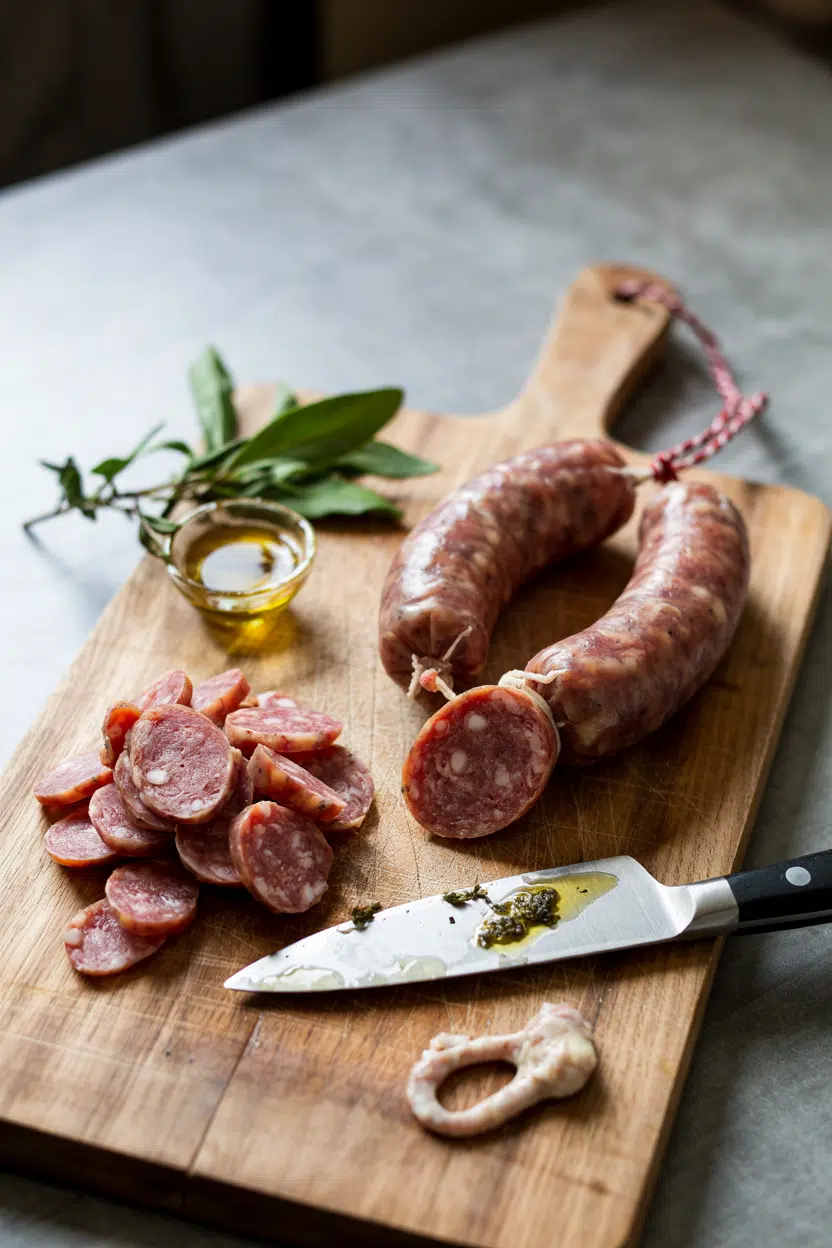
The fennel seed blooms into the fat as it renders, pulling garlic and savory pork into a single, cohesive hit of flavor that lands before any sauce or accompaniment even registers.
Unlike what makes chorizo distinct or bratwurst's flavor and uses, Italian sausage carries a defining botanical note - fennel - that shapes every dish it touches from the inside out.
Italian sausage is a coarsely ground fresh pork sausage seasoned with fennel seed and garlic. It comes in sweet (dolce) and hot (piccante) varieties, sold as links or bulk. Expect rich, savory pork flavor with a strong anise-like finish and juicy, slightly crumbly texture when cooked.
What Is Italian Sausage?
Italian sausage - known in Italy as salsiccia - is a fresh, coarsely ground pork sausage seasoned primarily with fennel seed and garlic. It originated across the regional cooking traditions of central and southern Italy, where fresh sausages were made from pork shoulder and fat trimmings packed into natural casings.
Remember it later
Planning to try this recipe soon? Save it for a quick find later!
Two main varieties dominate the market. Sweet Italian sausage (dolce) relies on fennel seed for its signature flavor, with no added heat.
Hot Italian sausage (piccante) adds crushed red pepper and black pepper on top of the fennel base.
Beyond the sweet-hot divide, Italian sausage is sold in two formats. Links are individual portions in a natural or collagen casing; bulk is the same seasoned mixture loose, without casing.
Understanding what makes pork distinct as a base protein helps explain why the fat content here is not incidental - it's structural to how the sausage behaves in a pan.
- 🔗 Links - whole, cased portions best for grilling or slicing
- 📦 Bulk - loose meat ideal for crumbling into sauces or fillings
- 🌿 Sweet (dolce) - fennel-forward, no heat, broadly compatible
- 🌶️ Hot (piccante) - adds chili heat and pepper over the fennel base
What Does Italian Sausage Taste Like?
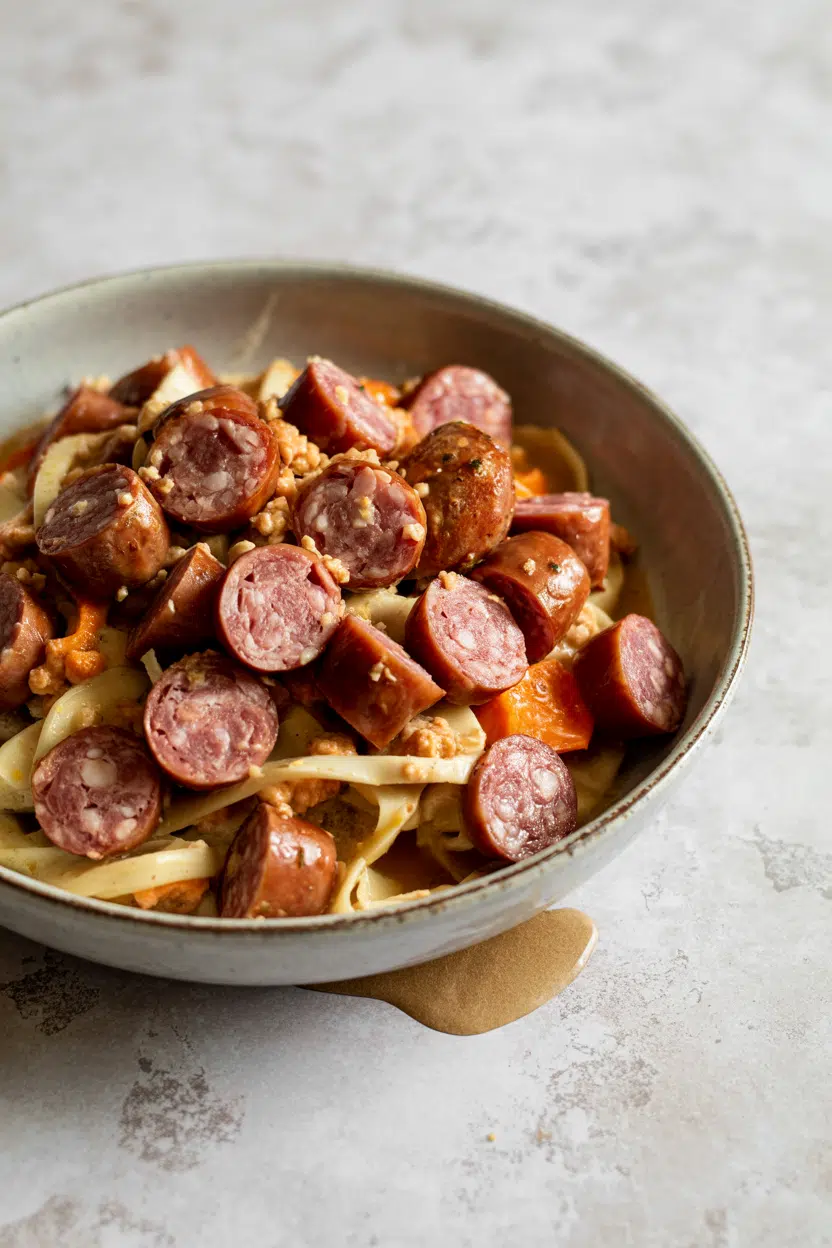
Salsiccia delivers a strong, layered flavor - savory pork-umami in the base, rendered-fat richness in the middle, and warm fennel-anise on the finish. It lands closer to a more fennel-forward pork breakfast sausage than to mild bratwurst, and the hot variety edges toward a milder chorizo when chili heat is factored in.
Heat changes the profile. Raw, the fennel is sharp and grassy.
Once seared, the fat renders and the fennel blooms into something warmer and rounder, closer to licorice than raw anise seed.
The coarse grind means visible fat flecks throughout - those white specks are intentional, not a flaw.
They baste the meat from the inside as it cooks, which is why crumbled Italian sausage in a sauce stays juicy where leaner meats dry out.
How to Use Italian Sausage
Italian sausage works across more preparations than most fresh pork products because of how its fennel-and-garlic seasoning integrates with fat during cooking. It pairs naturally with tomato and crushed red pepper, creamy cheeses like ricotta and pecorino, bell peppers and onions, polenta, and cannellini beans.
Sturdy red wines - Chianti-style - hold up to its weight.
| Method | Best For | Tip |
|---|---|---|
| 🔥 Pan-Sear + Simmer | Pasta sauces, ragù, Bolognese-style | Brown first for crust, then add liquid to finish cooking through |
| 🔥 Grill | Whole links with polenta or greens | Medium-high heat; rest 3 minutes before slicing to retain juices |
| 🔥 Brown + Crumble | Pizza topping, meatballs, stuffed pasta | Use bulk or remove casing from links; break apart in a hot pan |
| 🫙 Bake | Stuffed peppers, stuffed mushrooms, dough-wrapped | Par-cook filling before baking to avoid undercooked centers |
Italian-American cooking is the natural home for this sausage - spaghetti with crumbled sausage and tomato, hoagies loaded with sautéed peppers and onions, or pizza topped with sliced links.
For something closer to a skillet meal, a breakfast sausage potato skillet recipe shows how well this type of sausage holds alongside starchy, absorptive ingredients.
Keep it away from delicate seafood - the fennel-garlic weight overpowers light fish completely.
How to Buy and Store Italian Sausage
At the butcher case or grocery aisle, look for tightly packed links with a fresh pink-to-red color and clearly visible white fat specks throughout.
The fat marbling is not an indicator of poor quality - it's what makes the sausage behave correctly in a pan.
Smell before buying: a faint herbed pork aroma is correct; sour or metallic odors mean skip it.
Check the ingredient label for pork listed first and fennel or anise somewhere in the seasoning.
Once home, keep unopened raw links refrigerated at 34-40°F in their original packaging. Use opened raw sausage within 1-2 days.
Vacuum-packed links last up to 1-2 weeks unopened. For anything beyond a few days, freezing italian sausage in tightly wrapped or vacuum-sealed portions keeps quality intact for up to 3 months.
Where to Start With Italian Sausage
Start with sweet Italian links if you're new to the ingredient - the flavor is assertive but not divisive, and grilling or pan-searing a link whole requires no prep beyond a hot surface.
If you cook pasta sauces regularly, try bulk sausage crumbled into a tomato base; it builds a ragù-like depth faster than ground beef alone.
If you run into availability issues or dietary restrictions, a quick review of replacements for italian sausage covers the most practical swaps. Similarly, understanding what makes kielbasa sausage distinct puts Italian sausage's fennel profile in sharper context by comparison.
Frequently Asked Questions
Coarsely ground pork - typically shoulder and fat trimmings - seasoned with fennel seed and garlic. Most recipes also include black pepper, salt, and sometimes white wine. Hot varieties add crushed red pepper to that base.
It depends on the variety. Sweet Italian sausage has no added heat - the fennel can read as sharp, but there's no chili burn. Hot Italian sausage adds crushed red pepper and delivers a noticeable, sustained heat.
"Sweet" refers to the absence of chili heat, not added sugar - the flavor is savory and fennel-forward. "Hot" means crushed red pepper has been added to the same base blend, increasing heat without changing the fennel character.
Yes. Wrap links tightly in plastic then foil, or use vacuum-sealed bags, and freeze for up to 3 months. Texture holds well at that window; beyond it, the fat can oxidize and the flavor flattens.
Don't pierce the casing. Start links in a cold pan or over medium heat to let the interior temperature rise gradually. High heat from the start causes steam buildup inside the casing, which splits it.



