
Bratwurst does something in a recipe that most sausages can't quite replicate - it holds its structure under high heat while still releasing enough fat to baste everything around it. That combination of a firm, coarse grind and a snappy natural casing makes it the anchor of a plate, not just a protein on the side.

Whether you're grilling links for a backyard crowd or braising them in beer for sandwiches, bratwurst earns its place through sheer depth of flavor and texture.
Bratwurst is a German fresh pork sausage with a coarse grind, snappy casing, and mild herb spicing built around marjoram and nutmeg. It's best grilled or beer-braised, pairs with mustard and sauerkraut, and keeps 3-5 days refrigerated or up to 4 months frozen.
What Is Bratwurst?
Bratwurst is a fresh or smoked German sausage made primarily from ground pork, sometimes blended with veal or beef, seasoned with marjoram, nutmeg, and white pepper, and stuffed into natural casings. The word itself comes from the Old German brät (finely chopped meat) and Wurst (sausage), though today's versions range from coarsely to finely ground depending on region.
Remember it later
Planning to try this recipe soon? Save it for a quick find later!
Germany produces dozens of recognized regional varieties, and three stand out on international shelves.
- Thüringer bratwurst - Long, thin links with a pronounced marjoram flavor; one of the oldest documented German sausage styles.
- Nürnberger bratwurst - Small-diameter links, roughly finger-sized, spiced with marjoram and often grilled over beechwood charcoal.
- Weißwurst - A white, milk-blanched Munich specialty made with veal and pork back, traditionally eaten before noon with sweet mustard.
Fresh bratwurst is uncooked and must be fully heated before serving. Pre-smoked or pre-cooked versions are available and behave differently on the grill - worth checking the label before you cook.
What Does Bratwurst Taste Like?
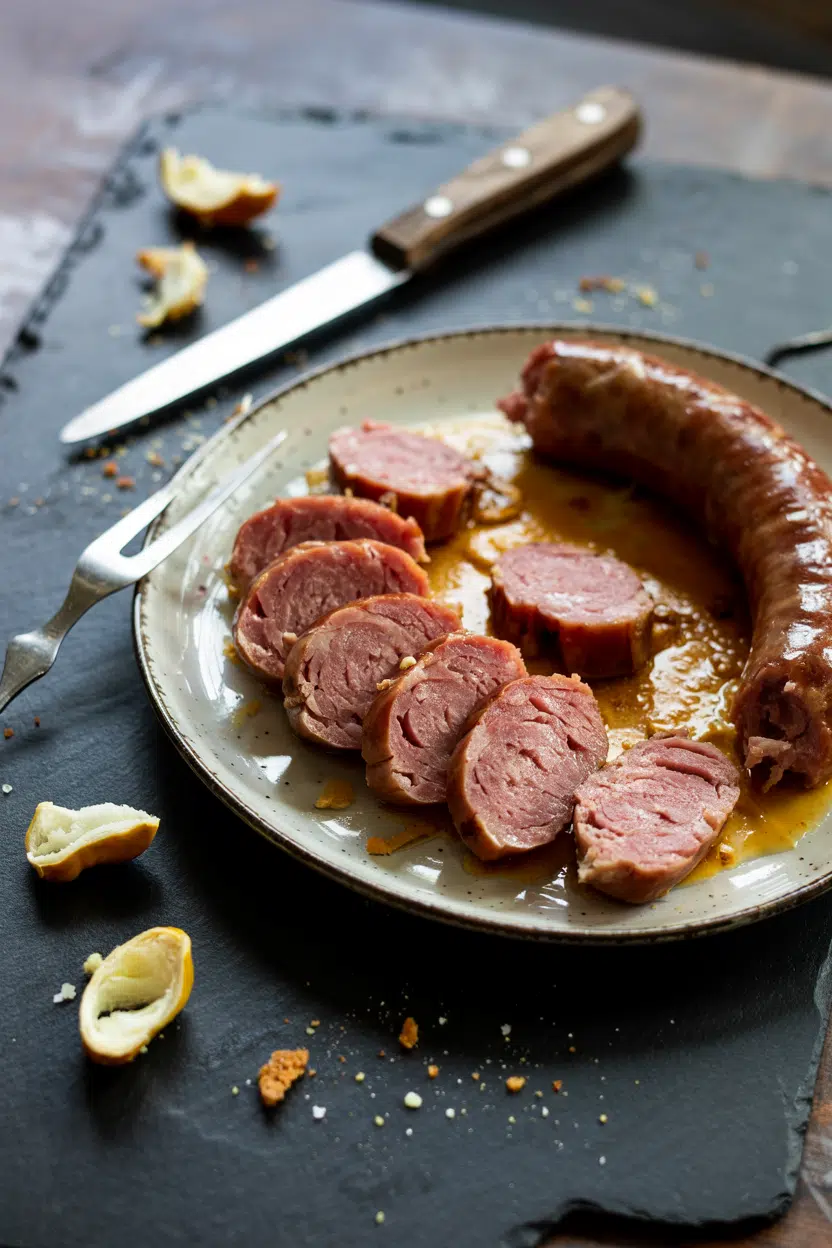
Pork is the dominant note, and it comes through clean - fatty and meaty without the cured funk of salami or the smoke-heavy profile of a smoked kielbasa. Marjoram gives bratwurst its characteristic herbal lift, slightly floral and more delicate than the oregano-forward flavor of Italian sausage. Nutmeg adds a faint warmth underneath.
Heat changes everything. Raw bratwurst smells faintly of pork and spice; grilled, it develops a browned crust that concentrates those marjoram and nutmeg notes considerably.
Beer-braised links stay juicier and more subtle, letting the natural pork flavor lead.
How to Use Bratwurst
Bratwurst is built for high-heat cooking methods that char the casing and render the fat through the grind. Grilling over medium heat is the standard - roughly 15 to 20 minutes, turning regularly to avoid blowouts.
For extra insurance against splitting, many cooks use a beer braise first: simmer raw links in lager or wheat beer with sliced onions for 10 minutes, then finish on a hot grill for color and casing snap.
| Method | Best For | Tip |
|---|---|---|
| 🔥 Grilling | Bun service, Oktoberfest platters | Medium heat; turn every 4-5 min to char evenly |
| 🍺 Beer Braise + Sear | Juicier links, sandwiches, stews | Simmer in lager 10 min; finish on high heat |
| 🍳 Pan-Frying | Sliced into skillets, hash dishes | Slice after cooking to avoid casing sticking |
| 🫕 Braising | Onion-beer sandwiches, winter stews | Low oven, 325°F, fully submerged in liquid |
| 🌡️ Oven Baking | Batch cooking, meal prep | 375°F for 25-30 min; broil last 3 min for color |
In German and Austrian cooking, bratwurst appears alongside sauerkraut, spaetzle, and roasted potatoes. American Midwest traditions - built on heavy German immigration - serve it on a pretzel or rye bun with grainy mustard and caramelized onions.
Sliced into a breakfast hash with pork shoulder trimmings and potatoes, it works equally well at brunch. Avoid pairing bratwurst with very sweet fruit sauces; they bury the herb spicing rather than complement it.
For a full rundown of what to set on the table alongside it, see side dishes for bratwurst.
How to Buy and Store Bratwurst
Fresh bratwurst should look pale pink to light tan with casings that are smooth, tight, and unbroken. Avoid links that appear gray, feel sticky, or smell sour - those signs indicate spoilage regardless of the sell-by date.
Check the label for whether the sausage is raw, pre-cooked, or smoked, since cooking times differ significantly across those categories.
For storage, keep unopened fresh links in the refrigerator at 34-40°F and use within 3-5 days. Once opened or cooked, use within 3-4 days.
Freeze raw links within 2 days of purchase for up to 4 months - wrap individual links in plastic before bagging to prevent freezer burn. Thaw overnight in the fridge, not on the counter.
Full details on bratwurst freshness guide cover freezer timing and safety windows by variety.
Where to Start With Bratwurst
New to bratwurst? Start with a standard fresh pork link from a butcher or supermarket meat case, not a pre-cooked shelf-stable version.
Grill or pan-fry it plain first to understand the baseline flavor before adding beer braises or toppings. If you can't find bratwurst locally or need a different spice profile for a recipe, checking bratwurst replacements will point you toward the closest alternatives by cooking method and flavor.
Bratwurst rewards simple treatment. Get the heat right, leave the casing intact, and let the pork and spices do the work.
Frequently Asked Questions
Bratwurst is a specific German fresh sausage defined by its coarse pork grind and herb spicing - primarily marjoram and nutmeg. "Regular sausage" is a broad category; bratwurst differs by its natural casing, regional origin, and distinct spice profile rather than a generic breakfast or Italian blend.
Fresh, raw bratwurst must be fully cooked - grilling alone is sufficient if done over medium heat to an internal temperature of 160°F. Pre-cooking in beer first is optional, not required; it adds juiciness but isn't a food safety step.
Marjoram and nutmeg are the core spices, with white pepper and ginger common in most blends. Regional recipes vary - Nürnberger bratwurst leans heavier on marjoram, while Weißwurst uses parsley and lemon zest alongside the standard spices.
Primarily pork, often from pork shoulder or a shoulder-belly blend. Some varieties include veal, and a few use beef, but pure pork is the traditional and most widely sold form outside of Germany.
Use an instant-read thermometer - 160°F at the center confirms doneness. Visually, the casing should be evenly browned with no pink remaining when the link is cut, though color alone isn't a reliable safety indicator.



