
Escarole shows up in a bowl of classic Italian wedding soup or a slow-braised pot of white beans, doing quiet work that a milder green simply can't.
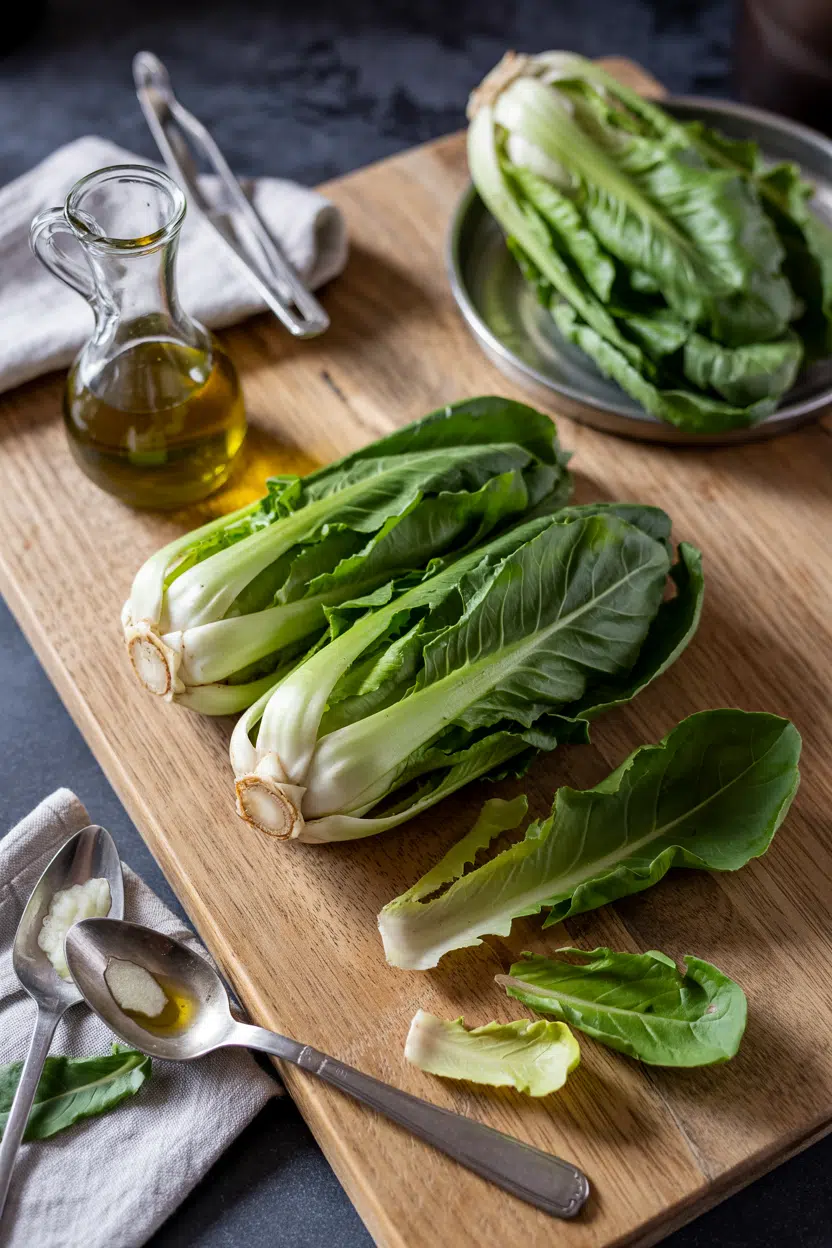
It holds up under heat, pushes back against rich pork fat, and keeps enough bitterness to make the whole dish feel alive.
If you've cooked with what makes frisee distinct or spent time swapping out frisee, escarole will feel familiar - broader, softer, and more forgiving in the pan.
Escarole is a chicory-family leafy green with wide, pale-ribbed leaves. Raw, it's crisp and mildly bitter. Cooked, it turns sweet and tender. Common in Italian and French cooking, it pairs well with garlic, white beans, and anchovies.
What Is escarole?
Escarole is a broad-leaved endive belonging to the chicory genus Cichorium, the same botanical family as frisée, radicchio, and Belgian endive. It originated in the Mediterranean and has been cultivated across Italy and southern France for centuries.
Remember it later
Planning to try this recipe soon? Save it for a quick find later!
The plant forms a loose, open head. Outer leaves are dark green and slightly waxy; inner leaves pale toward creamy yellow at the core.
Those pale inner leaves are the most prized - less bitter, more tender, and sweeter in flavor.
You may see it labeled broad-leaved endive or escarole lettuce at farmers markets.
A related type called catalogna, sometimes sold alongside it, is narrower and more deeply cut. Comparing radicchio vs red cabbage options gives useful context for how chicory-family bitterness varies across different leaves.
- 🌱 Family - Chicory (*Cichorium endivia*), same genus as Belgian endive and radicchio
- 🌍 Origin - Mediterranean, with deep roots in Italian and French regional cooking
- 🥬 Leaf structure - Wide, slightly wavy leaves with a firm, pale midrib running to the center
- 📛 Alternate names - Broad-leaved endive, escarole lettuce; catalogna is a related but distinct type
What Does escarole Taste Like?
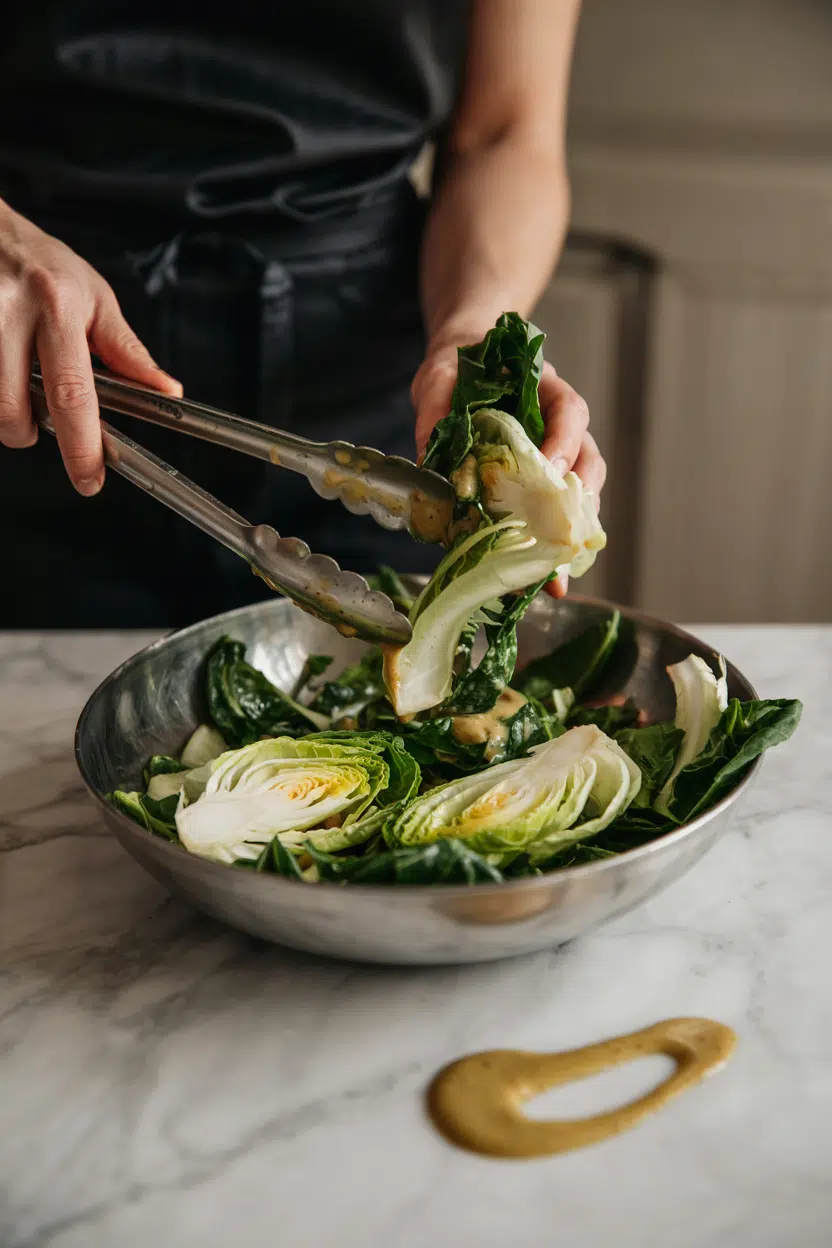
Raw escarole sits somewhere between romaine and radicchio on the bitterness scale - more assertive than romaine, far gentler than the sharp bite of frisée. There's a mild pepperiness and a faint nutty sweetness, especially in the pale inner leaves.
Heat changes escarole significantly. A quick sauté with garlic and olive oil softens the bitterness and coaxes out a gentle sweetness the raw leaf only hints at.
Long braising - as in white bean soup - mellows it almost completely, leaving a silky texture and a mild, savory depth.
How to Use escarole
Escarole handles more cooking methods than most leafy greens. It holds structure in soups, wilts beautifully in a hot pan, and still works raw in a salad when dressed assertively.
An anchovy-lemon vinaigrette or a bold citrus dressing gives it the acidic counterweight it needs to shine cold.
| Method | Best For | Tip |
|---|---|---|
| 🥗 Raw | Bitter green salads, grain bowls, leaf wraps | Use inner pale leaves; dress with citrus or anchovy vinaigrette |
| 🍳 Sauté | Warm side dish, pasta add-in | Add garlic and red pepper flakes; cook just until wilted, 3-4 minutes |
| 🥣 Braise/Soup | White bean soup, Italian wedding soup | Stir in near the end - it only needs 5-8 minutes to become silky |
| 🧀 Baked | Gratins, stuffed leaves with cheese and breadcrumbs | Blanch first to remove excess moisture before baking |
| ❄️ Blanch and shock | Composed plates, cold salads | 30 seconds in boiling water, then ice bath to set color and soften bitterness |
In Italian-American cooking, escarole and white beans with pancetta is the standard preparation - a three-ingredient combination that rarely fails.
Parmesan works as a finishing note, and replacements for olive oil can shift the dish depending on what fat you have at hand.
If a recipe calls for a chicory you don't have, swapping out escarole covers the closest options by cooking method and bitterness level.
How to Buy and Store escarole
Choose heads where the inner leaves are pale, tightly packed, and firm - that's where the sweetness lives. White ribs should snap, not bend.
Skip any head with slimy edges or large brown patches on the outer leaves; those signs spread fast once refrigerated.
Wrap the unwashed head loosely in a damp paper towel, then place it in a perforated plastic bag in the crisper drawer. Don't wash until you're ready to use it - moisture accelerates decay.
A detailed breakdown of escarole's shelf life covers how freshness at purchase affects how long it holds.
Properly stored, escarole typically lasts 5-10 days in the fridge.
Where to Start with Escarole
Start with a quick sauté if you're new to the green. Heat olive oil, add sliced garlic and a pinch of red pepper flakes, then toss in a roughly torn head and cover the pan for three minutes.
That single technique teaches you everything: how fast it wilts, how bitterness fades with heat, and how much volume it loses.
Once you understand that, soups and grain bowls follow naturally.
For anyone already comfortable with endive's flavor and uses or the alternatives to endive, escarole is the logical next step - wider, milder, and more at home in a hot pan.
Frequently Asked Questions
No. Both belong to the chicory family, but escarole has wide, flat leaves while Belgian endive forms a tight, pale torpedo-shaped head. Escarole is more suited to soups and sautés; endive is typically served raw or lightly grilled.
Mildly bitter - less sharp than frisée and far gentler than radicchio. Inner pale leaves are noticeably sweeter than the dark outer ones, so leaf position matters when managing bitterness.
Yes. Use the inner pale leaves, which are less bitter and more tender. A citrus or anchovy vinaigrette balances the mild bitterness well in a raw salad.
Heat reduces bitterness significantly. A quick sauté with garlic softens it; long braising in soup mellows it almost completely. Blanching for 30 seconds then shocking in cold water also strips noticeable bitterness before a second cook.
Typically 5-10 days when stored unwashed in a damp paper towel inside a perforated bag in the crisper. Heads that are already a few days old at purchase will land at the shorter end of that range.



