
Warm, faintly sweet, and almost impossibly neutral - cooked rice has a sensory quietness that few grains can match. That restraint is exactly what makes it the most-consumed grain on earth, a blank canvas that absorbs soy, spice, fat, and acid without competing.

Whether you're spooning it under a lamb curry or pressing it into a sushi roll, rice does its job by staying out of the way - and doing it beautifully.
Rice is a mild, starchy grain with flavor ranging from neutral to faintly nutty or floral depending on variety. Long-grain types cook fluffy and separate; short-grain types turn sticky and creamy. It works across savory dishes, desserts, porridges, and anywhere a neutral starch base is needed.
What Is Rice?
Rice is the edible seed of plants in the Oryza genus, cultivated in flooded paddies across Asia, Latin America, and beyond. Domesticated in East and South Asia thousands of years ago, it remains the primary calorie source for more than half the world's population.
Remember it later
Planning to try this recipe soon? Save it for a quick find later!
Brown rice is the whole-grain form - hull removed, bran and germ intact. White rice is milled further, stripping the bran layer to leave a polished, starchy kernel that cooks faster and stores longer.
The broadest split within rice is between long-grain and short-grain types, driven by starch chemistry:
- Long-grain (indica) - High in amylose starch; grains stay separate and fluffy after cooking. Basmati and jasmine are the most recognized examples.
- Short-grain (japonica) - High in amylopectin starch; grains cling together and turn creamy. Sushi rice and arborio fall here.
- Medium-grain - A middle ground, used in Spanish paella and some Korean dishes.
- Glutinous (sweet) rice - Extremely high amylopectin content; used for mochi and sticky-rice desserts.
For everyday cooking, basmati and jasmine are the most common aromatic long-grain options, while arborio is the go-to short-grain choice for risotto.
What Does Rice Taste Like?
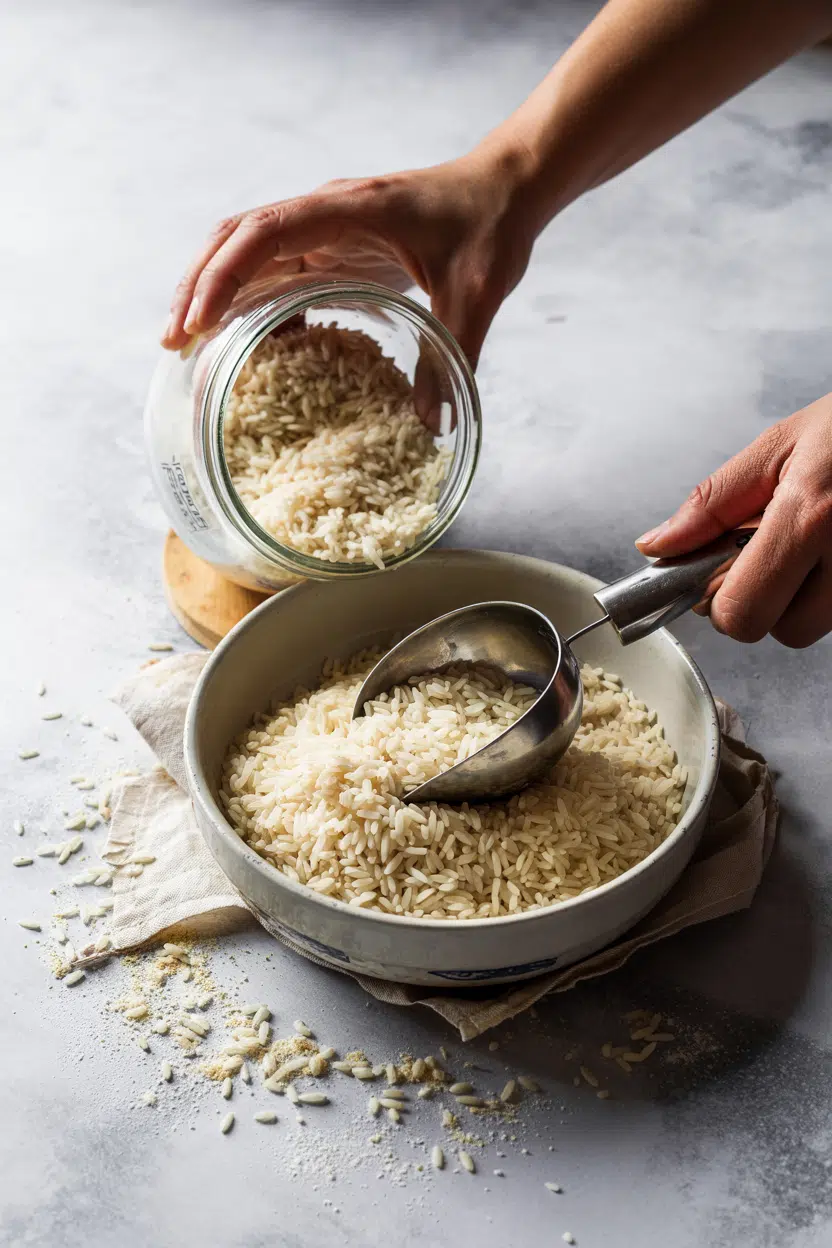
Think of cooked pasta without the egg or wheat flavor - that neutral, starchy warmth is the baseline for most white rice. It's a quiet flavor, not a bold one.
Short-grain rice cooked warm has a noticeable sweetness - mild, but there. That's the amylopectin releasing as the grains soften and cling.
Brown rice adds a layer of nuttiness from the intact bran. It's chewier and earthier, closer to farro in mouthfeel than its milled counterpart. Aromatic varieties change the equation completely: jasmine opens up floral and slightly buttery, while basmati carries a toasted, almost popcorn-like warmth you can smell before the pot even opens.
How to Use Rice
Rice shifts character depending on variety and method. Long-grain white rice steamed or cooked by the absorption method produces distinct, fluffy grains - the right platform for a Thai green curry or a congee rice porridge simmered low and slow until silky.
Short-grain arborio, stirred continuously with hot stock, releases its starch gradually to build the thick, creamy base that defines risotto.
| Method | Best For | Tip |
|---|---|---|
| ♨️ Steaming / Absorption | Everyday rice bowls, curries, stir-fries | Use a 1:1.5 rice-to-water ratio for long-grain; rest covered 5 min off heat |
| 🥘 Pilaf (sauté then simmer) | Grain bowls, side dishes, pilafs | Toast grains in butter or oil first for deeper flavor before adding liquid |
| 🍲 Risotto (stir with stock) | Creamy risotto, arancini base | Add stock in small ladles; constant stirring coaxes starch from arborio |
| 🫕 Slow simmer (congee) | Savory or sweet porridge, recovery meals | Use a high water ratio (1:10) and cook low for at least 45 minutes |
| 🔥 Pressure cooking | Fast weeknight cooking, brown rice | Cuts brown rice cook time from 45 min down to around 22 min |
For Southeast Asian meals, jasmine rice is the standard pairing alongside grilled meats, fish sauce-based sauces, and fresh herbs. In South Asian cooking, basmati is the base for biryanis and pilafs, often finished with ghee and whole spices.
Rice vinegar plays a supporting role in Japanese kitchens, used to season cooked short-grain rice for sushi and onigiri. Glutinous rice steps into dessert territory - mochi, Southeast Asian sticky sweets, and some Latin American tamale preparations all rely on its high amylopectin content to hold shape.
If rice isn't available, grain-based substitutes like quinoa or farro work in bowl dishes, though the starch behavior differs. For a protein-forward swap, quinoa is worth knowing well.
How to Buy and Store Rice
White rice is straightforward to shop for - look for uniform, unbroken grains and no musty smell through the bag. For aromatic types, sniff if you can: jasmine should smell faintly floral, basmati faintly nutty. Brown rice should have a slight oily sheen and a fresh, grain-forward smell; avoid anything that smells stale or off.
Storage by type:
- White rice - Pantry, airtight container, away from light; stays good up to 2 years unopened.
- Brown rice - Refrigerator or freezer; use within 6-12 months for best flavor.
- Cooked rice - Refrigerator, covered; safe for 3-5 days. For a full breakdown, see how long rice lasts.
Start Here
New to cooking rice regularly? Long-grain white rice by the absorption method is the entry point - low effort, consistent results, works with almost every cuisine. Once you have that down, try a jasmine or basmati for aromatic dishes, then move to short-grain for sushi or risotto.
Need to replace it in a dish? Our rice flour replacements guide covers baking swaps specifically.
Brown rice is worth adding when you want more chew and fiber, though it takes twice as long and behaves differently.
Frequently Asked Questions
For most long-grain white rice, yes - rinsing removes excess surface starch that causes gummy, clumped grains. Skip rinsing when making risotto or congee, where released starch is exactly what you want.
Stickiness usually means too much surface starch (skipped rinse), too much water, or stirring during cooking. Using a short-grain or glutinous variety instead of long-grain will also produce sticky results regardless of technique.
Short-grain japonica rice - sold labeled "sushi rice" - is standard. Its high amylopectin content makes grains stick together when pressed, which long-grain types won't do even with seasoning.
Milling. Brown rice keeps its bran and germ layers, giving it more fiber, a nuttier flavor, and a chewier texture. White rice is milled to the starchy endosperm, making it milder, softer, and faster to cook.
Yes, all plain rice is naturally gluten-free. It's one of the most widely used staple carbohydrates in gluten-free cooking, including as a base for [rice flour](https://forkliftkitchen.com/rice-flour-substitutes/) in baking.



