Raw turnip has a presence. That first bite - crisp, clean, and a little sharp - sits somewhere between a radish and a mild horseradish, peppery without the heat.

It's the kind of root that surprises people who expect a bland starchy vegetable and get something with actual character. Cooked low and slow, though, the whole personality shifts: the sharpness mellows, a quiet sweetness opens up, and the texture goes from snappy to silky.
Whether you're new to it or just haven't used it confidently, understanding what turnip greens and roots each bring to the table makes the difference.
The turnip is a brassica root with white flesh and a peppery, earthy bite when raw that softens into a mildly sweet, creamy flavor when cooked. Small bulbs are best for flavor; greens are edible and worth using separately.
What Is Turnip?
Turnip is a brassica root vegetable - the same family as cabbage, mustard, and kale - grown for both its bulbous root and its leafy greens.
Remember it later
Planning to try this recipe soon? Save it for a quick find later!
Botanically it's Brassica rapa subsp. rapa, domesticated across Eurasia and cultivated in Europe and Western Asia for thousands of years.
The root is typically round and squat, with white flesh and a two-toned skin: white at the base, shading into purple or red at the top where sunlight hits. You'll see it sold as white turnip in most markets, and in Scotland it goes by neep.
Rutabaga is a common source of confusion - it's a separate species, larger, yellow-fleshed, and sweeter, though both belong to the broader brassica genus. For a detailed look at how the two compare, the rutabaga profile covers the distinctions clearly.
Size matters here more than with most roots:
- Small bulbs (golf ball to fist-sized) - sweeter, tender, milder pepper notes
- Medium bulbs - the standard; balance of bite and sweetness
- Large, knobby bulbs - often woody and bitter; worth avoiding unless braising long and slow
The greens are fully edible and handled separately from the root - they're closer to mustard greens in character.
What Does Turnip Taste Like?
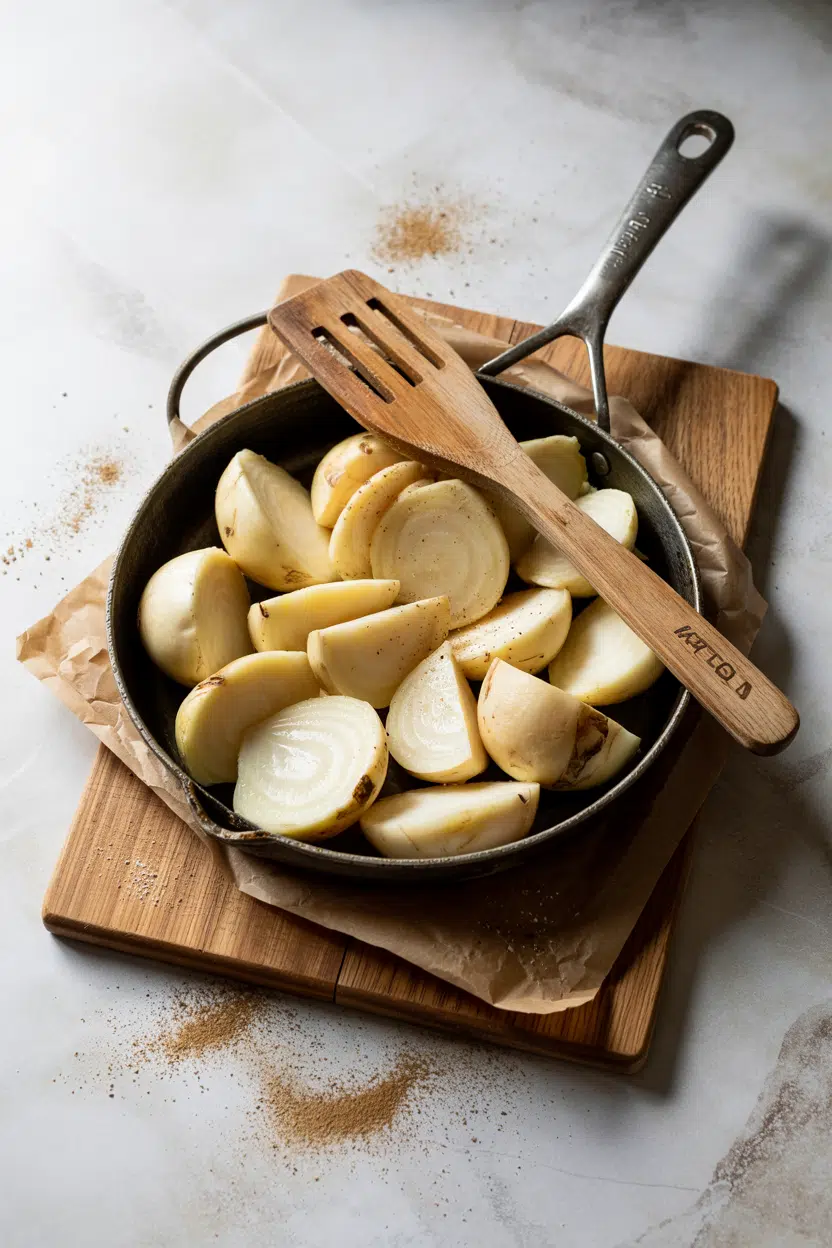
Raw turnip lands somewhere between a radish and a very mild horseradish. The bite is clean and peppery, with an earthy undertone and a faint bitterness that becomes more pronounced in larger roots.
It's not aggressive, however - more of a confident vegetable flavor than a sharp shock.
Heat changes turnip significantly. Roasting drives off the sharp compounds - glucosinolates, the same brassica chemicals responsible for mustard's heat - and what remains is a nutty, gently sweet root with some caramelized depth.
Boiled or mashed, it's closest to a mild potato with a background pepper note. Think less "sharp" and more "earthy and round."
How to Use Turnip
Turnip performs differently depending on how you treat it, which is part of its appeal. Raw, it adds peppery crunch to slaws and grain bowls; cooked, it absorbs savory broths and fats like a sponge.
The greens deserve their own moment too - sautéed with garlic, they cook down like mustard greens with a slightly more bitter edge.
| Method | Best For | Tip |
|---|---|---|
| 🥗 Raw | Slaws, salads, quick pickles | Slice thin or grate; salt briefly to soften the pepperiness |
| 🔥 Roasting | Caramelized sides, sheet-pan dishes | Cut into wedges, high heat (200°C+), don't crowd the pan |
| 🥣 Boiling/Mashing | Turnip-potato purée, creamy sides | Mix with potato for creamier texture; turnip alone can go watery |
| 🍲 Braising | Stews, jjigae, slow-cooked meats | Add early - it holds shape but absorbs surrounding flavors well |
| 🫙 Pickling | Condiments, Korean kimchi variants | A beet slice in the brine turns pickled turnips that signature pink |
British cooking uses turnip roasted or mashed alongside pork and bacon - fatty meats cut the pepperiness cleanly. Japanese tsukemono pickles lean on turnip's firm texture and neutral base, while Korean cooks use it raw and fermented in kimchi variants or simmered in jjigae.
Eastern European braises often treat it like a secondary root, added to stews alongside potato and carrot.
Strong pairings worth knowing: butter and cream soften the raw sharpness in mashes; thyme and rosemary hold up to its earthy weight in the oven; apple or pear adds brightness that balances the bitter notes in larger roots. If you've run out of turnips and need a substitute, the turnip swaps guide covers the closest options.
For mashed applications, the notes on potato flake substitutes can also be useful when blending mashes.
How to Buy and Store Turnip
Good turnip selection comes down to weight and firmness. Pick roots that feel heavy for their size with smooth, taut skin and no soft spots, cracks, or wrinkled patches.
Smaller bulbs - roughly golf ball to fist-sized - are almost always sweeter and less woody than large ones.
At home, remove the greens at the stem before storing - they draw moisture from the root and shorten shelf life. Keep the unwashed root in a perforated bag in the fridge crisper drawer.
Greens need separate storage, wrapped loosely in a damp paper towel; they deteriorate fast.
- Root shelf life - 1-3 weeks refrigerated; check the full guide on turnip storage guide for tips on longer storage
- Greens shelf life - 2-4 days; use them first, before the root
Where to Start With Turnip
Turnip rewards a low-stakes first attempt. Roast small cubes at high heat with olive oil, salt, and thyme - that's the method that shows its best side fastest.
From there, try it mashed half-and-half with potato for a creamy side with more depth than potato alone. Raw slaws and radish alternatives are worth exploring once you have a feel for how peppery the raw root tastes.
If you want a milder, sweeter entry point, check what sets rutabaga swaps apart - the two roots are close enough to be interchangeable in many dishes.
Frequently Asked Questions
Rutabaga is larger, yellow-fleshed, and noticeably sweeter than turnip. Turnip is white-fleshed, sharper, and peppery. Rutabaga is actually a hybrid of turnip and wild cabbage - a separate species entirely.
Roasting at high heat or slow braising both reduce bitterness significantly. The glucosinolate compounds responsible for the sharp, bitter edge break down with prolonged heat. Starting with small bulbs also helps - they're naturally less bitter.
Yes - and they're worth using. Turnip greens taste similar to mustard greens, slightly bitter and bold, and they're best sautéed with garlic or added to braises. Store them separately from the root and use within 2-4 days.
Turnips are low in calories and carbohydrates compared to starchy roots like potato. They provide vitamin C, potassium, fiber, and glucosinolates - brassica compounds associated with anti-inflammatory properties in research contexts.
Properly stored roots last 1-3 weeks in the refrigerator. Remove the greens before storing - they draw moisture from the root and accelerate spoilage. Keep the root unwashed in a perforated bag in the crisper drawer.