Rutabaga earns its place in the pot by doing something few root vegetables manage: it adds sweetness and body simultaneously, without the sharpness of a turnip or the starchiness of a plain potato. It thickens stews, holds its shape under high roasting heat, and collapses into a creamy mash when you want it to - making it one of the more reliable workhorses in cold-weather cooking.

If you're already comfortable with kohlrabi or similar brassica roots, rutabaga will feel like familiar territory.
Rutabaga is a large brassica root vegetable with dense yellow flesh and a mild, sweet-earthy flavor. It roasts well, mashes smoothly, and adds body to stews. Smaller bulbs are sweeter. Whole roots store for weeks in a cold, humid spot.
What Is Rutabaga?
Rutabaga (Brassica napobrassica) is a cool-season root vegetable believed to be a natural cross between a turnip and a wild cabbage, originating in Scandinavia or Northern Europe sometime in the 17th century.
Remember it later
Planning to try this recipe soon? Save it for a quick find later!
Outside North America, it's almost universally called swede - short for Swedish turnip - while in Scotland it goes by "neep," as in the traditional Burns Night side dish.
The bulb grows large, often reaching the size of a grapefruit or bigger, with distinctively two-toned skin: purplish-brown on the upper half and creamy yellow below the soil line. Cut it open and you'll find dense, bright yellow flesh that's firmer than a turnip and noticeably heavier in the hand.
That density is one of its defining traits - it doesn't cook down into mush the way some roots do.
A few things worth knowing about varieties and size:
- Small to medium bulbs (roughly tennis-ball to softball size) - sweeter, less woody, better for mashing and roasting
- Large bulbs - more fibrous, better suited to long braises or soups where texture softens over time
- Waxed rutabagas - common in supermarkets; the wax coating extends shelf life and should be peeled away before cooking
What Does Rutabaga Taste Like?
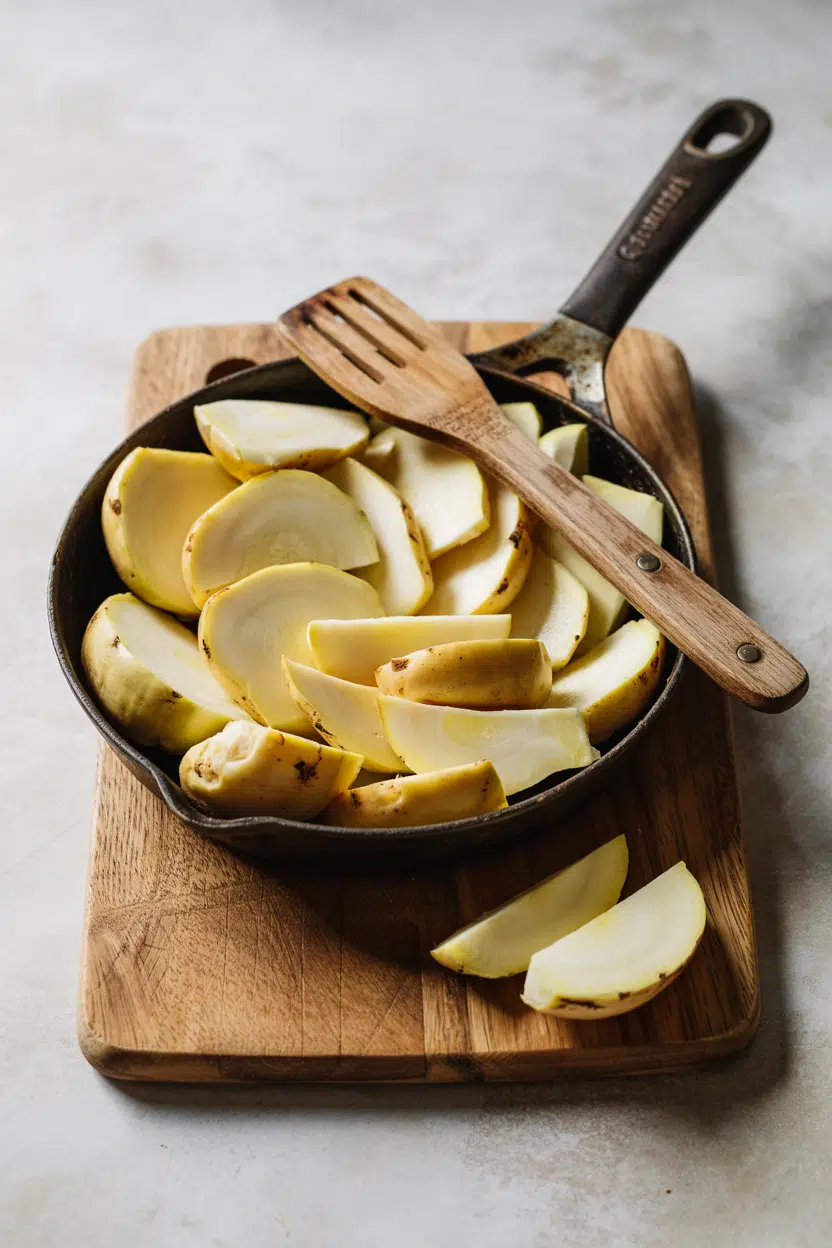
Raw rutabaga tastes like a turnip that's been dialed back - less sharp, more sweet, with a faint peppery bite at the finish. The earthy sweetness is the dominant note, which is why it pairs so naturally with butter, thyme, and pork.
Heat changes it noticeably. Roasting concentrates the sugars and brings out a nutty, caramelized depth that raw rutabaga doesn't hint at.
Boiling and mashing softens everything - the pepper fades, the sweetness stays, and the result leans closer to a mild, creamy root puree than anything sharp or brassica-forward.
The closest kohlrabi swaps in flavor profile include rutabaga itself - that shared nuttiness when cooked is not a coincidence, given their common brassica lineage.
How to Use Rutabaga
Rutabaga handles high heat without falling apart, which makes roasting the most forgiving starting point.
Cut it into 1-inch cubes, toss with oil and thyme, and roast at 425°F until the edges caramelize - a method that works as well for rutabaga as it does for honey-roasted carrots with thyme.
| Method | Best For | Tip |
|---|---|---|
| 🥗 Raw | Slaws, salads, crudités | Shred or julienne thin; pairs well with mustard vinaigrette |
| 🔥 Roasted | Side dishes, sheet pan meals | Cut evenly; high heat (400-425°F) for good caramelization |
| 🥣 Boiled/Mashed | Mash blends, purees, soups | Mix with butter and cream; combine with potato for lighter texture |
| 🍲 Braised | Stews, braises with lamb or beef | Add in the last 45 minutes so it holds shape |
| 🫙 Pickled | Scandinavian-style condiments | Slice thin; a light brine with vinegar and dill works well |
In British and Scottish cooking, mashed rutabaga - sometimes blended with potato in a dish called "clapshot" - appears alongside haggis or roasted meats. Scandinavian kitchens use it in long-simmered root vegetable stews and pickled as a table condiment.
New England American cooking folds it into holiday mashes, often as a partial swap for potato flakes or fresh potato.
It holds its own in soups too. Pureed rutabaga creates a thick, slightly sweet base that carries cream, stock, and bacon well.
For gratin, layer thin slices with potato and aged cheddar - the rutabaga adds density and a mild earthiness the potato alone won't deliver.
Avoid pairing rutabaga with delicate white fish or very acidic dressings - both overwhelm its subtler sweet notes or get buried under its earthiness.
How to Buy and Store Rutabaga
Pick rutabagas that feel heavy and dense for their size, with smooth, firm skin and no soft spots, cracks, or shriveled stem ends. That two-tone coloring - purple on top, pale yellow below - should look clean and even.
Smaller to medium bulbs are the better buy; very large ones tend toward woodiness.
Store whole, unwashed rutabagas in the crisper drawer or a root cellar at 32-40°F with moderate humidity. A perforated bag helps limit moisture loss without trapping condensation.
For full details on how long rutabagas last under different storage conditions, see our rutabaga storage life guide - whole roots can keep anywhere from 3 weeks in a standard fridge to 12 weeks in a proper root cellar. Once cut, wrap tightly and use within a few days.
Start Here If You're New to Rutabaga
Roast it first. High heat brings out the sweetness, neutralizes any bitterness, and gives you an immediate sense of what rutabaga does well - without committing to a whole stew or mash project.
If roasting wins you over, the next step is a simple mashed rutabaga with butter and a splash of cream. From there, try it alongside turnip in a winter stew, where the two roots balance each other's sharpness and sweetness.
Cooks looking for a direct swap in existing recipes should also check rutabaga replacements and turnip alternatives for side-by-side comparisons.
Frequently Asked Questions
No. Rutabaga is larger, denser, and sweeter than a turnip, with yellow flesh versus a turnip's white interior. They're related brassicas but distinct species - rutabaga is thought to be a hybrid of turnip and wild cabbage.
Yes. Raw rutabaga is firm and mildly peppery - it works well shredded into slaws or cut into sticks for dipping. The flavor is sharper raw than cooked, so thin cuts and a bold dressing help balance it.
Choose smaller, fresher bulbs - bitterness in rutabaga usually signals age or oversized, woody roots. Roasting at high heat or boiling in lightly salted water both reduce any bitterness effectively.
Whole rutabagas keep 3-4 weeks in the crisper drawer at standard fridge temperatures. A root cellar at 32-40°F can extend that to 12 weeks. Cut rutabaga should be used within 3-4 days.
Always peel rutabaga - the skin is thick, fibrous, and often coated in food-grade wax in stores. Use a sturdy vegetable peeler or a knife and remove a generous layer, not just the outer surface.