
Raisins do one thing no fresh fruit can: concentrate weeks of sweetness into a single, chewy bite. That depth of caramelized grape sugar is what makes them so useful in both sweet and savory cooking - not as a garnish, but as a structural flavor element.

A handful stirred into pilaf or folded into cookie dough changes the texture and flavor profile in a way that fresh or dried alternatives simply can't replicate.
Raisins are dried grapes with concentrated sweetness, a chewy texture, and mild acidity. They work across baking, grain dishes, and slow-cooked savory recipes. Varieties include dark Thompson seedless, golden sultanas, and tiny Zante currants. Stored properly, they last up to a year or more.
What Are Raisins?
Raisins are grapes dried either in the sun or through mechanical dehydration, a process that removes most of their water content and concentrates both sugar and flavor.
Remember it later
Planning to try this recipe soon? Save it for a quick find later!
They originated in the Mediterranean and Near East, where sun-drying grapes on drying trays was common practice thousands of years ago.
The most widely sold variety in the US is the Thompson seedless raisin -
dark brown, moderately sweet, and made from the Thompson Seedless grape. Sultanas are a close relative, typically lighter in color and slightly tangier, often treated with a drying agent to speed the process and preserve their golden hue.
A few key types worth knowing:
- Thompson seedless (standard dark raisin) - The most common; deep brown with a rich, sweet flavor and chewy bite.
- Golden raisins (sultanas) - Treated with sulfur dioxide before drying; lighter in color, softer, and slightly more tart.
- Zante currants - Tiny dried Black Corinth grapes, not true currants at all; more intense flavor in a smaller package.
- Muscat raisins - Made from Muscat grapes; larger, floral, and often sold on the stem for eating.
What Do Raisins Taste Like?
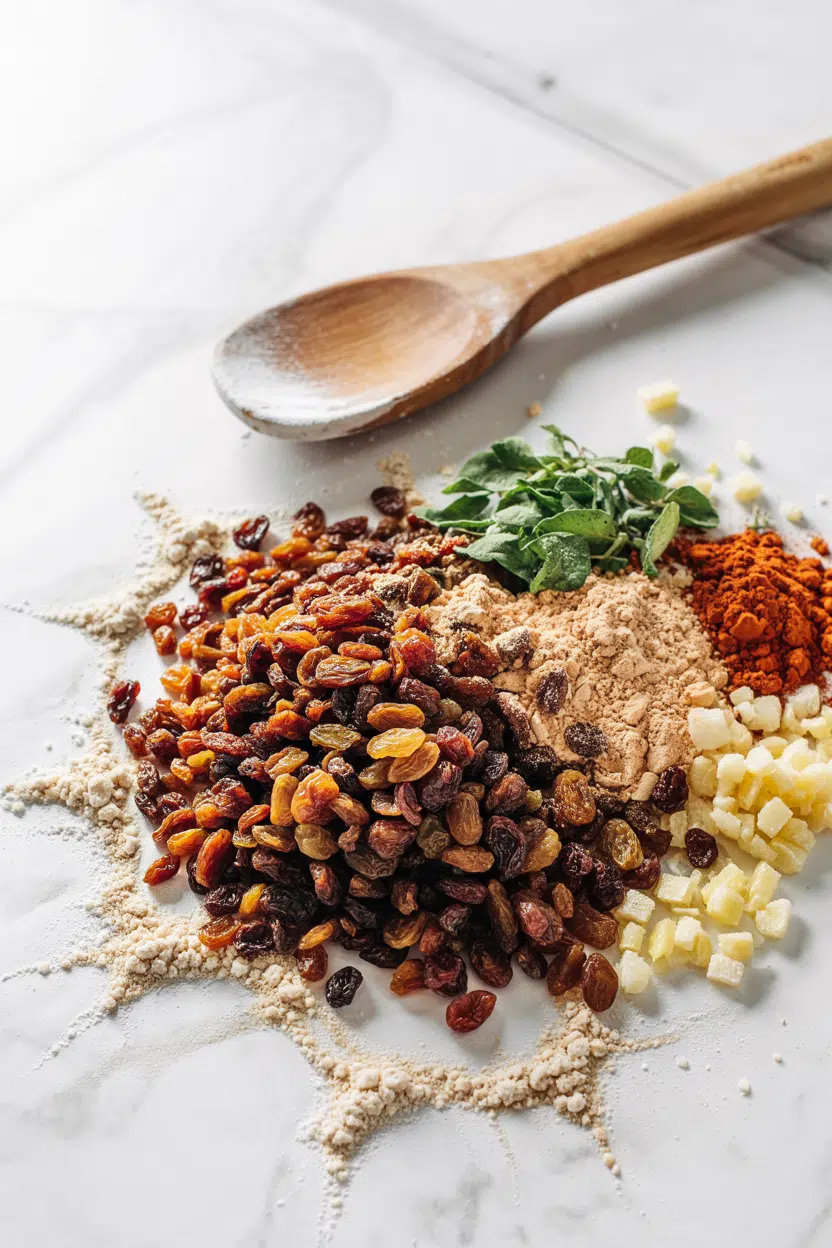
Raisins taste like concentrated grape jam pushed toward caramel - with none of the bright freshness of the original fruit.
The drying process converts much of the fructose and glucose into deeper, almost prune-like sweetness, with a mild tangy undercurrent that keeps them from tasting flat.
Golden raisins and sultanas lean more noticeably acidic - closer to a dried apricot than a dried plum. Heat amplifies their sweetness further, which is why rehydrated raisins in a sauce taste richer than raw ones from the bag.
How to Use Raisins
Raisins earn their place in a recipe by adding concentrated sweetness and chew - two textural and flavor notes that punch above their volume. They work raw, soaked, or baked, each method shifting how much sweetness they release and how they sit against other ingredients.
| Method | Best For | Tip |
|---|---|---|
| 🥗 Raw | Cereals, muesli, salads, trail mix | Toss with sharp cheese or citrus to balance sweetness |
| 🍞 Baked | Raisin bread, scones, oatmeal cookies, cinnamon loaves | Coat in a little flour first to prevent sinking in batter |
| 🍲 Soaked/Stewed | Chutneys, compotes, tagines, pilafs | Soak in hot water, tea, or port for 10-15 minutes before adding |
| ✨ Garnish | Couscous, rice dishes, roasted vegetables | Add at the end to preserve chew and visual contrast |
In Middle Eastern and Moroccan cooking, raisins are a standard ingredient in lamb tagines and couscous, pairing their sweetness against savory meat and warm spices like cumin and cinnamon.
British baking uses them heavily - spotted dick, hot cross buns, and tea cakes all rely on raisins for moisture and flavor pockets inside enriched doughs.
Raisins pair well with walnuts and pecans, cinnamon and allspice, orange zest, sharp cheddar or blue cheese, and slow-cooked lamb or chicken. They also work in wine-based pan sauces, where they plump and dissolve slightly into the reduction.
How to Buy and Store Raisins
Plump and glossy is what you're looking for at the store. Raisins should feel soft when pressed through the bag and carry a clean, sweet smell - a musty or fermented aroma signals age or poor storage. White sugar bloom on the surface is harmless but indicates they've been exposed to temperature swings.
Store opened raisins in an airtight container, away from heat and direct light. Refrigeration keeps them soft and extends shelf life significantly; for long-term storage, freeze in sealed bags.
Knowing the raisins storage life matters more than most people expect, since improperly stored raisins harden well before they spoil.
- Pantry (unopened): Several months; check the best-by date.
- Refrigerated (opened): Up to 6-12 months in an airtight container.
- Frozen: 12+ months with no significant quality loss.
Start Here With Raisins
New to cooking with raisins? Baked goods are the lowest-risk entry point. Fold them into oatmeal cookie dough or a cinnamon loaf and you'll immediately understand how they function - sweet pockets that hold moisture and interrupt an otherwise uniform crumb.
Once that clicks, try them soaked and stirred into a grain dish with lamb or chicken. That's where raisins show their range: not just a baking ingredient, but a genuine sweet-savory tool that works across cuisines.
Frequently Asked Questions
Both are dried grapes, however sultanas come specifically from seedless white grapes and are typically treated with an oil-based solution before drying to keep them lighter and softer. Standard dark raisins are usually sun-dried without that treatment, producing a chewier, deeper-flavored result.
Golden raisins are treated with sulfur dioxide before drying, which prevents the browning reaction that darkens standard raisins. The result is a lighter color, softer texture, and slightly more tart flavor compared to dark raisins.
Soak them in hot water, tea, juice, or liquor for 10-15 minutes. For faster results, microwave them in a small dish of water for 30-45 seconds, then let them sit covered for a few minutes.
Yes - raisins freeze well for 12 months or more with no meaningful quality loss. Seal them in a freezer-safe bag, press out the air, and they'll thaw at room temperature within 30 minutes.
They provide fiber, potassium, and plant-sourced iron, making them a reasonable addition to most diets. The concentrated natural sugars are high relative to portion size, so people managing blood sugar should keep servings small - around a small handful.



