
French onion soup earns its reputation on one thing: the cheese pull. That golden, bubbling crust comes from Gruyère, a firm Alpine cow's-milk cheese that melts unlike almost anything else in the dairy case.

It's not just a Swiss cheese stand-in - it's a specific, aged wheel with a flavor profile worth understanding before you cook with it.
Gruyère is a firm, aged Alpine cheese with a nutty, savory, buttery flavor that deepens with age. It melts cleanly into gratins, fondues, and sauces, and holds its own on a cheese board. Aged 4-12+ months, it ranges from mild and springy to sharp and crumbly.
What Is Gruyere Cheese?
Gruyère originates from the Fribourg region of Switzerland, where it has been produced since at least the 12th century. It carries Gruyère AOP status - a protected designation that restricts authentic Swiss production to specific cantons and mandates traditional methods.
Remember it later
Planning to try this recipe soon? Save it for a quick find later!
The cheese is made from raw cow's milk and aged on wooden boards in cool cellars. Wheels typically weigh around 35 kg and develop a firm, natural rind during aging.
Age determines nearly everything about how it behaves:
- Young (4-6 months) - pale, springy paste with a mild, milky nuttiness and smooth melt
- Réserve (8-10 months) - deeper savory notes, firmer body, still excellent for melting
- Vieux/Aged (12+ months) - crumbly and crystalline, sharp and complex, better for shaving than melting
Gruyère is often confused with Emmental cheese because both are Swiss Alpine wheels, but Emmental has larger, more pronounced holes and a sweeter, milder taste. Gruyère has smaller, irregular holes and considerably more savory depth.
For similar flavor without the Swiss origin, aged Comté cheese is the closest comparison.
What Does Gruyere Cheese Taste Like?
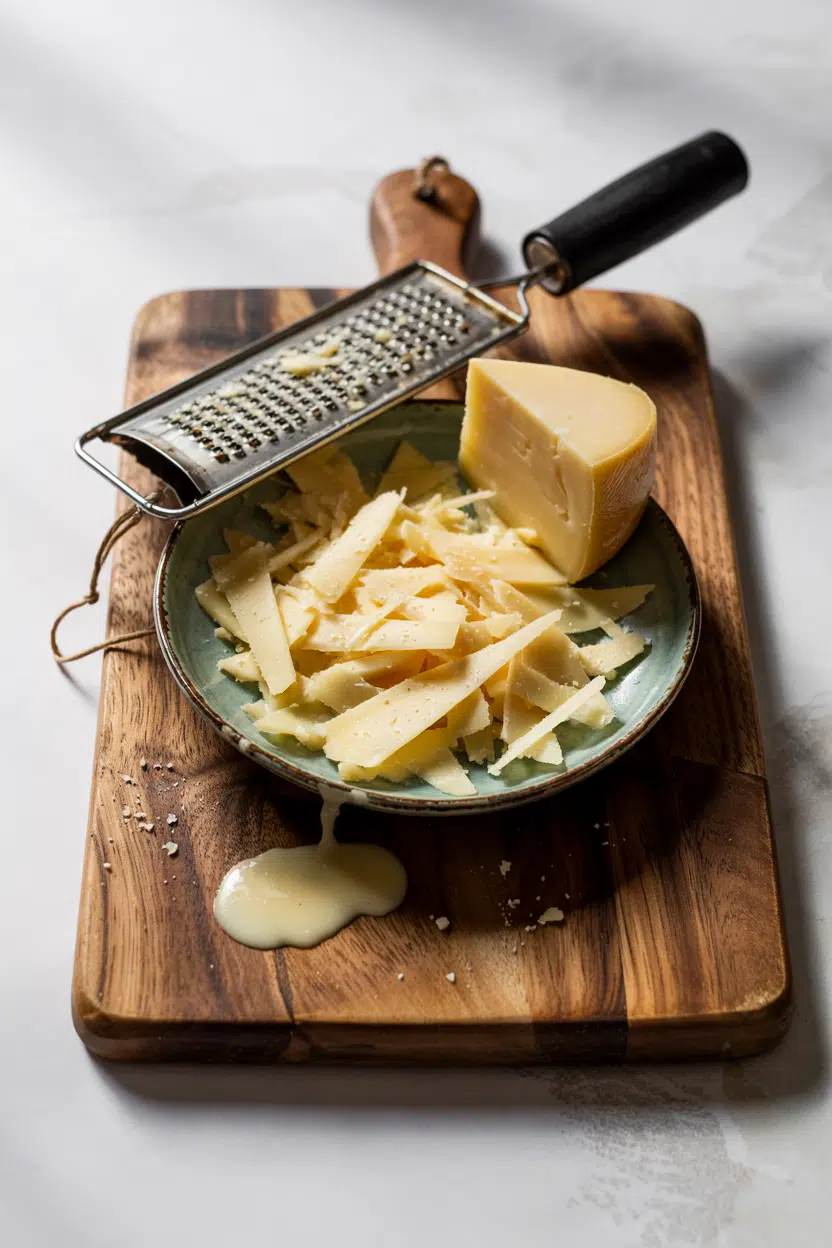
Gruyère's flavor sits at the intersection of toasted almonds, beef broth, and cultured butter - nutty on the front, umami-rich in the middle, with a clean, slightly salty finish. It's moderate in intensity, meaning it reads clearly without overwhelming a dish.
Heat changes the experience noticeably. Under a broiler, Gruyère browns to a deeply savory, almost caramelized crust - that's the Maillard reaction working on the cheese's proteins and residual milk sugars.
Low, slow heat (as in fondue) produces a stretchy, creamy pool with the nuttiness still present but smoother.
Age sharpens and dries the flavor. Well-aged wheels develop a faint crystalline crunch from tyrosine clusters - the same texture you find in aged Parmigiano.
How to Use Gruyere Cheese
Gruyère's exceptional melt behavior makes it a workhorse in hot applications. It doesn't break into greasy pools under heat the way younger, wetter cheeses often do - the fat and protein structure holds together until you want it to give.
| Method | Best For | Tip |
|---|---|---|
| 🫕 Gratinating | French onion soup, potato dauphinoise, vegetable gratin | Broil in the final 3-5 minutes for maximum browning |
| 🍲 Fondue | Classic Swiss fondue, cheese dips | Blend with Emmental; add a splash of dry white wine to stabilize |
| 🥧 Baking | Quiche Lorraine, gougères, savory tarts | Shred finely so it distributes evenly through custard or dough |
| 🥗 Raw/Shaved | Cheese boards, shaved over roasted vegetables | Use young or réserve; aged wheels shave better than they slice |
| 🥪 Melting | Croque-monsieur, paninis, mac and cheese | Combine with a milder cheese to stretch cost without losing flavor |
Swiss and French Alpine cooking claim Gruyère most firmly. A traditional fondue moitié-moitié (half-and-half) blends Gruyère with Fribourg Vacherin.
French bistro cooking leans on it for croque-monsieur and the French onion soup gratinée that defines the format.
Beyond those roots, it fits anywhere a sturdy, flavorful melt matters. Stir shredded Gruyère into mac and cheese alongside a sharper cheddar, or layer it into potato dauphinoise for a richer mouthfeel.
For cheese boards, pair it with apples, cornichons, walnuts, cured ham, and a dry Riesling or Savoie white.
If you need a swap, aged Gruyère substitutes exist - though the melt profile is hard to match exactly. Similarly, Comté substitutes work in reverse when a recipe calls for Comté but you only have Gruyère.
How to Buy and Store Gruyere Cheese
At the counter, look for a wedge with a dry, natural rind and a uniform pale-golden paste. Avoid anything with large oily spots, sticky or wet surfaces, or an ammonia smell - those signal poor storage or over-age.
Check the label for an age range if possible - this tells you what you're actually buying, not just "Gruyère." Pre-shredded bags skip this detail and often contain anti-caking agents that interfere with clean melting. Buy a block and shred it yourself.
Once cut, wrap the exposed surface in cheese paper or parchment, then loosely in plastic. Store in the refrigerator's cheese drawer or vegetable crisper, where humidity stays higher than the main shelf.
Properly wrapped, a cut wedge holds well for 2-4 weeks. Check the full shelf life guide for vacuum-packed wheels and freezing notes.
Where to Start With Gruyere
Gruyère earns its place fastest in hot applications. Start with a gratin or French onion soup if you've never cooked with it - the browning under a broiler shows you exactly what this cheese does that no mild supermarket Swiss can replicate.
- New to Gruyère? Buy a young or réserve wedge, shred it over a gratin, and broil until golden.
- Want more complexity? Try a vieux wheel shaved thin onto a cheese board with apples and dark rye.
- Building a fondue? Combine equal parts Gruyère and Emmental, add dry white wine, and keep heat low.
The flavor is assertive enough to define a dish but controlled enough not to dominate it. That balance is rare.
Frequently Asked Questions
No. "Swiss cheese" in the U.S. typically refers to a mild, mass-produced Emmental-style cheese with large holes. Gruyère is a distinct AOP-protected cheese with smaller holes, deeper savory flavor, and a more complex aging profile.
Gruyère is nuttier and more savory where cheddar is sharper and more acidic. Cheddar sharpens with a tangy bite as it ages; Gruyère deepens toward a meatier, almond-like richness without the same acidity.
Yes - it's one of the better melting cheeses available. Young and réserve-aged Gruyère melts to a smooth, stretchy consistency without breaking into grease. Older aged wheels melt less cleanly and are better shaved raw.
Réserve (8-10 months) hits the sweet spot - enough savory depth to brown well and flavor the dish, but still supple enough to melt evenly. Very aged wheels (12+ months) can dry out and resist smooth browning.
Only trace amounts. The aging process breaks down most of the lactose, making Gruyère one of the lower-lactose cheeses. Many people with mild lactose sensitivity tolerate it, though it still contains dairy proteins.



