
Most cooks assume Marmite is just a British breakfast spread - something you either grew up with or find completely off-putting. That's only half the picture.

A small spoonful stirred into gravy, lentil soup, or miso paste replacements can deliver the kind of deep, savory backbone that takes hours of simmering to build otherwise. This dark, sticky yeast extract has been quietly doing heavy lifting in British kitchens for over a century, and it deserves a closer look.
Marmite is a pungent yeast-extract spread with a deeply savory, salty, and slightly bitter flavor. Used in small quantities, it acts as a powerful umami booster in everything from toast to beef stew. It's vegan, high in sodium, and often fortified with B12.
What Is Marmite?
Marmite is a yeast extract spread produced in the United Kingdom from a concentrated byproduct of beer brewing - specifically spent brewer's yeast. The brand name comes from the French word for a lidded cooking pot, which explains the iconic pot-shaped jar it's sold in.
Remember it later
Planning to try this recipe soon? Save it for a quick find later!
The core ingredient is brewer's yeast that has been autolyzed - meaning the yeast cells break down and release their contents, including glutamates, B vitamins, and proteins. This process is what gives Marmite its characteristic intensity.
Commercial versions are also blended with vegetable extract, spices, and malt extract derived from malted barley. Fortified versions include added B12, making it a notable nutrient source for vegans.
Australian Vegemite is the closest equivalent, though it has a slightly different formula and a saltier, less malty profile.
- Standard Marmite - The original dark paste sold in the classic squeeze jar or glass pot
- Marmite XO - A more intensely aged version with deeper, more concentrated flavor
- Reduced-salt Marmite - Lower sodium formula, notably milder in both taste and saltiness
What Does Marmite Taste Like?
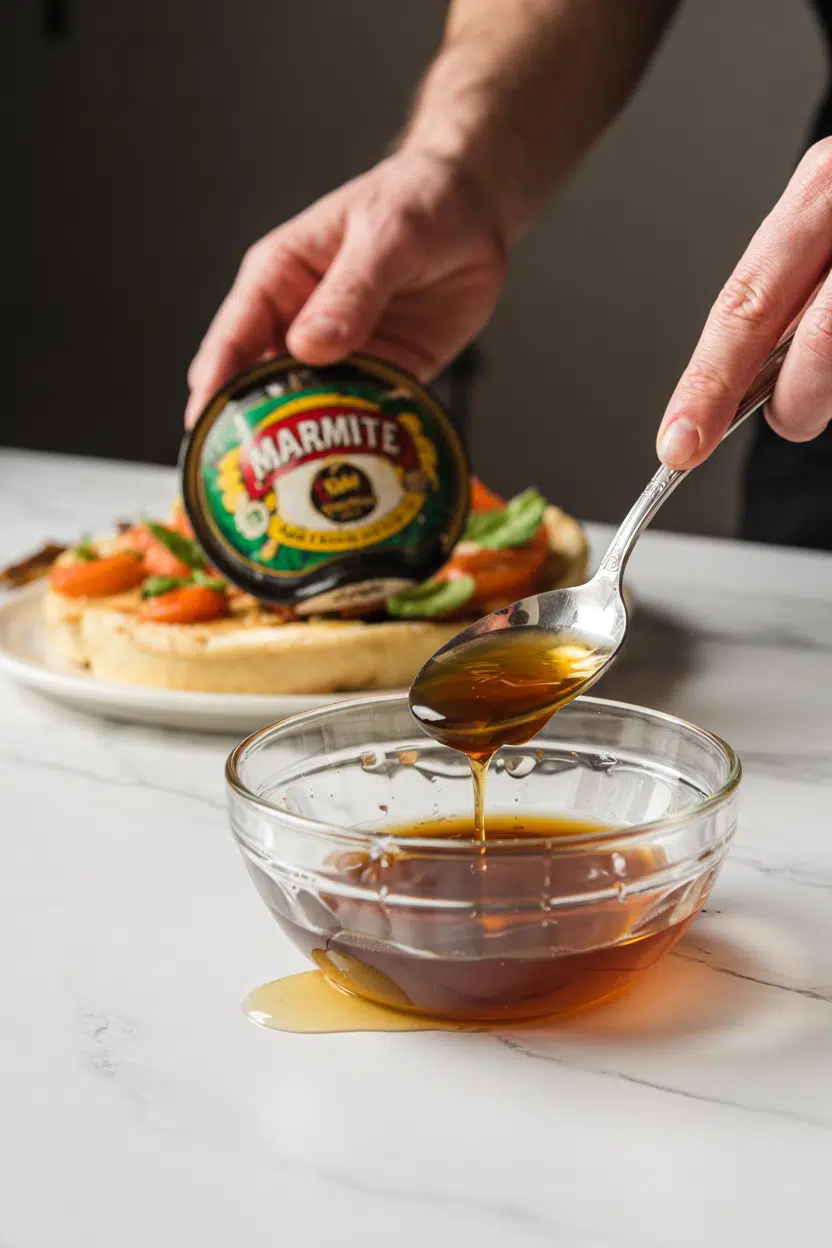
Marmite hits hard. The dominant note is umami - that savory, mouth-coating quality you'd associate with concentrated beef bouillon or a well-reduced soy sauce alternative.
Salt comes through immediately after, followed by a lingering bitterness from the yeast.
What surprises most first-timers is the maltiness - a dark, slightly sweet undertone that separates it from plain salt or plain bouillon. Applied thinly to buttered toast, that bitterness softens considerably.
Stirred into hot liquid, the sharp edges dissolve and only the savory depth remains.
How to Use Marmite
Quantity control is everything with Marmite. Unlike most condiments you can free-pour, this one demands a measured hand. Start with half a teaspoon and adjust from there.
| Method | Best For | Tip |
|---|---|---|
| 🍞 Spread | Buttered toast, crackers, dark breads | Apply after butter while bread is warm so it softens and spreads evenly |
| 🍲 Stirred In | Gravies, beef stew, lentil soup, split pea soup | Add near end of cooking to preserve saltiness control |
| 🥣 Dissolved | Marinades, vinaigrettes, glazes for roasted veg | Dilute in warm water or oil first so it disperses without clumping |
| 🍳 Folded In | Scrambled eggs, mashed potatoes, shepherd's pie filling | Use a tiny amount - a scraping - and taste before adding more |
Marmite pairs naturally with butter, cheddar cheese, and dark breads like rye or sourdough. Eggs are a surprisingly strong match, as the yeasty saltiness amplifies savoriness without overwhelming.
It also works alongside beef and lamb stocks, lentils, and mustard in slow-cooked dishes.
British pub-style cooking uses it most heavily, but modern cooks treat it the way they might treat anchovy paste - as a background umami booster rather than a primary flavor.
Avoid it in delicate sweet desserts or anywhere floral teas or light broths are the main character.
How to Buy and Store Marmite
At the store, look for a jar with an intact sealed lid and uniformly dark, viscous paste inside. Avoid anything showing separation, a dull or faded color, or a lid that shows any sign of having been opened.
Most supermarkets stock the standard size; larger jars suit regular cooks better.
Storage is straightforward. Sealed jars keep in a cool, dark pantry for many months to years. Once opened, reseal tightly after every use.
Refrigerating is optional - it firms the paste considerably, which makes spreading harder but extends freshness.
For more on marmite storage guide and signs of spoilage, we cover that separately. As a substitute standby, it's also worth knowing where it fits among bouillon cube swaps for savory cooking.
Where to Start With Marmite
Marmite rewards cooks who use it as a background ingredient rather than the main event. If you're new to it, buttered toast is the right first test - it shows you both the flavor ceiling and the importance of restraint.
From there, one teaspoon in a pot of beef stew or lentil soup is a low-risk way to understand what it adds.
If you already know it works for you, treating it like a Marmite substitute benchmark helps when you're building savory depth with other ingredients. It's a small jar with an outsized job.
Frequently Asked Questions
Yes. Standard Marmite contains no animal products - it's made from yeast extract and vegetable extract. Fortified versions also add synthetic B12, which is vegan-suitable.
In small amounts, yes - both deliver savory umami depth. Marmite is thicker and more bitter, so use half the quantity and dissolve it in warm water first to avoid clumping.
The intense saltiness and bitter-yeasty aroma can be overwhelming at first exposure, especially for those unfamiliar with concentrated umami flavors. It's also often eaten straight in larger amounts than it's designed for.
Very. A 4-gram serving contains around 450-500mg of sodium, which is roughly 20% of a typical daily limit. Account for it when seasoning any dish you add it to.
No. Both are yeast extract spreads, but Vegemite is Australian, saltier, and less malty. Marmite has a more complex, slightly sweeter flavor profile from added malt extract.



