
Most people treat prosciutto like a deli upgrade - a fancier ham to lay on a board and leave at that.
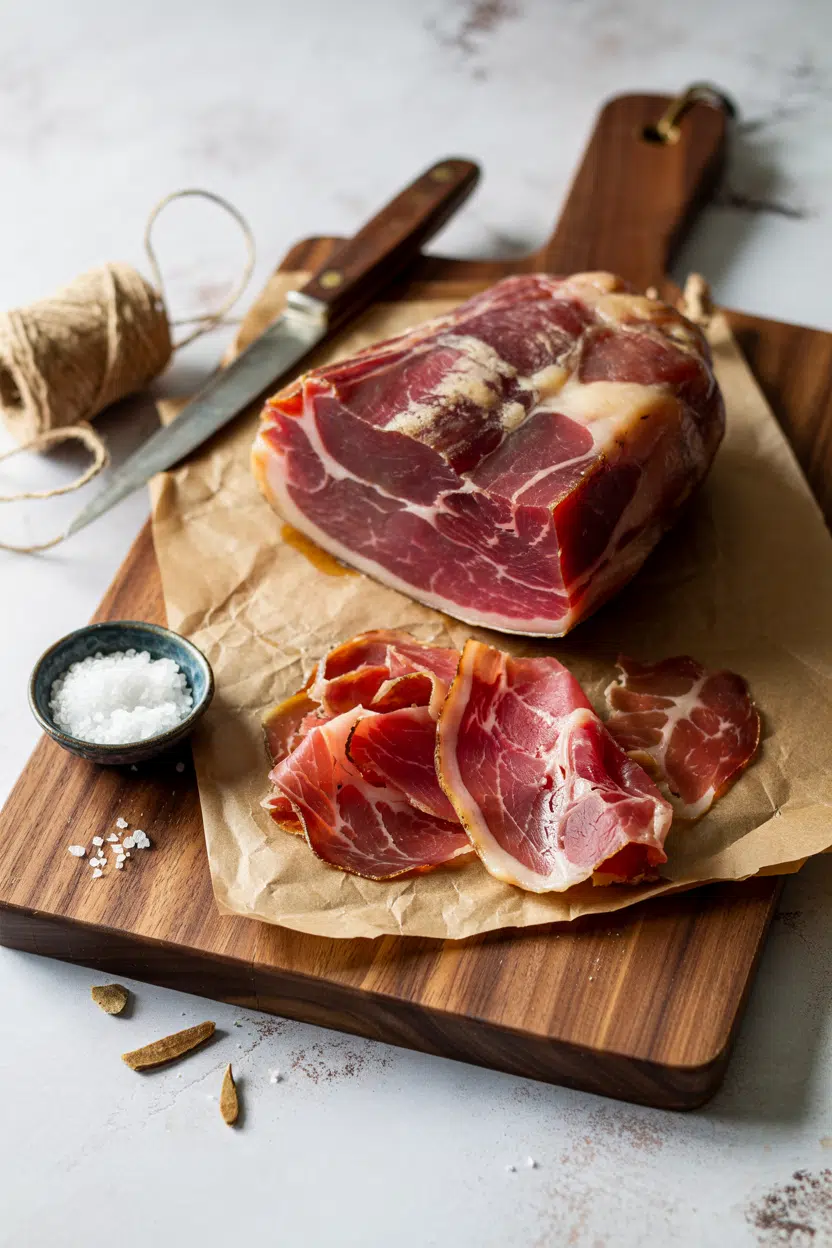
That undersells what aging actually does to pork: salt-curing and months of open-air aging break down muscle proteins and concentrate fat into something silky, nutty, and deeply savory in a way no smoked or cooked ham can replicate.
Prosciutto is an Italian dry-cured ham sliced paper-thin from the hind leg of a pig. Salt-curing and extended air aging produce a salty-sweet, umami-rich flavor with silky fat that melts on the tongue. Eat it raw, draped over fruit or cheese, or briefly warmed on hot food.
What Is Prosciutto?
Prosciutto crudo is a dry-cured Italian ham made from the hind leg of a pig, salted and hung to age in cool, moving air for a minimum of several months - and often over a year for premium cuts. No smoking, no cooking, no brine beyond the dry salt applied by hand.
Remember it later
Planning to try this recipe soon? Save it for a quick find later!
The two most celebrated varieties carry protected origin status. Prosciutto di Parma, from Emilia-Romagna, uses pigs fed partially on Parmigiano-Reggiano whey, giving it a mild sweetness; prosciutto di San Daniele, from Friuli-Venezia Giulia, tends toward a slightly more intense, mineral-edged character.
Both are sliced to near-translucency, so thin the fat appears almost white and glassy.
Prosciutto is often confused with pancetta, which is cured pork belly, not leg - a different cut with a fattier, less structured texture.
Outside Italy, the closest equivalent is Serrano ham from Spain, which shares the dry-curing method but uses different pig breeds and aging conditions.
- 🇮🇹 Prosciutto di Parma - mild, sweet, DOP-protected from Emilia-Romagna
- 🇮🇹 Prosciutto di San Daniele - slightly firmer, more mineral, DOP-protected from Friuli
- 🌍 Domestic prosciutto - widely available, shorter aging, less complex but still usable
What Does Prosciutto Taste Like?
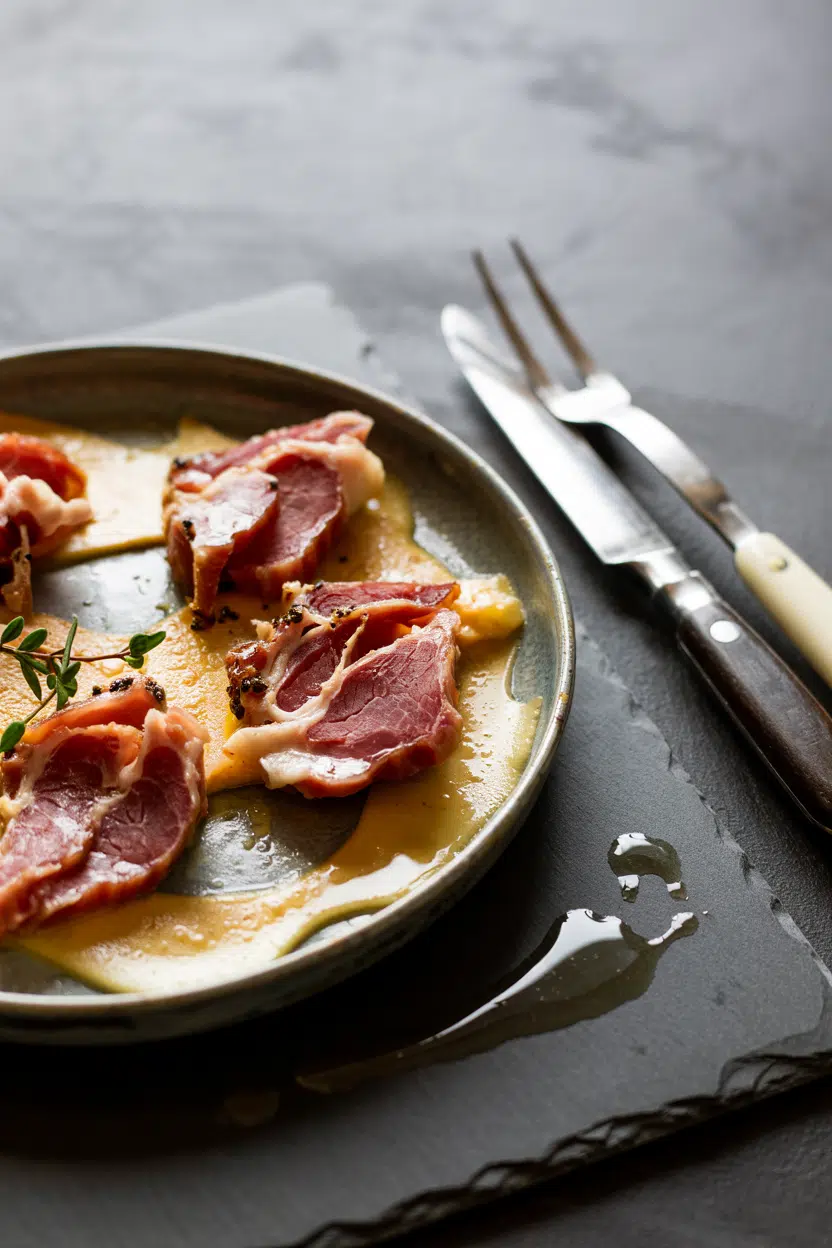
Prosciutto lands on the palate as salty and savory first, with a quiet sweetness underneath that comes from the chemical changes aging drives in the cured muscle - not added sugar.
The nutty finish is real: it develops from fat oxidation over the long hang time and is more pronounced in older legs.
Heat changes the equation. Raw prosciutto stays silky and delicate; a few seconds in a dry pan crisps it into a crackling-like garnish with intensified salt.
Wrapped around food and roasted, it crisps on the outside while the inner fat renders into the protein it's covering - a completely different texture again.
Compared to Serrano ham, prosciutto is slightly milder and sweeter. Against American country ham, it's less aggressively salty and carries no smoke.
How to Use Prosciutto
Raw is the default, and the best showcase. Prosciutto e melone - thin slices draped over ripe cantaloupe or honeydew - is the clearest demonstration of how cured salt sharpens sweet fruit.
The same logic applies with fresh figs, burrata, or a drizzle of honey on crusty bread.
Italian cooking also folds prosciutto into warm pasta right off the heat, where residual temperature softens it without cooking it through. Layering it onto pizza after the oven - not before - keeps the silky texture intact.
For a crunchy application, a dry skillet over medium-high heat crisps slices in under two minutes, making a fast garnish for soups, salads, or eggs.
| Method | Best For | Tip |
|---|---|---|
| 🥗 Raw | Charcuterie boards, melon, fig and burrata plates | Serve at room temperature - cold mutes the fat flavor |
| 🔥 Pan-crisped | Garnish for salads, soups, scrambled eggs | Dry pan only, no oil - its own fat renders fast |
| 🍗 Wrapped and roasted | Chicken, veal, asparagus, figs | Secure with a toothpick; fat side out for best browning |
| 🍕 Post-bake layered | Pizza, flatbreads, warm grain bowls | Lay on immediately after pulling from oven |
| 🍝 Folded in pasta | Cream sauces, carbonara-style dishes | Add off heat; toss once and serve immediately |
Prosciutto pairs well with Parmigiano-Reggiano, arugula, lemon, and dry white wines. Avoid pairing it with strongly sweet syrups or delicate raw seafood - both clash with the salt-forward cured character.
How to Buy and Store Prosciutto
At the deli counter, look for even pale-pink slices with creamy, glossy white fat - not yellowed, dried at the edges, or slimy. Translucent slices are ideal; torn or matted ones indicate poor handling or over-chilling before slicing.
For pre-packaged options, choose vacuum-sealed packs with no large liquid pockets and a use-by date at least a week out. Once opened, wrap slices loosely in parchment, then plastic wrap, or lay them in an airtight container with a paper layer between to absorb moisture.
For full details on how long each format lasts, see our guide to prosciutto storage life.
- Whole aged leg: Keeps for several months properly sealed
- Vacuum-packed sliced: Up to 2-3 weeks unopened
- Opened sliced: 3-5 days refrigerated
Where to Start with Prosciutto
If you've only ever put it on a board, try the melon pairing first - it costs nothing extra and shows exactly what the salt-sweet contrast does.
From there, wrapping it around asparagus or pork tenderloin before roasting is the fastest way to understand how heat changes its character.
Skip the pan-crisp method until you're comfortable with raw applications. Crisping is useful, however it's a supporting technique - prosciutto earns its reputation uncooked.
Frequently Asked Questions
Say "proh-SHOO-toh." The "sc" before "i" in Italian makes a "sh" sound, and the double "t" is soft, not clipped. Common misspellings like "prosciuto" or "prosciuta" reflect how people hear it before seeing the spelling.
It's high in complete protein and B vitamins, but also high in sodium - a few slices can carry 500-700mg. Because it's eaten in small amounts, the fat content is rarely a concern in moderation.
Yes, but briefly. It crisps well in a dry pan in under two minutes and wraps well around proteins for roasting. Extended oven time or simmering in liquid turns it tough and strips its flavor.
All three are cured pork, but from different cuts and countries. Prosciutto and jamón are both cured hind leg - Italian versus Spanish - while pancetta is cured pork belly, fattier and rolled rather than pressed flat.
Unopened vacuum-sealed slices last 2-3 weeks. Once opened, use within 3-5 days wrapped in parchment inside an airtight container. A sour smell or slimy surface means discard it.



