
You spot it at the deli counter - a whole serrano ham leg, deep rose and glistening, or a vacuum-sealed pack of paper-thin slices fanned out like playing cards.
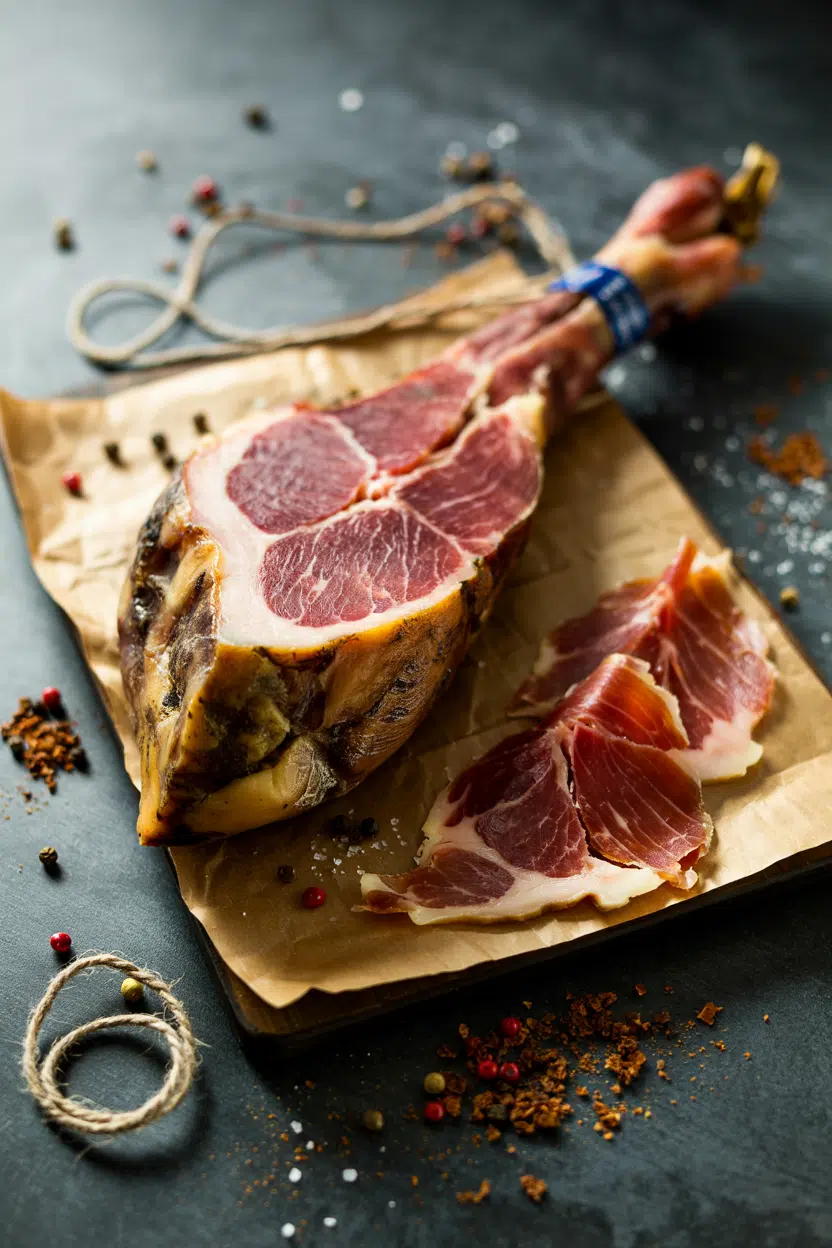
Knowing what you're actually buying matters, because the taste of prosciutto and jamón serrano overlap enough to cause confusion, yet the two are meaningfully different cured products.
Serrano is leaner, saltier, and firmer - qualities that make it behave differently on a plate.
If you're also reaching for Marcona almonds to build a board, understanding almonds in cooking rounds out why that pairing keeps showing up in Spanish kitchens.
Jamón serrano is a dry-cured Spanish ham made from white pork breeds, aged from a few months to over two years. It has a savory, nutty, moderately salty flavor and slices paper-thin. Serve it raw, crisp it in a pan, or use it to finish cooked dishes.
What Is Serrano Ham?
Jamón serrano - literally "mountain ham" - is a whole dry-cured ham made from white pork breeds such as Duroc, Landrace, and Large White. Spain produces it primarily in the Sierra Nevada and other highland regions where cool, dry mountain air has shaped the curing tradition for centuries.
Remember it later
Planning to try this recipe soon? Save it for a quick find later!
The process is straightforward but slow. Whole legs are salted, rinsed, and then hung to cure and air-dry for anywhere from seven months to over two years depending on the grade.
Three commercial grades exist: Bodega (aged around seven months), Reserva (nine to twelve months), and Gran Reserva (twelve months and beyond). Each tier deepens the flavor and firms the texture.
Serrano is sometimes confused with jamón ibérico, which comes from a different breed - the black Iberian pig - and carries a distinct nutty richness from acorn feeding.
Serrano is the more affordable, widely available option, and when shopping you'll find it sold either as a whole bone-in leg, a boneless piece, or pre-sliced in vacuum packs.
What Does Serrano Ham Taste Like?
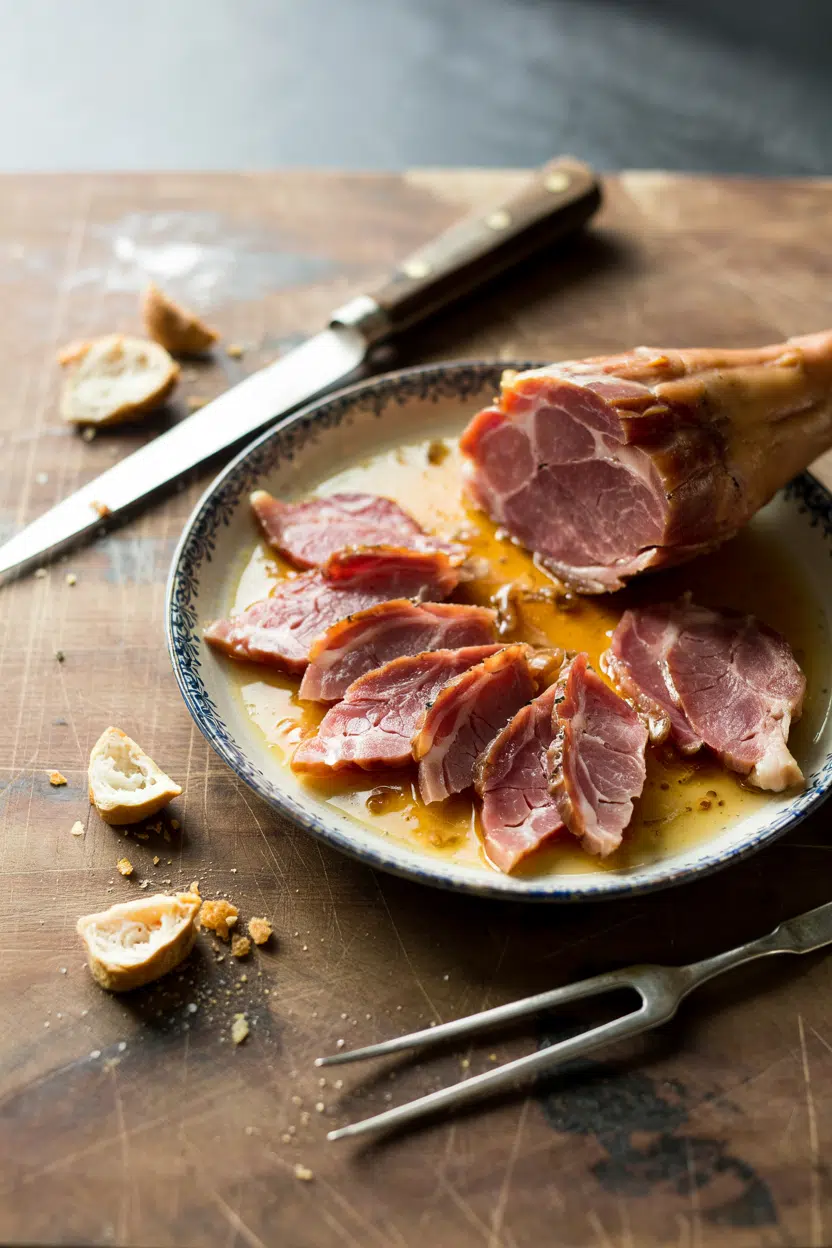
Savory and clean - that's the short answer. Serrano opens with a pronounced umami hit, followed by a bright, direct salty finish that doesn't linger as heavily as, say, heavily brined deli meats.
Beneath the salt, there's a nutty cured note that intensifies with longer aging, and the fat carries a subtle sweetness that rounds the whole thing out. Slice it paper-thin, and that fat practically dissolves on the tongue.
Compared to prosciutto, serrano is leaner with a firmer bite and a sharper salt profile.
Heat changes things: a brief warm brings out the fat's sweetness, while full crisping in a dry pan pushes the flavor toward concentrated, almost bacon-adjacent territory.
How to Use Serrano Ham
Serrano is built for restraint. Most of what it does best happens with minimal heat or none at all.
On a charcuterie board, drape thin slices alongside Manchego - if you're out of it, a look at manchego cheese stand-ins can save the spread - and a handful of Marcona almonds.
The contrast of fat, salt, and crunch is the whole point.
For tapas, wrap slices around melon or ripe figs.
The sweetness cuts the salt without smothering it.
Pairing serrano with a glass of fino sherry is traditional; if you're out of sherry, exploring replacements for sherry can keep the pairing logic intact.
Similarly, cantaloupe stands in well, but replacements for melon liqueur covers that angle if you're building a cocktail to match.
| Method | Best For | Tip |
|---|---|---|
| 🥗 Raw Sliced | Charcuterie boards, tapas, bocadillos | Slice as thin as possible; bring to room temp before serving |
| 🍳 Pan-Crisped | Soup garnish, egg dishes, salad topping | Dry pan, medium heat - 1-2 minutes per side until edges curl |
| ✨ Finishing Garnish | Pizza, pasta, risotto | Add after cooking so the fat softens but ham stays tender |
| 🍲 Stew Flavoring | Bean stews, vegetable braises | Add near the end - early addition turns it stringy and very salty |
Torn into a Spanish spinach salad, serrano adds a salty umami backbone that anchors bitter greens.
For a fuller picture of what works alongside it, the range of dishes alongside serrano ham is worth a look when you're planning a spread.
How to Buy and Store Serrano Ham
At the counter, look for pale pink to deep rose meat with creamy, evenly distributed fat. Avoid anything with grey edges, a slimy surface, or slices so dry they've started to crack at the edges.
- 🛒 Pre-sliced packs - Choose vacuum-sealed with visible marbling and a clear sell-by date; avoid packs with pooled liquid inside.
- 🦴 Whole bone-in leg - Hang in a cool, dry space; wrap the cut face with its own fat cap or a breathable cloth between uses.
- 🔪 Boneless piece - Wrap in parchment then plastic, refrigerate, and slice as needed rather than pre-slicing the whole piece.
Opened slices dry out quickly - use them within 3-5 days. For everything on wrapping, packaging, and extending life past that window, the full guide on keeping serrano ham fresh covers it in detail.
Where to Start With Serrano Ham
Don't overthink the first purchase. Grab a vacuum-sealed pack of Gran Reserva slices, set them out at room temperature for fifteen minutes, and serve with good bread, olive oil, and a wedge of Manchego.
That's the baseline.
Once you know the flavor, you'll recognize where it fits - finishing a risotto, crisping up for a fried egg, or folding into a bocadillo with tomato.
If prosciutto is your usual go-to and serrano feels like a stretch, the list of serrano ham swaps that work maps out the differences clearly so you can move between them with confidence.
Frequently Asked Questions
White pork breeds - mainly Duroc, Landrace, and Large White. The whole hind leg is salted, rinsed, and air-dried for months. No smoking or cooking is involved; curing and airflow do all the work.
No. Both are dry-cured hams, but serrano is leaner, firmer, and saltier. Prosciutto - particularly di Parma - is fattier and sweeter. The pork breeds, regional climates, and curing methods differ between Italy and Spain.
Bodega grade is aged around seven months; Reserva runs nine to twelve months; Gran Reserva goes twelve months or longer. Longer aging produces deeper, nuttier flavor and a drier, firmer texture.
Wrap slices in parchment then seal in plastic or an airtight container. Use within 3-5 days. For a cut whole leg, cover the exposed face with its fat cap or a clean breathable cloth - not plastic wrap directly on the meat.
Fino or manzanilla sherry is the classic match - the dry, saline notes mirror the ham without fighting the salt. A crisp Albariño or light Garnacha also works well if you prefer still wine.



