You spot it on the shelf between the canned beans and the corn - a can labeled "hominy" with those large, swollen, ivory-colored kernels floating in cloudy liquid. If you've only cooked with grits swaps or fresh sweet corn, hominy will read as something unfamiliar, almost alien.
It's worth grabbing.
Hominy is whole field corn treated with alkali to remove its hull and deepen its flavor. The result is a chewy, starchy kernel with a mellow, slightly nutty taste - used in pozole, grits, stews, and casseroles across Mexican, Southern, and Native American cooking.
What Is Hominy?
Hominy starts as field corn - a hard, starchy variety grown for drying, not for eating fresh off the cob.
Remember it later
Planning to try this recipe soon? Save it for a quick find later!
The kernels go through nixtamalization, an ancient Mesoamerican process in which dried corn soaks in an alkaline solution, typically water mixed with calcium hydroxide (slaked lime) or wood ash lye.
That soak loosens the tough outer hull, softens the kernel, and dramatically changes the corn's chemistry.
Niacin - vitamin B3 - becomes biologically available in a way it simply isn't in untreated corn, which is one reason nixtamalization became so important across cultures that depended on corn as a dietary staple.
After processing, the kernels puff up and take on a characteristic pearly, swollen appearance. You'll find hominy sold two ways:
- 🥫 Canned hominy - pre-cooked, ready to use after draining and rinsing; white or golden varieties are both common
- 🌾 Dried hominy - raw nixtamalized kernels requiring several hours of simmering or pressure cooking before they're tender
Elsewhere it goes by nixtamal (particularly in Mexico), hominy corn, or granos de elote nixtamalizados. Ground dried hominy becomes masa harina, the flour behind tortillas and tamales - a related but distinct product.
What Does Hominy Taste Like?
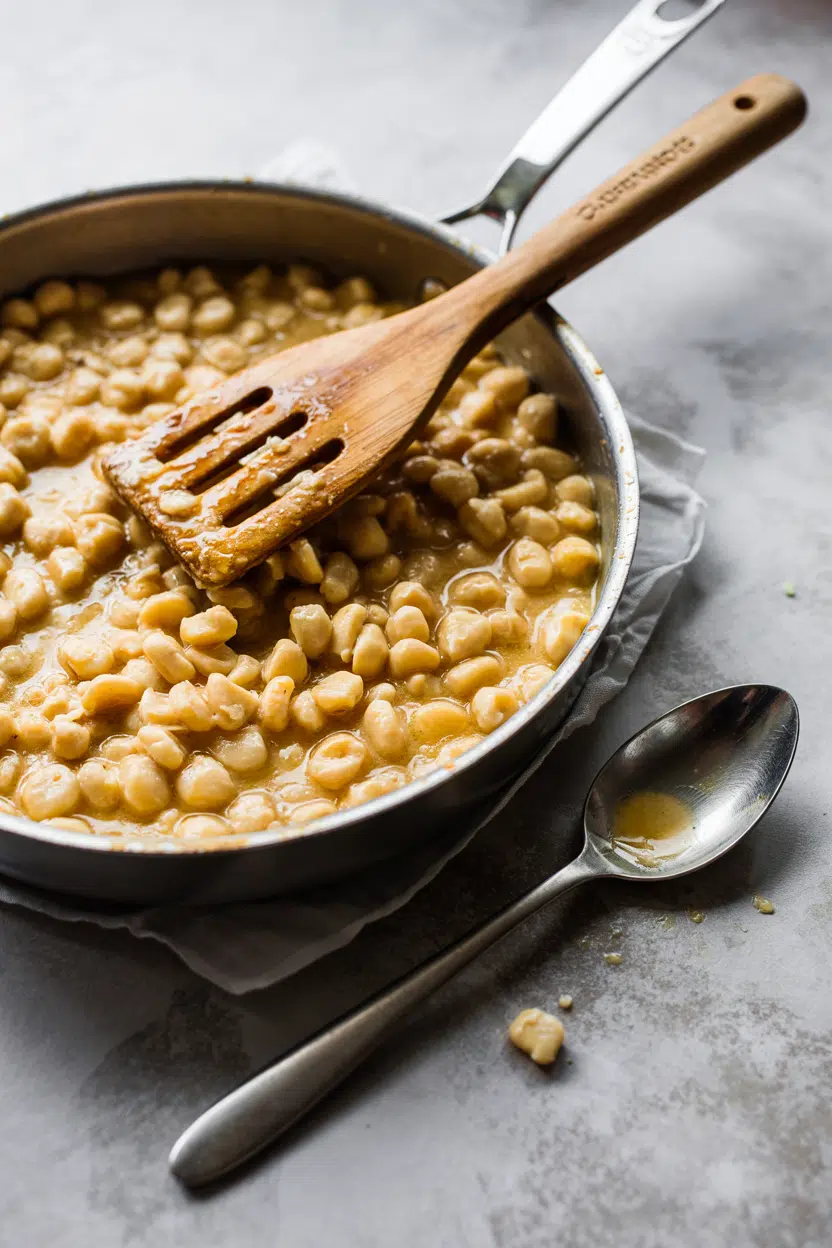
Hominy tastes nothing like fresh sweet corn. The sugars are muted, the starch is front and center, and the alkali process adds a mineral depth that anchors the whole flavor profile.
Think toasted polenta rather than a summer ear of corn. There's a light nuttiness that emerges with heat, and an earthy undercurrent that makes hominy absorb surrounding flavors - broth, fat, chiles - without disappearing into the background.
Dried hominy that's been pressure-cooked carries more complexity than canned. Canned hominy is convenient but slightly blander - rinsing away the canning liquid before using makes a noticeable difference.
How to Use Hominy
Hominy is built for long cooking and bold companions. Its chewy, starchy body holds together through hours of braising, making it the ideal base for soups and stews that need a filling, substantial grain element.
The most iconic application is pozole, the Mexican stew where hominy kernels "bloom" open and soak up a rich chile-laden broth. Anyone deciding pairings for pozole will find that the hominy itself does most of the structural work in the bowl.
| Method | Best For | Tip |
|---|---|---|
| 🍲 Simmered | Pozole, braised stews, soups with pork or chicken | Use low, steady heat and give it at least 30-45 minutes in the pot |
| 🔥 Pan-Toasted | Salad toppers, grain bowls, crunchy texture contrast | Drain and dry canned hominy well before hitting a hot dry skillet |
| 🫕 Baked | Casseroles, tamale-style bakes, cheesy gratins | Mix with sharp cheese and fat; hominy needs richness to sing in the oven |
| ⚙️ Ground | Hominy grits, polenta-style porridge, masa doughs | Grind dried nixtamalized corn coarsely for grits or fine for a masa-adjacent dough |
Pairings are direct: pork is the classic match - slow-braised shoulder, smoked ham hock, or carnitas-style pulled meat. Ancho and guajillo chiles build the broth that hominy was made to absorb.
Lime and cilantro cut through the starch at the finish, while cotija or sharp cheddar melt into the mix when you're going the casserole route.
In Southern cooking, hominy grits anchor the breakfast table in a way that masa harina swaps can't quite replicate - the kernel's processing history gives grits a specific mineral note that stone-ground cornmeal lacks.
How to Buy and Store Hominy
Look for canned hominy with whole, plump, ivory-colored kernels and minimal cloudy liquid. Avoid cans where kernels look broken or the liquid is thick and slimy - that signals poor processing or age.
For dried hominy, inspect the packaging for a recent processing date and choose kernels that are uniform in size and color - consistency means even cooking.
- Canned, unopened - store in a cool pantry; shelf-stable for months to years
- Canned, opened - refrigerate submerged in fresh water in an airtight container; replace the water every 24-48 hours and use within 3-5 days
- Dried hominy - airtight container in a cool, dark pantry; use within 6-12 months
- Cooked hominy - refrigerate in broth or cooking liquid; holds 3-5 days
Start With the Can
If you haven't cooked with hominy before, canned is the right entry point. It needs no soaking, no multi-hour simmer, and fits into a weeknight pozole or a quick skillet with smoked sausage without much planning.
Once you're comfortable with how hominy behaves in a pot - how it absorbs liquid, how it holds texture - move to dried.
The flavor payoff is real, though if you need alternatives along the way, solid hominy swaps can fill in while you get your footing.
Frequently Asked Questions
No. Hominy is whole nixtamalized kernels; masa is the wet dough made by grinding those kernels. Masa harina is the dried, powdered version of that dough - a separate product you rehydrate to make tortillas or tamales.
Expect 4-6 hours of stovetop simmering after an overnight soak. A pressure cooker cuts that to roughly 45-60 minutes at high pressure without pre-soaking, which is the more practical approach for most home kitchens.
They swap in the same dishes, but not cup-for-cup by volume. Dried hominy roughly triples in size once cooked. Canned is already cooked and will have a milder flavor than dried hominy simmered low and slow in seasoned broth.
No. Sweet corn has the wrong starch structure - its kernels are too tender and high in sugar to survive the nixtamalization process intact. True hominy requires dried field corn, which is hard enough to hold its shape through the alkali soak.
Hominy is naturally gluten-free - corn contains no gluten proteins. However, canned hominy processed in facilities that also handle wheat may carry cross-contamination risk, so check the label if gluten sensitivity is a concern.