
The easiest banana leaf substitute is parchment paper sealed inside foil. Cut the parchment to the size of the leaf pieces your recipe calls for, fold the food in, then wrap the parcel in foil and crimp the seams.
That wrap holds steam as well as the leaf does, but it adds no smell. When the leaf's sweet, grassy scent matters, soaked corn husks or dried lotus leaf come closer, and a Latin or Asian grocery sells both.
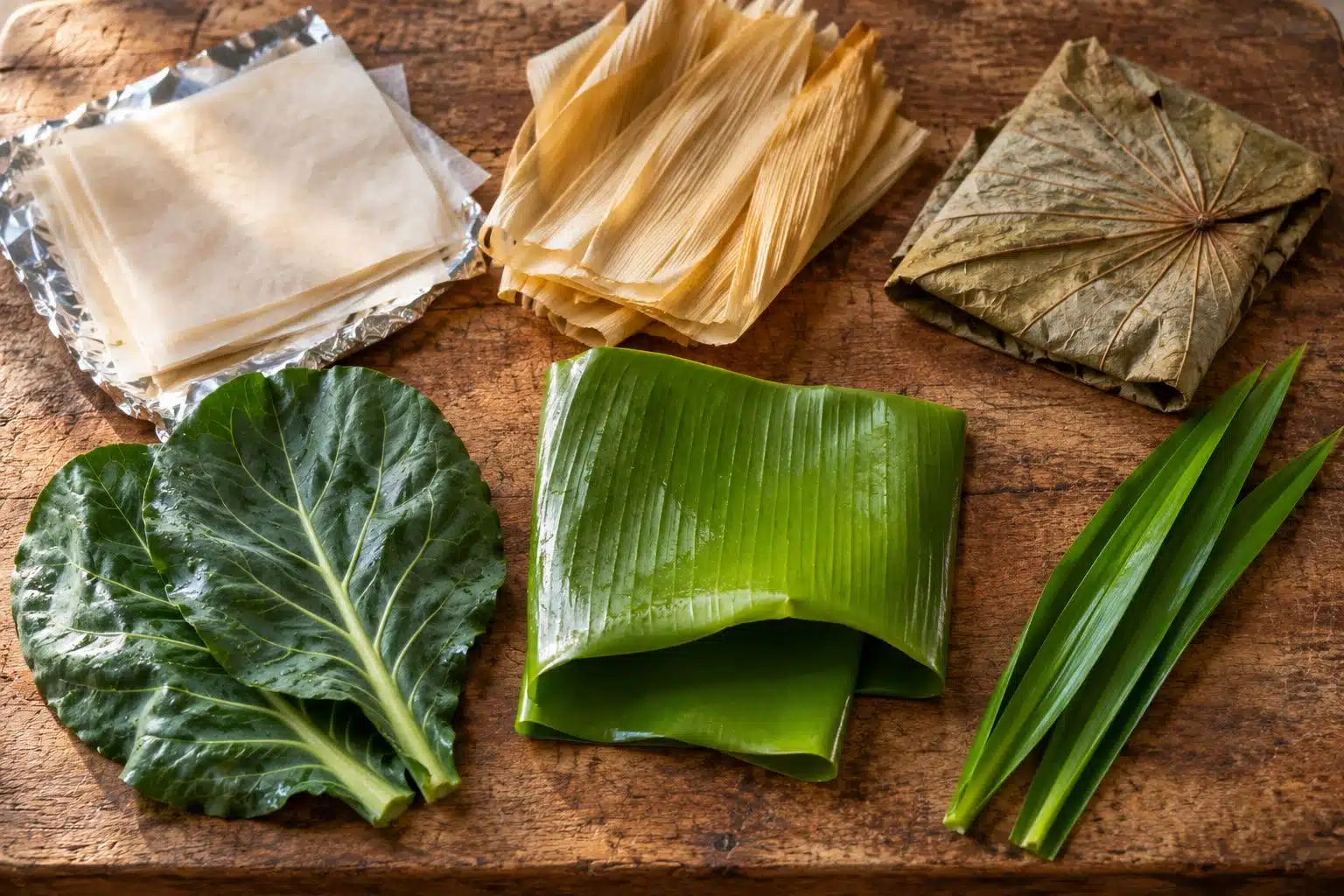
Parchment inside foil is the fastest swap for banana leaf and works for both steaming and grilling, but it adds no scent.
Soaked corn husks suit tamales and small bundles, and dried lotus leaf suits sticky rice.
Collard leaves make a wrapper you can eat, and pandan adds scent but wraps only small pieces.
What Does Banana Leaf Do in a Recipe?
A banana leaf does four jobs at once, and the one your dish needs most decides which swap to pick.
Remember it later
Planning to try this recipe soon? Save it for a quick find later!
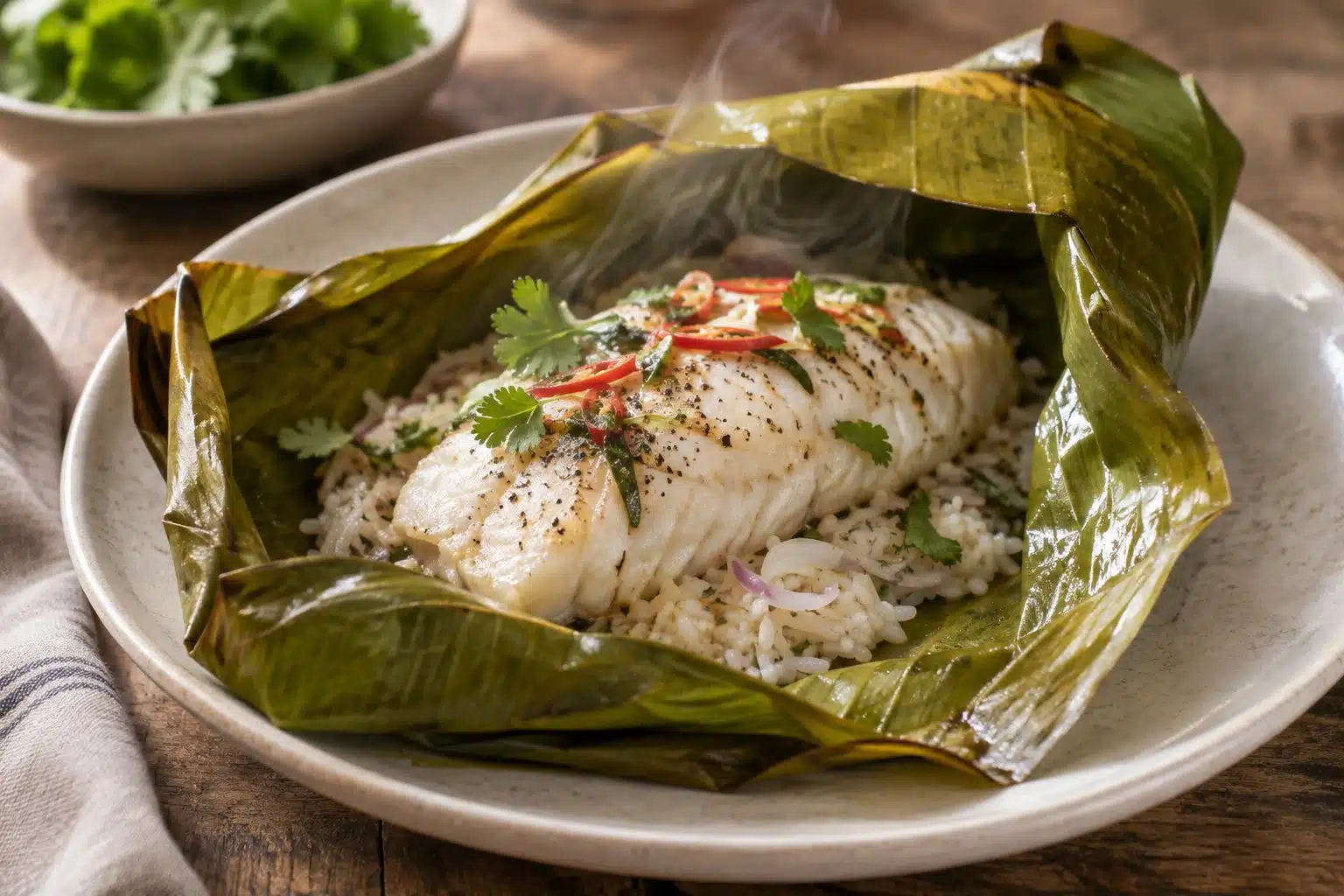
- Seals in steam. The leaf is wide, flexible and waterproof, so a folded parcel keeps its juices instead of letting them drain into the steamer or onto the coals.
- Shields food from direct heat. On a grill the leaf takes the char, so the fish or rice inside cooks without scorching.
- Stops sticking. Sticky rice and batters lift off a leaf in one piece, which is why recipes also use it as a liner.
- Adds a mild scent. Heat releases the leaf's oils, and a sweet, grassy smell moves into the food.
You do not eat the leaf. It is tough and fibrous, so it serves as a wrapper and a plate.
Steamed fish and tamales need the first three jobs, and any wrap can do those. Sticky rice also needs the scent, and that is the one job parchment and foil cannot do.
Which Banana Leaf Substitute Works Best?
These six are ranked by how easy they are to get in a US kitchen and how many dishes each one covers.
| # | Substitute | Best For | Ratio | Key Note |
|---|---|---|---|---|
| 1 | Parchment + Foil | 🍳 Steam, grill | 1:1 size | No scent |
| 2 | Corn Husks | 🌽 Tamales | Overlap to fit | Soak 30 minutes |
| 3 | Collard or Cabbage | 🥬 Edible rolls | 1 leaf per parcel | Eaten with filling |
| 4 | Lotus Leaf | 🍚 Sticky rice | 1:1 size | Soak overnight |
| 5 | Ti Leaf | 🍃 Big bundles | 1:1 size | Hard to find |
| 6 | Pandan Leaf | 🌿 Scent | Liner or tie | Wraps small pieces |
The first row needs no shopping trip, and the next four trade extra prep or a store visit for more of the leaf's character.
1 – Parchment Paper Wrapped in Foil
Cut parchment squares about the size of the leaf pieces in your recipe, then wrap the filled parcel in foil. For tamales, 6 by 6 to 8 by 8 inches is the usual square, and larger squares are easier to fill.
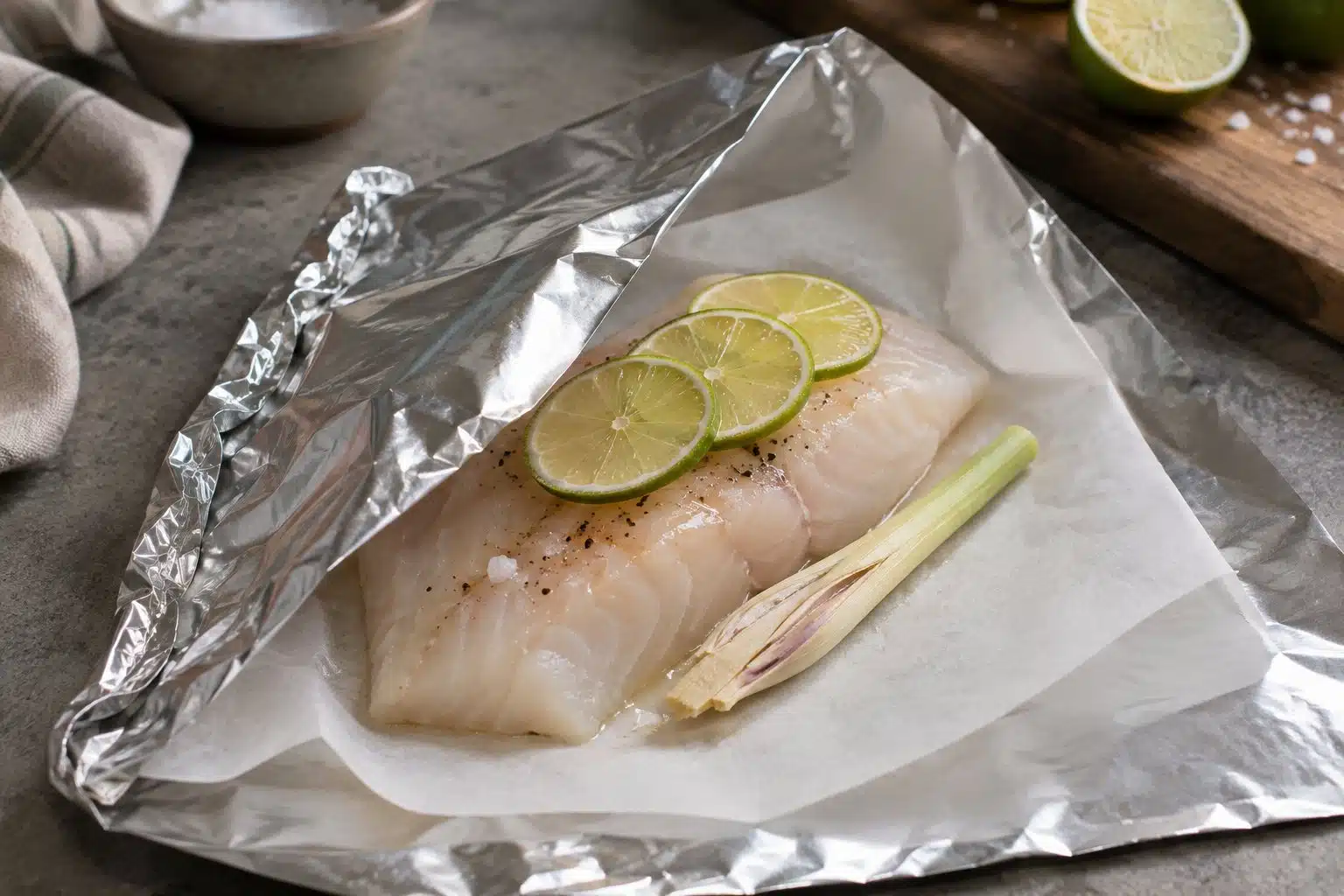
Parchment paper holds up to steam and heat, but on its own it can go soggy and collapse in a steamer. The foil on the outside keeps the parcel shut.
On a grill, the foil is the outside layer, so the parchment never touches the flame. Reynolds tells cooks to keep its parchment away from open flame, and most boxes list a limit near 425°F, so check yours before a hot oven.
- Use it for: steamed fish, rice parcels, tamales, and anything grilled in a sealed packet.
- Skip it when: the recipe depends on the leaf's smell, because this wrap adds none.
2 – Soaked Corn Husks
Dried corn husks need about 30 minutes in hot water, weighted under a plate, before they bend without cracking. Use hot tap water rather than boiling, and fold one husk to test it: if it cracks, soak longer.
A husk is much smaller than a banana leaf, so overlap two or three to cover a parcel and tie it with a strip of husk or kitchen string. That size limit is why husks suit tamales and small rice or masa bundles but not a whole fish fillet.
Husks add only a very mild corn sweetness. Once the bundles are steamed, see what to serve with tamales for sides that suit them.
3 – Collard Green or Cabbage Leaves
Chef Rick Martínez reaches for collard greens when he has no banana leaves for tamales, because their green, leafy flavor comes closest. Soak them about 15 minutes, rinse, and cut out the stem, or the leaf won't wrap.
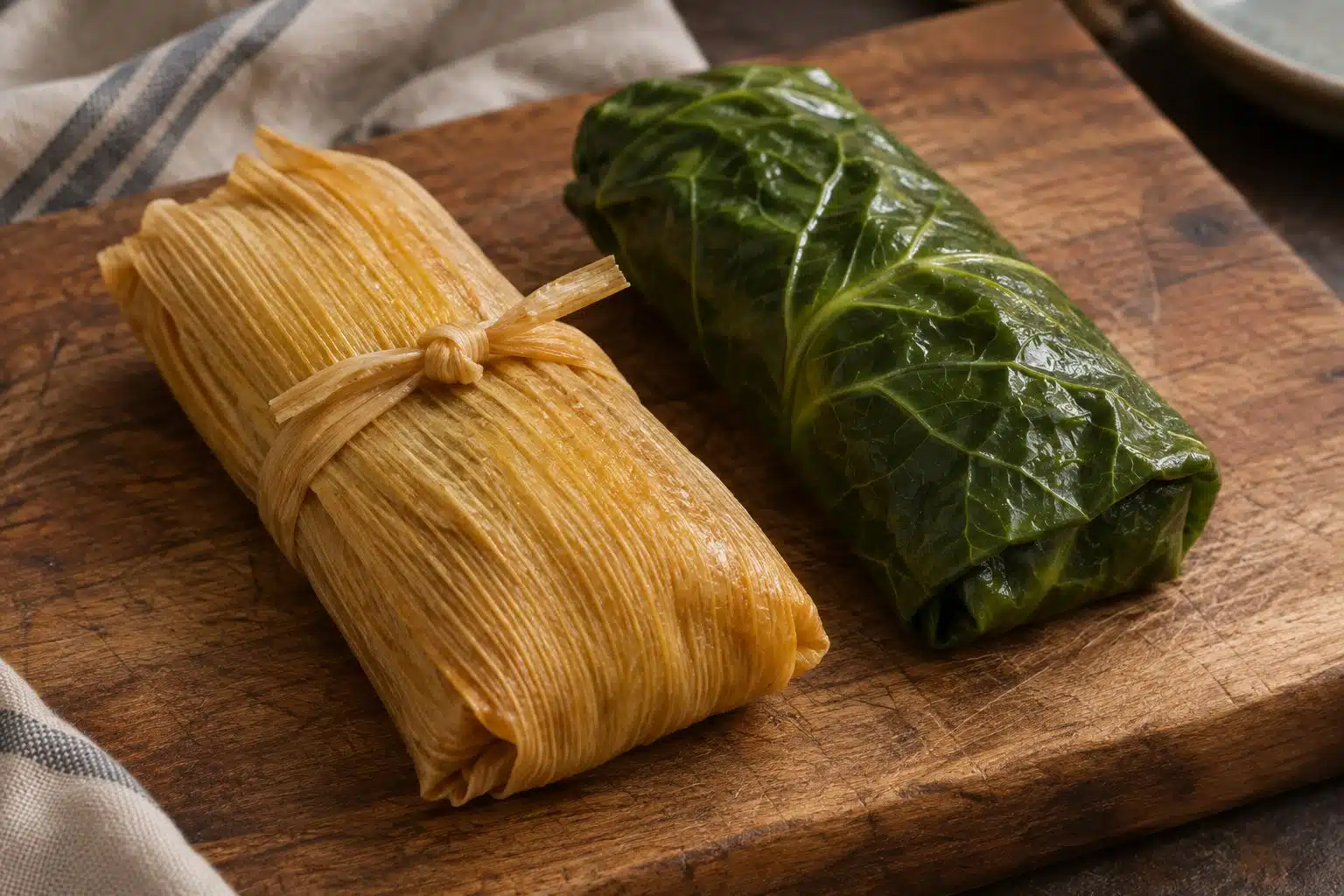
Collards hold their shape through hours of cooking, and you eat the wrapper with the filling. Pick whole, flat collard greens without tears, since bagged chopped leaves cannot wrap anything.
Cabbage leaves follow the same plan: blanch a leaf in boiling water until it bends, trim the thick rib, and roll the filling the way stuffed cabbage rolls are made.
Both taste like cooked greens, so they fit savory pork, beef or rice fillings and clash with sweet ones such as suman.
4 – Dried Lotus Leaf
Dried lotus leaf is the closest match for sticky rice. Asian supermarkets sell it in dry packages, and a leaf can reach about two feet long, which is close to banana leaf size.
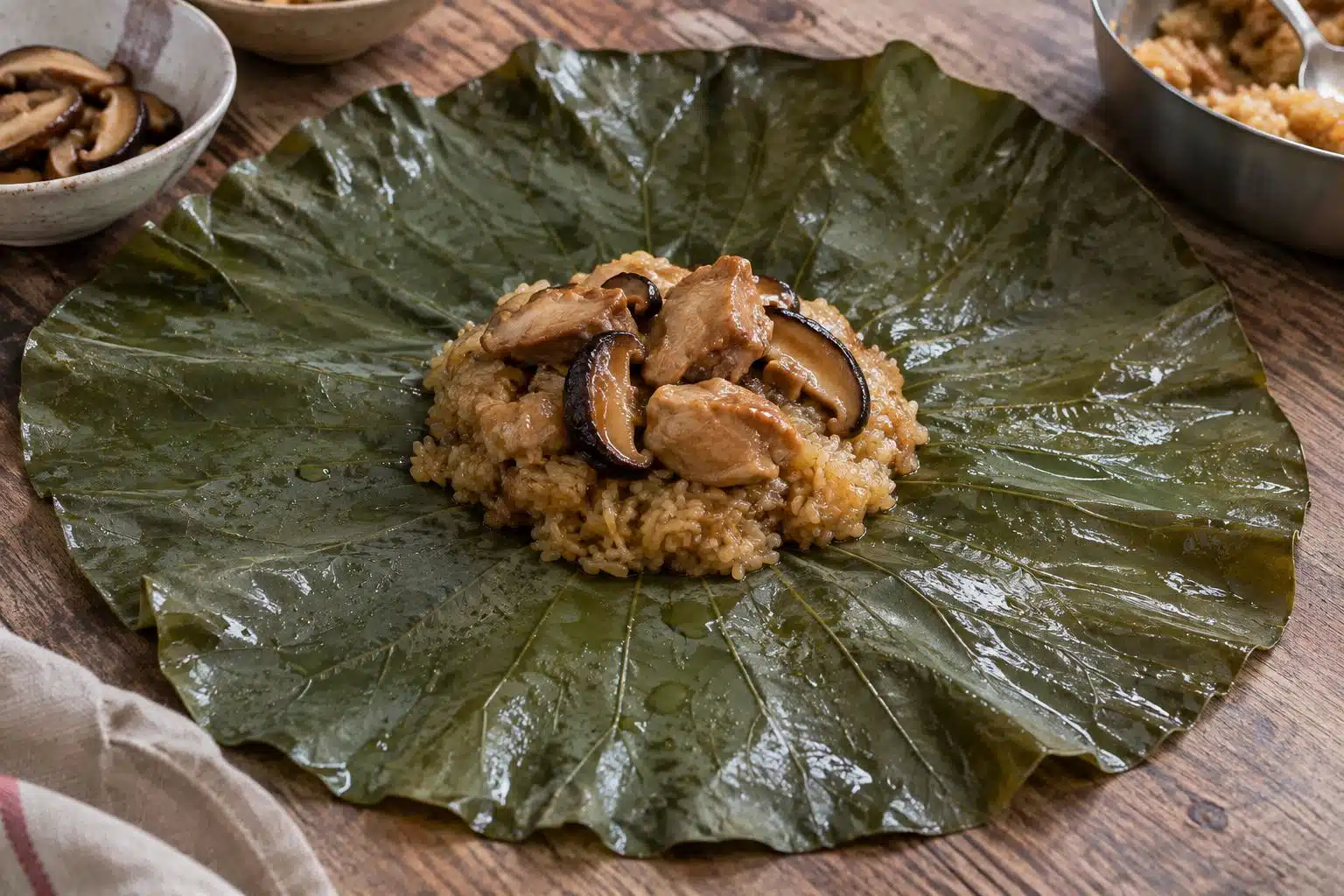
Soak it until it turns pliable, which many recipes do overnight, then trim the stem and hard center. Patch any tear with a second piece of leaf. Lo mai gai, the dim sum sticky rice with chicken, steams in it for 20 to 30 minutes.
The leaf smells sweet and perfumed, with a faint bitter edge, so it scents rice in its own way rather than copying banana leaf. The cost is planning, since a dried leaf needs hours in water.
5 – Ti Leaf
Ti leaf is the Hawaiian wrapper for laulau: pork or fish goes into taro leaves first, then the bundle is wrapped in ti leaf, which nobody eats. It steams a bundle the way banana leaf does, but its smell is earthy and grassy, not sweet.
Outside Hawaii it is hard to find. Leaves sold as ornamental plants or for flower arrangements are not grown for food, so buy ti leaf only from a seller that offers it for cooking.
6 – Pandan Leaf
Pandan leaf gives scent, not coverage. A blade is narrow, so it wraps small pieces only, as in Thai pandan chicken, where leaves cut to 10 to 12 inches are knotted around chicken pieces.
For a full parcel, lay a few pandan leaves under and around the food inside a parchment-and-foil wrap, or line the steamer basket with them. The scent is pandan's own sweet, grassy smell, which fits coconut rice and sweet steamed cakes better than fish.
Which Swap Fits the Dish You're Making?
| If You're Making | Pick | Why |
|---|---|---|
| Steamed Fish | Parchment inside foil | Seals in the juices; add herbs for scent |
| Tamales | Soaked corn husks | Traditional wrap with mild corn sweetness |
| Sticky Rice | Lotus leaf | Scents the rice; parchment is the blander fallback |
| Grilled Fish | Foil, parchment inside | Foil faces the fire, parchment never burns |
| Rice Batter | Parchment | One traditional panki recipe names it, minus the aroma |
The table pairs each dish with its closest swap, and the smell is the only thing the first and last picks give up.
Making Suman Without Banana Leaf?
Cooks who skip the leaf for suman name a couple of layers of parchment, soaked corn husks, or foil wrapped tight, because loose wrapping lets water seep in. Parchment or husks are the safer pick for suman sa lihiya, since lye water is strongly alkaline and eats into aluminum.
If you only have foil, line it with two layers of parchment so the rice never touches the metal. Expect a blander rice, since the leaf is where suman gets its aroma.
How Do You Bring Back the Banana Leaf Smell?
Parchment, foil and husks add little scent, so put it inside the parcel. Bruise a stalk of lemongrass and lay it with fish or rice, where the steam carries its citrus smell into the food.
A few lime leaves do the same job.
Should You Just Buy Banana Leaves?
Frozen leaves are easier to find than fresh ones. Look in Mexican and other Latin American groceries, some Asian ones, and online, and choose soft, unyellowed leaves with no ice crystals in the package.
Frozen leaves keep up to 3 months in their package, and thawed leaves last a week or more in the refrigerator. Soften them before wrapping, because a stiff leaf splits at the fold.
- Fresh leaves: pass each side over a low-to-medium flame for 3 to 5 seconds total, or dip the leaf in hot water for 10 to 15 seconds, until it turns glossy and bends.
- Frozen leaves: thaw them in the refrigerator, then rinse in warm water, because a flame can crack a thawed leaf.



