
Pickled banana peppers are the closest pepperoncini substitute, and you can use them 1:1. They taste a little sweeter and less sour, but the heat is in the same mild range: banana peppers rate 0 to 500 Scoville units, pepperoncini 100 to 500.
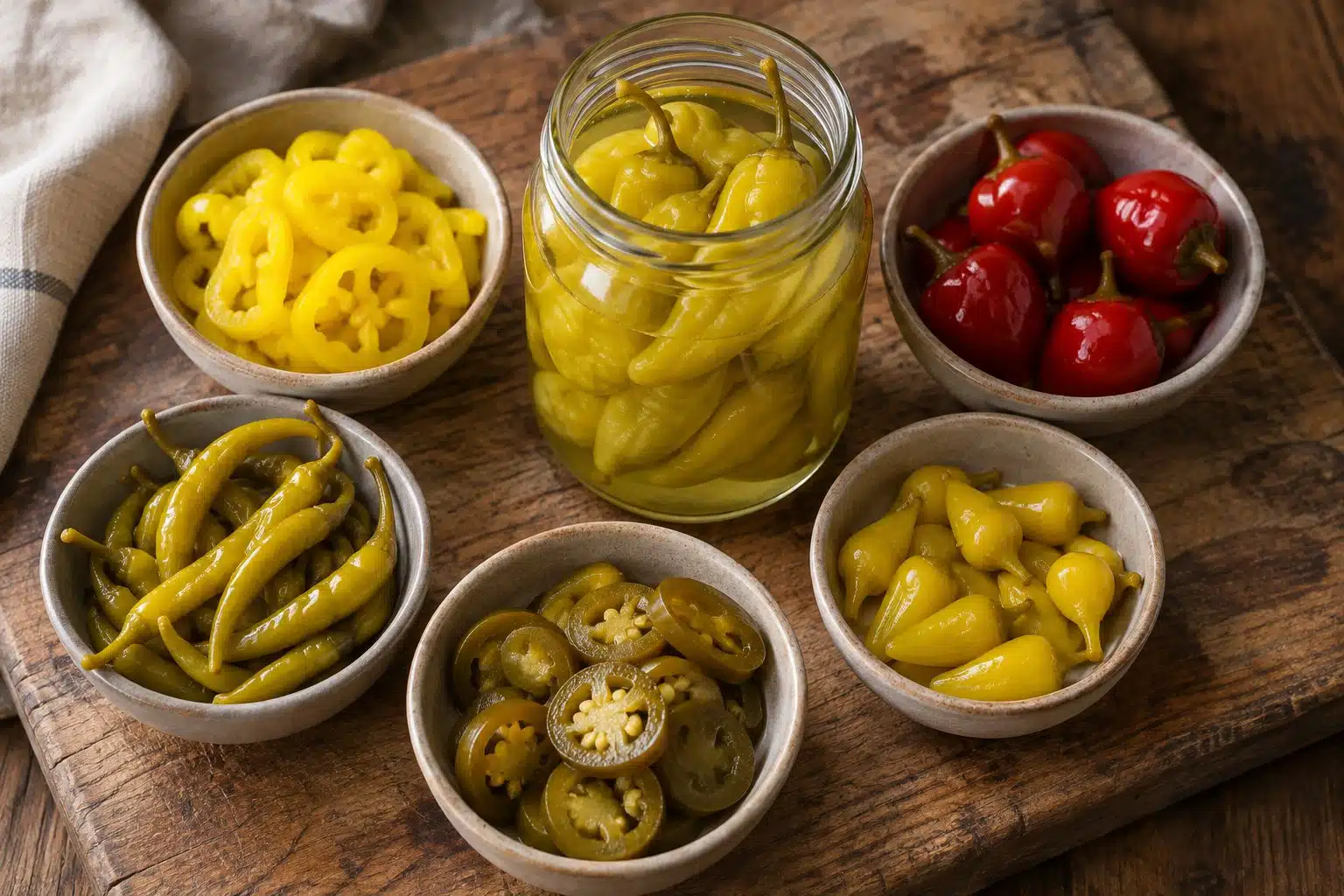
Pick a hotter pepper only on purpose. Pickled jalapeños, sport peppers and hot cherry peppers all work, but start with a third to a half of the amount, because they run many times hotter and will take over a mild dish.
What Does Pepperoncini Do in a Dish?
A jarred pepperoncini gives a dish vinegar tang, a little heat and a firm bite. The heat is small, 100 to 500 Scoville units, which is closer to a bell pepper than a jalapeño (usually 4,000 to 8,500).
Remember it later
Planning to try this recipe soon? Save it for a quick find later!
Which of those jobs matters depends on the dish, and that decides which swap you pick:
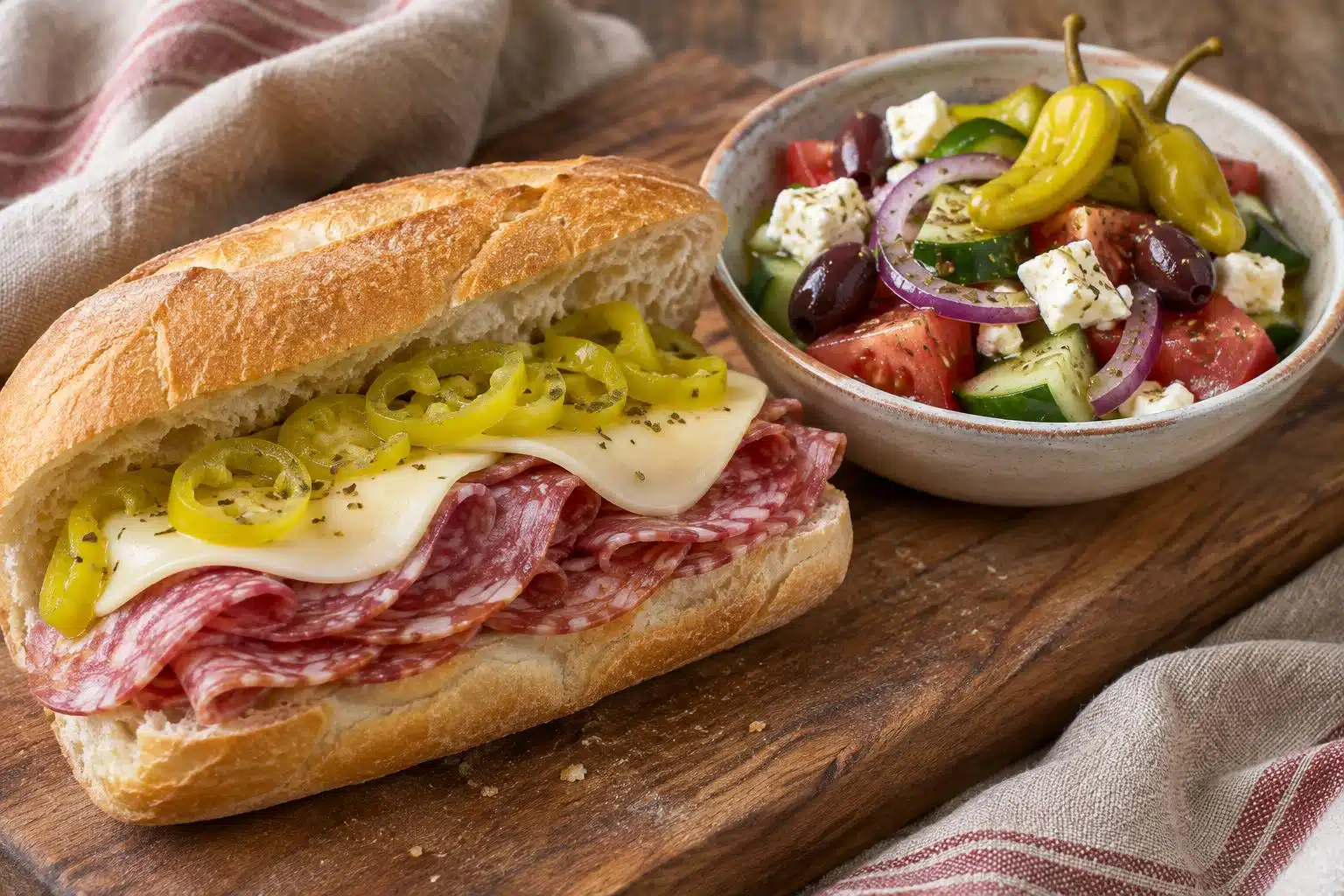
- Salads and subs: You need the tang and the bite, so the swap must stay crisp and mild.
- Slow-cooker beef: The liquid in the jar seasons the meat as much as the peppers do, so you may need to replace the juice too.
- Antipasto boards and pizza: Looks and mild heat matter most, so any pickled pepper of similar size and color fits.
Jarred pepperoncini are pale yellow-green and 2 to 3 inches long, packed in a vinegar brine. Our guide to pepperoncini covers their taste and the dishes they suit in more detail.
The 7 Best Pepperoncini Substitutes, Ranked
The table runs from the closest swap to the furthest. Ratios are by volume after you slice or chop, and the two hot swaps are starting points you adjust by taste.
| # | Substitute | Best For | Ratio | Key Note |
|---|---|---|---|---|
| 1 | Pickled Banana Peppers | ✨ Both | 1:1 | Sweeter, same heat |
| 2 | Sweet Cherry Peppers | ✨ Both | 1:1 | Sweet and mild |
| 3 | Guindillas | 🥗 Raw | 1:1 | Tart wine vinegar |
| 4 | Mild Giardiniera | 🥗 Raw | 1:1 | Mixed vegetables |
| 5 | Pickled Jalapeños | 🍳 Cooking | ½ amount | Much hotter |
| 6 | Sport Peppers | 🍳 Cooking | ⅓ amount | Hottest, tiny |
| 7 | Quick-Pickled Fresh Peppers | 🥗 Raw | DIY | Ready in 4 hours |
Rows 1, 2 and 4 keep the heat close to the original, and guindillas (row 3) run a little hotter at 1,000 to 2,000 Scoville units. Rows 5 and 6 only work when you cut the amount, and row 7 is for the day you have no jar at all.
1 – Pickled Banana Peppers
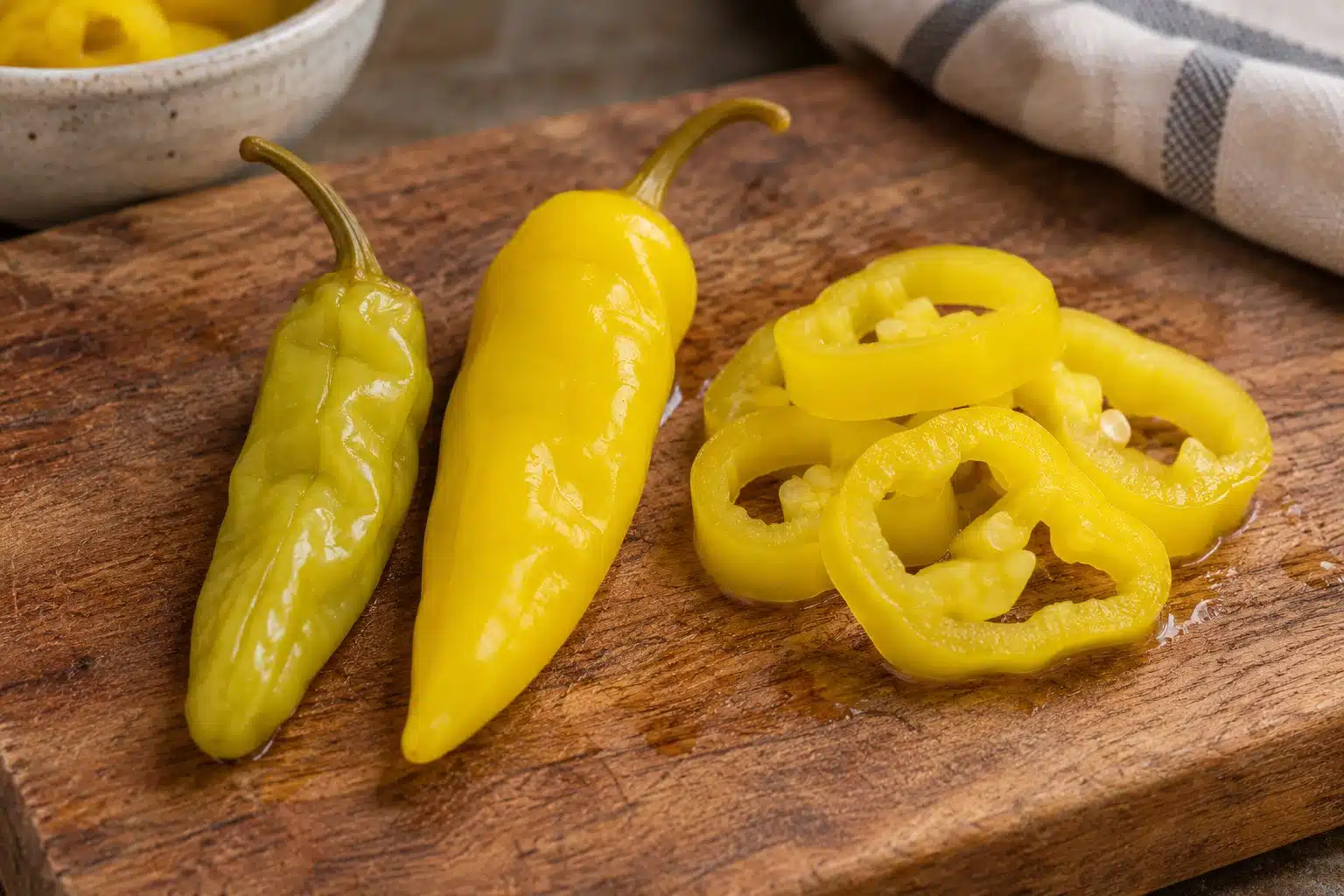
Use pickled banana peppers 1:1 in any recipe, whether it wants slices, rings or whole peppers. The two peppers are close enough that cooks often mix them up, and in a jar both give a mild heat and a vinegar tang.
Three things differ on the plate:
- Taste: Banana peppers are a little sweeter and less sour, so the dish tastes slightly rounder.
- Texture: They hold their shape better than pepperoncini, so they stay firmer in a sandwich or salad.
- Size: Both peppers are 2 to 3 inches long, so when a recipe counts whole peppers, swap one banana pepper for one pepperoncini. Rings go in by the tablespoon.
Our guide to banana peppers explains how the sweet and hot kinds differ.
2 – Sweet Pickled Cherry Peppers
Cherry peppers are round, so cut them into halves or quarters to stand in for pepperoncini slices. The jar label tells you which kind you have:
- Sweet cherry peppers: Swap 1:1, since they are a mild, sweet choice.
- Hot cherry peppers: Use half the amount and taste, because sources rate them up to about 5,000 Scoville units.
Our cherry pepper guide shows how the two look different.
Hot cherry peppers suit cooked dishes such as marinades, pasta and sausage with peppers, where the heat spreads through the food.
Slice them thin so each bite gets a little heat. Keep them off a mild Greek salad, where one slice stands out.
3 – Guindillas
Guindillas are slim green Basque peppers pickled in white wine vinegar, often sold as piparras. They rate about 1,000 to 2,000 Scoville units, hotter than pepperoncini but far milder than a jalapeño, with a crisp, tart bite.
Swap them 1:1 and cut long ones to 2 to 3 inches. Heat varies by brand, so taste one first.
They suit Greek-style salads and antipasto plates with olives, because the wine-vinegar tartness stays clean.
4 – Mild Giardiniera
Italian-style giardiniera is pickled bell pepper, celery, carrot, cauliflower and gherkins in vinegar or oil. Drain it, chop it small, and swap 1:1 by volume on sandwiches, antipasto plates and pasta salad.
Read the jar first. Chicago-style giardiniera is packed in oil and made spicy with sport peppers, so it brings heat and an oily coating.
That suits an Italian beef sandwich and spoils a delicate salad.
5 – Pickled Jalapeños
Pickled jalapeños have the same vinegar tang but usually rate 4,000 to 8,500 Scoville units, many times the heat of pepperoncini. Start with half the amount, taste, and add more.
They fit pizza, sausage and chicken thigh dishes, where cheese and fat soften the heat, and they overpower a mild Greek salad. If you need to buy a jar, our roundup of the best pickled jalapeños compares crunch and heat.
6 – Sport Peppers
Sport peppers are tiny, about 1 to 1½ inches long, and rate 10,000 to 23,000 Scoville units. That is at least 20 times the heat of the hottest pepperoncini, so use a third of the amount and add more by taste.
Once pickled, their brine tastes strongly of vinegar, which makes them a fair match for the tang.
Keep them for sandwiches, sausage and beef, where heat is welcome. Pickled sport peppers are small enough to drop in whole.
7 – Quick-Pickled Fresh Peppers
Fresh peppers alone lack the pickled tang. Slice fresh banana peppers or another mild pepper and cover them with a fridge brine. For about 1 pound of peppers, stir together:
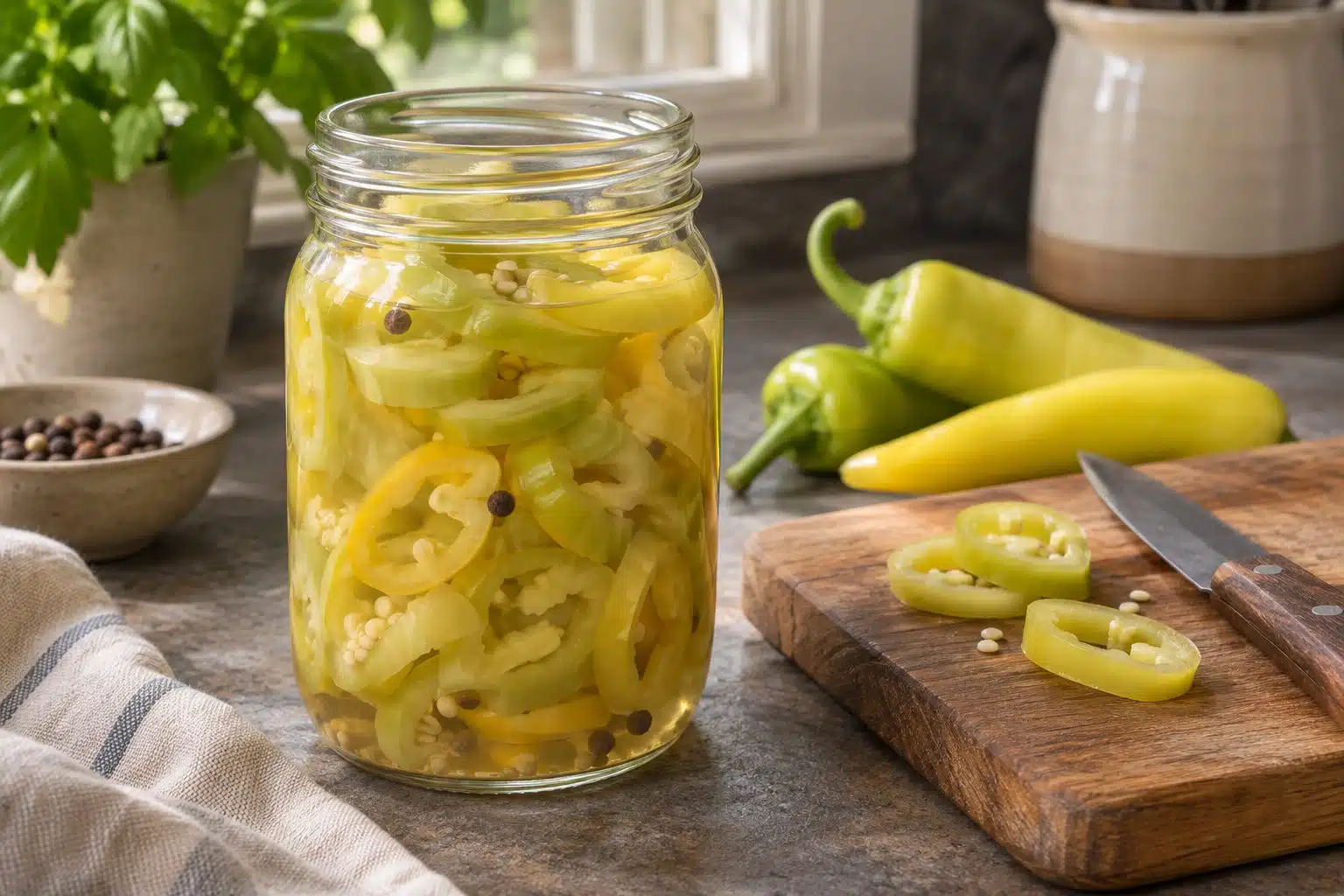
- 1 cup vinegar and 1 cup water, for the tang.
- 1 tablespoon salt and 1 tablespoon sugar, to season the brine.
Sliced peppers are ready after at least 4 hours, and whole ones need 24.
Keep them fully under the brine in the fridge and use them within 2 weeks. Recipes give anything from 2 weeks to 3 months, so the short end is the safe one.
For a salad you will eat right away, skip the brine. Toss sliced fresh mild peppers with a splash of vinegar, about 1 teaspoon per ¼ cup of peppers, or with lemon juice for a citrus tang.
These taste fresher and crisper than jarred pepperoncini but lack the pickled depth, and they do not keep, so make only what you will use that day.
What Can You Use for Pepperoncini Brine?
Some recipes use the jar liquid as an ingredient. A popular Mississippi pot roast calls for 6 pepperoncini plus ½ cup of their juice, and other versions range from ¼ cup to ½ cup.
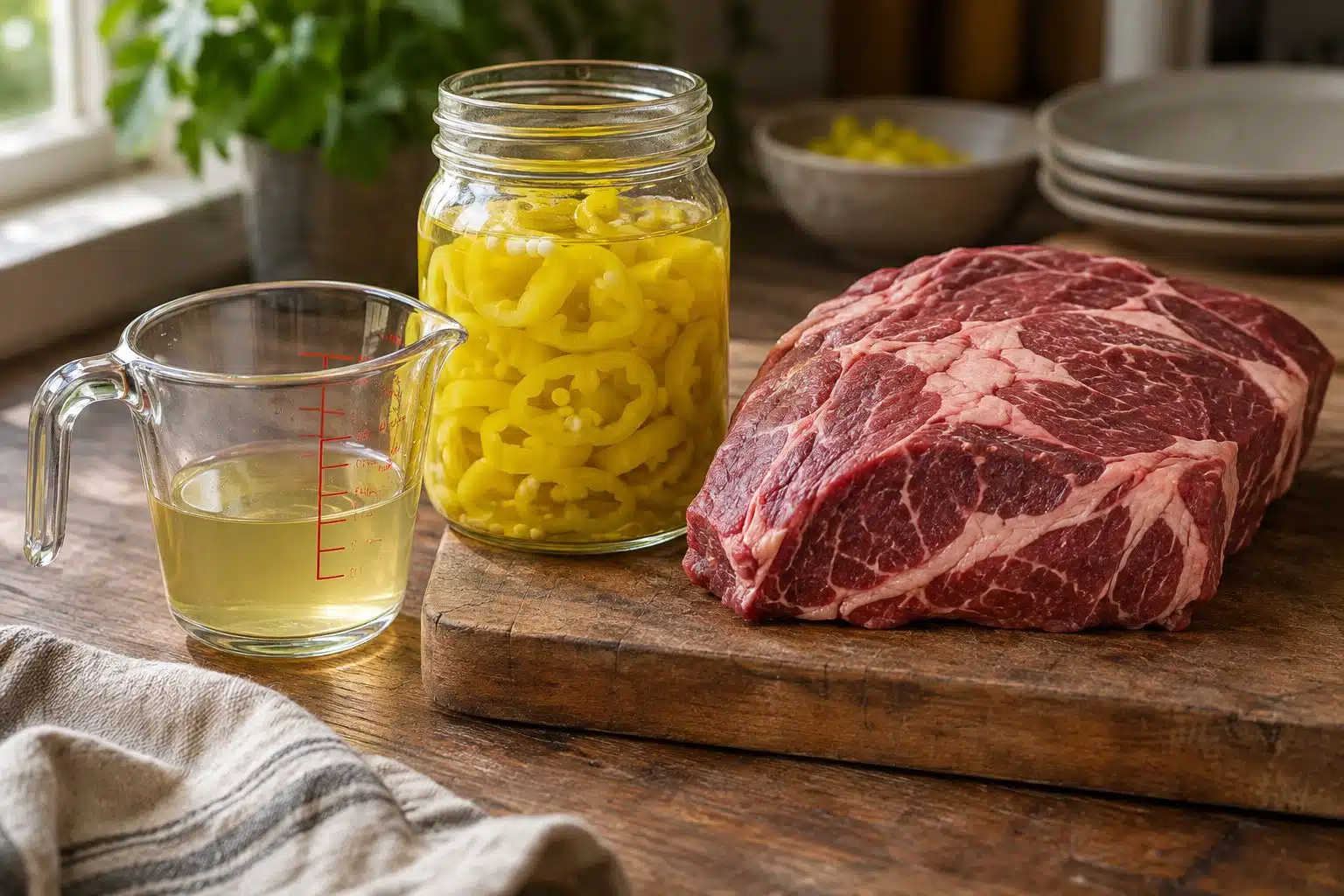
Pour the liquid from a jar of other pickled peppers, and match it to what you have:
- Banana pepper or cherry pepper juice: Use it 1:1, since it is the closest in tang and saltiness.
- Pickled jalapeño juice: Use half the amount and fill the rest with water, because the juice carries the pepper heat.
- Dill pickle juice: Use it 1:1 if you do not mind a dill and garlic note in the gravy.
- Homemade brine: For ½ cup, stir ¼ cup white vinegar, ¼ cup water, ¾ teaspoon salt and ¾ teaspoon sugar together, the same proportions as the fridge brine above.
Jar liquids differ in saltiness, and recipes with ranch or au jus mix already carry salt, so taste before you add any more.
Our slow cooker Mississippi pot roast uses pepperoncini, so it is a good place to try a swapped jar. The crockpot Italian beef filling calls for them with their juice as well.
Which Swap Fits Which Dish?
A Greek salad like our horiatiki village salad already has crisp cucumber and salty feta, so the pepper only has to bring tang and a soft bite. Heavier dishes can take more heat.
| If You Are Making | Pick | Why |
|---|---|---|
| Greek salad | Banana peppers or guindillas | Crisp and tart |
| Cold cut subs | Banana pepper rings or mild giardiniera | Easy to layer |
| Slow-cooker beef | Banana peppers plus their juice | Juice seasons the meat |
| Pizza and sausage | Jalapeños or hot cherry peppers, half amount | Fat softens the heat |
| Antipasto board | Guindillas or sweet cherry peppers | Look right beside olives |
| Heat-shy eaters | Sweet cherry or banana peppers | Mild and sweet |
The table shows that the mild swaps cover salads and sandwiches, while the hot ones belong in cooked dishes where other ingredients absorb some of the heat.
Pickled peppers soften as they cook. In a dish that cooks for a short time, such as a pasta sauce or a pizza topping, stir them in near the end to keep some bite.
In a long braise, the peppers go in at the start, because the dish is meant to take on their flavor.
Are Pepperoncini Hot?
Barely. Pepperoncini rate 100 to 500 Scoville units, while a jalapeño usually runs 4,000 to 8,500, but jars labeled hot are the exception.
Is Peperoncino the Same as Pepperoncini?
No. In Italian, peperoncino simply means chili pepper, so an Italian recipe that asks for it may want a fresh or dried chili, not a jar of mild pickled peppers.
Can I Rinse Pepperoncini to Tone Down the Brine?
Yes. A quick rinse in cold water softens the brine taste before you serve them, which helps on a delicate salad.
Can I Use Banana Peppers Instead of Pepperoncini?
Yes, 1:1. Banana peppers taste a little sweeter and less sour, and they look smoother and thicker than the thinner, wrinkled pepperoncini.
Can I Use Bell Peppers Instead of Pepperoncini?
Fresh bell peppers have no tang, so they leave a salad or sandwich flat. Pickled peppers are the better choice, or slice a fresh pepper and dress it with vinegar.
Can I Use Pepperoncini Substitutes in Cooked Dishes?
Yes. Hot swaps such as jalapeños and hot cherry peppers go in at half the amount, and pickled peppers keep more bite when stirred in near the end of a short cook.
What Can I Use for Pepperoncini Juice?
Banana pepper or cherry pepper juice goes in 1:1, and jalapeño juice goes in at half the amount with water added. Dill pickle juice also works 1:1 if you do not mind its dill and garlic taste.
Can I Make Pepperoncini at Home?
You can pickle sliced mild peppers in the fridge brine above, ready in 4 hours. They stay crisp and tangy but will not taste exactly like store-bought jars.



