Quinoa is the easiest swap for amaranth grain: use 1 cup of quinoa for 1 cup of amaranth, with 2 cups of water and about 15 minutes of simmering. It stays in separate grains, so for a creamy porridge pick teff instead.
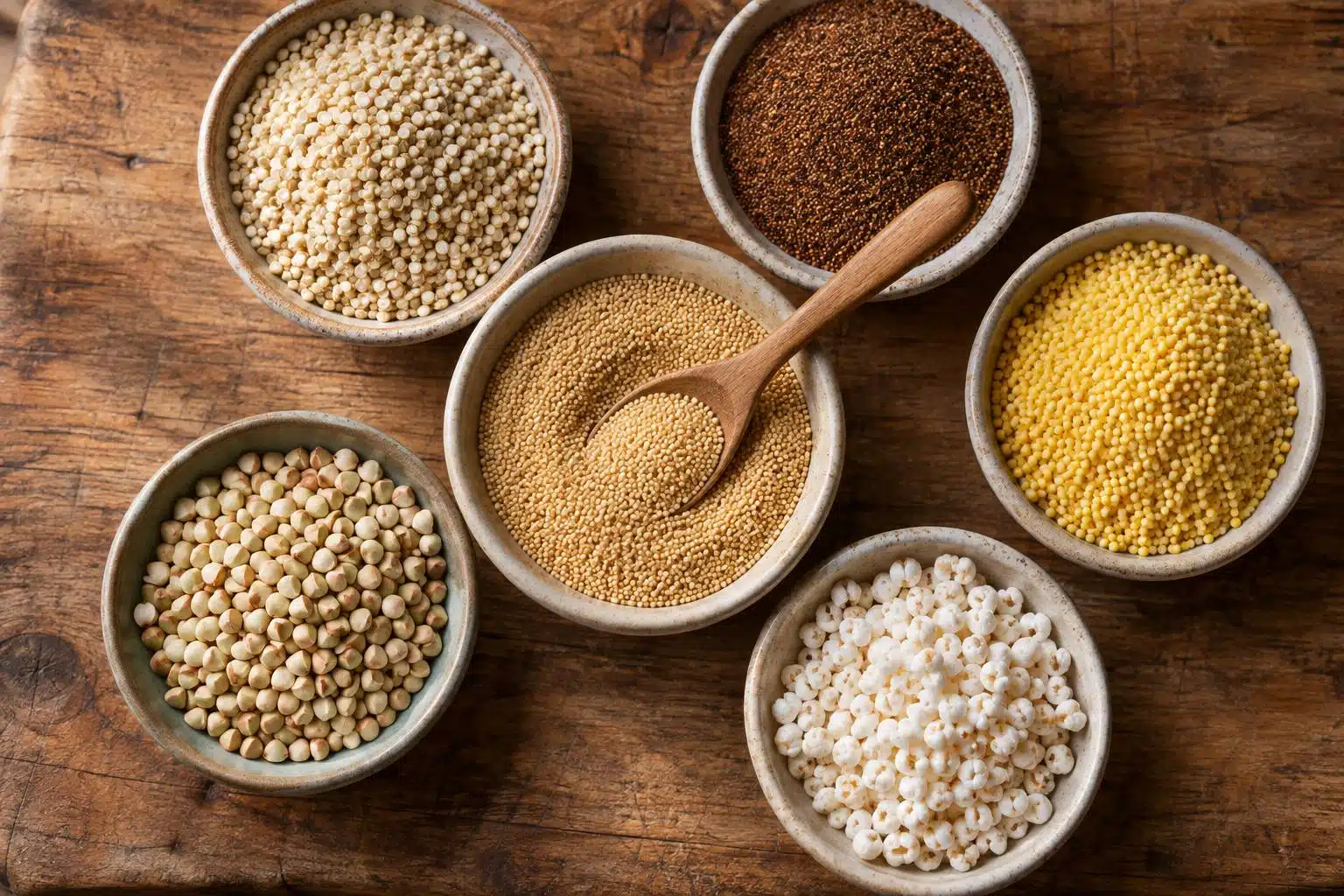
Popped amaranth has no pan-popping swap, so buy puffed millet or puffed quinoa, because other grains do not pop the same way at home. For amaranth flour in gluten-free baking, sorghum or quinoa flour takes its place.
What Does Amaranth Do in a Recipe?
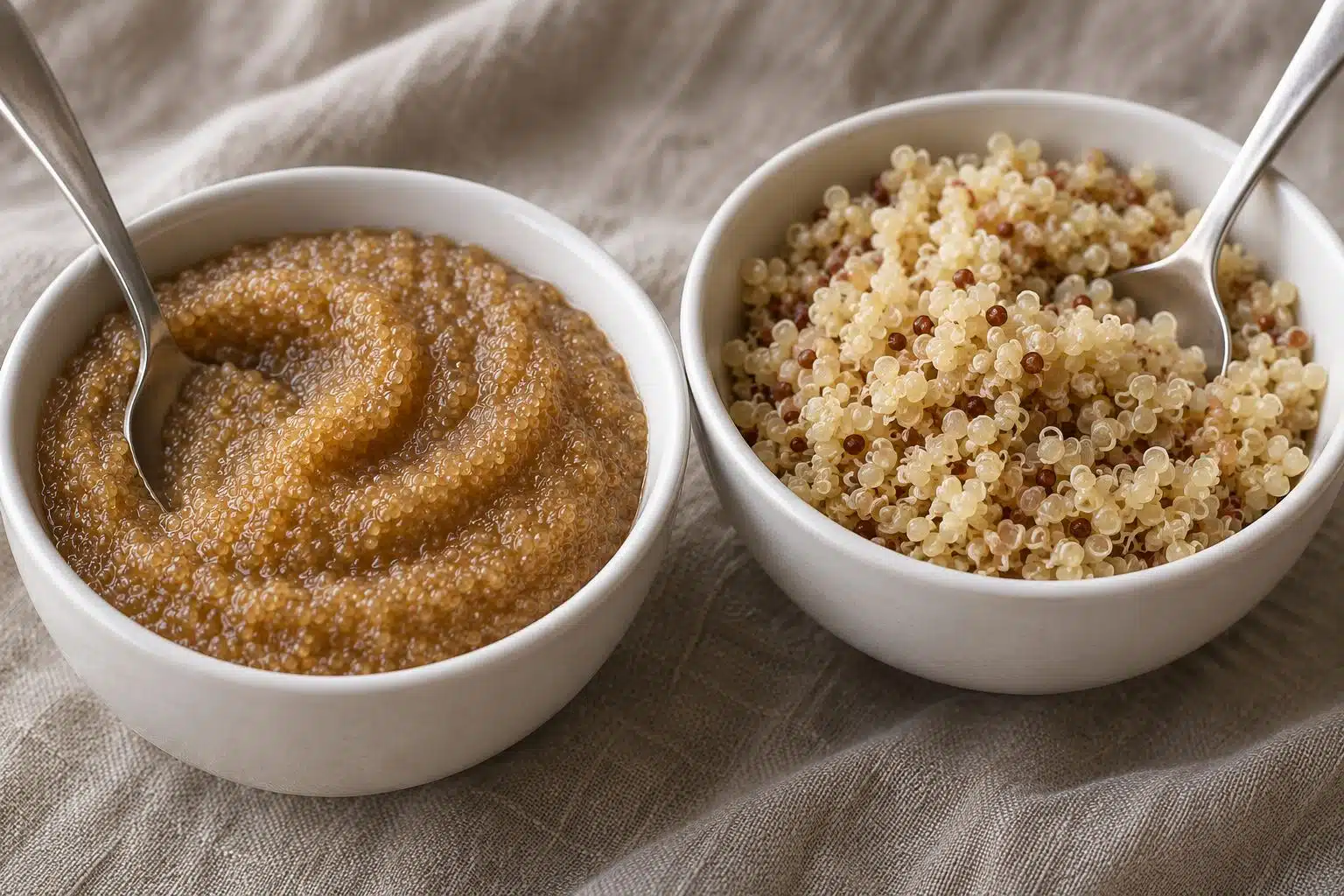
Amaranth seeds are tiny and release starch as they simmer, so cooked amaranth turns soft and sticky, closer to porridge than to separate grains. The flavor is earthy and nutty. If you have never bought it, what amaranth is and how it tastes has its own page.
Remember it later
Planning to try this recipe soon? Save it for a quick find later!
Your recipe uses amaranth for one of four jobs, and the job decides the swap.
- Creamy body in porridge. The sticky starch thickens a breakfast bowl, and teff comes closest to that texture.
- Thickener in soup. A small amount stirred into a soup or stew adds a thick, velvety body that a firmer grain like quinoa adds less of.
- Crunch when popped. Seeds puffed in a dry pan top yogurt and hold bars together, so the swap has to be a puffed grain.
- Gluten-free flour. Ground amaranth adds protein and a mildly nutty flavor, usually at about a quarter of a gluten-free blend.
What Are the Best Substitutes for Amaranth Grain?
Swap cup for cup, cooked for cooked or dry for dry, then cook the new grain in its own water. One cup of dry millet or buckwheat makes about 4 cups cooked against 2½ for amaranth, so a dry-measure swap fills the bowl about 1½ times fuller.
- Quinoa (1:1, best for cooking and baking): firmer, separate grains.
- Teff (1:1, best for cooking and baking): closest in size and creaminess.
- Millet (1:1, best for cooking and baking): absorbs the most water.
- Buckwheat Groats (1:1, best for cooking): firm, strong flavor.
- Steel-Cut Oats (1:1, best for porridge): certified gluten-free only.
The ranking follows how well each grain fills amaranth's role across porridge, pilaf and baking, and every ratio is cup for cup. The table below gives the water and time each grain needs, which is where most swaps go wrong.
| Grain (1 Cup Dry) | Water | Time | Cooked Yield |
|---|---|---|---|
| Amaranth | 2 cups | 15 to 20 minutes | 2½ cups |
| Quinoa | 2 cups | 12 to 15 minutes | 3 cups |
| Teff | 3 cups | 20 minutes | 2½ cups |
| Millet | 2½ cups | 25 to 35 minutes | 4 cups |
| Buckwheat groats | 2 cups | 20 minutes | 4 cups |
| Steel-cut oats | 4 cups | 30 minutes | 3 cups |
Teff matches amaranth's 2½ cups cooked per cup dry, so it lines up with recipes written in cooked cups. For a creamy amaranth porridge, Bob's Red Mill uses 2½ cups of water and 25 minutes, so expect to add water to a thick pot.
Times shift with the age and variety of the grain. Taste at the end of the time, add water if the grain is still firm, and drain the extra if it is tender while liquid remains.
1 – Quinoa for the Easiest All-Round Swap
Quinoa comes closest on protein, with about 8 g per cooked cup against about 9 g for amaranth. It cooks into separate, slightly firm grains instead of a sticky mass, so the dish loses amaranth's creamy body.
Use 1 cup of quinoa with 2 cups of water and simmer about 15 minutes. Rinse it in a fine-mesh sieve first, because the natural saponin coating tastes bitter and soapy.
2 – Teff for the Creamiest Porridge
Teff is the only common grain as small as amaranth, and it cooks into a soft porridge. It has about 10 g of protein per cooked cup, and its mild, nutty flavor sits close to amaranth's earthy, nutty one.
Stir it now and then while it cooks, because the tiny grains settle and catch on the bottom of the pot.
3 – Millet for Cooked-Grain Dishes and Baking
Millet absorbs the most water of the small grains, which is why 1 cup dry makes about 4 cups cooked. It has less protein than amaranth, about 6 g per cooked cup.
Use 1 cup of millet with 2½ cups of water and plan for 25 to 35 minutes. For porridge, give it the longer time so the grains soften all the way through.
- Good for: breakfast porridge and muffins or breads that call for cooked grain, since it fills the bowl generously.
- Watch for: a bigger yield than the recipe expects, so cook a smaller amount if the recipe lists dry amaranth.
- New to it: check how millet tastes before you build a whole recipe around it.
4 – Buckwheat Groats for Savory Bowls
Buckwheat groats have nothing to do with wheat and are naturally gluten-free. They are larger than amaranth seeds and stay firm, so they will not melt into a porridge.
Use 1 cup of groats with 2 cups of water for about 20 minutes. Buckwheat has the strongest flavor in this list, so it suits savory bowls with a bold sauce and overpowers a mild one.
5 – Certified Gluten-Free Steel-Cut Oats for Porridge Only
Steel-cut oats work only when the amaranth was making porridge. Use 1 cup with 4 cups of water for about 30 minutes, and expect a chewier, less sticky bowl.
Rolled oats cook faster, so follow their package, and read up on oatmeal types and textures before choosing.
What Can You Use Instead of Popped Amaranth?
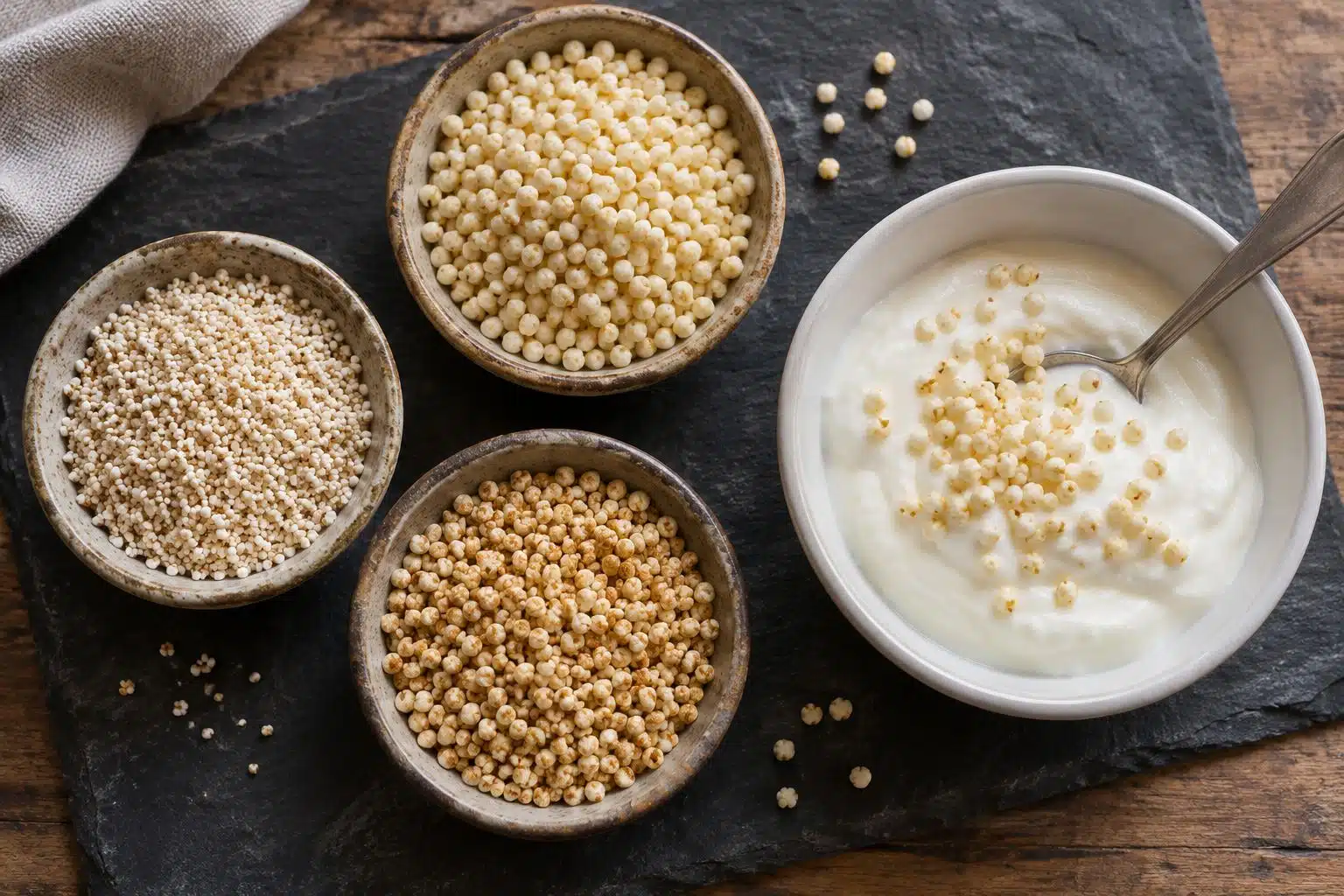
Popped amaranth is made by dropping seeds into a hot, dry pan, where 1 tablespoon of seeds puffs into about 2 to 3 tablespoons in seconds. It tops yogurt and cereal and holds together granola bars.
Other grains do not pop that way in a home pan, so buy them already puffed and start with the same volume.
- Puffed millet: the smallest of the three, so it is the closest in size to popped amaranth.
- Puffed quinoa: a light, crisp topping for yogurt and bowls.
- Puffed rice: larger and airier, which suits bars where a chunkier crunch is fine.
What Can You Use Instead of Amaranth Flour?
Amaranth flour is usually a minor part of a gluten-free blend, about 20 to 25%, so the swap is forgiving. Replace it with the same weight of another whole-grain gluten-free flour and leave the rest of the blend alone.
For ratios by recipe and more options, see substitutes for amaranth flour. The table gives how much of a blend each flour can take.
| Flour | Share of Blend | Flavor |
|---|---|---|
| Quinoa flour | Up to 30% | Delicate and nutty |
| Sorghum flour | No more than 30% | Slightly sweet |
| Teff flour | Stay near 25% | Mild and nutty |
| Buckwheat flour | Less in subtle recipes | Robust |
Sorghum is the easy pick for a plain bake, and what sorghum flour is covers how it behaves. Whole-grain flours spoil faster than white flour, so keep them in the freezer.
Which Swap Works for Which Dish?
- Creamy porridge: Teff, because it gives the same 2½ cups cooked per cup dry.
- Pilaf or grain bowl: Quinoa, because it makes separate grains in about 15 minutes.
- Savory bowl, bold sauce: Buckwheat groats, because the strong flavor holds up.
- Gluten-free porridge: Certified steel-cut oats, which need 4 cups of water.
- Crunch on yogurt or bars: Puffed millet, which is small and closest to popped amaranth.
- Gluten-free muffins or bread: Sorghum or quinoa flour, which fits a 25% share.
If your pantry has none of these, brown rice works in pilafs and bowls with 2½ cups of water for 25 to 45 minutes. It gives separate grains and no sticky body.
Common Mistakes and the Gluten-Free Check
Most failed swaps come from four habits.
- Cooking in amaranth's water. Teff needs 3 cups per cup and quinoa 2, so use the amount from the table for the grain you picked.
- Skipping the quinoa rinse. The saponin coating leaves a bitter, soapy taste, and pre-rinsed bags still benefit from a quick rinse.
- Swapping polenta or cornmeal. They are ground corn, not whole seeds, so they follow the ratio on their own package instead of a grain ratio.
- Trusting "naturally gluten-free". Amaranth, buckwheat, millet, quinoa, sorghum and teff are naturally gluten-free, but unlabeled bags can pick up gluten during processing.
Is Quinoa the Same as Amaranth?
No. Both are small gluten-free seeds cooked like grains, but amaranth seeds are smaller and turn sticky, while quinoa keeps separate grains and needs rinsing first.
Can I Use Rice Instead of Amaranth?
Brown rice works in pilafs and bowls at 2½ cups of water per cup for 25 to 45 minutes. It will not give the sticky body amaranth gives porridge.
5 Best Substitutes for Amaranth
Ingredients
Method
- Select your substitute based on dish type: porridge needs sticky grains like teff; salads and baking suit firmer or mild-flavored grains like quinoa or millet.
- Prepare the chosen grain by rinsing or toasting as indicated to enhance flavor and remove bitterness or strengthen nuttiness.
- Cook or soak each substitute according to its needs; quinoa requires less water, polenta needs whisking to prevent lumps, chia forms gel when soaked.
- Apply the recommended substitution ratio: usually 1:1 by volume except polenta at ¾ cup per cup of amaranth, or chia at 2 tablespoons per ¼ cup.
- Adjust liquid amounts as needed, especially reducing water for quinoa and polenta to avoid mushiness or gumminess.
- Check the final dish for desired texture and consistency, making small adjustments to liquids or cooking time if necessary.