Go Back
–+ servings
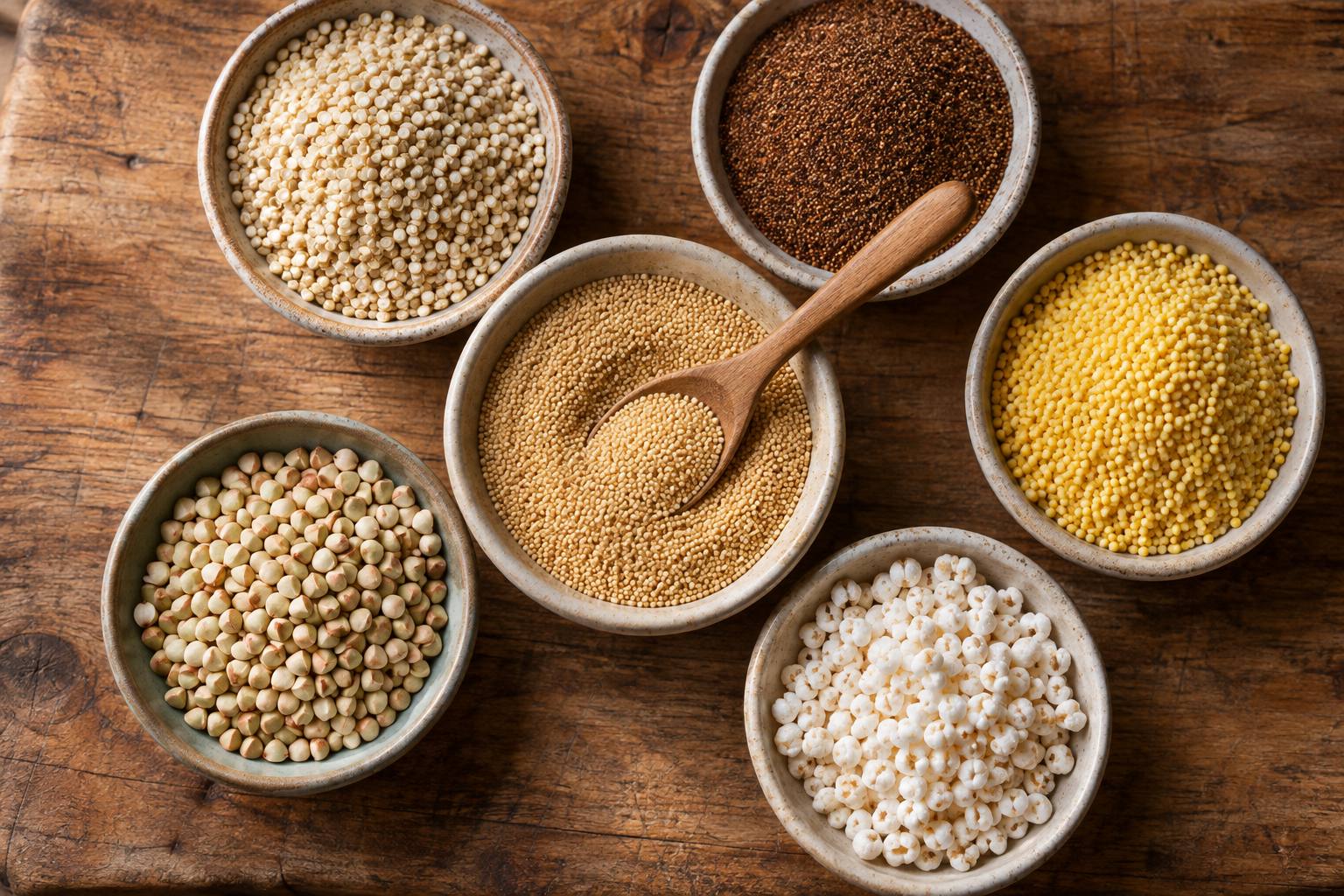
Amaranth seeds in a bowl surrounded by quinoa, teff, millet and buckwheat groats, the best amaranth substitutes

5 Best Substitutes for Amaranth

No ratings yet
When you're short on amaranth, choose substitutes based on your dish's texture needs. Quinoa and teff offer similar nutrition and texture, while millet, polenta, buckwheat, and chia serve specific roles in baking, cooking, or binding.
Prep Time 6 minutes
Cook Time 8 minutes
Total Time 14 minutes
Servings: 4 servings
Course: Substitutes
Cuisine: Gluten-Free

Ingredients
  

  • 1 cup Quinoa Use 1:1 by volume cooked; reduce cooking liquid by ~2 tablespoons per cup. Rinse before cooking to remove bitterness.
  • 1 cup Millet Use 1:1 by volume cooked. Best in sweet baking applications; toast before cooking to deepen flavor.
  • 1 cup Teff Use 1:1 by volume. Choose light teff for baked goods to avoid dark color; stir often during cooking to prevent clumping.
  • 0.75 cup Polenta Use ¾ cup per 1 cup amaranth. Reduce cooking liquid slightly; whisk into cold liquid before heating to prevent lumps.
  • 1 cup Buckwheat Use 1:1 by volume cooked. Toast groats first for deeper nuttiness. Stays firm, not creamy.
  • 2 tablespoons Chia Seeds Use 2 tablespoons chia per ¼ cup amaranth for binding. Let sit 10 minutes to form gel, or microwave 30 seconds in warm water.

Method
 

  1. Select your substitute based on dish type: porridge needs sticky grains like teff; salads and baking suit firmer or mild-flavored grains like quinoa or millet.
  2. Prepare the chosen grain by rinsing or toasting as indicated to enhance flavor and remove bitterness or strengthen nuttiness.
  3. Cook or soak each substitute according to its needs; quinoa requires less water, polenta needs whisking to prevent lumps, chia forms gel when soaked.
  4. Apply the recommended substitution ratio: usually 1:1 by volume except polenta at ¾ cup per cup of amaranth, or chia at 2 tablespoons per ¼ cup.
  5. Adjust liquid amounts as needed, especially reducing water for quinoa and polenta to avoid mushiness or gumminess.
  6. Check the final dish for desired texture and consistency, making small adjustments to liquids or cooking time if necessary.

Notes

Drain quinoa well before cooking to prevent a bitter, gritty texture in your dish.

Tried this recipe?

Let us know how it was!