
You spot it on the grocery shelf - a squat blue can labeled Wondra, wedged between all-purpose and bread flour - and wonder if it's worth buying.
Unlike cooking cornstarch perfectly or reaching for a standard roux, Wondra handles two completely different kitchen jobs: instant lump-free thickening and a dry coating that crisps without heavy batter.
It's a specialist, not a general-purpose flour, and knowing what it actually does changes how you cook gravies and pan sauces for good.
If flour freshness matters to you, the same principle applies here as with about can i use expired cake flour - condition and storage determine whether it performs.
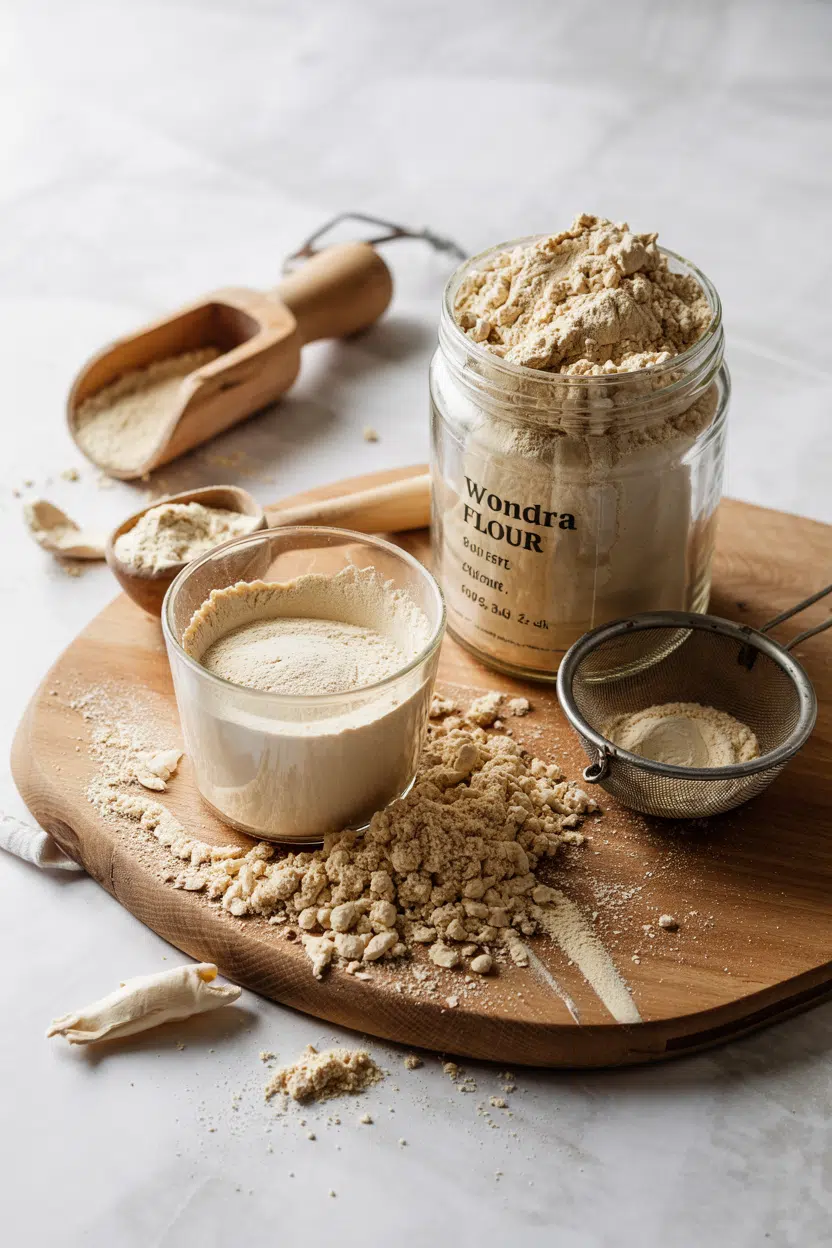
Wondra is an ultra-fine, pre-gelatinized wheat flour that dissolves instantly into hot or cold liquids. It thickens gravies and sauces without lumps, and its fine particle size creates a crisp, light coating on fried proteins. Flavor is mild and neutral.
What Is Wondra Flour?
Wondra is a commercially developed instant flour - a specialty product from the United States, produced by Gold Medal and sold in that recognizable blue canister.
Remember it later
Planning to try this recipe soon? Save it for a quick find later!
Its defining characteristic is that it has been pre-gelatinized: the starch granules are partially cooked and dried during milling, which allows them to hydrate and dissolve in liquid far faster than conventional flour.
The particle size is dramatically finer than all-purpose flour, which is why it pours almost like a powder and never clumps when stirred into a warm liquid.
You may also see it labeled as instant-mix flour or referred to generically as pre-gelatinized flour in professional recipe writing.
Unlike bread flour stand-ins designed for gluten development, Wondra is low-protein and not meant for yeasted baking.
It is a single-brand product - there is no generic "wondra" on shelves - though a few other instant flour products exist under different names.
- 🌾 Category - specialty milled wheat flour, not all-purpose or pastry flour
- 🏭 Origin - American commercial development, Gold Medal brand
- 🔬 Process - partially pre-cooked (gelatinized) then re-dried for instant dispersal
- 📋 Also called - instant flour, pre-gelatinized flour, instant-mix flour
What Does Wondra Flour Taste Like?
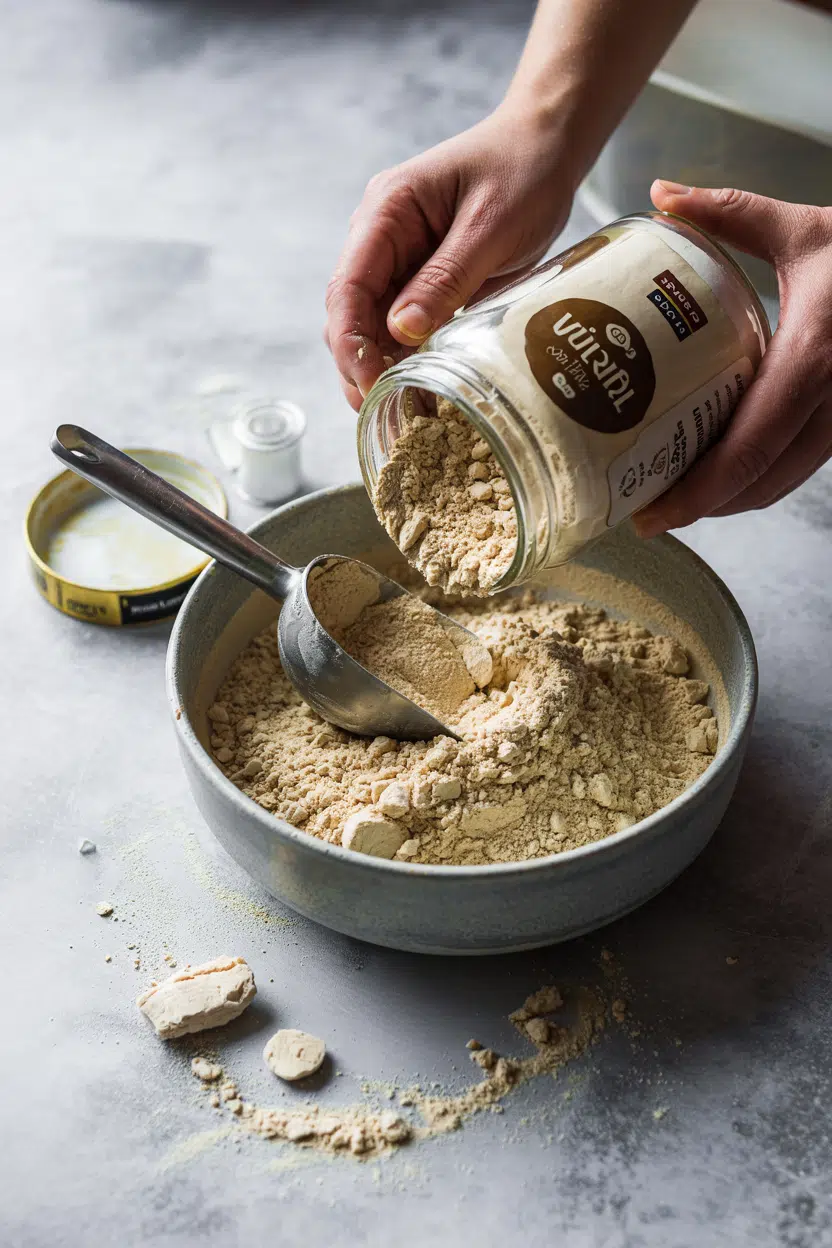
Wondra flour has an almost aggressively neutral flavor. Raw, it carries a faint fresh-milled wheat note - barely detectable, nothing like the raw-dough taste you notice when dusting a board with all-purpose flour.
Once stirred into a hot sauce or gravy, any residual starchy taste cooks out almost immediately. That rapid cook-out is a direct result of pre-gelatinization - the starch has already been partially cooked before it reaches your pan.
The glossy, silky texture it imparts to a finished pan sauce is Wondra's most distinctive quality - noticeably smoother than a standard roux-thickened sauce.
For comparison, cooking all purpose flour perfectly requires longer cooking to eliminate that pasty undertone; Wondra skips most of that work.
How to Use Wondra Flour
Wondra earns its place through speed and precision - it closes the gap between a thin liquid and a finished sauce in under a minute.
Most home cooks discover it through gravy, but restaurant kitchens reach for it specifically for coating proteins before a quick pan-sear.
| Method | Best For | Tip |
|---|---|---|
| 🥘 Hot Whisk | Instant gravy from pan drippings and stock | Sprinkle and whisk off direct heat first, then return to heat |
| ❄️ Cold Slurry | Finishing warm sauces without pre-cooking flour | Stir into cold liquid first, then stream into the warm sauce |
| 🍳 Dry Dredge | Light crisp coating on fish, chicken cutlets, vegetables | Pat protein dry, dust lightly, shake off excess before frying |
| ✨ Sauce Finish | Glossy body in butter-based pan sauces | Pinch stirred in at the end gives body without starch opacity |
American comfort cooking drives most Wondra use - beef gravies, roast chicken pan sauces, Southern-style fried fish - but it appears in any professional kitchen that values a quick, clean thickening agent.
It pairs exceptionally well with pan drippings and veal or beef stock, butter, roasted poultry, and cream-based white sauces.
Understanding comparing beurre manie vs roux options shows why Wondra is neither of those things - it replaces both for fast weeknight cooking, though it doesn't build the same depth of flavor a properly toasted roux does.
For dishes like wondra flour in grain dishes, its neutral starch profile keeps it from competing with other flavors.
How to Buy and Store Wondra Flour
Buy Wondra in its sealed blue canister - the packaging matters because the fine powder absorbs moisture faster than standard flour. The powder should look uniformly pale and free-flowing; any visible clumping or a stale, musty smell indicates moisture damage.
Store it in a cool, dry pantry, resealing the original can tightly after each use or transferring to an airtight container in humid climates. Opened, it stays reliable for 6-12 months; unopened canisters can last up to a year.
For extended storage, freezing wondra flour is a practical option if you live somewhere with high ambient humidity.
- 🛒 Where to find it - grocery baking aisle, large retailers, online; not in every store
- 📦 What to check - uniform pale color, free-flowing powder, no clumps or mustiness
- 🌡️ Storage - airtight container, cool dry pantry; avoid humidity at all costs
When Wondra Is the Right Call
Wondra isn't a workhorse flour - it's a targeted tool.
Reach for it when you need a smooth, quick sauce from pan drippings with no time to toast flour, or when you want a fried coating that stays light and crisp without egg wash and breadcrumbs.
Skip it for anything requiring gluten structure. Bread, pizza dough, and thick stews are not its territory - for long-simmered dishes, the taste of cornstarch thickening or a simple reduction gives a clearer, cleaner result.
If you have a jar of drippings and five minutes, Wondra is the fastest route to a finished sauce on the table.
Frequently Asked Questions
Yes, with a ratio adjustment. Wondra thickens similarly but produces a slightly cloudier, more opaque result than cornstarch. Use about 1½ tablespoons of Wondra for every 1 tablespoon of cornstarch a recipe calls for.
Start with 1 tablespoon per cup of liquid and whisk in gradually. Wondra thickens faster than all-purpose flour, so adding too much at once leads to over-thickening that's difficult to correct.
No. Wondra is made from wheat and contains gluten. It is not safe for people with celiac disease or a wheat allergy, and no gluten-free version of this product currently exists.
Essentially nothing - that's the point. Because its starch is pre-gelatinized, the raw-flour taste cooks out almost immediately, leaving a glossy, neutral-bodied sauce with no starchy undertone.
For yeasted breads, no - its low protein content won't support gluten development. Some bakers use it in small quantities for tender cakes or crisp crepe batters, where minimal gluten is actually desirable.



