Most people think tzatziki is just a dip - something to drag a pita through before the real food arrives. It's actually a sauce built on technique: straining yogurt, salting cucumber, and giving garlic enough time to mellow into something cohesive rather than sharp.
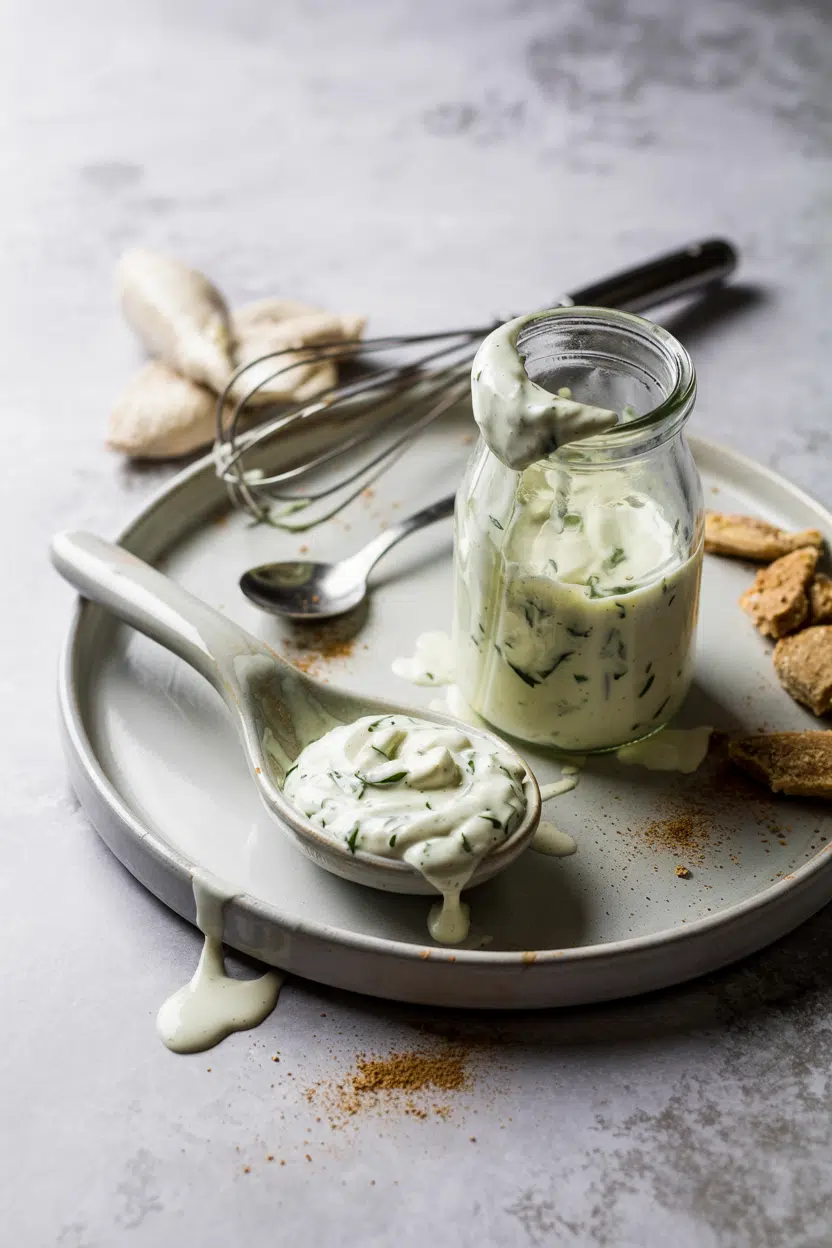
Tzatziki is a chilled Greek yogurt sauce made with grated cucumber, garlic, olive oil, and fresh herbs. Tangy, creamy, and herby, it works as a dip, spread, or condiment across Greek and Eastern Mediterranean dishes. Moderately intense flavor with a cooling finish.
What Is tzatziki sauce?
Tzatziki is a yogurt-based sauce and condiment originating in Eastern Mediterranean cooking, with Greece as its most recognized home.
Remember it later
Planning to try this recipe soon? Save it for a quick find later!
It's made by combining strained yogurt with grated or finely diced cucumber, raw garlic, olive oil, and fresh herbs - most often dill, mint, or both - finished with lemon juice or a small splash of white vinegar.
The sauce travels under different names across the region. Turks call it cacık, which is often thinner and served as a side salad.
In the Balkans, a similar preparation called tarator sometimes incorporates walnuts or vinegar in place of lemon. All three share the same foundation: cultured dairy, raw cucumber, and allium.
Two main styles exist in practice:
- Thick tzatziki - made with full-fat strained Greek yogurt, grated cucumber pressed dry, and a longer rest time. Standard in Greek restaurants.
- Thin cacık - made with regular yogurt thinned with water or ice, common in Turkish mezze service where it functions closer to a cold soup.
The word "tzatziki" comes from Turkish cacık, which itself likely derives from a Persian root. Common misspellings include tzadziki and tzaziki.
What Does tzatziki sauce Taste Like?
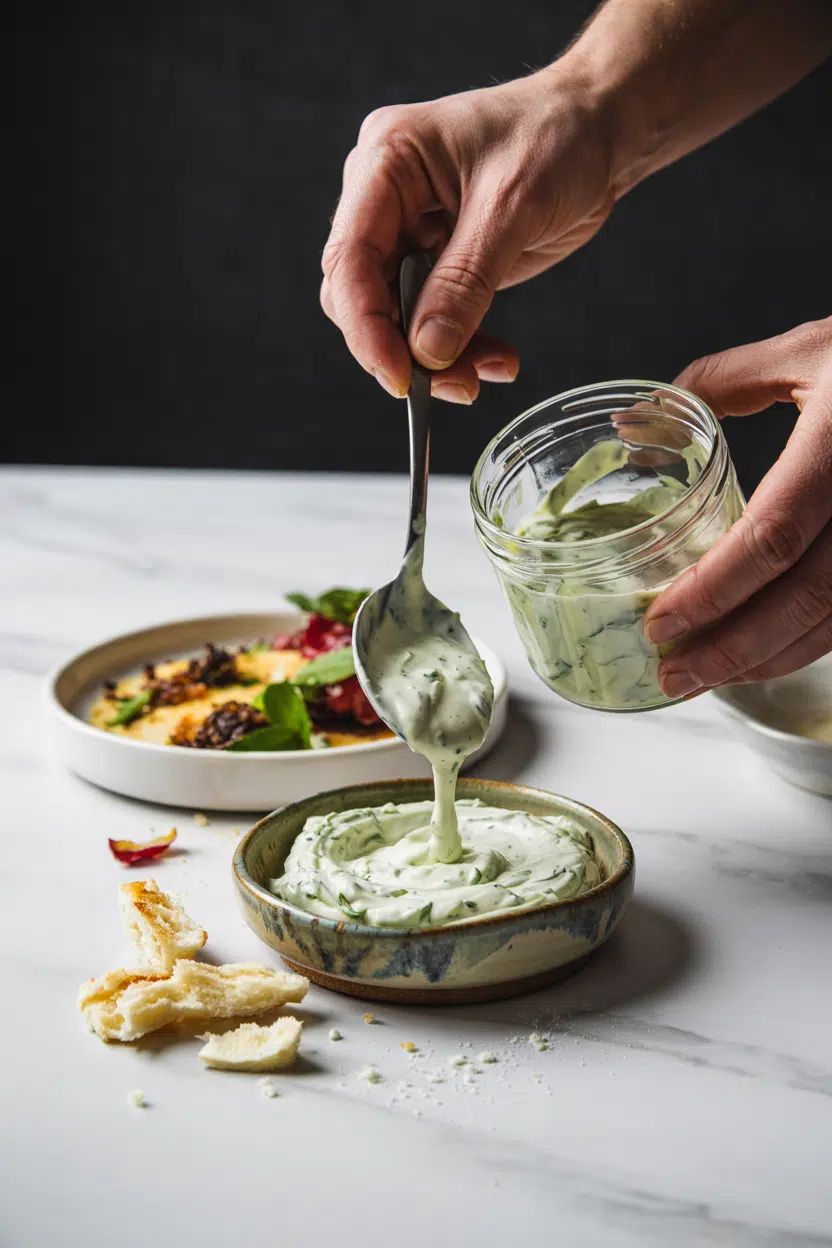
The dominant note is tangy cultured yogurt - bright, slightly acidic, and clean on the palate. Garlic provides a savory edge that softens over time as the sauce rests; fresh-made tzatziki tastes sharper than a batch that's sat overnight.
Cucumber contributes mild, watery freshness rather than any strong flavor of its own. Dill leans grassy and slightly anise-adjacent.
Mint, when used instead, pushes the sauce toward something cooler and more aromatic. A squeeze of lemon sharpens everything without adding sweetness.
Think of it as a thicker, garlicky cousin of ranch dressing - same creamy base, same herby lift, but with yogurt's fermented tang in place of buttermilk and none of the sweetness.
How to Use tzatziki sauce
Tzatziki starts cold and stays cold. Unlike most sauces, it's never cooked - heat breaks down the yogurt's structure and kills any probiotic benefit.
Its job is to contrast: cutting through rich, fatty, or charred proteins with cool acidity.
The most direct use is inside a pita for chicken souvlaki or gyros, where the sauce acts as both moisture and flavor anchor. It pairs just as naturally with lamb kebabs, grilled eggplant, and zucchini - anything with char benefits from its cooling effect.
| Method | Best For | Tip |
|---|---|---|
| 🥗 Dip | Pita chips, raw vegetables, grilled flatbreads, mezze platters | Serve in a shallow bowl with a drizzle of olive oil on top |
| 🌯 Spread | Gyros, souvlaki wraps, sandwiches, burgers | Layer generously - it compresses under fillings |
| 🍖 Sauce | Grilled lamb, chicken kebabs, roasted salmon, grilled vegetables | Spoon alongside, not over, hot proteins so it stays cold |
| 🥗 Dressing | Potato salad, grain bowls, chilled pasta salad | Thin slightly with lemon juice if using as a pour-over dressing |
Beyond Greek cuisine, tzatziki crosses into Levantine-influenced fusion cooking - swirled into chilled grain bowls, spooned over roasted potatoes with za'atar, or served alongside dolmades as part of a cold mezze spread.
Avoid pairing it with very spicy dishes; the dairy amplifies heat rather than neutralizing it.
How to Buy and Store tzatziki sauce
At the store, look for refrigerated tubs with visible cucumber pieces and green herb flecks - those are signs of real ingredients rather than flavored paste. A short ingredient list matters: strained yogurt, cucumber, garlic, oil, herbs, salt.
Anything with stabilizers, modified starch, or artificial preservatives suggests a product built for shelf life rather than flavor.
Store tzatziki at or below 40°F. Once opened, press plastic wrap directly onto the sauce surface to limit oxidation and herb browning.
Homemade tzatziki and its shelf life depend on how well the cucumber was dried before mixing - poorly drained cucumber shortens freshness to two days. Commercial unopened tubs last 2-3 weeks refrigerated; opened homemade versions hold for 3-4 days.
Don't freeze tzatziki. The yogurt separates on thawing and the cucumber turns waterlogged - the texture doesn't recover.
Where to Start With Tzatziki
If you're new to it, buy a quality refrigerated tub and taste it alongside pita bread or grilled chicken before committing to homemade. The store version shows you what the sauce should taste like.
Once you're ready to make your own, drain the cucumber aggressively - that single step separates good tzatziki from a watery one. If the flavor feels flat, it needs more garlic or lemon, not more salt.
And if it tastes sharp and disjointed straight after mixing, give it an hour. It comes together with time, not effort.
If you want a dairy-free alternative or need to swap it out for a dish, check the available tzatziki substitutes before improvising.
Frequently Asked Questions
Salt the grated cucumber and let it sit for 10 minutes, then squeeze it in a clean towel until almost dry. This removes most of the excess liquid before it ever reaches the yogurt.
Dill is the most common choice in Greek-style tzatziki, giving it a grassy, slightly anise note. Mint is equally traditional and produces a cooler, more aromatic result - some recipes use both.
No. Freezing causes yogurt to separate and cucumber to release water on thawing, leaving a grainy, diluted mess. Make smaller batches and refrigerate instead.
Made with full-fat strained Greek yogurt, it's high in protein, calcium, and - if live-culture yogurt is used - probiotics. It's naturally gluten-free and low in carbohydrates.
They share the same core ingredients but differ in consistency. Turkish cacık is typically thinned with water or ice and served as a cold side dish, while Greek tzatziki is thick enough to use as a dip or spread.