Ranch dressing does something no vinaigrette can: it cools, binds, and coats all at once, making it as useful on a chicken wing as on a crisp wedge salad.

Built on buttermilk and mayonnaise, it sits in a category of its own - creamy enough to double as a dip, tangy enough to cut through fatty or fried foods.
If you rely on blue cheese for that creamy-tangy role, knowing replacements for blue cheese gives you a useful comparison point, and ranch often lands on that shortlist.
Keeping the herbs fresh matters too - keeping chives fresh directly affects the quality of any homemade batch.
Ranch dressing is a creamy, tangy condiment made from buttermilk, mayonnaise, and dried herbs. It works as a salad dressing, dip, and cold finishing sauce. Moderate intensity, broadly paired with American comfort food, and best stored refrigerated after opening.
What Is Ranch Dressing?
Ranch dressing is a seasoned dairy-based condiment originating in the Midwestern United States, built from a base of buttermilk and mayonnaise or sour cream.
Remember it later
Planning to try this recipe soon? Save it for a quick find later!
It belongs to the broader category of creamy salad dressings, though its use extends well beyond salads into dipping and finishing roles.
The flavor profile comes from a reliable combination of aromatics: garlic powder, onion powder, dried dill, chives, and parsley. You'll also hear it called buttermilk ranch or simply ranch, and it sometimes appears mislabeled as "ranching dressing" in informal contexts.
Commercial versions vary more than most people expect. Some lean heavily on sour cream for tang, others use oil-based emulsions with added buttermilk flavor, and a growing range of dairy-free versions swaps the base entirely.
Understanding alternatives to garlic powder and alternatives to onion powder helps when making ranch from scratch and you're short on pantry staples.
- 🧴 Classic ranch - buttermilk and mayo base, dried herbs, pourable consistency
- 🥣 Ranch dip - thicker version using sour cream instead of buttermilk, made for crudités
- 🌶️ Flavored ranch - chipotle, jalapeño, or sriracha mixed in for heat
- 🌱 Dairy-free ranch - plant-based mayo and oat or cashew milk substitutes
What Does Ranch Dressing Taste Like?
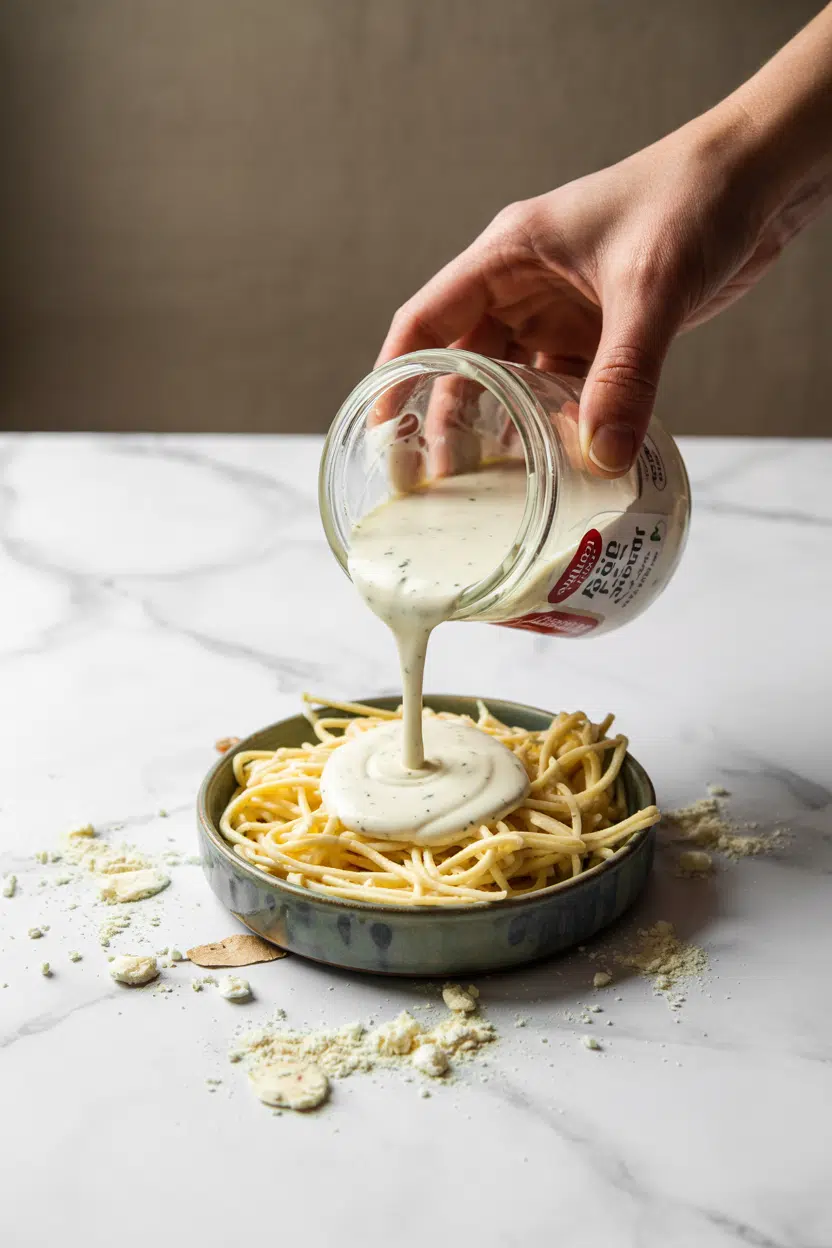
Ranch sits at a mid-point between a plain sour cream dip and a full herb vinaigrette - tangy without sharpness, savory without being salty. The buttermilk provides a lactic acid tang that reads as fresh rather than acidic.
Garlic and onion give it a savory backbone, while dill and chives push it toward garden-fresh territory. Unlike the taste of italian dressing, which leads with vinegar and oregano, ranch keeps its acid quieter and its fat forward.
Homemade versions made with fresh herbs taste noticeably brighter than shelf-stable commercial bottles. The creaminess also mutes intensity slightly - this isn't a bold condiment, it's a moderate one that complements rather than dominates.
How to Use Ranch Dressing
Ranch works entirely at room temperature or cold. No cooking required, no reduction needed - the no-heat approach is part of what makes it practical for quick assembly dishes.
| Method | Best For | Tip |
|---|---|---|
| 🥗 Salad Dressing | Mixed greens, wedge salads, coleslaw | Toss just before serving to prevent wilting |
| 🍗 Dip | Chicken wings, raw vegetables, fries | Use a thicker sour cream base for better cling |
| 🥙 Spread | Sandwiches, wraps, burgers | Apply thin - it's rich and a little goes far |
| 🥣 Cold Binder | Pasta salads, potato salad | Stir in after cooling to preserve herb flavor |
| 🌮 Finishing Sauce | Grain bowls, roasted vegetables, baked potatoes | Drizzle just before serving, not during cooking |
Ranch fits American casual cooking by design - barbecue spreads, game-day platters, and Tex-Mex tables all use it regularly. It acts as a cooling counterweight to spicy wings or smoky brisket.
Pairing works best with ingredients that have a clear textural contrast: crisp iceberg, raw carrots and celery, roasted chicken, or crispy potatoes. Bacon and cheddar both amplify the savory side without fighting the tang.
Avoid pairing ranch with dishes built on sharp citrus or assertive vinegars - the buttermilk tang and the acid will compete rather than complement.
If you want a different flavor profile in the same creamy-dip role, the guide to alternatives to ranch dressing covers what holds up in similar situations.
How to Buy and Store Ranch Dressing
At the store, look for refrigerated bottles labeled "buttermilk ranch" if classic tang is what you're after - these use real buttermilk and typically taste closer to homemade.
Shelf-stable versions are made for pantry convenience but often rely on flavoring rather than actual cultured dairy.
Check the color before buying: pale off-white with visible herb specks is the right sign. Bright white or uniformly smooth dressing usually signals a heavily processed formula.
A thin oil ring at the top of a fresh tub is normal - just shake or stir before serving.
Storage is straightforward:
- Unopened shelf-stable bottles - store in the pantry until the best-by date
- Opened or refrigerated tubs - keep sealed in the fridge, use within 2-3 weeks
- Homemade ranch - refrigerate in a sealed jar, use within 5-7 days
The herbs degrade fastest. If your ranch smells flat or the dill scent is gone, check dill's shelf life to understand why dried herb quality matters.
For a full breakdown of signs of spoilage and date guidelines, the article on how long ranch dressing keeps covers the detail.
Start With What You Need It to Do
Ranch divides cleanly by use case. If you're dressing a salad, buy a pourable buttermilk-based bottle.
Need a dip with more body? A sour cream-based ranch tub or homemade version with less liquid holds to crudités better.
Homemade gives you control over herb freshness and tang level, but it lasts under a week. Commercial is the practical call for anything beyond immediate use.
Either way, ranch earns its place fast.
Frequently Asked Questions
Buttermilk, mayonnaise or sour cream, garlic powder, onion powder, dried dill, chives, and parsley. Commercial versions sometimes add stabilizers and flavor concentrates to extend shelf life and standardize the taste.
Yes, most ranch dressings contain dairy through buttermilk or sour cream. Dairy-free versions exist using plant-based mayo and non-dairy milk, but check the label - some reduced-fat versions still contain dairy derivatives.
Classic ranch does, and buttermilk is the source of its signature tang. However, many shelf-stable commercial versions use powdered buttermilk or artificial flavoring instead of fresh cultured buttermilk.
Opened commercial ranch lasts about 2-3 weeks refrigerated; homemade lasts 5-7 days. The clearest spoilage sign is a sour or off smell, not just a change in color.
Yes, but only for cold marinating before cooking - not as a sauce during heat. The dairy base tenderizes chicken effectively when used as an overnight marinade in the fridge, then discarded before grilling.